REVIEW · ADDIS ABABA
Full Day Private City Tour Of Addis Ababa
Book on Viator →Operated by Addis Ethiopia Tours · Bookable on Viator
Addis Ababa gets calmer with a guide. This full-day private city tour helps you see major sights without wrestling the traffic, with a personal driver and guide who can explain what you’re looking at. I especially liked the door-to-door pickup and drop-off, and the way the day mixes big-name landmarks with everyday Ethiopia like museums and markets. One thing to plan for: you’ll spend a good chunk of time in the car, so it’s best if you’re okay with a full day pace.
My second big win is the flexibility. The standard flow includes the National Museum area, Entoto Hill, the Ethnological Museum, Addis Mercato, St. George’s Cathedral, and Tiglachin Memorial, but you can adjust the order or emphasis to match your interests. The one practical caution is that the National Museum is noted as closed for renovation, so you should expect a swap to another museum (the tour says it will improvise with Addis Ababa Museum).
In This Review
- Key points to know before you go
- Private chauffeur day: the real benefit in Addis Ababa traffic
- Museum swap: starting your day with Lucy, even if the National Museum is closed
- Entoto Hill: altitude, eucalyptus, and views of the capital
- Ethnological Museum at Addis Ababa University: seeing daily life through objects
- Addis Mercato and the market rhythm: clothes, bargaining energy, and variety
- St. George’s Cathedral: royal crowns and one of Addis Ababa’s oldest landmarks
- Tiglachin Memorial: Ethiopia and Cuban soldiers in the Ogaden War
- How the pace works: 6 to 8 hours that feel organized, not frantic
- Price and value: why $99 can make sense for a private Addis day
- Who should book this private city tour
- Should you book the Full Day Private City Tour of Addis Ababa?
- FAQ
- How long is the private city tour?
- What does the tour cost?
- Is this a private tour or a shared group?
- Does the tour include pickup and drop-off?
- Which museums are included?
- Will I stop at markets?
- Do I have time at Entoto Hill?
- Are tickets included for the stops?
- What is the cancellation policy?
Key points to know before you go

- Private chauffeur, private guide: You’re not stuck following a rigid group rhythm in Addis Ababa traffic.
- Big sights in one organized day: Museums, cathedral, hill views, and major markets without guesswork.
- Entoto Hill viewpoint time: Plan for altitude and cooler air at the top, plus eucalyptus-scented views.
- Market stops that actually teach you things: Addis Mercato plus a local clothes market give context for daily life.
- Museum swap if the National Museum is closed: You’ll be taken to Addis Ababa Museum instead.
- A guide can make or break the day: One guide mentioned in real bookings, Fitsum Kibreab, is praised for local history and a smooth, safe-feeling experience.
Private chauffeur day: the real benefit in Addis Ababa traffic

If you’ve ever tried to move around Addis Ababa on your own, you already know the main challenge: getting anywhere takes time, and the road situation can feel chaotic. This tour solves that with a private chauffeur and door-to-door transfers, which means you spend more energy on the sights and less on negotiating routes. Even if you’re only in town briefly, that “let someone else drive” comfort matters.
I also like that the guide isn’t just a walking map. A good private guide turns stops into stories—why a hill matters historically, what a memorial represents, and how Ethiopia’s ethnic diversity shows up in daily objects. You’ll usually see the same places other tourists do, but with more sense of place.
The main downside is simple: you’re signing up for a 6 to 8 hour day. If you prefer slow wandering with lots of breaks, you’ll still have a structured route, so you’ll want to pace yourself and pick what you care about most.
You can also read our reviews of more city tours in Addis Ababa



Museum swap: starting your day with Lucy, even if the National Museum is closed

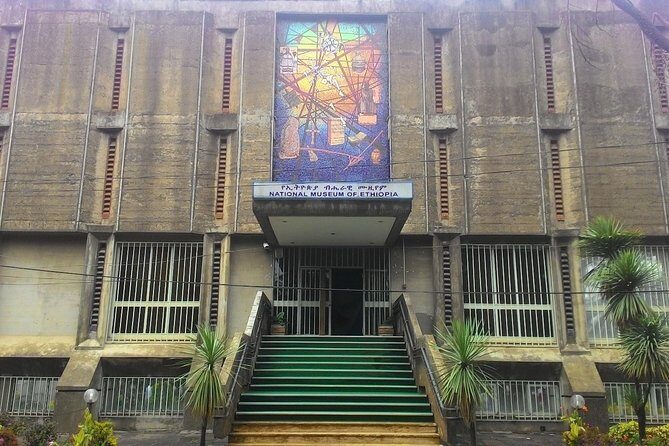
The morning concept is straightforward: start with Ethiopia’s major archaeology and human-history story. The tour normally includes the National Museum of Ethiopia, famous for artifacts that connect Ethiopia to world human origins. The highlight tied to that museum is the 3.5 million-year-old fossil of Lucy (Dinkinesh, meaning thou art wonderful), plus related early hominoid context that helps explain how scientists rethought human genealogy after the 1974 discovery.
Now here’s the key detail you’ll want to be ready for: the National Museum is listed as closed for renovation, and the tour says it will improvise by taking you to another museum called Addis Ababa Museum. That means your “start” is still archaeology and cultural context, but with a different building and exhibit set than you might have pictured.
In practice, I like this approach because it keeps the morning from stalling. It’s also a reminder to stay flexible: you’re booking a guided day of Ethiopian culture and history, not a single room with a single object. If Lucy is your one must-see, you’ll want to confirm what’s on view in the substitute museum once you’re booked.
Entoto Hill: altitude, eucalyptus, and views of the capital
After the museum time, the tour heads uphill to Mount Entoto. This stop has a specific historical flavor: Entoto was once Emperor Minilik II’s permanent camp. That matters because the hill isn’t just scenery; it’s a place tied to leadership and the way rulers related to geography.
You also feel the change on the drive. The tour notes a considerable drop in altitude as you climb, and the air is filled with the scent of eucalyptus trees covering the area. If you’re sensitive to temperature shifts or you’re visiting from lower elevation, plan a light layer and take it easy when you step out for photos.
From the top, you get a panoramic view of Addis Ababa and the surrounding countryside. This is the kind of viewpoint that helps you understand everything you’ll see later: why certain neighborhoods sit where they do, how the city spreads, and why hills and landmarks are part of everyday identity here.
Ethnological Museum at Addis Ababa University: seeing daily life through objects
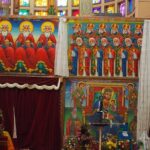
Next up is the Ethnological Museum, located inside the compound of Addis Ababa University. This is a different kind of museum than the archaeology-focused one earlier. Instead of fossils and ancient timelines, you’ll see artifacts and daily objects connected to many of the ethnic groups living in Ethiopia.
I like this sequencing. Archaeology helps you think about deep time, while an ethnological museum brings you into daily life—how people live, what they use, and how material culture reflects community identity. It’s the sort of stop that makes your later market experiences feel less random. When you see traditional clothing or handmade items, you can connect them to the broader cultural context you learned earlier.
The time here is set at about an hour, which is enough for a first pass without turning it into a rushed checklist. If you have strong interest in anthropology or you like studying everyday tools and textiles, you might want to ask the guide to point out the connections between what’s displayed and what you’ll see in the markets.
Addis Mercato and the market rhythm: clothes, bargaining energy, and variety
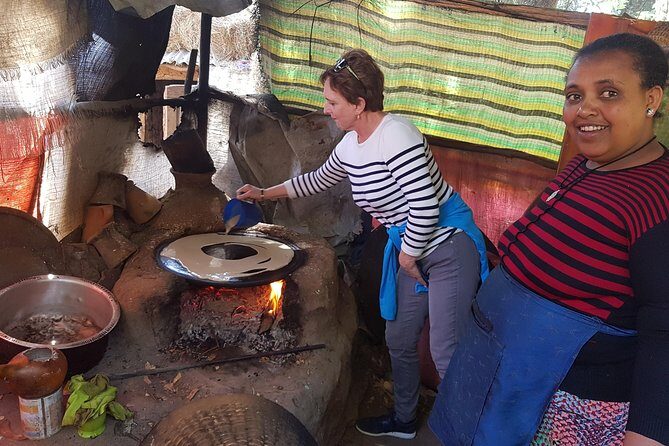
Markets are where the city feels loud, human, and real. The tour builds in market time before and after lunch. After returning from Entoto Hill, you’ll encounter a busy local market for handmade traditional clothes. Stooping at the market is optional—meaning you can spend a few minutes browsing casually or hang back if crowds aren’t your thing.
Then, after lunch, the highlight shifts to Mercato Market (often spelled Addis Mercato or Merkato), described as the largest open-air market in Africa. The promise here is scale: almost every possible commodity is for sale. That’s useful information for expectation-setting. Mercato isn’t a museum with labeled exhibits; it’s a place to move, scan, compare, and let the guide help you find what’s relevant to you.
Two things make a guided market visit worth it. First, a local guide can explain what you’re seeing so you’re not just staring at a wall of goods. Second, you’re moving as one group with a plan, which can reduce the “lost in the noise” feeling that can hit in huge markets.
A quick practical note: wear comfortable shoes. You’ll be on your feet more than you might expect, and you’ll likely want time to browse rather than sprint to the next photo.
You can also read our reviews of more private tours in Addis Ababa





St. George’s Cathedral: royal crowns and one of Addis Ababa’s oldest landmarks

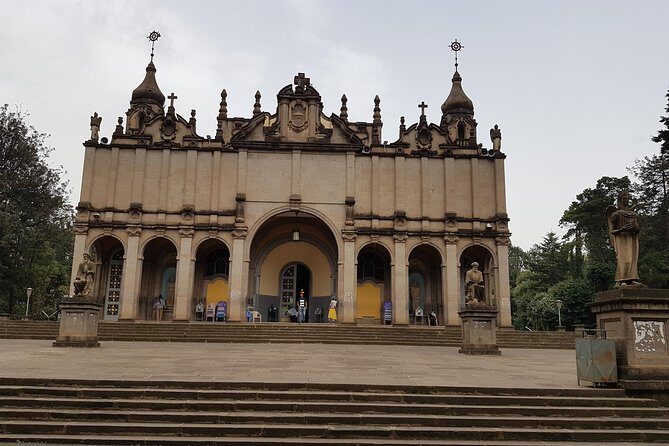
Mid-afternoon, you’ll visit St. George’s Cathedral, described as one of the oldest cathedrals in Addis Ababa. This stop has a memorable historical tie: it’s where Emperor Haileselasie and Empress Zewditu were crowned.
Even if you’re not a religion-history specialist, this is a meaningful anchor point. A cathedral like this isn’t only an architecture stop; it’s a landmark tied to national identity and leadership. It also gives you a break from market intensity and lets you shift into a quieter, more reflective kind of sightseeing.
The tour allots about an hour here, including time to look around and learn from the guide. If you enjoy architecture details—doors, design, and the way older buildings dominate a city block—this is the kind of place where that attention pays off.
Tiglachin Memorial: Ethiopia and Cuban soldiers in the Ogaden War
The final major cultural-historical stop is Tiglachin Monument, a memorial to Ethiopian and Cuban soldiers involved in the Ogaden War. The tour notes it was built under Mengistu Haile Mariam on Churchill Ave.
Memorials can be easy to rush past, but with a guide, you can understand why this one matters. It connects Ethiopia’s modern political history to international involvement, and it gives you a broader view of what Ethiopia has faced beyond day-to-day city life.
Time at this stop is set at about 30 minutes, so it’s not a long museum-style experience. Think of it as a meaningful last stop that closes the loop on the day’s theme: history shaping the present.
How the pace works: 6 to 8 hours that feel organized, not frantic
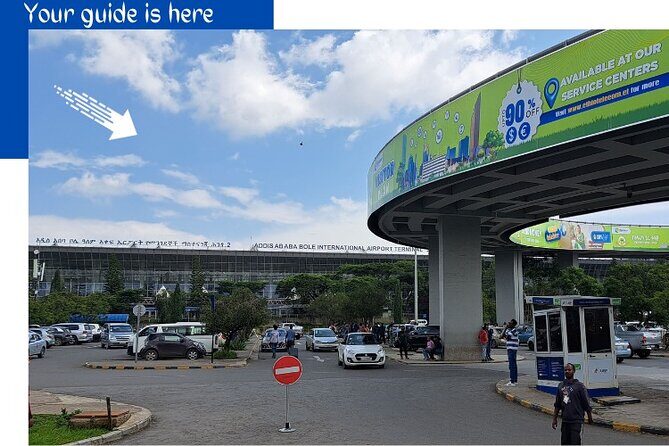
What makes a private day tour work well is not just the sights—it’s the pacing between them. The tour is designed as a loop: museum start, hill viewpoint, ethnological museum, market time, cathedral, memorial, then back to your hotel. With pickup and drop-off included, you don’t lose time figuring out transportation.
Still, the day is packed. You’ll do indoor museum time plus outdoor viewpoint time plus market walking. That mix is great for variety, but it means you should treat the day like a full day, not a casual half-day.
A smart way to handle the schedule is to decide your “musts” before you go. If your priority is human origins, focus on the first museum portion and ask questions about what’s on display. If your priority is culture and identity, spend extra attention on the Ethnological Museum and the traditional clothing market. The guide can help you trade small amounts of time between stops so you leave satisfied rather than overwhelmed.
Price and value: why $99 can make sense for a private Addis day
At $99 per person, this tour is positioned as a mid-priced private experience. On paper, that can sound steep if you’re used to cheaper group tours. The value comes from three things Addis Ababa makes hard on your own: door-to-door transportation, safe-feeling navigation, and interpretation from a private guide.
A private chauffeur saves you from the biggest cost in travel days: time and stress. And interpretation is a real currency in Addis Ababa. If you’re curious about why places matter—why the crown happened at St. George’s, why Entoto was chosen as a camp, what ethnic groups’ objects tell you—your guide helps you see more than just photos.
There’s also the fact that group discounts are available. If you’re traveling with a friend or family member, this is where the cost per person can start to look very reasonable for the amount of ground you cover.
One more value signal: it’s described as having a mobile ticket, which can reduce last-minute friction. You’ll still want to arrive prepared, but you’re not scrambling to figure out logistics once you’re in motion.
Who should book this private city tour
I’d point this tour toward travelers who want structure without losing the personal touch. It’s a strong fit if you’re:
- visiting Addis Ababa for a layover or short stay and want key sights without wasting time
- interested in Ethiopia’s culture through both museums and markets
- happier in a private setting than in a bus group
- the type of traveler who likes asking questions, not just taking pictures
It also makes sense if you’re concerned about feeling safe in a large, busy city. One booking story singled out a local guide named Fitsum Kibreab for making the day feel smooth and safe, with plenty of local history talk and even time to enjoy coffee.
If you’re traveling solo and want a day that feels guided but not controlled, a private tour is often the sweet spot.
Should you book the Full Day Private City Tour of Addis Ababa?
Yes, if your goal is a guided, organized day that connects Addis Ababa’s major landmarks with real-life culture. The best part is that you’re not just ticking off famous stops—you’re getting explanations that make the cathedral, hill views, ethnology museum, and markets feel like one story.
I’d book with one mindset adjustment: you might start the morning with the Addis Ababa Museum instead of the National Museum due to renovation. If you’re okay with flexibility, that swap keeps the experience intact.
Don’t wait if your dates are tight. It’s commonly booked about two weeks in advance, so planning ahead is smart. If you’d like the day tailored, ask for a guide who can explain what you care about most—because in Addis Ababa, that’s what turns a tour into a useful day.
FAQ
How long is the private city tour?
The tour runs about 6 to 8 hours.
What does the tour cost?
It’s listed at $99.00 per person.
Is this a private tour or a shared group?
It’s a private tour/activity, with only your group participating.
Does the tour include pickup and drop-off?
Yes, pickup is offered, with door-to-door round-trip transfers.
Which museums are included?
The tour typically includes the National Museum of Ethiopia and the Ethnological Museum. The National Museum is noted as closed for renovation, and the tour says it will substitute with Addis Ababa Museum.
Will I stop at markets?
Yes. You’ll visit a local market for handmade traditional clothes and also go to Mercato Market, described as the largest open-air market in Africa.
Do I have time at Entoto Hill?
Yes. The tour includes Mount Entoto with time for panoramic views and a drive uphill to the area connected to Emperor Minilik II’s camp.
Are tickets included for the stops?
Admission tickets are included for the listed museum and sight stops in the itinerary.
What is the cancellation policy?
Free cancellation is offered up to 24 hours in advance for a full refund. If you cancel less than 24 hours before the start time, the amount you paid is not refunded.