REVIEW · ADDIS ABABA
Private Omo Valley Tours From Addis Ababa
Book on Viator →Operated by Aman Ethiopia Tours And Travel Agent · Bookable on Viator
Omo Valley trips change how you see everyday life. This private, all-inclusive route from Addis Ababa leans into real-life village rhythms, with a Blue Badge-certified guide doing the talking when it matters. You’re not just sightseeing; you’re moving through Ethiopia with context.
I love two things most: the village-focused days (Doreze/Shammas, Bana, Ari, Mursi, Hamer, Karo, Dassanech, Konso) and the big-scene nature moment at Lake Chamo with a boat cruise. One caution: expect long drives and early starts, so plan for an active, sometimes bumpy day.
In This Review
- Key Things You’ll Notice Right Away
- Omo Valley from Addis: who this private tour fits best
- Price and value: what $1,890 is buying you
- Starting at Bole Airport at 7:00 am: how the pace actually feels
- Day 1: Arba Minch, Shammas weaving, and enset’s role in daily life
- Day 2: Lake Chamo boat cruise plus Bana and Ari village visits
- Day 3: Mago National Park for Mursi, then Hamer near Turmi
- Day 4: Turmi and Murulle for Karo body decoration
- Day 5: Omorate and the Dassanech on Lake Turkana
- Day 6: Konso UNESCO terracing, coffee connections, and on to Welayta Sodo
- Day 7: Tiya stelae, an Ethiopian folkloric dinner, and the Addis send-off
- Guides and drivers make or break it: Barch, Firew, Niko, Shahsa, Marko
- How to prepare: clothing, fitness, and photo ethics that keep things positive
- Should you book this Omo Valley private tour from Addis Ababa?
- FAQ
- Where does the tour start?
- What time does it start?
- Is pickup offered?
- Is this a private tour?
- What does the $1,890 per person price include?
- Are meals included and is there a vegetarian option?
- What’s the dress code?
- How physically demanding is it?
- What’s the minimum age?
- What’s the cancellation policy?
Key Things You’ll Notice Right Away
- A private setup: just you, your party, and your guide (max 15 travelers overall).
- All-inclusive in practice: lodging, meals, transit, and scheduled activities are handled.
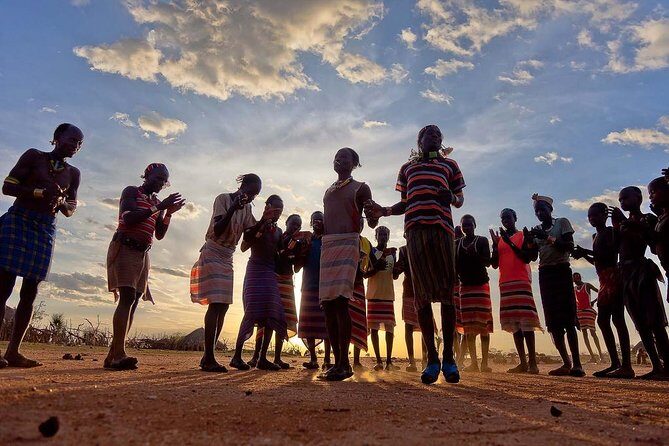
- Hands-on cultural stops: weaving, pottery, body decoration, terraced farming, and local markets.
- UNESCO time built in: Tiya’s stelae and Konso’s terracing anchor the trip near Addis.
- A nature add-on that’s not a bonus: Lake Chamo’s cruise puts wildlife on your route, not off your route.
- Guides with real momentum: names like Barch, Firew, Niko, Shahsa, Marko, and Amanuel show up as examples of how the experience gets shaped.
Omo Valley from Addis: who this private tour fits best
This style of trip is for you if you like the feeling of going somewhere with a plan, but still want the human scale. Omo Valley is not a museum circuit. The value here is that your guide helps you connect names, customs, and daily life into something you can actually remember.
I also think this works well for photographers and curious travelers who care about why people do what they do. You’ll visit several groups—Doreze/Shammas, Bana, Ari, Mursi, Hamer, Karo, Dassanech, and Konso—so you get a layered view rather than one single “tribe stop.”
The trip is private in the sense that you travel with your guide and party, not in the sense of being a slow, cushy private car parade. You’ll still be moving. If you need a low-effort vacation with minimal driving, this might feel like too much. If you’re okay with a steady pace and you pack for it, you’ll likely love the way the days connect.
You can also read our reviews of more private tours in Addis Ababa

Price and value: what $1,890 is buying you

At $1,890 per person, you’re paying for more than transport. This is set up as an all-inclusive experience: food, lodging, activities, and transit are meant to be covered so you don’t burn vacation time price-checking buses, meals, and ticket lines.
That matters in Ethiopia because the “real cost” of a trip isn’t just the ticket price—it’s the time and stress of coordinating everything. With pickup from Bole Airport and a guide who handles the route, you save energy for the part you actually came for.
There’s also a group discount listed, and the tour is capped at 15 travelers. Even so, it’s described as a private tour with just your guide and your party, so you’re not stuck in a huge bus crowd. The pricing is steep compared with DIY travel, but the trade is clarity and smoother logistics.
If you’re traveling solo, this price can still be worth it because you’re buying independence plus local navigation. If you’re two or more people, you may feel the value more sharply since the private-car-and-guide setup costs spread out.
Starting at Bole Airport at 7:00 am: how the pace actually feels
The tour starts at Bole Airport at 7:00 am. That early time sets the tone: you’re not doing late breakfasts and slow departures. You’re doing “see a lot while the day is still young,” which is essential for Omo Valley geography and for reaching villages before things get too hot or too chaotic.
You’ll also be in and out of vehicles for much of the week. Expect driving days that turn into village visits, then into travel again. If you get motion-sick, pack accordingly. If you’re sensitive to dust and road conditions, bring a simple face covering and plan for it to be part of your routine.
One small but real comfort note: the tour allows service animals, and it says it’s near public transportation. That’s not a promise of “walk out to the curb anytime,” but it signals the organizers aren’t operating in a completely isolated bubble.
Finally, note the dress guidance: dress code is formal for the folkloric dinner in Addis. Plan one outfit that looks right for that evening, not just something “good enough for photos.”
Day 1: Arba Minch, Shammas weaving, and enset’s role in daily life

Day 1 begins with a drive toward Arba Minch, with an important stop along the way at the Doreze/Shammas weaving community. This is where the trip earns its “authentic” goal. The houses have an unusual shape meant to remind people of elephants in the area long ago—an eye-opening example of how local memory becomes architecture.
You’ll also hear about enset, sometimes called the fake banana, which is a stable food source for the people here. The practical takeaway for you is that you’re not just watching crafts; you’re seeing why those crafts and daily habits exist in the first place.
In terms of “how it feels,” this is a softer entry day: you start the trip with a drive, then you stop and learn, then you end in Arba Minch for the night. It’s a good way to settle into the rhythm before jumping into the more intense cultural days later in the week.
Potential drawback: because you’re on the road, it can feel like a “beginning-of-trip day” rather than a full deep dive. Still, it’s a solid start, and it sets up the rest of your week by framing local life before you add more variety.
Day 2: Lake Chamo boat cruise plus Bana and Ari village visits
Day 2 is a strong mix of nature and culture. After breakfast, you head toward Konso and Jinka, with a boat cruise on Lake Chamo. This is one of those days where the wildlife element is part of the itinerary, not a random add-on.
On the lake, you might spot Nile crocodiles, hippos, and different types of birds. Even if you don’t see everything, you still get the sense of how living systems work at water level.
Then the trip shifts to people and livelihoods. You visit the Bana, described as indigenous pastoral and semi-nomadic in the harsh lower Omo environment. Later you go to the Ari people, with a focus on how women wear skirts made from the banana-like tree (enset) and how they’re skilled in pottery.
If you like craft and everyday work, this is a great day. It’s not just body decoration; it’s about what’s made, what lasts, and what feeds communities.
Possible consideration: the information you get on cultural practices is shaped by your guide’s approach, and those conversations can be emotionally loaded. Keep your mind open, respect boundaries, and remember that photography can change what people want to show you.
Day 3: Mago National Park for Mursi, then Hamer near Turmi

Day 3 starts with Mago National Park, a day excursion to meet the Mursi. The Mursi live in low huts made of straw leaves, and the tour notes women’s traditional terra cotta ornaments on stretched lower lips and ear lobes, plus the ear and lip adornment tradition that many outsiders know by reputation.
Then you drive back for lunch and continue toward Turmi, where you visit the Hamer. Here, the tour focuses on Hamer women’s clothing and the men’s hair style and body ornamentation—details that help you see differences, not just “another tribe day.”
What I like about this day is that it doesn’t treat the Omo Valley as one flat cultural block. You move from Mursi in a park setting to Hamer in Turmi, with new customs and new visual language.
A drawback to consider: Mursi and Hamer stops are visually dramatic, which can tempt people to reduce the visit to photos only. If you go in with curiosity about how communities live—not just what looks unusual—you’ll get more from the day and feel less like you’re on a highlight reel.
Day 4: Turmi and Murulle for Karo body decoration

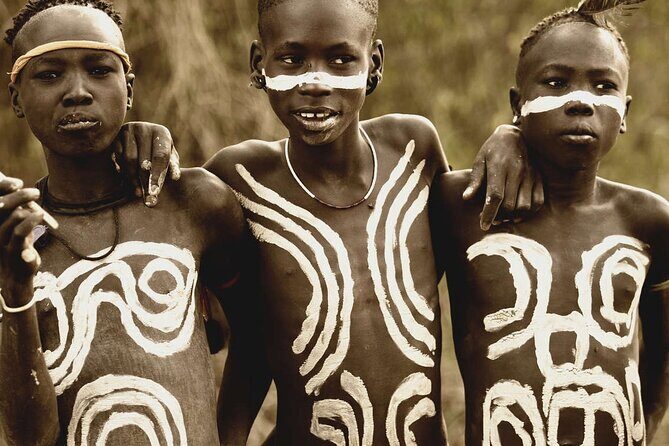
Day 4 keeps the cultural momentum and adds a different kind of “public expression.” You drive to Murulle to visit the Karo people. The tour notes that Karo are famous for body decoration, including painting with white chalk to prepare for a ceremony.
You’ll also learn about scarification practices. Women scar the chest, while men’s scars can represent an enemy or a dangerous animal killed. Those details are intense, and your guide’s job here is to turn them into understandable meaning rather than shock value.
This day is also a reminder that “ceremony” isn’t a tourist costume. It’s tied to identity, memory, and social structure. Even if your stop is short, treat it like a conversation, not a performance.
Practical tip: if you want photos, ask first and keep it respectful. If you don’t get a clear yes, don’t push for it. This is one of the clearest ways to protect your experience and theirs.
Day 5: Omorate and the Dassanech on Lake Turkana

Day 5 heads toward Omorate for the Dassanech—the tour calls them people of the delta—and focuses on life on the northern shore of Lake Turkana.
The key value here is geography. Lake Turkana’s environment shapes housing, food routines, and movement. That’s why the Dassanech stop pairs well with the earlier days: you see how different ecosystems produce different daily life patterns.
This day also hits Konso again on the way back, which gives you continuity rather than a random scatter of names.
Potential consideration: the “delta” and lakeshore environment can be hot and visually intense. Wear light layers, bring water, and don’t plan on changing clothes halfway through unless your guide specifically arranges that.
Day 6: Konso UNESCO terracing, coffee connections, and on to Welayta Sodo
Day 6 includes Konso, one of the UNESCO sites known for terracing. Terracing isn’t just pretty; it’s a survival strategy that reshapes how people grow food on challenging slopes.
The tour also mentions coffee connected to this area, calling out that one of Ethiopia’s best coffee types comes from the Konso region. That’s a nice detail because it links heritage to something you can taste later—if you choose to try Ethiopian coffee in Addis afterward.
You then proceed to Welayta Sodo. The itinerary wording suggests transit and repositioning, not a full extra highlight stop, but it’s still part of the pacing that brings you back toward Addis Ababa.
This is a “move and connect” day. If you’re the type who wants every hour to be a big moment, you might feel this day is a bit more transit-heavy than others. If you accept that roads are part of the story in southern Ethiopia, it works.
Day 7: Tiya stelae, an Ethiopian folkloric dinner, and the Addis send-off
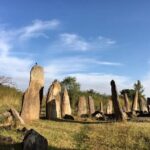
Day 7 turns back toward Addis Ababa. On the way, you stop in Butajira, then visit Tiya stelae, a UNESCO-registered site. Tiya adds a different kind of context: Omo Valley is about living culture, and Tiya gives you a historical anchor near Addis.
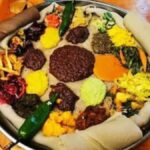
In the evening, you attend a folkloric dinner, with national dishes and dances from different Ethiopian ethnic groups. The traditional coffee ceremony is also served. Dress code is listed as formal here, so plan to look like you belong in a proper dinner, not just in travel clothes.
Later, you transfer to the airport for departure. The wrap-up is efficient: you end the week with a cultural “performance” that’s still part of everyday Ethiopian social life, then you’re moving on.
If you hate packing and unpacking, this day is a reminder to keep your formal outfit accessible in your bag so you’re not fishing for it in the dark after a long travel day.
Guides and drivers make or break it: Barch, Firew, Niko, Shahsa, Marko
The most repeated theme in the experience is the human factor: the guide. You’ll see guide names come up often—Barch, Firew, Niko, Shahsa, Marko, Amanuel, and drivers like Sam and Alex. The point isn’t the names. The point is what these guides are praised for: professional handling, safety, and the ability to tailor the day to what you care about.
As a practical traveler, here’s what you should watch for when your guide is explaining the route:
- Do they connect the stop to daily life, not just visuals?
- Do they manage timing so you’re not rushing people or pushing yourself?
- Do they keep the visit respectful when photography becomes sensitive?
A good guide makes the trip feel easier because they reduce confusion. You spend less time wondering what comes next, and more time noticing what’s in front of you.
And yes, if you’re a photographer, the customization angle matters. The tour can shift around your priorities, as long as it stays within the route and the community expectations.
How to prepare: clothing, fitness, and photo ethics that keep things positive
This tour lists moderate physical fitness as a baseline. That fits the reality: you’ll be walking in village settings, standing for conversations, and spending hours in vehicles.
It also says the tour operates in all weather conditions. So pack based on season, but also pack for dust and sun. Long sleeves can help in harsh light, and breathable layers work better than heavy cotton.
The dress guidance is simple but specific: formal for the folkloric dinner. If you forget this, you’ll likely feel stressed later. Make your life easy and plan one “evening look” now.
For photos, be aware that some cultural stops can become performance-like if you treat them like a photo shoot. Your best strategy:
- Ask before you take portraits.
- Don’t block paths.
- Keep a respectful distance unless invited closer.
If you treat people like people, the visit becomes far more meaningful—and your pictures will look better because the mood is natural.
Should you book this Omo Valley private tour from Addis Ababa?
Book it if you want guided cultural depth across multiple ethnic groups, plus UNESCO stops near Addis, without the chaos of self-planning. The price only starts to make sense when you value a smooth route, included meals and lodging, and a guide who can explain what you’re seeing.
Skip or rethink if you’re uncomfortable with long driving days and a schedule that moves daily. Also think twice if you want a low-effort vacation. This trip is active, and it’s meant for people who like to learn while they travel.
One more smart decision filter: if you care about context (weaving, pottery, terracing, ceremonies, local food like enset), you’ll get a lot out of this format. If you only want one “big tribe day,” you might prefer a shorter, more focused option.
If you do book, choose your priorities upfront—wildlife on Lake Chamo, UNESCO history at Tiya and Konso, or the village crafts and ceremonies. Then work with your guide to keep those priorities at the center of the week. That’s the fastest way to turn a tour into a trip you remember for years.
FAQ
Where does the tour start?
The tour starts at Bole Airport, Addis Ababa, Ethiopia.
What time does it start?
The start time is 7:00 am.
Is pickup offered?
Yes, pickup is offered.
Is this a private tour?
It’s described as a private tour with just your guide and your private party. The maximum group size is 15 travelers.
What does the $1,890 per person price include?
The tour is described as all-inclusive, including food, lodging, activities, and transit. The included items listed also mention breakfast (6), lunch (6), and dinner, plus landing and facility fees.
Are meals included and is there a vegetarian option?
Yes. Breakfast, lunch, and dinner are included, and a vegetarian option is available if you request it at booking.
What’s the dress code?
The dress code is formal for the evening folkloric dinner.
How physically demanding is it?
The tour advises moderate physical fitness. You’ll spend time walking and traveling during the week.
What’s the minimum age?
The minimum age is 18 years.
What’s the cancellation policy?
There is free cancellation. You can cancel up to 24 hours in advance for a full refund. If you cancel less than 24 hours before the start time, the amount paid is not refunded.