REVIEW · ADDIS ABABA
10 Days in Northern Ethiopia Tours
Book on Viator →Operated by Mass Ethiopia Tours · Bookable on Viator
Northern Ethiopia history hits hard. This 10-day route strings together monasteries, fortresses, and rock churches in the same trip. I love how guide Mass (Mastewal) keeps the story clear as you move site to site, and I love the broad sweep from Lake Tana to Lalibela without it feeling random.
A possible drawback: the plan uses flights and long drives, and some sacred spaces come with entry limits. For example, women are not permitted in the chapel area where the Ark of the Covenant is kept at St Mary of Zion in Axum, and entry to certain Lalibela churches (the Northwestern cluster) is not permitted for women.
In This Review
- Key highlights you’ll actually feel in your day
- Why Northern Ethiopia Works as a 10-Day Route
- Addis Ababa: National Museum, Merekato, and Enetoto views that set the tone
- Lake Tana monasteries and the Blue Nile Falls short hike
- Gondar’s Royal Enclosure, Fasilidas Pool, and Debre Birhan Selassie
- Simien Mountains National Park: ridge trekking, geladas, and walia ibex moments
- Axum: stelae fields, Queen of Sheba sites, and St Mary of Zion entry rules
- Yeha, Debre Damo, and Wukro Chirkos: quieter ruins, a rope-climb, and cliffside faith
- Lalibela: Northwestern and Southeastern church clusters up to Bet Giyorgis
- Price and logistics: what $4,300 likely means for value
- Guide quality: why Mass (Mastewal) matters more than the checklist
- Practical tips before you go (based on the route’s demands)
- Who should book 10 Days in Northern Ethiopia
- Should you book this tour?
- FAQ
- How long is the tour?
- Where does the tour start and end?
- Is pickup offered?
- Is this a private tour?
- What major places are included in the north of Ethiopia?
- Does it include flights?
- What kind of walking or trekking is included?
- Are there restrictions for women at churches?
- What is the cancellation policy?
Key highlights you’ll actually feel in your day

- Lake Tana boat time to reach Orthodox churches and monasteries with wall paintings
- Gondar’s Royal Enclosure plus Fasilidas’s Pool used for Timket celebrations today
- Simien ridge trekking for 3 to 4 hours, with a chance to spot gelada monkeys and walia ibex
- Axum’s major monuments including the stelae field and the famous St Mary of Zion church rules
- Debre Damo monastery with the famous 15-meter rope climb (men only)
- Lalibela’s church clusters ending with Bet Giyorgis
Why Northern Ethiopia Works as a 10-Day Route
This tour is built around contrast, and that’s the secret sauce. You start in Addis Ababa with a quick pulse of modern city life, then shift into ancient Ethiopia across stone, water, and mountain ridges. In a single trip you go from painted monastery walls to royal castle enclosures, from cliff-edge trekking to carved rock churches.
It’s also smart that the route clusters regions. You’re not bouncing back and forth between far-flung areas. The geography makes sense: Addis Ababa sets the baseline, then the north unfolds in a way that lets each place sink in before you move on.
You can also read our reviews of more tours and experiences in Addis Ababa.

Addis Ababa: National Museum, Merekato, and Enetoto views that set the tone
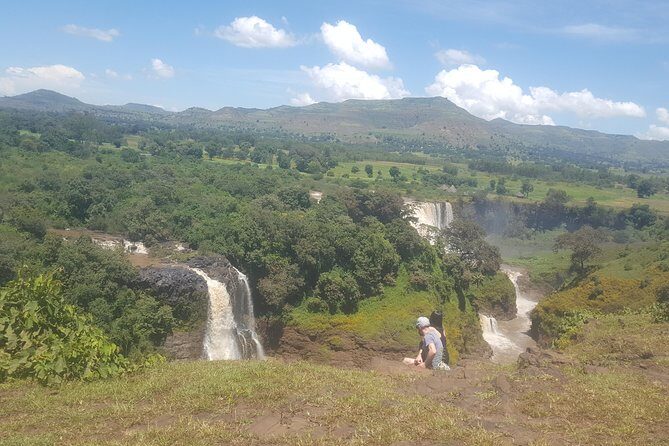
Your time in Addis Ababa starts with three hits that help you understand the country fast.
First is the Ethiopian National Museum. It gives context for why Ethiopia’s ancient story still matters in daily life. Even if you only get a short visit, it helps you avoid the common mistake of treating later sites as disconnected ruins.
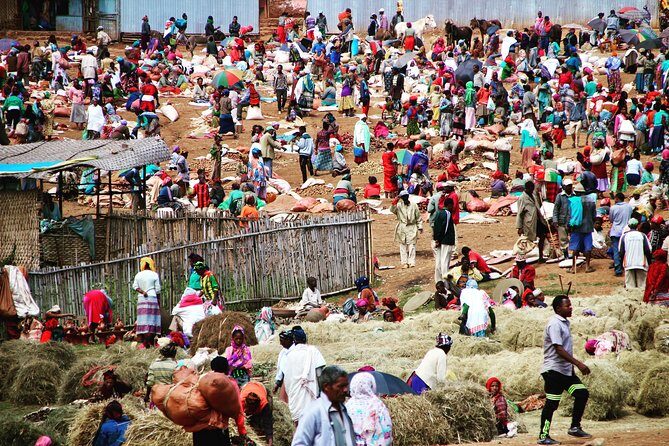
Next comes Merekato, the open-air market. This is where you get your bearings on modern energy: everyday commerce, loud bargaining, moving crowds. It’s not a museum stop. It’s a reality check.
Then you finish with a top view of Addis at Enetoto. That last stop is practical. It makes the city geography feel real, so you land with your mental map already started instead of scrambling.
Overnight stays keep you close to where you’ll begin the next leg of the journey.
Lake Tana monasteries and the Blue Nile Falls short hike
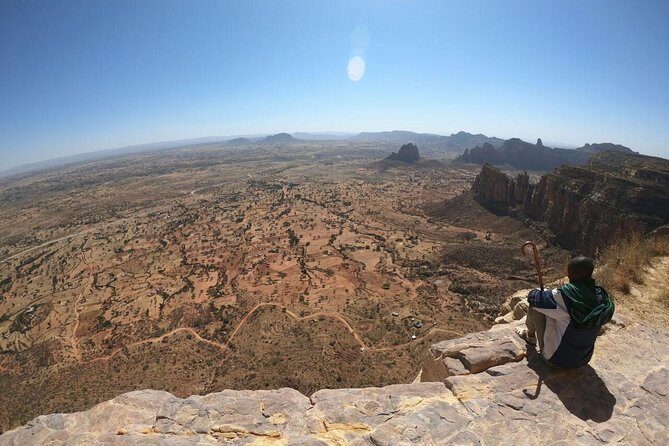
If you only remember one day as the most scenic switch, it’s this one.
Morning starts with a boat trip on Lake Tana, designed around visiting multiple Ethiopian Orthodox churches and monasteries. The wall paintings matter here. They’re not just decoration; they’re part of how Orthodox faith is taught and remembered. You get a chance to see named sites such as Ura Kidanmeheret, Azewa Mariyam, and Betre Mariyam, plus the area where the Blue Nile outlet leaves the lake.
The boat portion is listed as taking about 4 hours. That’s long enough to settle in, watch the lake change with light, and actually enjoy the pace instead of rushing. It also means you’re seeing religious sites from the water, which changes your perspective.
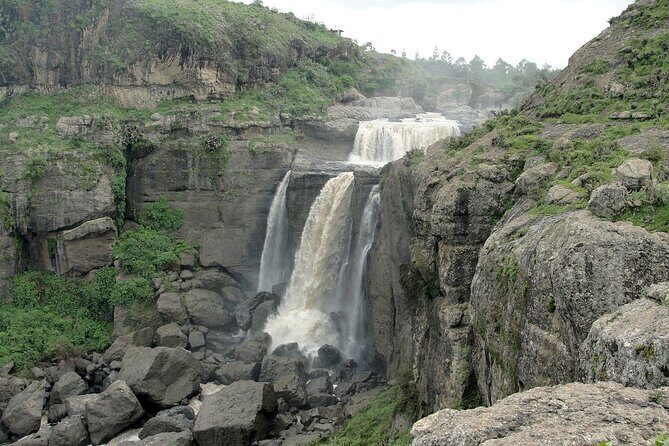
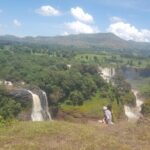
In the afternoon you drive to the Blue Nile waterfalls and take a short hike around the area. This is where you’ll feel the plan move from painted interiors to raw natural power. You get a bit of exercise without it turning into a full trek day.
Practical note: water and good shoes matter here. Even with a short hike, the ground can be uneven around waterfall areas.
Gondar’s Royal Enclosure, Fasilidas Pool, and Debre Birhan Selassie
Gondar is the kind of city you visit for “wow, this is specific.” The monuments don’t feel generic.
You drive in after breakfast from the Addis area, with the road through rural villages giving you a feel for Amhara life along the way. That drive is about more than transit. It helps you see that the culture around these UNESCO-level sites isn’t staged for tourists.
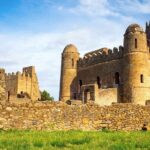
Once in Gondar, you hit the Royal Enclosure, known for its royal castles and the complex layout. You’re walking in a space tied to the Ethiopian imperial era, and the mix of structures helps you understand how the kingdom lived, ruled, and defended itself.
Then comes Fasilidas’s Pool. It’s still used for Timket celebrations today. That detail turns a historical site into a living calendar moment. You’re not just looking at what was once used; you’re learning what still matters.
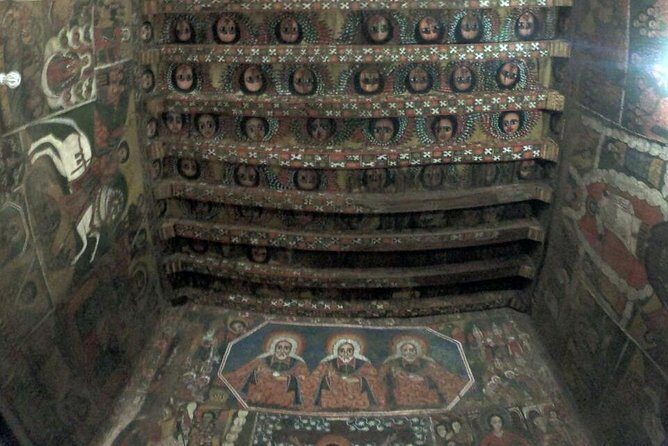
Finally, Debre Birhan Selassie church is a major highlight, especially for its famous ceiling. Even when you’re not an art expert, you’ll feel the impact once you’re inside and see how much work went into the ceiling.
This area is a good match for travelers who like monuments but also want faith, ceremony, and daily continuity woven in.
Simien Mountains National Park: ridge trekking, geladas, and walia ibex moments
Simien Mountains is where the trip stops being mostly “looking” and starts being “moving.”
You drive toward Simien Mountains National Park for about 2 hours, then you spend time trekking along the ridge. The plan lists 3 to 4 hours of trekking, and the description is clear: tough but rewarding. This is not the kind of walk where you can treat it as casual sightseeing.
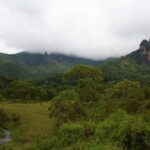
The payoff is the sense of scale. The terrain has gullies and pinnacles, and the ridge drops away toward the plains below. You’ll likely find yourself pausing often, even if you’re moving at a steady pace.
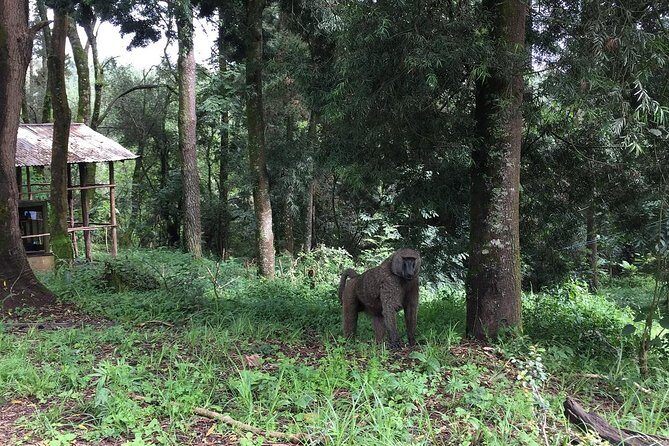
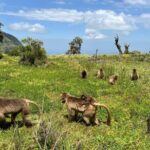
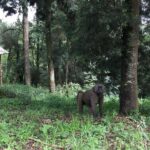
Wildlife is a real part of the draw here. The route mentions time among gelada monkeys and the chance to watch walia ibex on rock ledges. Those aren’t guaranteed, but planning for them changes how you look at the day. You’re walking with attention, not just covering distance.
Overnight is in Simien or Debark depending on logistics. Either way, you’ll be positioned for the next transfer north.
Axum: stelae fields, Queen of Sheba sites, and St Mary of Zion entry rules
Axum is ancient power you can stand inside.
The day’s structure gives you a full Axum overview: famous obelisks including a recently erected stelae returned from Italy, the Queen of Sheba’s Bath (fed year-round with water), King Bazen’s tomb, and the Queen of Sheba’s Palace area. These are named stops for a reason. They connect geography to legends and empire history.
You’ll also spend time at the Northern Stelae Field near St Mary of Zion Church. The scale of these stone markers is hard to understand from photos. Seeing them in person helps you grasp how Central Ethiopia communicated authority across centuries.
St Mary of Zion is the other cornerstone stop, and the rules there are not minor details. Men only are allowed to enter the old church. Access to the chapel where the Ark of the Covenant is kept is extremely restricted, allowed only for a specially chosen guardian monk. Women are not allowed into the chapel area.
This matters for your planning. If you’re traveling as part of a group with mixed access needs, talk it through before you arrive so nobody feels surprised on the spot.
Yeha, Debre Damo, and Wukro Chirkos: quieter ruins, a rope-climb, and cliffside faith
After Axum, the route keeps moving through Tigray’s layers, and it adds some stops that feel more remote than the big-name monuments.
First is Yeha, with ruins dating from the 8th to 5th centuries BC. It’s thought to be the capital of an earlier Ethiopian civilization before Axum. Even if you only get limited time among the stones, the point is clear: you’re seeing deeper roots, not just Axum’s era.
Next is Debre Damo monastery. Here’s the practical headline: the men’s-only access involves climbing up a 15-meter rope. That rope climb is a standout moment, physically and mentally. If you’re the kind of traveler who likes hands-on experiences (not just photo stops), this will likely be one of your strongest memories.
Then you visit Wukro Chirkos Church, another rock-hewn site. The route notes it as a stop through the state of Tigray with a church that’s part of the area’s long tradition of carving places of worship into rock.
This stretch of the trip tends to appeal to travelers who enjoy lesser-known heritage that still has a living religious role.
Lalibela: Northwestern and Southeastern church clusters up to Bet Giyorgis
Lalibela is the moment many people came for, and the day plan is designed to cover the churches in a way that feels coherent.
You drive early to Lalibela through small villages with sandstone homes. That road approach helps you slow down before you reach the rock church complex. It’s not a dramatic “arrive and run” situation; it gives you time to adjust to the setting.
For the church tour, the plan is split into clusters.
In the morning you visit the Northwestern cluster churches, including Bet Medhane Alem, Bet Maryam, Bet Meskel, Bet Danaghel, Bet Mikael, and Bet Golgotha. Entry is not permitted for women in that cluster, so plan around what you can and can’t enter.
After lunch you shift to the Southeastern cluster: Bet Gabriel-Rufael, Bet Merkorios, Bet Amanual, and Bet Abba Libanos.
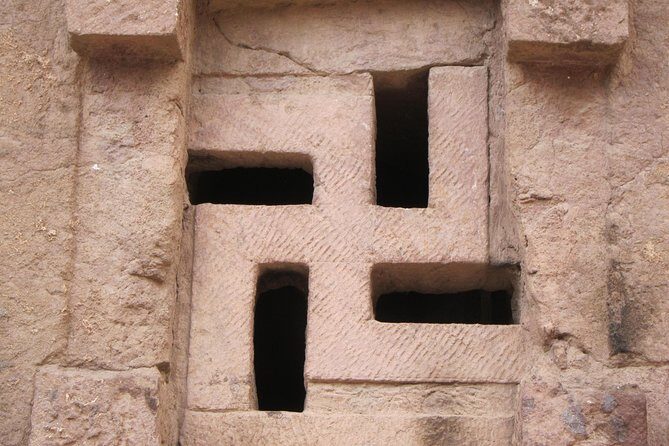
Then you end with Bet Giyorgis, the most famous church, built in honor of Saint George. That’s a smart finish. By then, you’ve already seen enough church interiors and carvings to appreciate the craftsmanship and symbolic design instead of arriving at the climax too early.
If you care about religious art and architecture, Lalibela delivers in a way few places can.
Price and logistics: what $4,300 likely means for value
The headline price is $4,300 per person for an approx. 10-day trip. That’s not cheap, but for this kind of multi-region route, you’re paying for travel coordination, guided site visits, and the heavy lifting of getting you from Addis through the north and back.
The included items listed are strong for value: all fees and taxes, bottled water, breakfast (6), dinner, and lunch is listed as included in one place while also marked not included in another place. That contradiction is worth your attention.
Also, the itinerary includes domestic flights (Addis Ababa to Bahir Dar, and a flight back from Lalibela to Addis Ababa), yet domestic flight is listed as not included. So before you treat $4,300 as all-in, confirm what you still have to add for flights and meals.
What you should feel confident about is that the big-ticket heritage entries are covered by the all-fees listing, and the schedule includes the essential transport between regions.
Guide quality: why Mass (Mastewal) matters more than the checklist
With tours like this, the “what” is famous. The “how” decides whether it feels meaningful or exhausting.
The guiding style described here is professional, disciplined, and strong on communication. In practical terms, that means you’re not left guessing. You get context for each site and clear guidance around what to expect.
That’s especially valuable at places with strict rules, like Axum’s St Mary of Zion and Lalibela’s clusters. If you’ve ever been stuck waiting while you try to sort out access rules on your own, you’ll appreciate having a guide handle it in a calm way.
It’s also a nice fit for first-time Ethiopia visits. A good guide helps you connect the dots between the museum start, the Orthodox monasteries, the royal sites, and the carved churches.
Practical tips before you go (based on the route’s demands)
This trip is doable for most travelers, but it has a few “pay attention” elements.
- You’ll have short hikes and a full ridge trek: Simien is the main physical day with 3 to 4 hours of trekking, and the Blue Nile includes a short hike.
- There are gender-based access limits at specific religious spaces: the St Mary of Zion chapel area in Axum and the Northwestern cluster churches at Lalibela.
- You’ll do a rope-climb at Debre Damo for men only, listed as 15 meters.
- Expect early starts and long driving days: the plan includes a full day drive to Lalibela and multiple transfers between regions.
- Bring realistic expectations for weather. The cancellation notes say the experience requires good weather, and if it’s canceled due to poor weather, you’ll be offered a different date or a full refund.
Finally, this is a private tour/activity, meaning it’s your group only. That usually makes pace and timing feel more flexible than large shared group tours.
Who should book 10 Days in Northern Ethiopia
I’d point you to this tour if you want a single, well-organized arc through northern Ethiopia’s must-sees, with enough time to take in each region instead of sprinting.
It’s a strong match for:
- First-time visitors who want a clear introduction across Addis, Lake Tana, Gondar, Simien, Axum, and Lalibela
- Travelers who like a mix of natural scenery and major heritage sites
- People who value disciplined guidance through access rules at religious sites
- Travelers who can handle a trek day and a long set of transfers without turning it into a complaint festival
It may not be the best fit if you need maximum flexibility, dislike long driving days, or need guaranteed access to specific church interiors regardless of local rules.
Should you book this tour?
I think it’s a good buy if you want the north in one confident package and you trust the guide to keep things running smoothly, especially around the sensitive church access rules. The combination of Lake Tana monasteries, Gondar’s living ceremony connection at Timket-related sites, Simien’s ridge trekking, and Lalibela’s church clusters is a rare blend.
Before you say yes, do two quick checks: confirm what you still pay for domestic flights and clarify the lunch inclusion contradiction. If those two items line up the way you expect, this is the kind of trip that turns Ethiopia from a list of names into places you remember clearly.
FAQ
How long is the tour?
The tour is listed as 10 days approximately.
Where does the tour start and end?
It starts in Addis Ababa, Ethiopia and ends back at the meeting point.
Is pickup offered?
Yes, pickup is offered.
Is this a private tour?
Yes. It’s described as a private tour/activity, and only your group participates.
What major places are included in the north of Ethiopia?
The route includes Addis Ababa (museum, market, and Enetoto view), Lake Tana monasteries and the Blue Nile Falls area, Gondar (royal sites and churches), Simien Mountains National Park, Axum (major monuments and St Mary of Zion), Yeha and Debre Damo, Wukro Chirkos Church, and Lalibela (eleven rock-hewn churches).
Does it include flights?
The plan includes flights between Addis Ababa and Bahir Dar, and also a flight back to Addis. Domestic flights are marked as not included, so confirm costs with the provider.
What kind of walking or trekking is included?
Simien Mountains includes trekking for about 3 to 4 hours along the ridge. The Blue Nile Falls day includes a short hike.
Are there restrictions for women at churches?
Yes. The itinerary notes that women are not allowed to enter the chapel where the Ark of the Covenant is kept at St Mary of Zion in Axum. It also notes that entry to the Northwestern cluster churches in Lalibela is not permitted for women.
What is the cancellation policy?
Free cancellation is available up to 24 hours in advance for a full refund. The notes also say the experience requires good weather, and if canceled due to poor weather you’ll be offered a different date or a full refund.