REVIEW · ADDIS ABABA
12- Day Historical Route of Ethiopia
Book on Viator →Operated by Enat Ethiopia Tours · Bookable on Viator
One place can feel like time travel. Ethiopia’s trail of UNESCO history and living faith, from Addis Ababa to Lalibela, is the kind of trip that makes you stop and stare at stone, paint, and bones. I especially loved the National Museum start in Addis, where you see the famous Lucy fossils, and the Lake Tana boat time that connects you to island monasteries and churches. One heads-up: this route includes long drives and a couple of optional walks, so you’ll want moderate stamina.
What makes this tour work for most people is the small size and the fact that you’re not figuring things out alone. With Enat Ethiopia Tours and a guide like Ashu coordinating your days, you get a smooth flow of flights, drives, and guided visits. The main drawback is pacing: some days are packed with driving before you get to slow down and actually look closely.
In This Review
- Key highlights you’ll notice quickly
- Addis Ababa: Lucy at the National Museum and the Entoto viewpoint
- Lake Tana: Boat time to Ura Kidane Mihret and the smoke of Tisissat Falls
- Gondar UNESCO stop: Walled Royal Enclosure, Fasiledas castles, and Timkat’s bathhouse
- Simien Mountains National Park: optional walk, geladas, and a camping night
- Crossing to Axum: long drives that pay off in the St Mary of Zion area
- Yeha and Adwa: from a moon temple to the mountains of resistance
- Tigray rock-cut churches near Gheralta and Wukro: why they stayed unknown until the 1960s
- The drive to Lalibela: countryside routes and the approach to the New Jerusalem
- Lalibela rock-hewn churches: granite engineering you can feel
- Price and pace: what $2,597 buys you in time and planning
- Who this 12-day historical route suits best
- Should you book Enat Ethiopia Tours for Ethiopia’s historical route?
- FAQ
- What is the price and duration of the 12-Day Historical Route of Ethiopia?
- Does the tour include pickup and private transportation?
- What’s included in the tour cost?
- Are domestic flights included?
- How big is the group?
- What cancellation options are available?
Key highlights you’ll notice quickly
- National Museum in Addis Ababa: a strong start with early hominid fossils, including Lucy
- Lake Tana by boat: Ura Kidane Mihret church and its Ge’ez illuminated bibles
- Gondar’s Royal Enclosure: Fasiledas castles and the bathhouse tied to Timkat
- Simien Mountains day: optional 1.5-hour walk plus chances at gelada baboons
- Tigray rock-cut churches: clusters at Gheralta and Wukro with churches still in use
- Lalibela’s engineering in stone: rock-hewn churches built from all sides of a rectangle, then finished inside and out
Addis Ababa: Lucy at the National Museum and the Entoto viewpoint
Your trip typically begins with a pick-up on arrival in Addis Ababa and a city introduction that helps you understand what comes next. First stop is the National Museum, where Ethiopia’s deep past is shown in a way that’s easy to grasp: fossils and bones of early hominids found in Ethiopia, including Lucy (about 3.5 million years old). It sets a tone that I like on a first visit, because the rest of the route is about civilizations and faiths that grew after that very ancient start.
After that, the tour returns to Addis near the end for a change of pace: a viewpoint from Entoto Mountain. You get panoramic views over Addis Ababa, with eucalyptus forests bringing a cooler, fresher feel than the city center. On a practical level, this matters because it gives you orientation. Once you see the layout from above, you understand how the city spreads and why some routes feel like they take forever.
One more detail I appreciate: the evening farewell includes a traditional restaurant meal with cultural songs, dances, and food and drinks. It’s a good final “closure moment” after days of driving and early starts.
You can also read our reviews of more historical tours in Addis Ababa
Lake Tana: Boat time to Ura Kidane Mihret and the smoke of Tisissat Falls
From Addis you fly north to Bahir Dar on the shores of Lake Tana. This part of the route is valuable because it breaks up the historical weight with something quieter and slower: water, islands, and churches that have been part of local religious life for a long time.
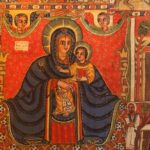
A highlight is the boat trip on Lake Tana aimed at monasteries and churches on the islands. One church visit is Ura Kidane Mihret on the Zeghie peninsula. I like this stop because it isn’t just about seeing a building. You get specific visual detail—colorful paintings of religious scenes under a thatched roof, plus an impressive display of illuminated bibles written in Ge’ez (the ancient religious language from which Amharic is derived). That language connection is one of those “wait, that makes sense” moments: you see how faith, history, and everyday culture connect.
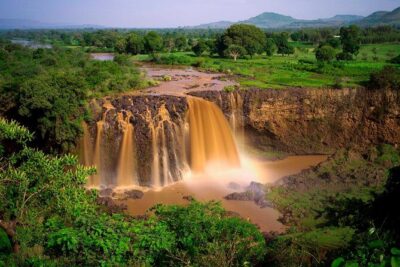
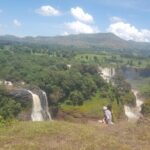
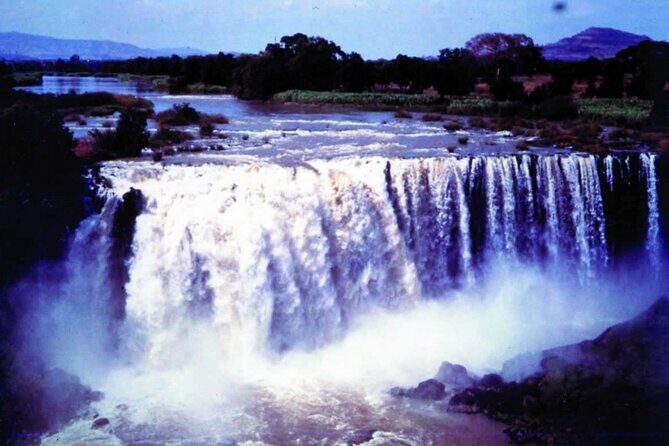
Then you shift gears to Tisissat Falls, Amharic for water that smokes. Even if you’ve seen waterfalls before, Ethiopia’s version tends to hit differently because of the elevation and the mountain-fed flow. It’s the kind of stop where a few minutes of just watching does more than another hour of sightseeing photos.
Gondar UNESCO stop: Walled Royal Enclosure, Fasiledas castles, and Timkat’s bathhouse
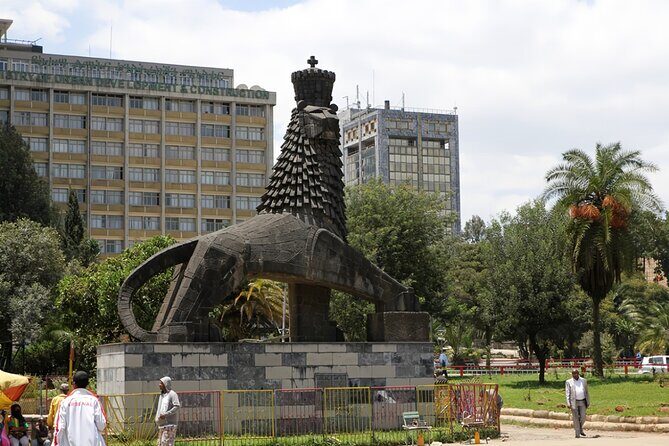
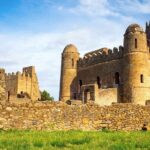
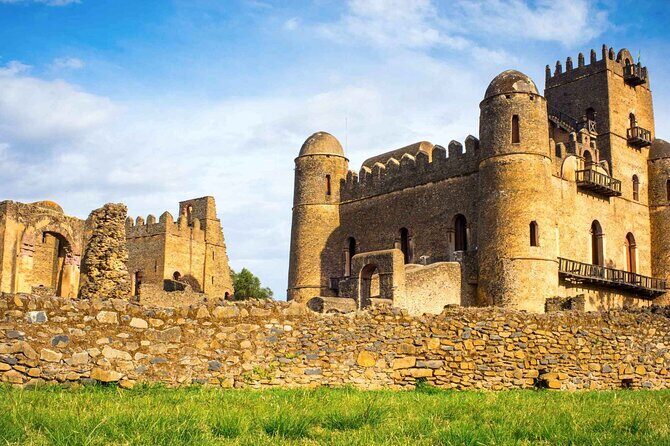
Next comes Gondar, the former capital of Ethiopia, and a big reason the route gets so much attention: the Royal Enclosure and its 17th-century castles are a UNESCO highlight. You drive north from Bahir Dar area to Gondar, and once you’re there you feel the shift from lake life to stone power.
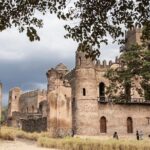
The key sights are the well-preserved castle structures inside the walled Royal Enclosure. The largest and best-known is the castle of King Fasiledas, with round turrets and wooden balconies. I also like the idea of visiting the bathhouse a mile or so outside town, called the Pavilion of Delight (and the Bathhouse of Fasil). It’s tied to how Ethiopians celebrate Timkat in January. That matters because you’re not just looking at ruins—you’re seeing how a place still connects to annual religious life.
A practical tip for this stop: the castles and enclosures are visually dense. Plan to take your time inside rather than treating it like a quick exterior photo loop. The best moments often come when you look up at turret shapes and wooden balcony details and then slowly trace how the complex is laid out.
Simien Mountains National Park: optional walk, geladas, and a camping night
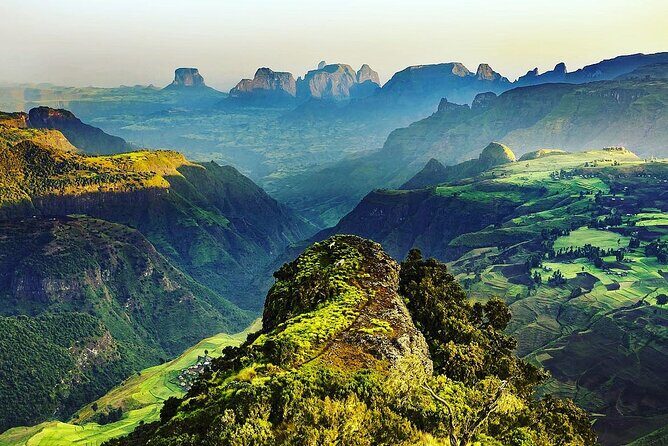
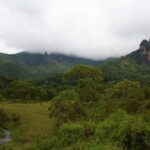
Heading into the Simien Mountains National Park is where the trip’s “nature + history” balance really shows. After breakfast you drive to Debark at the edge of the mountains, then go up into the ecosystem for spectacular views and wildlife potential.
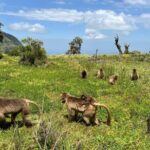
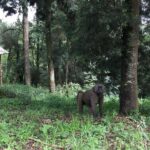
There’s an optional 1.5-hour walk in the park, described as mostly flat or downhill. This is where you might spot the endemic gelada baboons, klipspringers, lammergeyer vultures, and bushbuck. I like that the tour gives you both an optional activity and time for a relaxed walk around the Sankaber region. If you’ve got moderate physical fitness, this is a manageable way to experience the park without overcommitting.
The tour also reaches a maximum altitude of about 3,250 meters, and that’s something to take seriously for pacing. Don’t force a hard workout. Take breaks, drink water, and let your body adjust to the height.
Overnight is Simein Camping. That’s not the same as a hotel, so you should expect a more rugged night. If your idea of comfort means hot showers all the time, this is the part to plan for mentally.
Crossing to Axum: long drives that pay off in the St Mary of Zion area
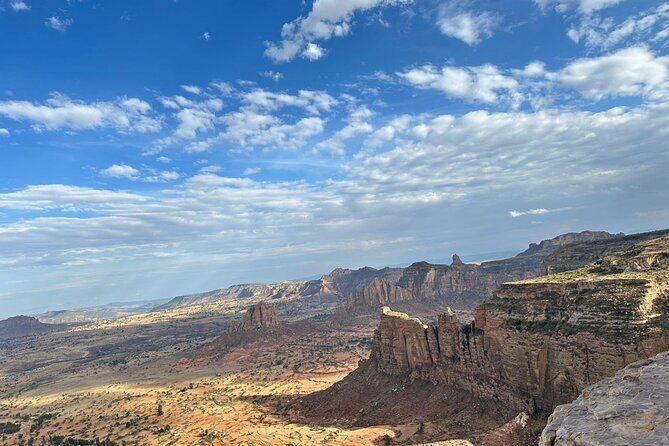
After Simien, you continue with a full day drive to Axum via lowlands of the Simien Mountains and the Tekeze River gorge. Yes, it’s a long route day. But Ethiopia’s roads can turn travel time into your own “moving viewpoint.” You get dramatic landscape in motion, with photo opportunities along the way.
Axum is where the ancient world feel becomes sharper. This UNESCO stop centers on Axum as the ancient capital of the Kingdom of Axum, once powerful in the region and connected to trading routes between the Mediterranean and India, with a major port at Adulis on the Red Sea.
The religious significance is also a key reason to love this stop. The tour frames Axum as the origin of Christianity in Ethiopia, and it includes the tradition that the Ark of the Covenant rests here. You also visit the old church of St Mary of Zion, described as one of the first churches in Sub-Saharan Africa around 330 AD, with ruins visible in the precinct.
Even if you’re not religious, this kind of site hits because it blends story and architecture. You’re looking at a physical footprint of centuries of belief, and that’s why Axum belongs on a historical route.

Yeha and Adwa: from a moon temple to the mountains of resistance
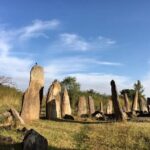
From Axum you head east to Yeha, described as one of Ethiopia’s oldest settlements, likely dating back about 3,000 years. The star attraction here is a large temple dedicated to the moon god Ilmuqah. I like Yeha because it shows the long arc of religion in Ethiopia, including how older sacred spaces can later shift in meaning.
The temple is connected to other Ilmuqah temples linked to Yemen across the Red Sea, which is a specific detail that gives this stop extra depth. You’ll also see that the temple was later converted into a church in the 6th century, and the façade includes friezes of ibex carved into the stone.
Then the tour continues to Adwa, set amid rugged mountains. The big historical point is that Ethiopians repelled a colonial power there, and the tour treats Adwa as a place of pride and first African resistance in that context.
This day is useful because it prevents Ethiopia from turning into a museum-only trip. You get ancient architecture on one side, and then a story of more modern political history on the other.
Tigray rock-cut churches near Gheralta and Wukro: why they stayed unknown until the 1960s
The next shift is into a rarely visited corner of Ethiopia, focused on Rock-cut Churches in the Tigray region. These architectural gems were created prior to the 16th century and were unknown to the outside world until the 1960s. That detail alone makes the stop feel special, because it means the experience isn’t “overexposed” by tourism.
The tour points you toward two clusters including Abreha We Atsbeha and Degum Selassie at Gheralta. It also includes the sandstone church of Chirkos at Wukro, with its cruciform pillars and barrel vaulted ceiling. What I’d call the emotional core here is the fact that many churches are still in active use by the Orthodox Christian community. That changes your mindset from sight-seer to guest.
The tour also highlights that about 150 churches are known, with all but a handful still active. You’re not just looking at preserved ruins; you’re seeing places that have real daily religious roles.
From there you proceed to Mekelle for overnight, which gives you a base before moving down toward Lalibela.
The drive to Lalibela: countryside routes and the approach to the New Jerusalem
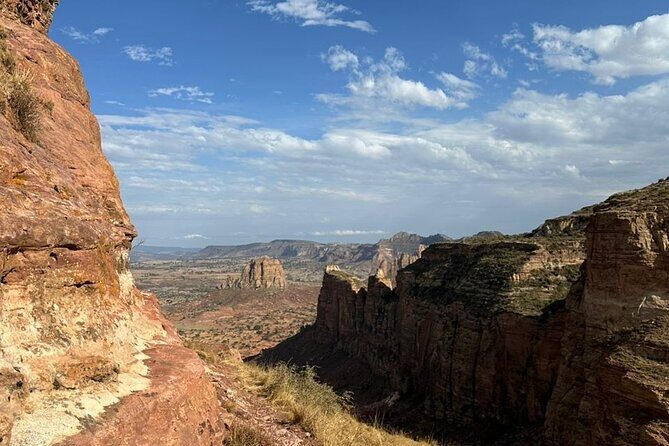
Next is the big travel day toward Lalibela, with a full day drive through stunning countryside. The route is described as traveling south between mountains to the west and the start landscape of the Danakil Depression to the east. Even without getting too technical, this matters because it hints at why the region looks so different from one side to the other.
Arriving in Lalibela, you’re not rushed into the next “big thing” immediately. You check in, and the day is set up so you can rest before the church visits start in the morning.
It’s smart pacing. Lalibela is one of those places where you’ll want your eyes fresh. The stone work is detailed, and you’ll miss things if you’re too tired.
Lalibela rock-hewn churches: granite engineering you can feel
Lalibela is UNESCO, and it’s treated as the highlight of the religious and architectural side of Ethiopia. The tour begins with visiting the first cluster of rock-hewn churches, built about 800 years ago by King Lalibela and known as the New Jerusalem.
Here’s the architecture detail I think you’ll actually appreciate when you’re standing there: the churches were generally excavated on all sides of a rectangle, leaving a large block of granite isolated in the center. That central rock was then shaped to form both inside and out. This is why you see such precise forms. It isn’t carved from the outside like a statue. It’s engineered by removing and shaping stone like a sculpture plus a construction site.
When you move between churches, you’ll likely notice how the tour organizes the visits into clusters. That helps you avoid the fatigue of trying to see every single carved church back-to-back.
The second day of Lalibela churches includes the church of Yimrhane Kristos first. This one is described as a masterpiece of Axumite wood and stone construction, known for interior decoration and a wooden coffer ceiling inlaid with hexagons and medallions with figurative and geometric motifs. It’s the interior details that many people miss if they treat the churches like quick photo stops, so slow down here.
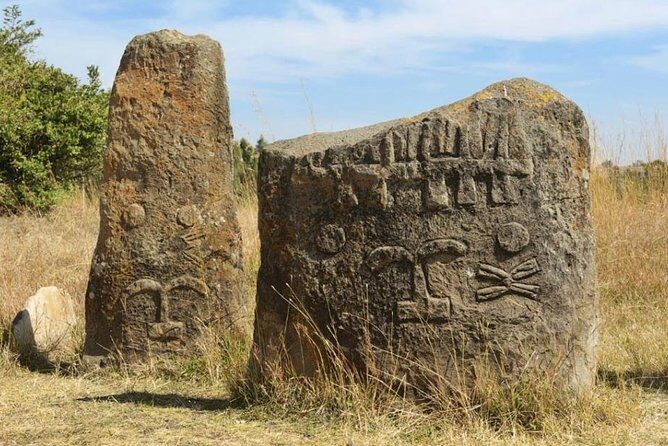
Then you see the remaining rock-hewn churches including Bete Gabriel and Rafael, Merkorous, Emanuel and Abba Libanos. Bete Emanuel is called out as the best in this group, with unique Axumite building features like indentations on the walls, symbols of multi-story buildings taken from Axum stelae, monkey heads, and false windows.
If you enjoy architecture, this is where you’ll feel the tour’s strongest payoff: you start to connect Ethiopia’s different eras—Axumite elements show up in stone carvings and design choices even hundreds of miles apart.
Price and pace: what $2,597 buys you in time and planning
At $2,597 per person for about 12 days, this tour isn’t cheap. But it’s also not just paying for a driver and hope. You’re paying for private transportation, air-conditioned vehicles, professional guide support in English and multiple other languages, and all fees and taxes. Domestic flights are included, which is a major time-saver in Ethiopia.
You also get accommodation with breakfast, plus lunch and dinner components listed as 8 breakfasts, 10 lunches, and 2 dinners. That matters because food logistics can turn chaotic fast on your own. Even when you still want extra snacks or personal meals, the baseline is taken care of.
The pace is still real. Long drives show up more than once, and one or two optional activities can require moderate fitness. If you prefer a very slow, unstructured trip, this might feel busy. If you want history, clean routing, and minimal decision-making, the value makes more sense.
Group size is max 4 travelers, which tends to improve flexibility and reduces waiting around.
Who this 12-day historical route suits best
This tour is a good fit if you:
- Want a first-timer’s, well-structured Ethiopia plan that hits major UNESCO sites
- Care about the connection between ancient civilization and modern Orthodox Christian practice
- Prefer private guidance over joining big group buses
- Are comfortable with long travel days and can handle an optional walk
If you’re chasing only one type of travel (only cities, only beaches, only hiking), this route might feel like it switches gears often. But if you like variety with a strong historical through-line, it’s an efficient way to see a lot without feeling scattered.
Should you book Enat Ethiopia Tours for Ethiopia’s historical route?
I think you should book if you want Ethiopia’s big history points handled for you: Addis’s museum start, Lake Tana’s monastery-linked church visits, Gondar’s royal stone power, Simien’s wildlife possibility, Axum’s ancient Christian roots, Tigray’s rock churches in active use, and Lalibela’s stone-carved churches with real interior detail.
The main reason not to book is if you hate driving days or you expect hotel-comfort every night. Simein Camping is a different feel, and the route asks you to keep moving.
If you’re okay with that trade, this tour offers solid value for your time because it bundles domestic flights, private transport, and expert guidance into one plan led by Ashu and the Enat team.
FAQ
What is the price and duration of the 12-Day Historical Route of Ethiopia?
The tour costs $2,597.00 per person and runs for approximately 12 days.
Does the tour include pickup and private transportation?
Yes. Pickup is offered, and private transportation with an air-conditioned vehicle is included.
What’s included in the tour cost?
Included are domestic flights, a professional English-language guide (and guides in Spanish, French, German, Italian), accommodation with breakfast, and listed meals including breakfast, lunch, and some dinners. All fees and taxes are included as well.
Are domestic flights included?
Yes, all domestic flights are included.
How big is the group?
This tour has a maximum of 4 travelers.
What cancellation options are available?
You can cancel for free up to 24 hours in advance for a full refund. If you cancel less than 24 hours before the start time, the amount paid is not refunded.