Addis Ababa changes gear fast on this day trip. You’ll bounce from Mercato Market noise to museum quiet, then end on a hilltop sunset from Mount Entoto—all in about a half-day workday worth of time.
Two things I especially like: the hands-on Ethiopian food moment at Zoma Museum (cooking, tasting, and a coffee ceremony), and the way the National Museum of Ethiopia connects Ethiopia to the world story of human evolution. It’s a strong mix of what you see, what you taste, and what you learn.
The only real drawback is the crowd level—Mercato can feel intense. If you don’t enjoy packed streets and loud bargaining, you’ll want to pace yourself and keep your energy for the calmer stops.
In This Review
- Key highlights worth planning for
- A day that strings Addis Ababa’s story from market to museum to sunset
- Getting picked up, keeping the 8-hour clock realistic
- Mercato Market: where Addis smells like commerce and recycling
- Zoma Museum: permaculture peace, lunch, and real cooking lessons
- Bata Mariam Church and the Mausoleum of Menelik II: turtles, tombs, and a surprising art detail
- National Museum of Ethiopia: meeting Lucy and the human story in context
- Mount Entoto and the Entoto skyline sunset: capital history from the ridge
- Price and value: why $75 can feel fair for a full cultural day
- Who this tour fits best (and who should choose a slower plan)
- Final call: should you book Hidden Treasures of Addis Ababa?
- FAQ
- How long is the Hidden Treasures of Addis Ababa tour?
- What is included in the price?
- Do you get pickup and drop-off?
- What are the main stops during the day?
- Is this a private tour or a group tour?
- Is coffee part of the experience?
- What’s the cancellation policy?
Key highlights worth planning for
- Mercato Market’s two faces: classic open-air selling plus a visible recycling market.
- Zoma Museum’s break from the city: permaculture gardens, a small urban farm feel, and lunch.
- Coffee ceremony details you can smell: roasting and incense on charcoal, paired with tasting.
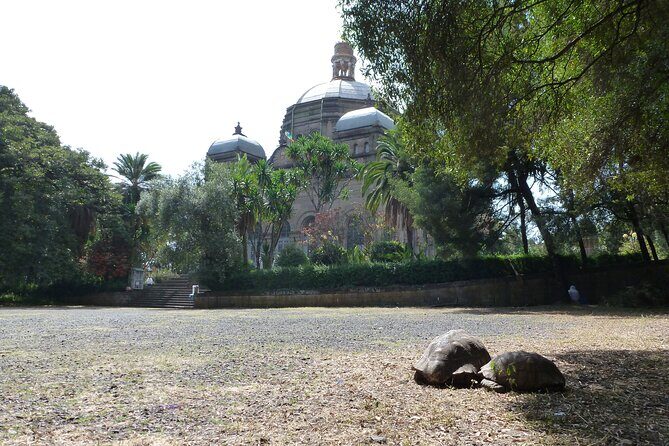
- Menelik II beneath Bata Mariam Church: royal tombs and giant turtles in the compound.
- Entoto sunset with capital history: ridge views plus a museum stop before the skyline glow.
A day that strings Addis Ababa’s story from market to museum to sunset

This tour is built like a good meal: you start with something loud and immediate, you slow down in the middle, and you end with a view that makes everything feel worth it.
You get a full sweep of Addis Ababa that goes beyond the usual “see a landmark, take a photo, move on” rhythm. The day is anchored by food and culture, but it also covers the capital’s origins and Ethiopia’s long human timeline—so you finish with a clearer mental map of the city.
And yes, the pace is active. You’ll be moving between sites most of the day, which is great if you’re on a tight schedule (hello, layovers), but it’s not the choice if you want a laid-back stroll with zero pressure.
You can also read our reviews of more food & drink experiences in Addis Ababa



Getting picked up, keeping the 8-hour clock realistic
The tour runs about 8 hours, with a start window between 8:30 AM and 9:30 AM. That matters in Addis Ababa because morning lighting is good for photos, traffic can shift fast, and several stops are inside spaces where you’ll want enough time to actually look.
Pickup is offered from your hotel or a place you choose, and you’re dropped back at the end. It’s also a private format, meaning it’s only your group (even if the operator mentions group discounts). For me, that private setup is key for comfort: you can ask questions without feeling rushed, and you can adjust on the fly if a site feels too crowded or you want a little more time at a museum.
What’s included helps the day feel smoother:
- Private transportation
- Snacks and bottled water
- Coffee and/or tea
- Admission tickets for the stops
What’s not included is straightforward: alcohol and souvenirs/personal expenses. If you like to buy small gifts or enjoy drinks during breaks, you’ll want to plan for that separately.
Practical tip: wear comfortable shoes. Even if the driving does a lot of the heavy lifting, you’ll still do walking inside markets, church compounds, and museum areas.
Mercato Market: where Addis smells like commerce and recycling
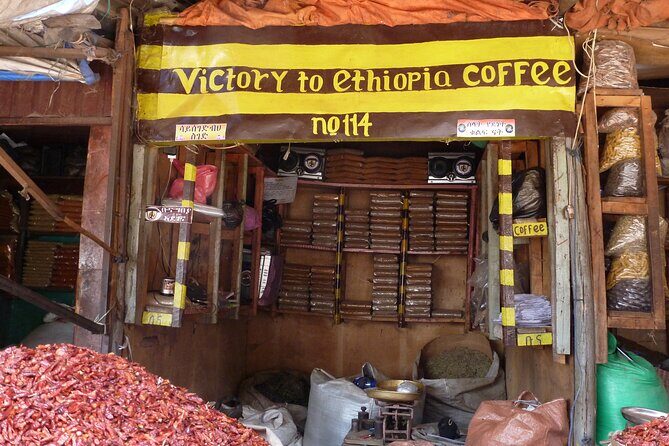
Your first stop is Mercato Market, often described as the biggest open-air market in Africa. In real terms, that means you’re stepping into a maze of sellers and shoppers where the energy never really stops.
You’ll see familiar market staples like:
- Basketry and pottery
- Livestock being sold
- A wide spread of everyday goods moving through hands constantly
But Mercato’s extra value is that it doesn’t feel one-note. There’s also a recycling market, where different items are made from waste. That detail changes how you see the place. It stops being just a tourist “look at the market” stop and becomes a snapshot of how people solve everyday problems and keep resources in use.
One caution: it’s crowded and lively, so it can be mentally loud. If you’re easily overwhelmed by noise or dense foot traffic, treat Mercato like a short, focused visit rather than an hours-long wander.
Good news: the day is designed to keep you from staying in that intensity too long. You’re there about 1 hour 30 minutes, long enough to get the feel, short enough that you won’t feel cooked by the time you reach the next stop.
Also, in the way the guide runs the day, you may sometimes get a better view of the action from a higher point (like a rooftop restaurant nearby) rather than only being down at street level. That’s a smart add-on because it helps you understand the scale.
Zoma Museum: permaculture peace, lunch, and real cooking lessons
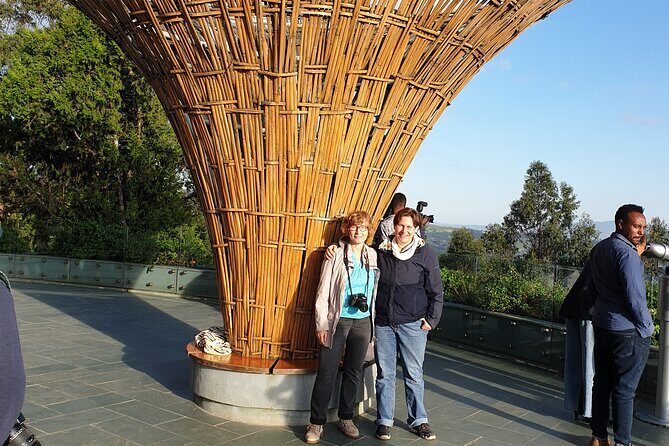
After Mercato, Zoma Museum feels like someone turned down the volume.
You’ll have a longer stop here—about 2 hours 30 minutes—and it’s not just “sit in a café and rest.” The museum grounds include a permaculture garden, plus false banana trees, herbs, and a sense of an urban farm right inside the city.
For me, this is the most satisfying pacing break on the itinerary. You’re still in Addis, but the environment shifts from trading and shouting into smells of plants and shaded paths. It’s a reminder that Addis isn’t only concrete and traffic.
Food is the highlight:
- You’ll see how traditional Ethiopian food is prepared
- You’ll get a chance to try it
- Then comes the coffee ceremony
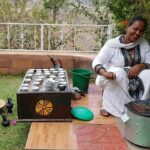
The coffee ceremony part is where this stop gets extra memorable. You’ll see coffee roasted and prepared, while incense is burned using a traditional charcoal stove. When you’re in the middle of it, you understand that the ceremony is not just a drink—it’s a sensory ritual with smell, warmth, and time.
My advice: plan to be curious, not rushed. Ask simple questions like what you’re tasting and why it’s served that way. You’ll get more out of the coffee moment if you treat it like a small cultural lesson, not just a caffeine break.
Bata Mariam Church and the Mausoleum of Menelik II: turtles, tombs, and a surprising art detail
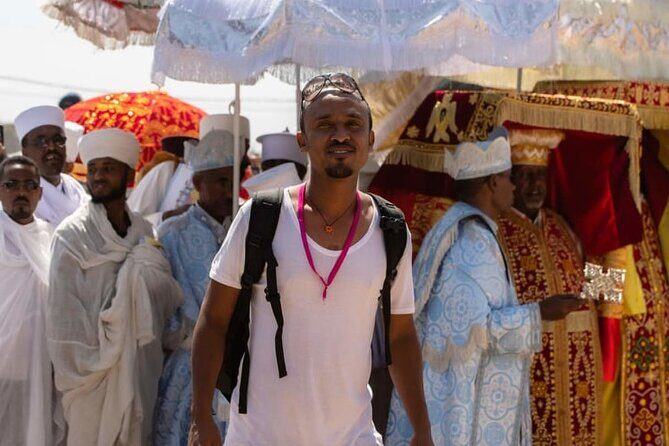
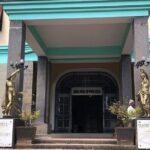
Next up is the Mausoleum of Menelik II, located in the old Bata Mariam Church compound. This stop is about 1 hour and it’s visually memorable in a very Addis way.
First, the compound has giant turtles—a strange, wonderful detail that makes the place feel alive instead of purely ceremonial. It also helps you slow down. When you’re focused on the turtles, the tombs and royal story start to feel less like a checklist item and more like a place where history still has a physical presence.
Under the church, you’ll find the tomb of Menelik II, described here as the founder of Addis Ababa, along with tombs of other royal family members. There’s also mention of an original painting Michelangelo. Whether you’re a serious art person or not, the fact that this kind of reference exists in a church setting makes the stop feel unexpected.
Balance point: this is a religious and historic space, so keep your behavior respectful. If you’re used to fast photo stops, switch to slower looking. You’ll get more out of the time you spend there.
A few more Addis Ababa tours and experiences worth a look


National Museum of Ethiopia: meeting Lucy and the human story in context
Then you roll into the National Museum of Ethiopia, with about 1 hour on the clock.
This is where the day shifts from “capital origins” to “deep human story.” The museum explains the evolution of mankind, using examples connected to Ethiopia. The big emotional anchor is Lucy, described as 3.2 million years old.
Even if you don’t know the science, the impact here is practical: Ethiopia is not only a place with history; it’s a place with a huge part of the human timeline. If you want a grounded sense of why Ethiopia is treated as important on a global level, this stop does that quickly and clearly.
Drawback to consider: one hour is enough to feel the museum’s main themes, but not enough for a long, study-style visit. If you’re the type who wants to read every label slowly, you might wish you had more time here.
But for a single-day “hidden treasures” concept, it’s the right length. It keeps the day moving while still giving you that major museum anchor.
Mount Entoto and the Entoto skyline sunset: capital history from the ridge
To close the loop, you head to Mount Entoto, at the entrance of Addis Ababa. This is about 2 hours, and it’s the perfect ending because it lets you see the city instead of only learning about it.
You’ll explore:
- A first palace associated with the founder of Addis Ababa
- A museum displaying Ethiopian history
- And then the sunset view over the Addis Ababa skyline
The skyline part is where the tour earns its name. After Mercato’s pressure and Zoma’s calm, ending on Entoto gives you a sense of scale. You can look down and mentally connect the day’s pieces—people, food, religion, and power—to the city layout.
Practical note: bring a layer or something warm for the evening if you run cool. The tour is in Addis, and even when daytime feels warm, sunset can feel sharper on exposed ridges.
This is also a good moment to ask your guide to explain anything that clicked at earlier stops. The view helps your brain organize what you learned instead of leaving it as separate fragments.
Price and value: why $75 can feel fair for a full cultural day
At $75 per person, this tour isn’t trying to be a bargain-basement budget item. It’s a full-day package that combines transport, multiple sites, and multiple “hands-on” cultural elements.
Here’s why that price can make sense:
- You’re paying for private transportation across several areas of the city.
- Admission tickets for each stop are included.
- You also get snacks, bottled water, and coffee/tea, plus food tasting during the Zoma Museum segment.
- The itinerary includes both high-energy (Mercato) and slower reflective stops (Zoma gardens, museums, church compound).
What you should watch: because the day is packed, it’s value-maximizing if you actually want to see all of these themes in one go. If you only care about one or two stops, you might compare it mentally to booking only a museum or only a market tour. But if you want a “get your bearings” day, this one is built for that.
Also, a lot of the praised experience centers on the guide running the day with flexibility. If you have questions, specific interests, or a time constraint, you’ll likely feel that personalization in the pacing.
Who this tour fits best (and who should choose a slower plan)
This is a smart fit if you:
- Have a layover or limited time in Addis Ababa
- Like food and culture as much as museums
- Want a day that includes both Ethiopia’s famous human story and the capital’s origin story
- Enjoy the contrast between lively markets and peaceful garden spaces
It may not be your best match if you:
- Hate crowded environments (Mercato can be intense)
- Want a slow, open-ended schedule with no time constraints
- Are traveling with mobility challenges and you expect minimal walking and minimal stairs (the tour doesn’t state accessibility details)
Most travelers can participate, and the operator frames it as suitable for different ages. Still, the itinerary includes market time, church compound time, and museum time, so plan for some movement.
Final call: should you book Hidden Treasures of Addis Ababa?
If you want a single day that mixes Mercato Market, Zoma Museum food and coffee, the Menelik II story at Bata Mariam, Lucy at the National Museum, and a sunset ending on Mount Entoto—then yes, this is a strong booking.
I’d skip it only if you’re very crowd-sensitive or you’d rather spread Addis Ababa out over multiple days. Otherwise, this tour is one of the more efficient ways to leave with both better context and better taste in your memory.
FAQ
How long is the Hidden Treasures of Addis Ababa tour?
It runs for about 8 hours.
What is included in the price?
Private transportation, snacks, bottled water, coffee and/or tea, and admission tickets for the tour stops.
Do you get pickup and drop-off?
Yes. Pickup is offered from your hotel or another place you prefer, and you are dropped back there after the tour.
What are the main stops during the day?
Mercato Market, Zoma Museum, the Mausoleum of Menelik II (in Bata Mariam Church), the National Museum of Ethiopia, and Mount Entoto.
Is this a private tour or a group tour?
It’s private. Only your group participates, and there are also group discounts.
Is coffee part of the experience?
Yes. The itinerary includes an Ethiopian coffee ceremony at Zoma Museum, and coffee and/or tea is included.
What’s the cancellation policy?
You can cancel up to 24 hours in advance for a full refund. If you cancel less than 24 hours before the start time, the amount paid is not refunded.