REVIEW · ADDIS ABABA
Addis Ababa City Tours With Cocking Class of Ethiopian Food
Book on Viator →Operated by Aman Ethiopia Tours And Travel Agent · Bookable on Viator
Food and history, then you eat.
This one-day Addis Ababa plan strings together a museum inside a former palace and a real Ethiopian cooking-and-coffee experience that goes past the usual sightseeing script. You start with the Ethnological Museum, then head to Merkato for ingredients, and end at a staff home where injera and classic dishes come together at the table.
I like that the route is built for understanding daily life, not just taking photos. You also get guided context while you move through the city’s big public spaces, so lunch (and the coffee ceremony) feels like part of the story, not a random stop. The main drawback to flag is that museum hours can affect your day, so if you’re on a tight layover window, ask about timing for your specific day and day of week.
In This Review
- Key highlights you’ll feel fast
- Addis Ababa in one long day: how the pieces fit
- Ethnological Museum: a university museum that used to be a palace
- Merkato: the scale of an open-air city within a city
- From market ingredients to home cooking: injera, shiro, mesir wot
- Ethiopian coffee ceremony: more than caffeine
- Getting value from $90: what’s included and what you should budget for
- The guides people remember: Joseph, Yoseph, Jocy, and George
- Who should book this Addis Ababa food tour
- Should you book this tour?
- FAQ
- How much does the Addis Ababa city tour with Ethiopian food cost?
- How long is the tour?
- Where do we meet, and is pickup offered?
- What’s included in the price?
- What Ethiopian dishes are part of the cooking experience?
- Is an Ethiopian coffee ceremony included?
- Is dinner included?
- What if my plans change or the weather is bad?
Key highlights you’ll feel fast

- A museum with royal roots: The Ethnological Museum sits on the Addis Ababa University campus and was once the Emperor Haile Selassie palace.
- Merkato scale, explained: You’ll see how Ethiopia’s largest open-air market was shaped by history and how many people it employs.
- Shopping for lunch like locals: You buy key ingredients at the market before heading to the cooking stop.
- Hands-on Ethiopian classics: Injera, shiro, and mesir wot are the focus, with Ethiopian coffee at the end.
- A guide who keeps the day coherent: The English-speaking guide links each stop so you understand why it matters.
Addis Ababa in one long day: how the pieces fit
This tour is designed for the kind of traveler who has limited time and wants the day to mean something. You’re not just ticking off places. You’re moving from a cultural museum tied to university scholarship and imperial history, to the sheer energy of Merkato, to a home cooking session where you learn what Ethiopian food tastes like when it’s made with care and served the way people actually eat it.
You’ll also get a car with a professional driver, which matters in Addis Ababa. It means you’re not spending your limited hours fighting traffic or figuring out routes. Instead, your guide can spend the time giving you useful context: what you’re looking at, what you’re about to eat, and how the city’s daily rhythms connect.
At $90 per person for a day that runs about 1 day 10 hours, the value is in the package. You’re getting museum entrance, market ingredient costs, guide time, transport, and a meal plus Ethiopian coffee. If you tried to assemble this yourself, you’d still pay for a driver and a guide (or you’d spend hours figuring it out), and you’d likely pay more for organized museum access and a structured food experience.
The day does have one cultural note to respect: injera is eaten with your fingers. If you’re uncomfortable with that style, bring patience—and be upfront with your guide. People can usually help you adjust without making it awkward.
You can also read our reviews of more food & drink experiences in Addis Ababa



Ethnological Museum: a university museum that used to be a palace

Your first major stop is the Ethnological Museum, and it’s a smart opener. It sets the tone: Ethiopia here isn’t just a destination, it’s a living culture with deep roots and organized study.
The museum is described as the first university museum in Ethiopia. It holds anthropological, musicological, and cultural objects—so it’s not only about artifacts in glass cases. You’ll get a sense of how culture gets studied, collected, and explained. And location matters: it’s on the main Addis Ababa University campus, specifically the Institute of Ethiopian Studies area.
Then comes the wild detail that makes the building feel like more than a museum. The palace connection is real. The museum is in what used to be the palace of Emperor Haile Selassie. That means you’re walking through a space with political and historical weight, while your guide helps connect that background to what the museum displays.
One practical consideration: don’t assume museums always run on your schedule. One past pattern from similar city days is that the museum can be closed on certain days (like Mondays). Your tour operator should be able to guide you on the plan for your specific travel day, so if you’re on a short layover, confirm your museum timing before you commit.
Merkato: the scale of an open-air city within a city

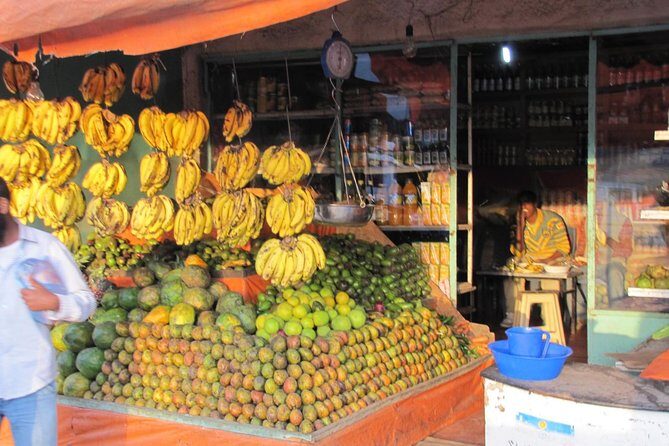
Next you head to Merkato, one of Addis Ababa’s most important experiences if you want the real pulse of the city. It’s an open-air market established by the Italians around 1937, and the size figures are the kind that make you stop and look again.
Merkato covers several square miles and employs an estimated 13,000 people in about 7,100 business entities. That’s not just “a big market.” It’s closer to a neighborhood economy—one that moves constantly and pulls in shoppers and sellers from many directions.
Your guide doesn’t just drop you into the chaos. The point of the Merkato stop here is practical: you buy important ingredients for the cooking portion of the day. That changes how you experience the market. Instead of wandering randomly, you’re shopping with purpose—looking for items that will become injera accompaniments like shiro and mesir wot.
A drawback to consider is simple energy management. Merkato is huge. Even with a guide helping you stay oriented, you’ll likely walk more than you expect. If you’re arriving from a red-eye or have limited mobility, tell your guide how you’re feeling early so the pace can be adjusted.
From market ingredients to home cooking: injera, shiro, mesir wot
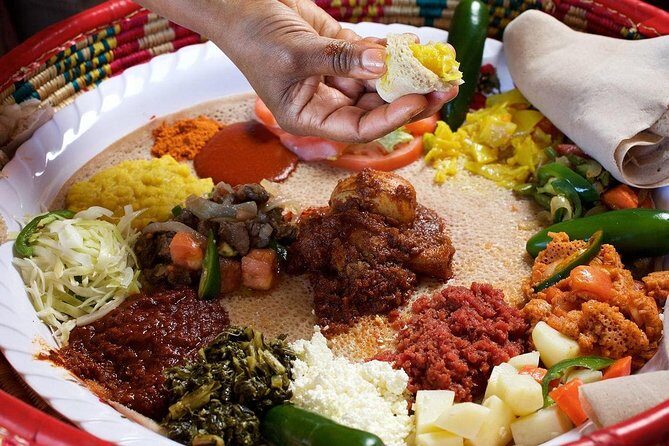
After the market, you go to a staff house for the cooking portion. This is where the tour earns its name, because it turns “food sightseeing” into an actual food moment. You’re not only tasting dishes. You’re learning how to connect ingredients to what ends up on the table.
Here’s what’s planned in the core menu:
- Injera (Enjera): Ethiopia’s national staple. You eat with your fingers, using injera as the base for scooping. This is a key cultural move, not just a serving style.
- Shiro: A chickpea powder-based dish, usually flavored with Ethiopian spices and often served as a warm, comforting meal.
- Mesir wot: Split red lentils simmered in a spicy berbere sauce. The color and spice level are part of what makes it memorable.
What makes this structure valuable is the sequence. You see the market, pick up ingredients, and then you get the “why” of the dishes. Even if you don’t cook yourself start-to-finish, the experience helps you understand how Ethiopian food works: spice blends, lentils, chickpeas, and the role injera plays as both plate and tool.
One more thing to know before you go: cooking at a home stop can feel casual and cozy compared to a restaurant meal. That’s usually a positive. But if you’re expecting a polished, staged event, you might find it more like being welcomed into someone’s routine. The payoff is that you’ll likely leave with a stronger sense of how Ethiopians feed family and guests day-to-day.
If you’re traveling with dietary restrictions, the plan names specific dishes rather than offering a menu of alternatives. So if you have allergies or strict limitations, ask questions ahead of time and don’t wait until you’re seated.
Ethiopian coffee ceremony: more than caffeine
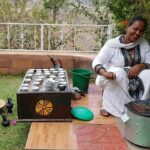
If there’s one moment that tends to stick with people, it’s the Ethiopian coffee ceremony. This tour includes it as a centerpiece ending, after the meal.
The coffee ceremony is not described in step-by-step detail here, but you can expect it to follow the Ethiopian tradition of taking the process seriously: preparing, presenting, and letting the moment unfold as a social ritual. You’ll also get Ethiopian coffee with lunch, so you’ll taste coffee twice in different contexts—first as part of the meal, then again as the ceremony finale.
This is a meaningful way to end the day because it slows you down after a long sequence of museums and market walking. It turns the final hour into something reflective. You’re not rushed out. You’re given space to sit, ask questions, and understand how hospitality shows up in daily life.
If you’re a coffee person, pay attention to how the guide explains it. Even small details—like how people treat coffee as a welcoming act—add texture to the day beyond what you’d get from a standard restaurant order.
A few more Addis Ababa tours and experiences worth a look


Getting value from $90: what’s included and what you should budget for

Let’s talk money and why it’s reasonable.
At $90 per person, you’re paying for:
- Entrance fee and food ingredient pricing from the market
- Car with a professional driver
- English-speaking professional guide
- Lunch with a bottle of water and Ethiopian coffee
What’s not included:
- Gratitude/personal expenses
- Dinner
- Any alcoholic drinks
So the big win is that the “hard parts” are already handled: you don’t have to arrange transport, navigate museum logistics, or calculate ingredient costs. You’re also not stuck just eating a meal with no context. The guide connects the market ingredients to what you eat at the home cooking stop.
For a layover traveler, this matters a lot. A long connection can feel like wasted time unless you can turn it into something structured and safe. This tour’s start point at Bole Airport is especially useful when you want to avoid another taxi run or uncertainty.
My practical advice: plan to eat dinner elsewhere or not at all on tour day. Since dinner isn’t included, you’ll want to avoid accidental starvation. The lunch plus coffee should help, but Merkato and home cooking still add up to a full-day calorie load.
The guides people remember: Joseph, Yoseph, Jocy, and George
A funny thing happens on city tours: the same route can feel totally different depending on the guide. On this kind of day—museum, market, home cooking—the guide isn’t a bonus. They’re the translator of the whole city.
Names that show up as strong picks include Joseph and Yoseph. You’ll also see Jocy and Neway associated with tours, with George showing up as a frequent driver mentioned for punctuality and smooth transport. If you have the chance to request a specific guide, Joseph is repeatedly called out as a great match for visitors who want lots of answers while still having time to enjoy each stop.
What to look for, regardless of the guide name:
- Clear explanations that help you understand why Merkato matters, not just where it is
- A pace that feels leisurely enough to ask questions
- Comfort in handling practical needs, like keeping you oriented and safe around busy areas
Who should book this Addis Ababa food tour
This tour fits best when you:
- Have limited time in Addis Ababa and want a full day of meaningful highlights
- Want Ethiopian food experiences that go beyond ordering in a restaurant
- Like the idea of learning through context: museum history, market shopping, and then home-style cooking and coffee
It can also work well on a long layover. The schedule is built for airport pickup and a complete day loop. Just remember that museum hours can vary, so if you’re squeezed by flight times, build in a bit of flexibility.
Who might hesitate:
- You want a totally hands-off, quick walk experience with minimal walking. Merkato can be a long physical stop.
- You dislike finger-eating. Injera is part of the plan, and you’ll be eating it that way.
Should you book this tour?
Yes, if you want one day to teach you how Addis Ababa works—through its museum history, its market energy, and its home-style food rituals. For $90, the value is strongest because key costs are included (museum access, market ingredients, guide, driver, lunch, and Ethiopian coffee), and the day is structured so you don’t just show up and guess.
Before you book, do two things:
- Confirm museum timing for your exact day, especially if you’re traveling on a day museums sometimes close.
- Ask your operator about how they handle pacing at Merkato and whether the cooking stop can accommodate your comfort level with finger-eating.
If you get those answers, you’ll likely leave with the best kind of souvenir: understanding. Plus, you’ll have eaten injera with shiro and mesir wot and ended with an Ethiopian coffee ceremony that makes the day feel complete.
FAQ
How much does the Addis Ababa city tour with Ethiopian food cost?
It costs $90.00 per person.
How long is the tour?
The duration is listed as approximately 1 day 10 hours.
Where do we meet, and is pickup offered?
The meeting start point is Bole Airport in Addis Ababa, Ethiopia, and pickup is offered.
What’s included in the price?
The price includes entrance fees and food ingredient price at the market, car with a professional driver, an English-speaking professional guide, and lunch with a bottle of water plus Ethiopian coffee.
What Ethiopian dishes are part of the cooking experience?
The plan includes injera (eaten with your fingers), shiro, and mesir wot.
Is an Ethiopian coffee ceremony included?
Yes. Ethiopian coffee ceremony is included as part of the experience.
Is dinner included?
No. Dinner is not included (and any alcoholic drinks are also not included).
What if my plans change or the weather is bad?
Cancellation is free up to 24 hours in advance for a full refund. The experience requires good weather; if canceled due to poor weather, you’ll be offered a different date or a full refund.