REVIEW · ETHIOPIA
2 Nights 3 Days Visiting Danakil Depression
Book on Viator →Operated by Ethio Backpacker Tours · Bookable on Viator
Danakil Depression tours are rare for a reason. In just 3 days, you’ll move from high desert drives to a real active-volcano moment and the unreal color zones of Dallol. The trip is also built for people who hate rushing: it’s a small-group format and the schedule gives time to look, not just snap photos.
Two things I really like: first, the early 3am Ertale/Erta Ale visit sets you up for the kind of sight you can’t get from a normal viewpoint. Second, the full-day focus on Dallol—creator/crater areas, plus salt activity—makes the trip feel like it has a point, not just a long drive to tick boxes.
One thing to consider: this is remote country with a demanding rhythm. You’ll be up early and moving most days, and the tour asks for a moderate physical fitness level.
In This Review
- Key things that make this Danakil trip work
- Why the Danakil Depression feels otherworldly in 3 days
- From Semera to Kurswad: Afdera lake, camping, and an Ertale 3am visit
- Salt-market scenes on the road to Dallol (plus camel caravans)
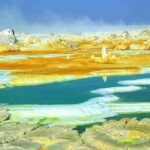
- Dallol’s creator/crater zone and the feel of a geothermal color world
- Air-conditioned transport, full-board meals, and the small-group advantage
- Timing and energy: what this schedule asks of you
- Price and value: is $400 for 2 nights 3 days a fair deal?
- Who this Danakil Depression trip suits best
- Should you book this Danakil 2 Nights 3 Days tour?
- FAQ
- Where does the tour start?
- How long is the Danakil Depression experience?
- What’s included in the price?
- Is pickup offered?
- How many people are on the tour?
- What if I need to cancel?
Key things that make this Danakil trip work
- Small group (max 10): easier conversations with your guide and less chaos at stops
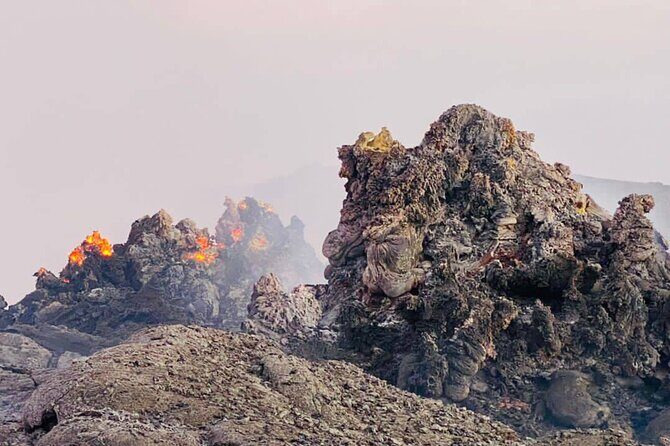
- Erta Ale timing at ~3am: the schedule is built around the active-volcano window
- Dallol plus salt realities: color crater sights paired with working salt-mining scenes
- Full-board meals and camping included: fewer logistics headaches when you’re off-grid
- Air-conditioned vehicle: helpful for the long hours of driving between sites
- Named guide leadership: Gashaw and Tsehayu are directly associated with smooth coordination
Why the Danakil Depression feels otherworldly in 3 days
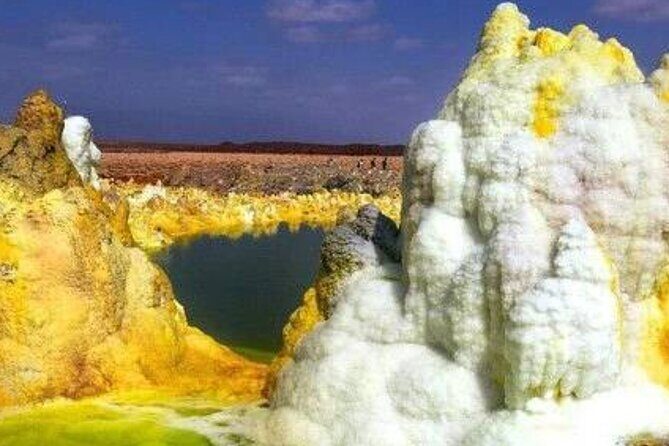
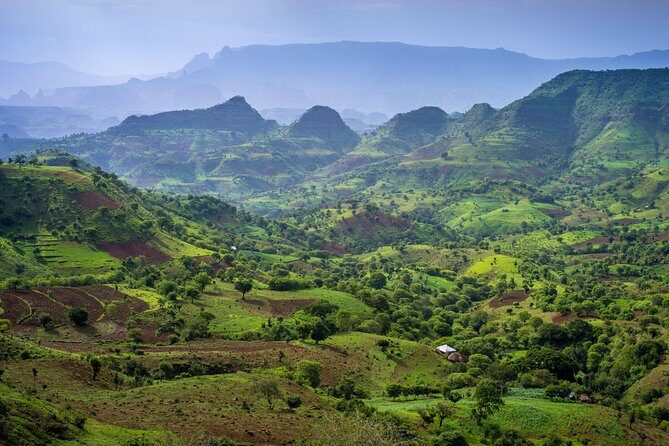
The Danakil Depression sits low—over 100 meters below sea level—and it’s part of the tectonic action happening where plates meet. That’s why the area can look alien: hot geology, mineral deposits, and strange surface chemistry all show up at once.
What makes this 2 nights 3 days plan special is the way it clusters the highlights. You’re not bouncing around Ethiopia for weeks. You’re staying in the Afar region’s orbit long enough to see the range: volcanic heat at Ertale/Erta Ale, salt work and trade scenes on the way, then Dallol’s high-color geothermal zones.
If you like trips that feel authentic, this one helps. You’re not just watching from far away—you’re guided through what people actually do here (salt mining activity and caravan life) and then you’re pointed at the dramatic visual payoffs.
A few more Ethiopia tours and experiences worth a look
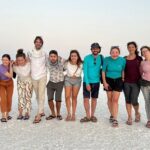
From Semera to Kurswad: Afdera lake, camping, and an Ertale 3am visit
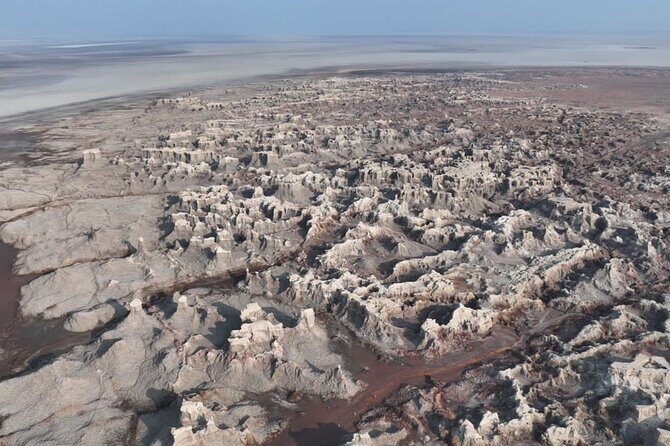
You start in Semera, then the day’s driving takes you toward the Kurswad area via Afdera. On the way, there’s a stop at Lake Afdera. Even if you think you’ve seen “salt lakes” before, this route tends to give a different vibe because the surrounding terrain looks like it belongs to another place entirely.
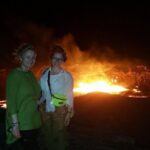
Then comes the part that turns this trip from interesting into memorable: the early 3:00am visit to the active volcano in Ertale. Getting up at that hour isn’t a cute gimmick. It’s about timing—seeing the volcanic activity when conditions and access are at their best.
Afterward, you head back to the camping site at Kurswad for breakfast. That matters more than it sounds. Camping, then breakfast after a night push, helps you recover quickly and keeps the next day from feeling like a slow-motion crash.
A small note on comfort expectations: the plan includes camping at Kurswad, so you should be mentally ready for simpler lodging than a city hotel. But the upside is that you also get that proper desert-night feel—one of the experiences people describe is looking up at the stars after a day of heat and driving.
Salt-market scenes on the road to Dallol (plus camel caravans)
Day 2 is when the trip starts feeling like real trade and real geography—not just a geology lecture.
In the morning after breakfast, you drive to Dallol. On the way, you stop at a salt mining market and you also see camel caravans. This is the kind of stop that adds context. Dallol and the surrounding salt country are visual spectacles, yes—but salt is also a livelihood. Watching caravans move through the area helps you understand what keeps the region’s economy working.
The schedule is also designed to keep moving without turning into a constant sprint. One of the strengths of this tour style is that there are “many stopping points” for sights and photos, but the timing stays coordinated—you don’t lose the whole day to lingering.
After the drive and Dallol approach, you overnight at Hamedila. That stay is part of how they make the short 3-day format realistic: you’re not trying to do everything from the same base and backtrack endlessly. Instead, you sleep closer to the next big moments.
Dallol’s creator/crater zone and the feel of a geothermal color world
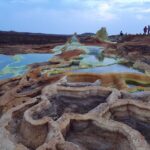
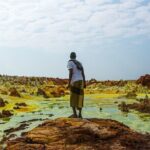
Day 3 starts with the main Dallol visual payoff: the beautiful and colorful Dallol creator (listed as a crater/creator stop). This is the kind of place where photos help, but the real impact comes when you’re standing there in person.
Why it hits: geothermal zones change how your brain reads color, texture, and scale. You’re seeing mineral deposits and heat-affected surfaces all packed into one area. Even if you’re not a science person, it’s hard not to feel like you’re walking through a real-life chemistry diagram.
There’s also an efficiency to the way this final day is set up. After Dallol, you drive back to Semera to catch the last flight at 5:00. That creates a clear deadline and a focused morning. If you’re the type who likes to wander, this is the one day where you’ll likely find the schedule a bit more “managed” than “free roaming.”
Still, if you want the whole Danakil best-of without stretching your trip longer, the structure makes sense. You get the star moment at Erta Ale, the salt-trade context, and then the Dallol color payoff—then you’re back in time for the flight.
Air-conditioned transport, full-board meals, and the small-group advantage
This tour includes an air-conditioned vehicle, which is a real quality-of-life factor on long drives in hot regions. A/c won’t change the geography, but it can help your body handle the day’s moving and temperature swings.
The other practical win is the full board meals. When you’re off-grid, meals become part of your schedule—and schedule matters when you have a 3am departure on Day 1. Having meals included reduces decision fatigue and helps you follow the plan without constantly hunting for food.
Accommodation is included too (camping at Kurswad, and an overnight at Hamedila). With remote trips, “included” is not a small detail. It means you can plan around what’s scheduled instead of worrying about where you’ll sleep after a long day.
And then there’s the small-group piece. The maximum group size is 10 travelers, and that shows in how tours like this run. You’re less likely to feel like cattle at viewpoints, and it’s easier to get your guide’s attention when you want a bit more context—especially around what you’re seeing at active sites.
In particular, the tour’s leadership is associated with names like Gashaw and Tsehayu, and the consistent theme tied to them is careful coordination. That shows up in the way the trip keeps you safe and on time while still allowing photo stops.
Timing and energy: what this schedule asks of you
This is not a “sleep in and stroll” kind of tour. The rhythm is built around key moments:
- Morning and driving days that keep you moving
- A 3:00am start for the Ertale/Erta Ale active volcano visit
- A Day 2 route that layers salt-market and caravan scenes into the drive
- A Day 3 that ends with the 5:00 flight back from Semera
So plan your expectations. If you handle early starts well, you’ll love the payoff. If you’re the type who loses function before noon, you’ll want to mentally adjust before committing.
Hydration and sun protection are never optional in desert-country travel, even if the tour doesn’t list them. Also, pack for cold early morning conditions—when you’re out near a volcano at dawn timing, temperatures can feel different than mid-day.
Price and value: is $400 for 2 nights 3 days a fair deal?
At $400 per person, this is priced like a true remote-country excursion, not a “local day trip.” For your money, you get:
- An air-conditioned vehicle
- All fees and taxes
- Accommodation
- Full-board meals
- Admission tickets included (each day lists admission ticket included)
Here’s how I think about value in situations like this: the cost is less about comfort and more about access. Getting to Danakil Depression and coordinating active-site timing is expensive in time, fuel, and logistics. With admission tickets and meals included, you’re also less likely to get surprised by extra bills once you’re already deep in the trip.
The fact that it’s often booked about 22 days in advance suggests demand stays steady. In plain terms: don’t wait until the last minute if you’re set on dates, especially since the group is capped at 10.
Who this Danakil Depression trip suits best
This tour fits best if you:
- Want the main Danakil highlights in a short time window (volcano timing plus Dallol)
- Like guided structure but still want enough stops for photos
- Are okay with camping-style lodging and early starts
- Prefer a small-group experience where coordination matters
It’s also a good match for people who care about the “human geography” part of the region. Seeing salt mining market scenes and camel caravans adds meaning beyond the geology. You come away with the sense that the land shapes life here.
If you’re looking for a luxury style of travel, this isn’t that. If you’re looking for an intense, well-timed adventure in one of the world’s most unusual regions, it’s exactly the kind of trip that makes people remember a year later.
Should you book this Danakil 2 Nights 3 Days tour?
I’d book it if you want a focused Danakil experience with good coordination, small group size, and a schedule that hits the moments that can’t be faked with a quick stop. The inclusion of meals, admissions, and transport also makes planning simpler than many remote tours.
I wouldn’t book it if you’re strongly dependent on a relaxed pace, you can’t handle early morning wake-ups, or you’d struggle with moderate physical demands. Also think twice if you dislike fixed deadlines—Day 3 ends with the 5:00 flight, so your morning time is planned.
If your goal is “short trip, big payoff,” this Danakil Depression plan is a practical choice.
FAQ
Where does the tour start?
The tour starts in Semera, Ethiopia.
How long is the Danakil Depression experience?
It runs for 2 nights and about 3 days.
What’s included in the price?
The price includes an air-conditioned vehicle, all fees and taxes, accommodation, and full-board meals, plus admission tickets listed for the activities.
Is pickup offered?
Yes, pickup is offered.
How many people are on the tour?
The group has a maximum size of 10 travelers.
What if I need to cancel?
You can cancel for a full refund up to 24 hours before the experience’s start time. If you cancel less than 24 hours before, the payment is not refunded.