REVIEW · ETHIOPIA
3 Days Danakil Depression Tour
Book on Viator →Operated by Great Ethiopian Tours · Bookable on Viator
Danakil can feel like science fiction, in real life. In three days you’ll chase Dallol’s mineral colors, camp near Erta Ale’s active lava lake, and watch salt caravans crossing the flats around Lake Asale. It’s extreme geography, but the trip is run like a system: get you there, keep you safe, and point out the details you’d miss on your own.
I like two things a lot. First, you get an air-conditioned vehicle for long stretches, which matters when the region is hot and the drives are long. Second, the camping setup is thoughtfully handled with solid camping gear and bedsheets, so you’re not just toughing it out.
One possible drawback: comfort is basic and the schedule is early and remote. You should expect simple camping conditions and a moderate physical effort for the Erta Ale rim walk—nothing crazy, but it’s not a lazy tour.
In This Review
- Key things that make this Danakil trip worth it
- Why the Danakil Depression tour feels different from other big sights
- Price and value: what $450 buys you in remote Afar
- Getting there: early starts, long drives, and the comfort you actually need
- Day 1: Semera coffee, Afdera salt water, and an Erta Ale rim that owns your attention
- Semera coffee and Afar regional capital energy
- Afdera: lunch, salt lake views, and the swim-and-float moment
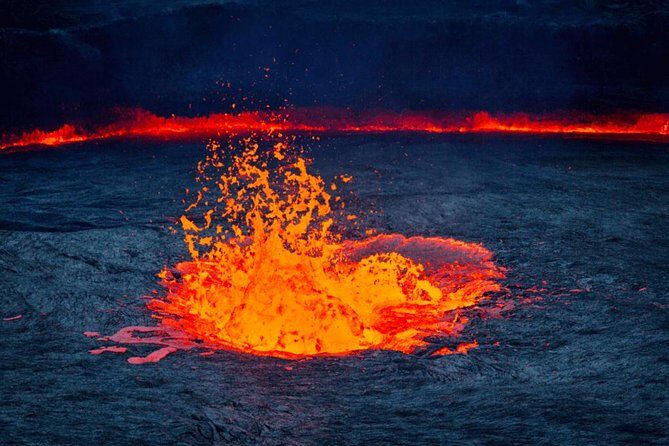
- Erta Ale: the rim walk, lava-lake views, and camping for sunrise photos
- Day 2: Hamedela’s salt-miner town feel and Lake Asale at sunset
- Ahmedela/Hamedela: unloading gear and village life near the salt work
- Lake Karum / Lake Asale: camel caravans and a sunset that hits hard
- Day 3: Dallol sunrise, Salt Canyon towers, and the black-and-turquoise springs
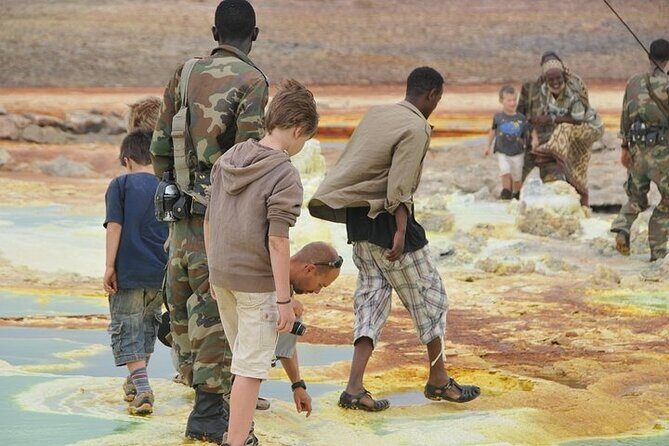
- Dallol Depression: the mineral colors at about 130 meters below sea level
- Salt Canyon: towers and pinnacles west of Mount Dallol
- Black Water Spring: hypersaline bubbling with black tones
- Gaet’ale Pond: turquoise heat and extremophile conditions
- Assa Ale and Lake Asale salt flats: salt bricks, tradition, and moving caravans
- Camping, food, and the comfort reality check
- Guides, safety, and the small-group edge
- Who should book this Danakil Depression tour
- My decision: should you book it?
- FAQ
- FAQ
- What’s the duration of the Danakil Depression 3-day tour?
- How much does the tour cost?
- What’s included in the price?
- Is pickup available?
- What kinds of stops are included?
- Do I need to bring lunch or dinner?
- Is the group size limited?
- Is the tour physically demanding?
- Are domestic flights included?
- Can I cancel for a full refund?
Key things that make this Danakil trip worth it
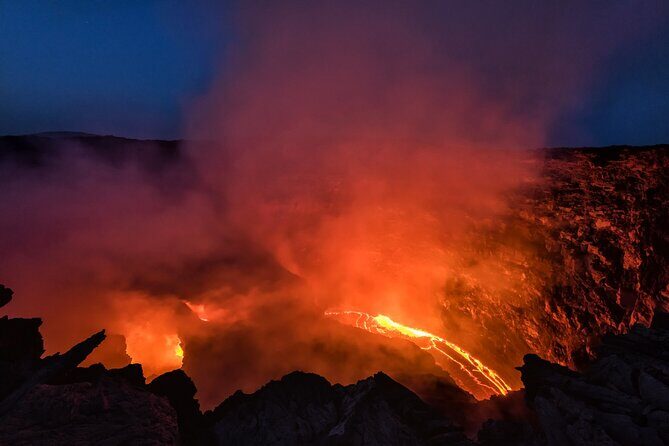
- Erta Ale rim night: camping right by one of the few active lava lakes in the world.
- Dallol sunrise timing: early light helps the mineral colors look unreal.
- Saline water breaks at Afdera: you can swim and float in extremely salty water.
- Lake Asale salt-caravan viewing: you’ll see how salt moves through the region.
- Small group size (max 15): easier pacing and more guide attention.
- Meals included (2 breakfasts, 3 lunches, 2 dinners): fewer logistics headaches out there.
Why the Danakil Depression tour feels different from other big sights
Danakil isn’t just another famous place on a list. It’s a working mix of geology and survival—volcanic heat, hypersaline lakes, and salt harvesting all in the same few days.
I also like that this trip is structured around sensory moments. You’re not only looking at features; you’re timing them: sunrise at Dallol, sunset around Lake Asale, and a night camping experience at Erta Ale where the volcano dominates the sky and the air.
And because it’s far from normal towns, the guide’s job is more than storytelling. You’ll feel the safety side in how the day is paced, how you’re moved near sensitive areas, and how you’re given enough time to see without rushing your footing or judgment.
A few more Ethiopia tours and experiences worth a look
Price and value: what $450 buys you in remote Afar
$450 per person for a 3-day route sounds steep until you think about what’s included. You’re paying for an experienced local team, permits and entrance fees, a full vehicle program, and three days of meals. You’re also paying for the hardest part: making remote logistics work without turning the day into chaos.
This price also makes sense when you compare what many people spend after the fact—transport, entrance permits, guide time, and food—especially in places where everything is spread out. Here, meals are built in: 2 breakfasts, 3 lunches, and 2 dinners, plus a coffee/juice stop in Semera at the start.
One more value factor is the small group size (up to 15). Big tours can feel like you’re herded; smaller groups usually mean more flexibility and better pacing when conditions change, which is common in a place like Danakil.
Getting there: early starts, long drives, and the comfort you actually need
The tour is set to begin early, with the morning pickup from Semera Airport happening around 8:00 AM in the plan, while the listed start time is 9:00 AM. Either way, you’ll be operating on a morning rhythm, because the destinations are best in specific light and temperatures.
The vehicle part matters more than people think. You’ll be traveling by air-conditioned vehicle across long stretches, and that can be the difference between arriving fresh enough to enjoy stops versus feeling drained before the real sights begin. Reviews also point out how much the air-conditioned jeeps helped keep things comfortable during travel.
Bring the mindset that you’re going through a remote zone, not popping between attractions. You’ll be out in the Afar region’s extremes, and you’ll want to conserve energy for the moments that count: the rim walk, the saline swimming, and sunrise and sunset viewings.
Day 1: Semera coffee, Afdera salt water, and an Erta Ale rim that owns your attention
Day 1 is all about easing you into the Danakil rhythm—first with a human pause, then with geology that’s hard to believe.
Semera coffee and Afar regional capital energy
You start in Semera, described as the capital of the Afar Regional State. After pickup from Semera Airport, you’ll stop for a short coffee and juice break in town. It’s simple, but it’s smart: you get a reset before the longer drive.
This is also a useful moment for your body. When you’re heading into extreme terrain later, you want your hydration and energy in decent shape.
Afdera: lunch, salt lake views, and the swim-and-float moment
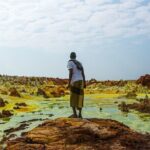
Afdera is a hub for salt production, and it’s also one of the lowest points in the Danakil Depression, listed at -102 meters below sea level. After lunch, you’ll get a glimpse of the nearby salt lake before the truly memorable part: you can swim and float in the saline waters.
This stop is one of the most practical highlights. Swimming or floating gives you a physical sense of how dense and strange the water chemistry is—information you’d never grasp from photos alone. It’s also a good time to take a break from the constant camera mode and just experience the conditions.
Just note the obvious: you’ll be dealing with salty water and dry wind afterward, so plan for how you’ll handle comfort and rinse-off needs.
Erta Ale: the rim walk, lava-lake views, and camping for sunrise photos
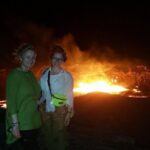
Erta Ale is where the trip becomes unforgettable in a very direct way. The plan has you arriving at the base camp around 6:00 PM, then taking a 30-minute hike up to the rim. From there, you’ll have time to explore while seeing one of the few active lava lakes in the world.
The sleeping part is the signature move. You’ll camp near the rim so you can capture sunrise photos, and you’ll spend the night on the volcano rim. Even if you think you’re ready for adventure, this is the moment that changes how the trip feels: quiet, sky full of stars, and the sense that you’re sleeping beside something alive.
One review mentioned being there on a day when Erta Ale erupted. You can’t count on that, but it’s a reminder that the volcano is not a museum exhibit—it’s active, and conditions can shift.
Day 2: Hamedela’s salt-miner town feel and Lake Asale at sunset
Day 2 turns from volcano focus to salt-country rhythms. The schedule is about travel time and timing: long enough to connect the sites, short enough to keep the light and viewing opportunities in the right window.
Ahmedela/Hamedela: unloading gear and village life near the salt work
You depart the base camp at 8:00 AM and head toward Hamedela, arriving around 4:00 PM in the plan. Hamedela is described as a small town founded by salt miners. The day includes a gear handoff—unloading camping gear—and a cook’s setup in the village.
I like this part because it stops being only about scenery. You’re spending time in the human layer of Danakil: the people who keep salt harvesting going, and the practical routines that support it.
Also, it helps you understand why the salt caravans you’ll see later aren’t just dramatic props. This is labor and transport, moving salt from extraction areas toward markets and other towns.
Lake Karum / Lake Asale: camel caravans and a sunset that hits hard
After Hamedela, you continue toward the salt flats area around Lake Karum / Lake Asale, with the sunset viewed there. The plan specifically calls out camel caravans transporting salt to Ahmedela town, where they spend the night before continuing onward toward Mekele.
At Lake Asale, the tour includes a small party, then a drive back to Ahmedela for dinner and camping. This is the stop where you’ll feel how vast the system is. The salt flats look unreal, but the caravans bring it back to a working world: animals, routes, and daily movement.
If you care about photography, this is the moment that makes people say the trip is worth it without adding extra hype. The combination of salt surface, low light, and moving caravans gives you images with real motion, not just static color.
Day 3: Dallol sunrise, Salt Canyon towers, and the black-and-turquoise springs
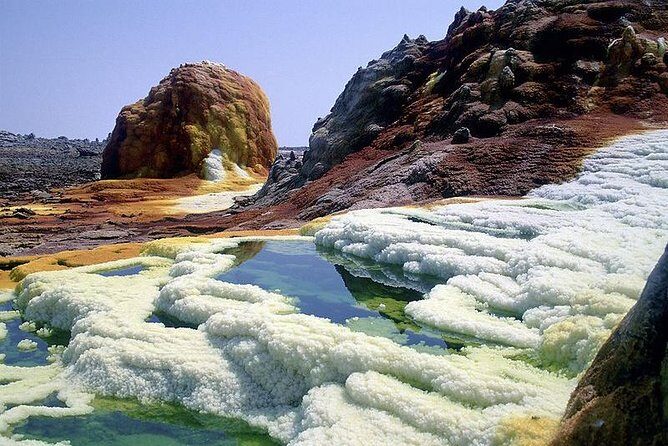
Day 3 is about early light and short, high-impact stops. You’ll drive out for sunrise at Dallol, then work your way through nearby geothermal features that look like they’re from another planet.
Dallol Depression: the mineral colors at about 130 meters below sea level
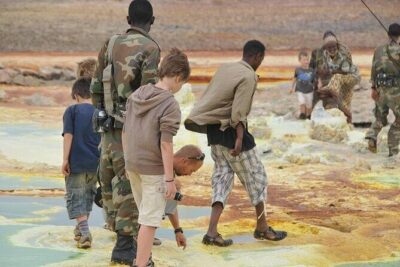
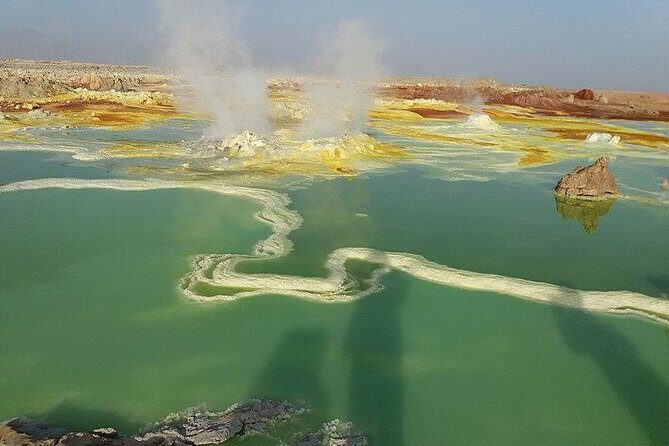
Dallol is listed as one of the hottest and lowest places on Earth, at 130 meters below sea level. It’s known for otherworldly shapes created by volcanic activity and mineral deposits.
This stop matters because the color and texture are where Danakil becomes uniquely Danakil. Sunrise helps, since the angle of light makes the mineral tones and contrasts read more clearly. This is why the early start is not just for scheduling—it’s part of the visual payoff.
Salt Canyon: towers and pinnacles west of Mount Dallol
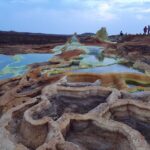
After Dallol, you’ll visit Salt Canyon, west of Mount Dallol. The feature here is the weird architecture: bizarre towers and pinnacles formed in salt and surrounding mineral terrain.
The walk is brief (about an hour), so don’t waste time standing around early. Move at the pace your guide sets, and keep your attention on the formations around you because the strange shapes can shift dramatically with viewpoint changes.
Black Water Spring: hypersaline bubbling with black tones
Next is Black Water Spring, where bubbling hypersaline water dots the area near Dallol. The black color is described as likely coming from dissolved potassium salts.
This is one of those stops where you should keep your eyes open and your distance respected. You’re near active geothermal features, and the guide’s boundaries matter more than your curiosity.
Gaet’ale Pond: turquoise heat and extremophile conditions
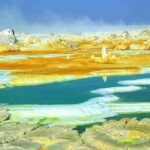
Then you’ll see Gaet’ale Pond, known for its turquoise color from minerals dissolved in the water. It’s also described as hot and extremely salty, supporting extremophiles—life forms adapted to harsh conditions.
I like this stop because it gives the science layer in plain language: even if nothing looks alive, the conditions allow life in strange ways. It’s a good moment to slow down and let your brain catch up to what your eyes are seeing.
Assa Ale and Lake Asale salt flats: salt bricks, tradition, and moving caravans
You’ll finish at Assa Ale, another salt flat listed at around 130 meters below sea level. The plan highlights camel caravans crossing the desert to transport salt bricks made from Lake Asale, plus traditional salt excavation methods you can observe.
This is a strong closing scene because it connects the colors and the geology to the work. The carvans aren’t a random detail; they’re part of how salt becomes a product.
After the final salt-flat exploration, you’ll drive back to Semera, arriving by 4:00 PM. The tour also notes an optional alternative to take you to Mekele if you plan to visit the Tigray Mountain Churches, Axum, and Lalibela.
Camping, food, and the comfort reality check
This is a remote environment, so your expectations need to match reality. The tour includes “excellent camping gears, mattress and bedsheets,” and that’s a big deal. It means you can focus on the experience instead of worrying whether you’ll sleep on bare ground.
Still, accommodation is basic, and that’s not a failure of planning. It’s a direct result of location. One key idea I’d take from the overall experience: the basic setup is part of the trade-off for being close to the volcano and deep in Danakil’s working geography.
Food is also handled. You’ll get meals across the days—breakfast (2), lunch (3), dinner (2)—so you’re not hunting food at odd hours in tiny places. That matters when the day moves fast and the light windows are short.
Guides, safety, and the small-group edge
Guides are a huge part of why this works. In the feedback, people highlight careful pacing and professional handling, especially around Erta Ale’s rim and the lava views.
You may hear guide names like Isaac, and in one note Aki is mentioned for careful handling. The common thread is the same: you get help interpreting what you’re seeing and you get safety guidance where it counts.
The small group size (maximum 15 travelers) helps here. You can actually move together without turning it into a logistical bottleneck, and the guide can adjust if someone needs a slower pace on a rim walk or if conditions shift during a stop.
Who should book this Danakil Depression tour
This tour is best for you if you:
- Want a 3-day hit of the main Danakil zones: Dallol, Erta Ale, and Lake Asale.
- Like big nature moments tied to real human activity (salt mining and caravans).
- Are okay with basic camping and early mornings for sunrise and sunset timing.
It might not be your best match if you need high-comfort lodging or a fully relaxed pace. The region is extreme, and the schedule includes moderate physical effort, especially the hike to the Erta Ale rim.
My decision: should you book it?
I’d book this tour if you want the full Danakil story in a tight 3 days and you value organization. The combination of Erta Ale rim camping, Dallol sunrise, and Lake Asale salt caravan scenes is the real headline, and the included meals and permits remove a lot of guesswork.
If you’re excited by remote travel and you can handle basic accommodations, this is a strong way to experience Danakil without turning it into a DIY stress test. If you’re chasing comfort first, or you dislike early departures and walking on uneven ground, then you’ll probably wish you chose something gentler.
FAQ
FAQ
What’s the duration of the Danakil Depression 3-day tour?
The tour is listed as approximately 3 days.
How much does the tour cost?
The price is $450.00 per person.
What’s included in the price?
It includes experienced local guides, an air-conditioned vehicle, camping gear with mattress and bedsheets, permits and entrance fees, and meals: 2 breakfasts, 3 lunches, and 2 dinners.
Is pickup available?
Yes, pickup is offered, and the start is tied to Semera Airport.
What kinds of stops are included?
You’ll visit Semera, Afdera (including a salt-water swim/float), Erta Ale (including rim camping), Hamedela, Lake Asale/Lake Karum area (including sunset and camel caravans), and multiple Dallol geothermal sites like Salt Canyon, Black Water Spring, Gaet’ale Pond, plus Assa Ale and more Lake Asale viewing.
Do I need to bring lunch or dinner?
No. Lunch and dinner are included during the days of the tour.
Is the group size limited?
Yes. Maximum group size is listed as 15 travelers.
Is the tour physically demanding?
It’s best for travelers with moderate physical fitness, since there is a hike to the Erta Ale rim.
Are domestic flights included?
No. Domestic flights are not included.
Can I cancel for a full refund?
The policy states free cancellation, with a full refund if you cancel up to 24 hours in advance of the experience start time.