REVIEW · GONDER
Gondar city Tour With Airport & Hotel Pick Up
Book on Viator →Operated by Simien Mountain Trekking and Tours · Bookable on Viator
Gondar’s churches and castles move fast. This 7.5-hour city tour combines airport and hotel pickup with a tight route through the royal capital of Fasilides, mixing fortress walls, painted churches, and a craft-focused community visit. The day runs with an air-conditioned vehicle, a small group size (max 10), and a mobile ticket.
What I like most is the easy, well-run logistics. The tour is operated by Simien Mountain Trekking and Tours, and the whole handoff feels organized, including an airport meet-up arranged by their guide contact (Mickey) and smooth coordination with the local guide team. I also really enjoy the way the tour hits big visual landmarks in a short time—especially Debre Birhan Selassie Church, with its stone towers that carry meaning right at the entrance approach, not just as distant background.
One thing to consider is pacing and shopping pressure. The stop at Wolleka (Falasha Village) includes a small synagogue visit and craft stalls, and you may find persistent sellers around the browsing. If you prefer slow, quiet sightseeing, you’ll want to keep expectations realistic for a 9:00 am start and a full day.
In This Review
- Key highlights
- Why Gondar feels different the moment you arrive
- Central Hotel pickup and airport meet-up that keeps the day calm
- Fasil Ghebbi: palaces, churches, and the 900-m-long wall
- Fasilides Baths: crumbling brick meets roots, plus Timkat context
- Debre Birhan Selassie: 12 apostles towers and a Lion of Judah imprint
- Wolleka (Falasha Village): craft stalls, a small synagogue, and a reality check
- Value for $90: what you get in a single 7.5-hour day
- Timing and pacing: a 9:00 am start with four major stops
- Practical tips so the day goes smoothly
- Who this tour is best for
- Should you book this Gondar city tour with airport and hotel pickup?
- FAQ
- How long is the Gondar city tour?
- What time does the tour start?
- Where do we meet for pickup?
- Does the tour include airport pickup?
- What sights are included?
- Are entrance fees included?
- What is the price per person?
- How large is the group?
- What is the cancellation policy?
Key highlights
- Fasil Ghebbi’s fortress layout with its long wall and dense cluster of palaces and churches
- Dawit’s Hall included inside the Fasil Ghebbi area, saving you time hunting tickets later
- Fasilides Bath and Timkat context with details about Epiphany timing and the once-a-year bath filling
- Debre Birhan Selassie’s tower symbolism including the 12 apostles concept and the Lion of Judah marker
- Wolleka (Falasha Village) visits with craft stalls, a small synagogue, and an entrance fee mentioned for the interior
Why Gondar feels different the moment you arrive
Gondar isn’t trying to be a theme park. It’s the old Ethiopian royal center—founded by Emperor Fasilides in the 1630s, and later the seat of Ethiopian Emperors for about 250 years. That matters because the sights you see are not just old buildings. They’re tied to how power, faith, and art shaped daily life.
The tour frames the day around that idea: castles and churches first, then the city’s living edges—markets, craft work, and religious meaning. You also get an immediate convenience boost: pickup is offered, you start at the Central Hotel, and the ride is handled in an air-conditioned vehicle. In practical terms, you spend less time negotiating and more time looking.
You can also read our reviews of more tours and experiences in Gonder.

Central Hotel pickup and airport meet-up that keeps the day calm
The meeting point is the Central Hotel in Gondar (listed with the location pin JF69+7RM). The tour start time is 9:00 am, and the day ends back at the same meeting point, so you’re not stuck figuring out transportation for the final stretch.
Here’s the best part for planning: the tour includes pickup offered plus an organized connection when flights are involved. In one of the highest-rated experiences, the tour contact (Mickey) arranged for someone to meet at the airport and get the visitor into the day smoothly. That kind of coordination is a big deal in Gondar, where traffic and timing can be unpredictable, and you do not want your first hours eaten up by logistics.
The tour also uses a mobile ticket, which is handy if you’re juggling phone access and not carrying a paper folder.
Fasil Ghebbi: palaces, churches, and the 900-m-long wall
Fasil Ghebbi is the fortress-city that served as the residence of Emperor Fasilides and later emperors. You’ll enter an enclosed complex surrounded by a 900-meter-long wall, and inside you’ll see palaces, churches, monasteries, and buildings influenced over time by Hindu and Arab styles—later shaped again by Baroque style brought by Jesuit missionaries.
What you should appreciate here is the scale and density. Fasil Ghebbi covers about 70,000 square meters. In real visitor terms, that means there’s a lot to spot in a short walk. With a guided visit (the tour includes a Blue Badge guide), you get pointers on what to look for instead of simply staring at stone and hoping it all clicks.
You’ll also spend time at Dawit’s Hall in this first stop, and that admission is included. Even if you only remember one thing about the building, remember the reason it’s here: these enclosures were not random structures. They were the stage for authority, ceremonies, and proclamations.
A useful side note for your imagination: to the south of Fasil Ghebbi is Adababay, described as the marketplace of Gondar where imperial proclamations were made and where punishments were carried out. Today it functions like a city park, but it helps you understand how the royal world extended beyond the fortress walls.
Fasilides Baths: crumbling brick meets roots, plus Timkat context
After the fortress stop, the tour turns to one of Gondar’s most visually memorable structures: the Fasilides Baths. The details you’ll hear during the visit add depth fast. The bath is attributed to either Emperor Fasilides or his son Iysau I, and it sits in a compound with walls slowly swallowed by the roots of old badian trees that now tangle into the crumbling brickwork.
This is a stop where the guide’s explanation matters. The compound includes the baths, a central tower, and a bridge used when the bath is full. That kind of functional design helps you picture how people used the space rather than treating it like ruins.
Also, if your travel dates happen to line up with the Ethiopian Orthodox Christian celebration Epiphany (Timkat), you’ll hear a key fact: the bath is filled once a year on 19 January as part of the celebration. Even if you’re not there for that date, knowing it’s tied to a real ritual calendar gives the architecture extra meaning.
The tour lists the admission for this stop as free, so you’re not paying extra on the spot here. That’s a nice value point inside a day that already bundles several paid sights.
Debre Birhan Selassie: 12 apostles towers and a Lion of Judah imprint
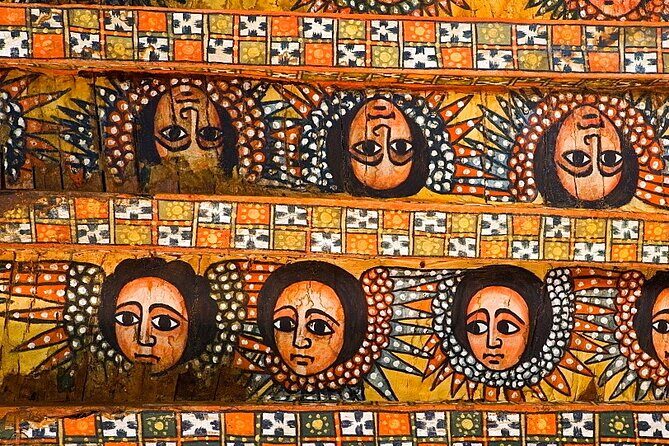
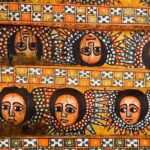
If you love churches for the art and symbolism inside, Debre Birhan Selassie Church is the reason to take a full-day circuit in Gondar. The church name is tied to the Trinity and the Mountain of Light, and the approach is the show.
As you come in, you’ll see twelve rounded stone towers that represent the 12 apostles. The guide also points out the tallest tower, which represents the Lion of Judah. There’s even an eagle-eyed detail mentioned: you can see an imprint of the Lion on the top half of the tower.
The church’s story also helps you understand why the architecture looks the way it does. It was originally built in the 17th century by Emperor Eyasu II, and the structure was later redeveloped in the 1880s after a raid by Sudanese Dervishes and a lightning strike that reduced the earlier building to rubble. That mix—faith, conflict, repair—creates a different kind of emotional weight than a site that only survived peacefully.
The visit is long enough to take it in properly, about 2 hours, and admission is included for this stop.

Wolleka (Falasha Village): craft stalls, a small synagogue, and a reality check
Wolleka—also referred to as the Falasha Village area—introduces a different tempo. Around it, you’ll find craft stalls with Stars of David and Falasha Village signs. The background is important: this area was home to Ethiopian Jews, many were airlifted to Israel in the 1980s, and today none remain. The tour highlights that there are a few original houses with artwork on their fronts and a small synagogue.
One practical tip from the tour’s description: there’s an entrance fee of Birr 10 to look inside the synagogue. That’s the kind of small, concrete detail that helps you avoid a cash moment mid-visit. If you prefer to be ready for every payment, carry some small bills for local currency.
This is also where you might notice more sales energy than in the other sites. The description you’ll hear about the village includes a warning to expect an entourage of persistent sales kids. You don’t need to be rude—just decide your boundaries early, smile politely, and keep walking when you’ve seen enough.
For context, the tour explains that after Christianity became the state religion, land was confiscated for refusing to convert, and many survived by becoming skilled craftspeople. So even if you only spend time looking at door fronts and small-scale artwork, you’re seeing the result of adaptation.
The guide keeps this stop structured at about 2 hours, with admission included for the overall program.
Value for $90: what you get in a single 7.5-hour day
At $90 per person for about 7 hours 30 minutes, the price can feel like a jump until you look at what’s bundled.
You’re not just paying for a route. You’re paying for:
- an air-conditioned vehicle
- airport/departure tax being covered in the package
- a Blue Badge guide
- entrance fees as per the program
- government taxes
- and pickup offered plus a mobile ticket
When you compare that to doing the same places one by one, the time savings is huge. Gondar sights are not next door to each other in the way that some European cities are. You’d spend time and effort lining up drivers, negotiating entrance costs, and trying to understand what you’re seeing without a guide.
Also, the group size cap is 10 travelers, which usually means you can ask questions and still move through the sites without constant waiting. If you’re traveling solo, this format often feels like the best of both worlds: you get the structure of a group tour, but you’re not stuck in a crowd.
One more small value signal: the tour uses a mobile ticket, which often reduces friction compared with last-minute paper paperwork.
Timing and pacing: a 9:00 am start with four major stops
This day runs tight, so you’ll want to treat it like a sprint through Gondar’s most iconic visual sites, not a slow stroll. The start time is 9:00 am, and you’ll hit four major stops: Fasil Ghebbi, Fasilides Baths, Debre Birhan Selassie Church, and Wolleka (Falasha Village).
Here’s how the timing works in your favor:
- The first stop (Fasil Ghebbi) is long—about 2 hours 30 minutes—so you’re not rushed out of the fortress before the details sink in.
- Debre Birhan Selassie is also about 2 hours, which helps with the tower symbolism and the church approach.
- The middle stop at the baths is shorter (about 1 hour), but it’s high meaning-per-minute because of the Timkat context and the visible compound structure.
- Wolleka gets about 2 hours, enough time to browse stalls, visit the synagogue, and handle the sales energy without feeling you’re being dragged.
The day ends back at the meeting point, which is a practical way to protect your evening plans.
Practical tips so the day goes smoothly
A few small things make a big difference on a day like this:
- Bring cash in small denominations for the Birr 10 synagogue fee at Wolleka.
- Wear something comfortable for walking between stops inside large complexes like Fasil Ghebbi. The places are dense, not spaced for long breaks.
- If you dislike shopping pressure, mentally frame Wolleka as a short cultural stop and stick to that plan.
- Keep your phone charged. A mobile ticket means you’ll want access when needed.
If you’re the type of traveler who likes art and architecture but also enjoys understanding how faith and politics shaped the built environment, this route fits your style.
Who this tour is best for
This is a strong choice if you:
- want a single, focused day in Gondar
- care about church symbolism (especially Debre Birhan Selassie)
- want fortress architecture with real historical framing (Fasil Ghebbi)
- prefer having a guide do the explanation so you can look more carefully
If you’re chasing total quiet, slow pacing, or long free time in markets, you might find the day scheduled. But if you want to leave Gondar with clear images and names in your head, this tour makes that easy.
Should you book this Gondar city tour with airport and hotel pickup?
I’d book it if your goal is to hit the core Gondar sights with low hassle. The package value is in the bundle: pickup, air-conditioned transport, guided visits with entrance fees handled, and a day that stays structured from 9:00 am to return back to the starting point.
Skip it or adjust expectations if you know you hate shopping pressure, because Wolleka includes craft stalls and you may deal with persistent sellers. Also, if you want lots of unstructured time, this schedule is built for highlights—not wandering.
Given the price and the included elements, it’s one of the cleaner ways to see Gondar’s major landmarks in a single day, without turning your vacation into a logistics project.
FAQ
How long is the Gondar city tour?
The tour lasts about 7 hours 30 minutes.
What time does the tour start?
It starts at 9:00 am.
Where do we meet for pickup?
The start point is the Central Hotel in Gondar (JF69+7RM).
Does the tour include airport pickup?
Pickup is offered, and the experience description plus review details indicate airport meeting is handled.
What sights are included?
You’ll visit Fasil Ghebbi (including Dawit’s Hall), the Fasilides Bath area, Debre Birhan Selassie Church, and Wolleka (Falasha Village).
Are entrance fees included?
Entrance fees are included as per the program. The tour notes admission included for some stops and free admission for the Fasilides Bath stop.
What is the price per person?
The price is $90.00 per person.
How large is the group?
The maximum group size is 10 travelers.
What is the cancellation policy?
You can cancel for a full refund up to 24 hours before the experience starts. If you cancel less than 24 hours before, the amount paid isn’t refunded.