REVIEW · GONDER
2 Nights 3 Days Trek to Semien Mountain
Book on Viator →Operated by Ethio Backpacker Tours · Bookable on Viator
A mountain trek with wildlife on your doorstep is a special kind of travel. This 2 nights / 3 days hike into the Simien Mountains National Park runs north of Gondar, and it’s built around real trekking routes, park permits, and high-altitude camp nights. I like that the day plan is structured but not rushed, so you can enjoy the views instead of just “getting through” the hike.
Two things I particularly like: first, the combination of an English-speaking guide and an obligatory scout plus included entrance fees means you’re not juggling admin while you’re trying to breathe at altitude. Second, the route targets standout natural moments—Jinbar waterfall, gelada baboons, giant lobelia at Geech, and the Imet Gogo promontory viewpoint. One consideration: you’re sleeping high (around 3250–3600m) and hiking several hours each day, so it’s not the one for anyone who wants an easy stroll or a low-commitment day.
In This Review
- Key things to know before you go
- Why the Simien Mountains trek begins north of Gondar
- Getting your permit and crossing into the trekking zone (Day 1)
- Sankabar to Geech: Jinbar waterfall, lobelia, and Kedadit sunset (Day 2)
- Imet Gogo promontory and lammergeier vultures (Day 3)
- Price and value: what $400 covers and how it changes the trip
- Comfort, meals, and how the high altitude shapes your expectations
- Choosing the right guide energy: ask for Tsehaynew
- Should you book this 2 nights 3 days Simien trek?
- FAQ
- What’s included in the Simien Mountains National Park trek?
- How long is the trek and when does it start?
- Where does the trekking start on Day 1?
- How much walking should I expect each day?
- What wildlife and scenery are highlighted on the route?
- How high will I be during the trek?
- Is pickup included?
- Are vegan meals provided?
- What’s the cancellation policy and what happens if weather is bad?
Key things to know before you go
- Permit-and-scout setup handled before you start trekking from the Sankobar area
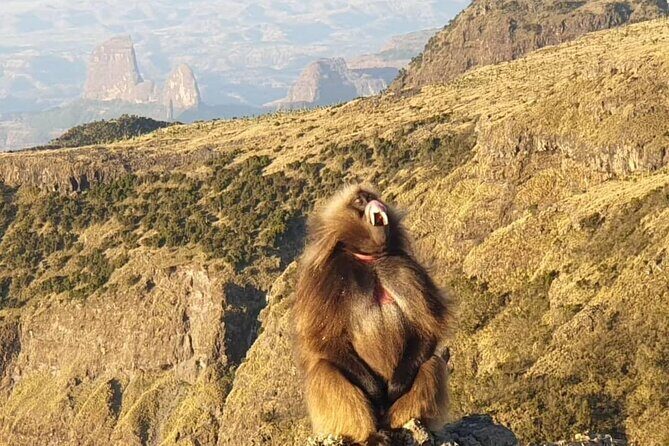
- Wildlife hotspots timed into the route: geladas early, lammergeier vultures at Imet Gogo
- Water and plants you’ll remember: Jinbar waterfall plus giant lobelia near Geech
- Sunset potential from Kedadit summit above the Geech camp zone
- Small group pace capped at 15 travelers, which usually makes the trek feel more personal
Why the Simien Mountains trek begins north of Gondar
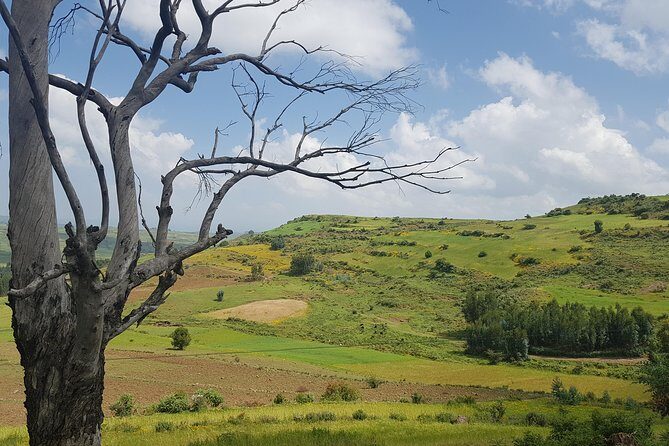
The Simien Mountains are one of Ethiopia’s most famous trekking regions for a reason: you get big-sky viewpoints, steep-sided valleys, and animals that feel like they belong in the landscape—not staged for visitors. Starting from Gondar and heading north keeps the whole trip practical. You’re not spending half your time just reaching the mountains.
What I like about this specific setup is that it leans on the park experience itself. You don’t just drive to a viewpoint and call it done. You’re trekking into the national park with the required paperwork handled up front, then walking between named spots like Buytras (Simien Lodge), Sankobar/Sankabar, Geech, and the road near Ambaras.
Also, the area’s lodge options matter. The Simien Mountains can feel like “camping only” in people’s minds, but this region has lodge bases too (like Simien Lodge and Limalimo Lodge). That means your route is part of a broader trekking infrastructure—so even though this is a short trek, it doesn’t feel like a rough, throwback expedition.
You can also read our reviews of more hiking tours in Gonder
Getting your permit and crossing into the trekking zone (Day 1)
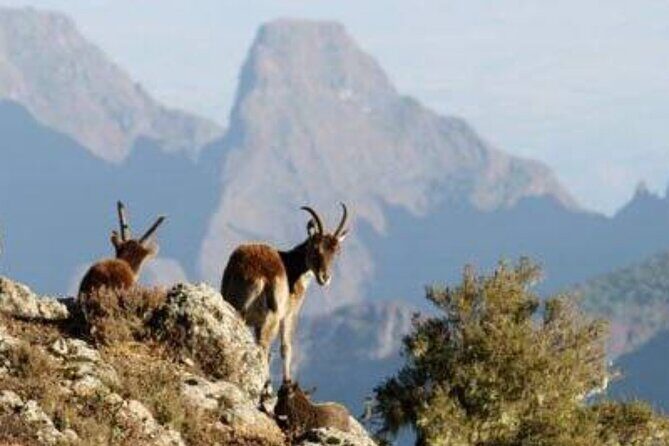
Day 1 starts with the logistics that make or break a trek: an early drive and getting the park permit. You’ll travel from Gondar to Debark, pick up your obligatory park permit at the park headquarters, and collect a scout before continuing on to Sankobar at about 3250m.
The drive from Gondar takes roughly 2–3 hours, so you’ll want to be ready for an early start. Then the trekking begins near Buytras at Simien Lodge. From there, it’s a 3–4 hour walk to the Sankabar campsite, and it’s the kind of first-day hike that finds a rhythm: long enough to settle into the mountain walking, not so long that it destroys your legs before the main views.
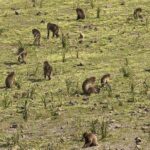
The best part of Day 1 isn’t just the altitude jump—it’s the chance to spot your first wildlife highlight. There’s a good possibility of seeing gelada baboons during the trek. Geladas are not a random “maybe”; they’re a core Simien attraction, and seeing them early sets the tone for the whole walk.
Practical drawback on Day 1: if you’re not used to hiking at elevation, the combination of early morning driving plus a few hours of walking can feel like a lot. The route is still doable for “moderate physical fitness,” but it does require a steady pace.
Sankabar to Geech: Jinbar waterfall, lobelia, and Kedadit sunset (Day 2)
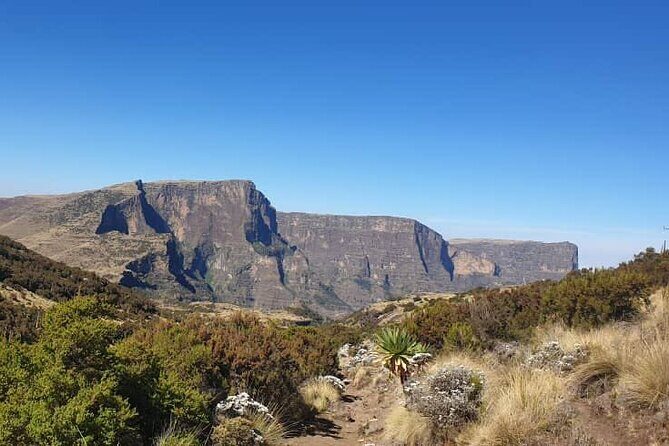
Day 2 is the long walking day, and it’s built around scenery that changes as you climb and descend. You start in the morning and trek to Geech via Jinbar waterfall. Expect about 5–7 hours on the trail.
The route has a classic trekking shape: you descend down toward the Jinbar Wenz (the water feeding the waterfall), then you climb back up slightly to reach Geech village. If you’re the type who enjoys how landscapes work—how water carves routes and how ridgelines change views—this segment gives you that cause-and-effect feeling fast.
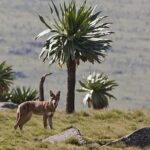
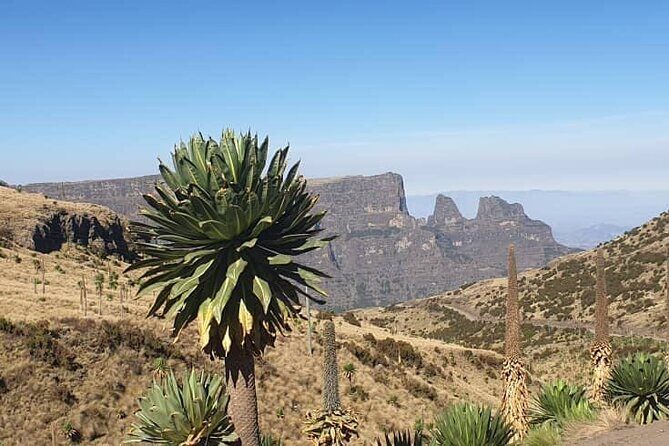
Once you arrive near Geech village, you camp beyond it in a campsite that’s known for views and for giant lobelia plants. Lobelias are a signature highland plant, and seeing them up close makes the altitude feel real rather than just a number on a schedule.
From there, plan for sunset. The nearby Kedadit summit is one of the better places to see the day’s light change. You’re camping around 3600m, so sunsets can cool down quickly and the air can feel thin. Bring layers you can actually move in; you’ll probably want them both for the walk and the evening.
What you should watch for on Day 2: because it’s longer (and includes real elevation changes), pacing matters. If you go out too fast, the back half can feel harder than the morning. The good news is the reward is right at camp—big mountain views plus lobelia scenery, then a sunset viewpoint nearby.
Imet Gogo promontory and lammergeier vultures (Day 3)
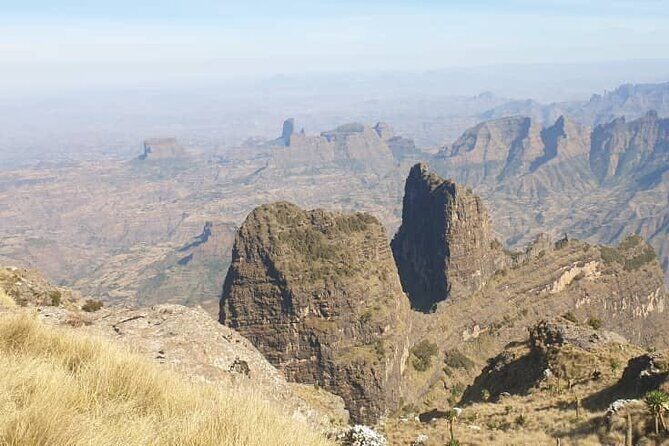
Day 3 is shorter on paper than Day 2, but it’s designed for one of the most exciting payoff moments of the whole trek: the Imet Gogo promontory.
From Geech, you trek toward Imet Gogo for spectacular views in the range. This is also the day for one of the Simien Mountains’ headline birds: the lammergeier (often called the bearded vulture). If you’ve never seen a large raptor at close range, this is the kind of moment that makes a trek feel like more than just hiking.
After the promontory viewpoint time, the route turns back. You trek back toward the road near Ambaras, then meet the car for the drive back to Gondar. The walking time is about 4–5 hours total, which makes Day 3 the easiest day in terms of sustained effort—especially compared to Day 2’s longer route.
Day 3’s main “consideration” is timing and attention. The best bird and the best view both depend on being ready when they show up, not when you planned to stop for photos. Keep your pace steady and stay alert in the promontory section.
Price and value: what $400 covers and how it changes the trip
At $400 per person for 2 nights / 3 days, this trek isn’t the cheapest thing you’ll do in Ethiopia. But for the money, you’re paying for the stuff that actually costs time and admin in a place like this: entrance fees, guide and scout support, and the full meal plan across the trek.
Here’s the value equation that matters:
- Entrance fees & taxes are included
- You get an English-speaking guide and scout
- Meals are included for each day—breakfast, lunch, and dinner throughout the 3 days
- Accommodation is included (the trek includes overnight nights along the route)
- You’ll also have park-required logistics covered through the permit process
Alcohol isn’t included, so if you expect to unwind with drinks at camp, you’ll need to plan for that. But the included meal structure is a big win on a short trek. You’re not tracking food stops. You’re not paying extra for every meal when you’d rather be focusing on the next viewpoint.
Another value booster: small group size. With a maximum of 15 travelers, the trek usually feels more manageable than large group hikes, and it tends to keep the pace realistic.
And one more quiet benefit: pickup is offered and you’ll have a mobile ticket. For a short trek, reducing friction on the start and finish helps a lot.
A few more Gonder tours and experiences worth a look
Comfort, meals, and how the high altitude shapes your expectations
The trip says it’s designed for people with moderate physical fitness, which matches the hiking hours in the schedule. Your day lengths hover around a range of roughly 3–4 hours on Day 1, up to 5–7 hours on Day 2, and then about 4–5 hours on Day 3. The goal is steady effort, not sprinting up hills.
Altitude is the other big factor. You begin the trek around 3250m and camp around 3600m. That typically means cooler evenings and quick shifts in comfort as the sun drops. You don’t need fancy gear, but you do need to be prepared for cold at night and for sunlight during the day.
Meals are thoughtfully handled. You’ll be provided vegan meals, and you can also be accommodated for health restrictions. That matters on a trek because meal quality and consistency affect energy. When meals are included across the whole trip, you spend less mental effort on logistics and more on the hiking.
Choosing the right guide energy: ask for Tsehaynew
One detail I appreciate from the broader experience feedback around Ethio Backpacker Tours is the focus on people and communication. In particular, Tsehaynew gets mentioned as someone who knows a lot and supports the group.
This matters because a Simien trek is not just about scenery—it’s also about understanding what you’re seeing. When your guide can connect the dots (plants like lobelia, animals like geladas and lammergeiers, why the trail turns where it does), the trek feels sharper and more meaningful.
Also, because you’ll have both an English-speaking guide and a scout as part of the operation, you should expect that practical safety and route knowledge are part of the plan—not an afterthought.
Should you book this 2 nights 3 days Simien trek?
Book it if you want a real trekking experience in a short window, and you care about wildlife and viewpoints, not just a quick scenic stop. The itinerary hits several standout moments: geladas early, Jinbar waterfall and lobelia at Geech, then Imet Gogo and lammergeier vultures on Day 3.
Skip it if you’re looking for an easy walk, guaranteed warm weather comfort, or a more luxurious, all-lodge day-by-day experience. You are hiking for multiple hours, and you’re sleeping at meaningful altitude.
One more decision tip: if you’re traveling around weather-sensitive months, keep an eye on conditions. The trek depends on good weather, and if conditions are poor, the tour may be offered on a different date or you’ll get a full refund.
If that schedule flexibility works for you, this short trek is a strong way to experience one of Ethiopia’s top mountain regions without taking on a longer multi-day commitment.
FAQ
What’s included in the Simien Mountains National Park trek?
The tour includes all entrance fees & taxes, an English-speaking guide and scout, accommodation, and meals: breakfast, lunch, and dinner for each day of the trek. Lunch and dinner are included for 3 days, and breakfast is included for 3 days.
How long is the trek and when does it start?
The experience runs for 2 nights / 3 days (about 3 days). The start time is 8:00 am, and it begins in Gondar.
Where does the trekking start on Day 1?
Day 1 includes driving from Gondar to Debark for permits and a scout, then continuing to Sankobar. The trek begins near Buytras (Simien Lodge) and walks to the Sankabar campsite.
How much walking should I expect each day?
Day 1 is about 3–4 hours of trekking. Day 2 is about 5–7 hours. Day 3 is about 4–5 hours, with an element of trekking to the road near Ambaras before returning by car.
What wildlife and scenery are highlighted on the route?
You have a good chance of seeing gelada baboons on the first day. Day 2 includes Jinbar waterfall and giant lobelia plants near the Geech campsite. Day 3 is known for the lammergeier vultures and views from the Imet Gogo promontory.
How high will I be during the trek?
The route reaches about 3250m at Sankobar on Day 1 and camps at around 3600m at Geech on Day 2.
Is pickup included?
Yes, pickup is offered. The tour also starts in Gondar and ends back at the meeting point.
Are vegan meals provided?
Yes. Meals are vegan, and the tour also states they can adapt based on health restrictions.
What’s the cancellation policy and what happens if weather is bad?
You can cancel for a full refund up to 24 hours in advance. The tour requires good weather; if it’s canceled due to poor weather, you’ll be offered a different date or a full refund.