REVIEW · ADDIS ABABA
Excursion to Melka Kuntre, Tiya and Adadi Mariam
Book on Viator →Operated by East Africa Tour Operator · Bookable on Viator
Three sites, one long day.
I love the small-group setup and the included lunch that keeps things easy and stress-free. The trade-off: this is a full 8-hour push, so you’ll move between stops and spend less time per site than you would on a slower schedule.
What makes this outing work so well is the basic idea: you get out of busy Addis Ababa early, then someone else handles the driving, timing, and entrance logistics. You also get a real mix of Ethiopia’s past in a single day—stone tools up to 1.8 million years old, an UNESCO stele field, and a rock-hewn church. Just go in with the right expectations: you’ll be learning fast, not taking it slow.
In This Review
- Key highlights at a glance
- A one-day archaeology route that actually fits real life
- Price and logistics: what $220 really buys you
- A morning start from Addis Ababa that keeps the day on track
- Melka Kunture: 1.5–1.8 million-year-old stone tools, clearly explained
- What to expect (and what to watch for)
- Tiya’s UNESCO stele field: decorated pillars and ancient stone geometry
- The trade-off: it’s scenic and still
- Adadi Maryam: a rock-hewn church with echoes of Lalibela
- What might feel different from famous churches
- The included food and water make the day feel civilized
- Small-group travel (max 14) and why it matters at these sites
- The guides and drivers: the kind of competence that saves time
- Who this tour is best for
- Should you book this Melka Kuntre–Tiya–Adadi Maryam tour?
- FAQ
- What time does the tour start?
- How long is the day trip?
- Is pickup from Addis Ababa included?
- How big is the group?
- What is included in the price?
- Are admission tickets included?
- Is alcohol included?
- What if the weather is bad?
- What is the cancellation policy?
Key highlights at a glance
- Max 14 people keeps it manageable and less chaotic than big tours
- Pickup in Addis + air-conditioned vehicle makes an early start easier
- Melka Kuntre is 1.5–1.8 million years old, with tools from early Homo sapiens
- Tiya’s UNESCO stele field features large decorated stone pillars
- Adadi Maryam is a rock-hewn church, with similarities to Lalibela and Tigray churches
- Lunch, coffee/tea, and bottled water are included, plus fuel surcharge coverage
A one-day archaeology route that actually fits real life
If you’ve only got one day in Addis Ababa, this type of trip can be a lifesaver. You get countryside time without needing to plan a thing, and you still hit three major stops that feel very different from each other.
I like that the day is built around pacing that most people can handle: early pickup, steady driving, then focused time at each site. You’re not just riding around—you’re getting stops that reward your attention.
You can also read our reviews of more tours and experiences in Addis Ababa.


Price and logistics: what $220 really buys you
At $220 per person, you’re paying for more than entry tickets. You’re paying for transportation, guidance at the sites, and the glue that holds the day together: round-trip transfers, an air-conditioned vehicle, and fuel coverage.
In plain terms, the value comes from how much coordination you avoid. Without a plan like this, you’d still need transport between Addis and the countryside, plus you’d have to figure out timing and entry details on your own. Here, you also get lunch, plus coffee and/or tea and bottled water. Alcohol is not included, so if you want drinks beyond that, budget separately.
Also, it’s typically booked about 6 days in advance. That’s a good sign: it’s not a last-minute “maybe.” If you’re visiting during busier periods, booking ahead helps you lock in your preferred day.
A morning start from Addis Ababa that keeps the day on track
The day starts at 7:30 am, with pickup offered and a shared group structure. The vehicle is air-conditioned, which matters because you’ll be sitting for part of the ride before you even reach the first site.
You’re going to spend a lot of the morning in transit, including a drive to Tiya (about 83 km). That’s not a flaw—just a reality of doing three countryside sites in one shot. If mornings feel brutal for you, bring water, keep your camera ready, and plan on being awake early.
Melka Kunture: 1.5–1.8 million-year-old stone tools, clearly explained
Melka Kunture is the kind of place that makes your brain recalibrate. The site is often described as between 1.5 and 1.8 million years old, and the focus here is on Stone Age tools associated with early Homo sapiens.
You’ll get around 45 minutes here, with the admission ticket included. That time is short, but it’s shaped well: the tools and findings are presented in show rooms with good scientific explanation about Stone Age tools in general and what the site means specifically.
One practical tip: don’t try to read everything word-for-word. Instead, pick a few tool types (even just by shape) and look for the explanations tied to how people used them. In a short visit, that’s the fastest way to leave with real understanding.
What to expect (and what to watch for)
You’ll be moving through exhibits and learning in a structured way. The main limitation is time: 45 minutes flies. If you’re the type who could spend hours with archaeology labels, you might wish you had more time here. The upside is that the day continues, so you won’t get stuck in one place.




Tiya’s UNESCO stele field: decorated pillars and ancient stone geometry
After Melka Kunture, you’ll drive about 83 km to Tiya. Tiya is famous for its ancient stele field and its UNESCO World Heritage status, built around large stone pillars that often include decoration.
You’ll have about 1 hour, and admission is free. That hour is plenty if you treat it like a guided walk: look at the pillars as a “collection,” not as individual objects. The decorations (as described for the site) are your clue to how people marked place, identity, or meaning in the landscape.
This stop also gives you a nice change of pace from tool-based archaeology. Instead of asking what people made, you start asking why they built, marked, and repeated designs on stone.
The trade-off: it’s scenic and still
Tiya is not built for speed. You’ll want to pause, look closely, and let your guide’s explanations do the heavy lifting. If you’re rushing for photos, you’ll miss the point of the stele field. If you’re patient, it’s one of those places where the details start to “click.”
Adadi Maryam: a rock-hewn church with echoes of Lalibela
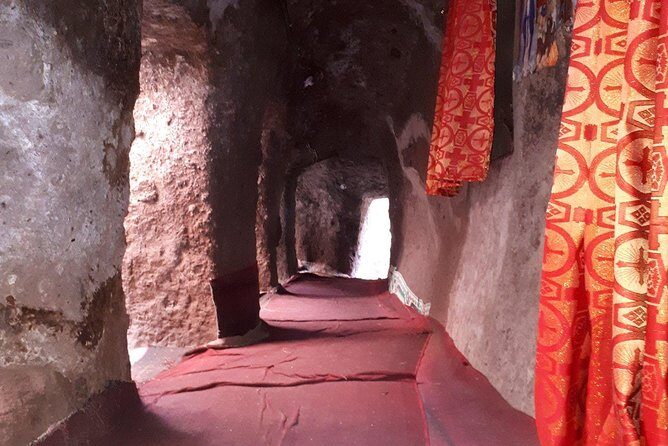
Adadi Maryam sits along the same route you’re traveling and is described as the only rock-hewn church existing in that region. This church isn’t carved with the same level of precision you may associate with Lalibela, but it has similarities to other rock-hewn churches, including those in Tigray.
You’ll spend around 2 hours here, with the admission ticket included. Two hours is generous compared with some day trips, and it’s what makes Adadi Maryam worth it. You’ll have time to understand the setting and notice architectural cues without feeling like you’re standing under a time limit.
Here’s how to make the most of it: think of Adadi Maryam as a study in variation. Similar religious architecture ideas can still show up with different carving styles and levels of refinement depending on time, hands, tools, and local choices.
What might feel different from famous churches
If your expectations are tied to Lalibela-level craftsmanship, you may notice the difference quickly. That’s not automatically a disappointment. It can actually be the value: you get a church that’s part of the same tradition family, just with a different expression.
The included food and water make the day feel civilized
A day that starts early and runs around 8 hours long needs basic comfort. This one includes lunch, plus coffee and/or tea and bottled water. There’s also fuel coverage, and you travel in an air-conditioned vehicle.
I appreciate this because it prevents the common day-trip problem: hunger and thirst turn a cultural outing into a grind. If you have dietary needs, double-check details when you book, but at least you’re not starting the day assuming you’ll find lunch on your own.
Alcoholic beverages aren’t included, so if that matters to your plan, keep it in mind for the timing of any stops or meals.
Small-group travel (max 14) and why it matters at these sites
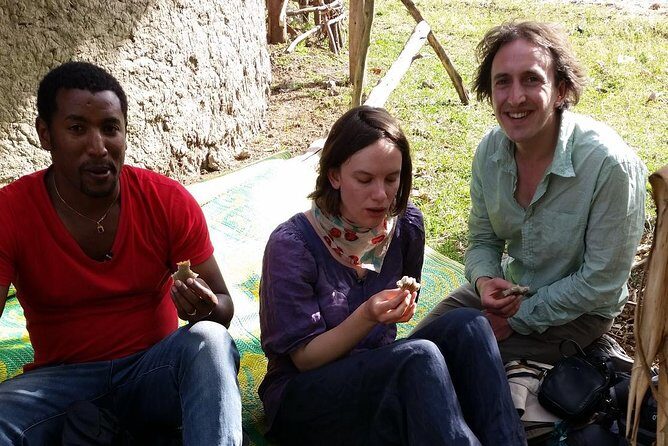
The tour keeps the group to 14 people max, which makes a tangible difference across a day like this. Smaller groups mean less waiting for everyone to regroup, and more space for your guide to respond when questions come up.
You also tend to get better control of the pacing. At archaeology stops, people move at different speeds. A tighter group helps everyone stay in sync without turning the experience into a rush.
The guides and drivers: the kind of competence that saves time
One thing that comes through clearly is the quality of the people running the day. The guide and driver are described as competent and sympathetic, and that combination matters more than it sounds.
A capable driver means smoother transit timing. A sympathetic guide means you’ll get explanations that feel human, not robotic, especially when the day includes sites with very different themes (tools, pillars, and a church).
Even if you know little about Ethiopian archaeology going in, a good guide helps you look at what you’re seeing in a way that actually sticks.
Who this tour is best for
This is a strong fit if you want a value-focused day trip from Addis without getting tangled in logistics. It’s also a good choice if you’re curious about ancient human history and sacred architecture and want both in one day.
You’ll likely enjoy it most if:
- you’re comfortable with an early start and a packed schedule
- you want structured time at each site rather than independent wandering
- you prefer a small shared group over private-only pricing
If you hate long drives or want deep, slow archaeology reading time, you might be happier with a longer itinerary spread over multiple days. This one is designed for one-day coverage.
Should you book this Melka Kuntre–Tiya–Adadi Maryam tour?
I’d book it if you want the best odds of hitting three meaningful countryside sites with minimal stress. The combination of small-group size, included lunch and drinks, and tickets for most of the key stops makes the $220 price feel more reasonable than it first appears.
Skip it (or consider another format) if you’re the type who needs lots of quiet time and long stays per site. This is a “see it all” day, so your experience depends on being okay with moving through fast.
FAQ
What time does the tour start?
It starts at 7:30 am.
How long is the day trip?
It runs about 8 hours on average.
Is pickup from Addis Ababa included?
Yes. Pickup and round-trip transfers from Addis Ababa are provided.
How big is the group?
The tour is limited to a maximum of 14 travelers.
What is included in the price?
Lunch, coffee and/or tea, bottled water, an air-conditioned vehicle, private transportation, and fuel surcharge are included.
Are admission tickets included?
Admission is included for Melka Kunture and Adadi Maryam. Tiya admission is described as free.
Is alcohol included?
No. Alcoholic beverages are not included.
What if the weather is bad?
This experience requires good weather. If it’s canceled due to poor weather, you’ll be offered a different date or a full refund.
What is the cancellation policy?
You can cancel up to 24 hours in advance for a full refund. If you cancel less than 24 hours before the start time, the amount paid is not refunded.