REVIEW · GONDER
6 Days tour Package (Simien Mountains, Lalibela, and Danakil Depression)
Book on Viator →Operated by Ethio Travel And Tours · Bookable on Viator
Volcano air and rock churches in one week. I love how this trip strings together three of Ethiopia’s biggest draws, and I like that you still get real hiking in the Simien Mountains instead of only bus stops. The main trade-off is that this is an active itinerary with early starts and long, rough overland drives.
I’d also go in with eyes open about service consistency. Some people report smooth coordination and great staff teamwork, while others describe moments of disorganization and a rougher experience on the road. If you’re flexible, good at rolling with bumpy logistics, and focused on the sights, you’ll likely be happy with what you get.
In This Review
- Key things to know before you go
- Simien–Lalibela–Danakil: the smartest way to pack Ethiopia into 6 days
- Starting in Gondar with pickup and a 5:30 am rhythm
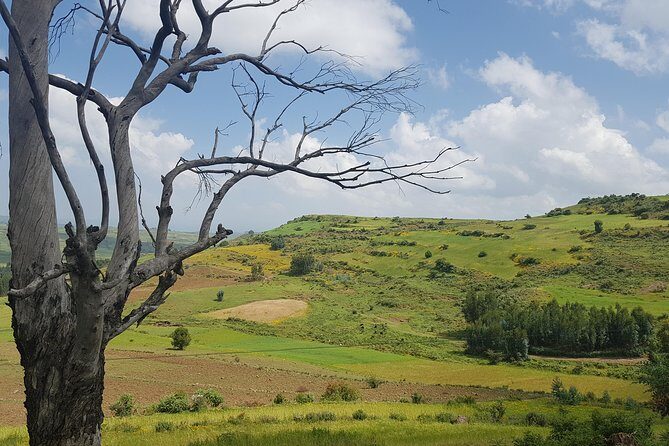
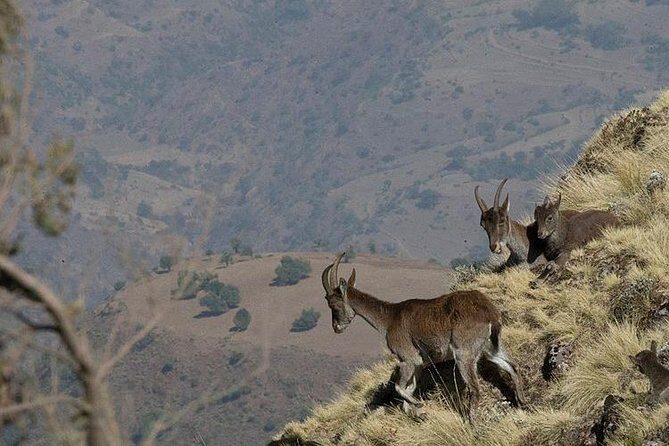
- Simien Mountains National Park: Debark permission, a scout, and the Chilkuwanit viewpoint
- Lalibela’s 11 rock churches: a UNESCO stop you can actually absorb in a day
- Traveling from Lalibela to Mekele: the road portion you shouldn’t ignore
- Getting to Erta Ale: rough roads, early setup, and Afar-region guidance
- Erta Ale sunrise and the lava pits: what “challenging” really means
- Dallol, Lake Assal, and salt mining: surreal geology with real human work
- Price and value: what $1,435.90 covers (and what you may still pay)
- Group travel reality check: 25 people, early mornings, and long drives
- Who should book this (and who should reconsider)
- Should you book this 6-day Simien, Lalibela, and Danakil tour?
- FAQ
- What time does the tour start in Gondar?
- Does this tour include pickup?
- What’s the maximum group size?
- Are entrance fees and permits included?
- Are meals included?
- How many domestic flights are included?
- What kind of transport is used?
- Is there camping involved?
- Is a visa or permission required to enter sites like Simien?
- What happens if weather is bad?
Key things to know before you go
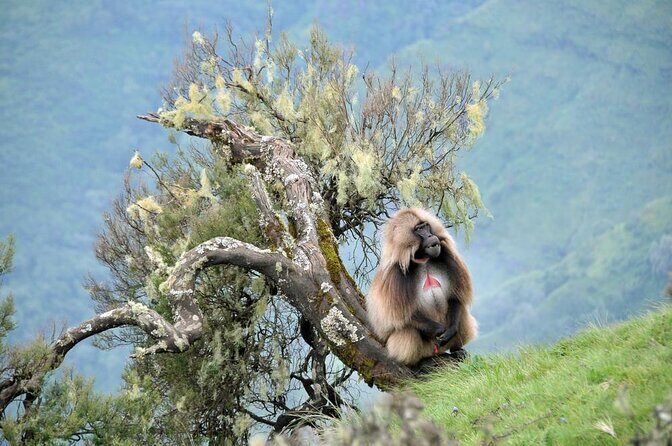
- UNESCO coverage, not just sightseeing: Simien National Park and Lalibela’s rock churches both have UNESCO status.
- Morning starts are part of the deal: the tour meets at 5:30 am, and several days begin early.
- Danakil is rough and physical: Erta Ale involves climbing up to the pits around sunrise and walking in challenging conditions.
- You travel with a built-in safety layer: scout and police service is provided for the Afar region, plus security.
- Camels and salt mining are timed to the season: camel caravans are noted as not available in July, August, and early September.
- Meals and entry fees are largely handled: accommodation, entry fees, and most meals are included, but some meals in Gondar and Lalibela aren’t.
Simien–Lalibela–Danakil: the smartest way to pack Ethiopia into 6 days
This is the kind of itinerary that usually takes you weeks if you plan it yourself. Instead, you get a tight circuit: Simien Mountains National Park, Lalibela’s rock-hewn churches, and the Danakil Depression with Erta Ale, Dallol, and Lake Assal. The value here is not just the distance covered. It’s that you’re saved from the most annoying parts: arranging permissions, lining up transport, and figuring out how to do remote stretches safely.
I also like the mix of experiences. Simien gives you high-altitude views and a true trek (with a scout). Lalibela gives you cultural depth in a way that’s easy to understand in a day. Then Danakil switches gears hard into heat, geology, and the surreal visuals of volcanic landscapes and salt mining.
The main consideration is stamina. You’re not just looking out windows. You’ll be trekking, doing early starts, and spending hours on overland routes where “fast and comfy” isn’t the goal.
You can also read our reviews of more tours and experiences in Gonder.
Starting in Gondar with pickup and a 5:30 am rhythm
The tour starts at 5:30 am in Gondar, with pickup offered from Gondar Airport or your hotel. From there, your first big move is heading toward Debark, the headquarters town for Simien National Park.
Two practical details matter for day-to-day comfort:
- Small group size: the tour has a maximum of 25 travelers, so you’re less likely to feel like you’re on a big cattle-car schedule.
- English-speaking support: you get an English-speaking guide and a driver throughout, plus additional local guidance for the Afar region.
You’ll also be using three domestic flights with Ethiopian Air Lines during the overall program. That’s part of why this route can fit so much in—air travel trims the long Ethiopian ground distances.
Simien Mountains National Park: Debark permission, a scout, and the Chilkuwanit viewpoint
Day 1 is built around getting you into the Simien Mountains with the right paperwork and the right team on the ground.
You’ll drive Gondar to Debark, where you’ll:
- pick up permission to enter the park
- meet a scout
- have a tea/coffee break
- potentially stop at the local market
Timing note: the local market runs daily, with big market days on Wednesdays and Saturdays. If your schedule matches one of those, this is a nice bonus before you switch into trek mode.
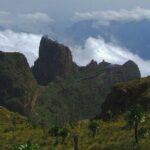
Then you drive from Debark to the park gate (about 16 km away). After that it’s still more moving: roughly 6 km to Buit Ras, followed by a 3–4 hour trek to Chilkuwanit, which is described as one of the best viewpoints in the area. The day also includes admission ticket coverage.
What to expect on a practical level:
- You’re starting early enough that you’ll likely feel the altitude and effort from the first hours.
- Your scout and local setup reduce the friction factor. In this region, that matters.
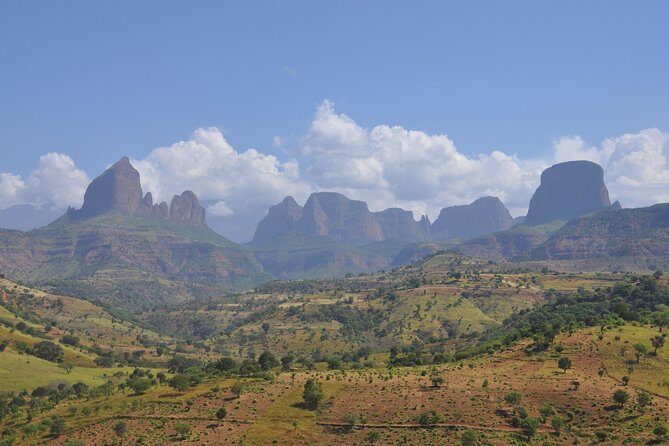
- The viewpoints here are why Simien is so famous. Even if you’ve seen Ethiopian photos online, the scale of the views tends to hit differently in person.
A heads-up: this is listed as a hiking-focused experience, so if you’re not comfortable walking for multiple hours on day one, you may feel it later in Danakil too.
Lalibela’s 11 rock churches: a UNESCO stop you can actually absorb in a day
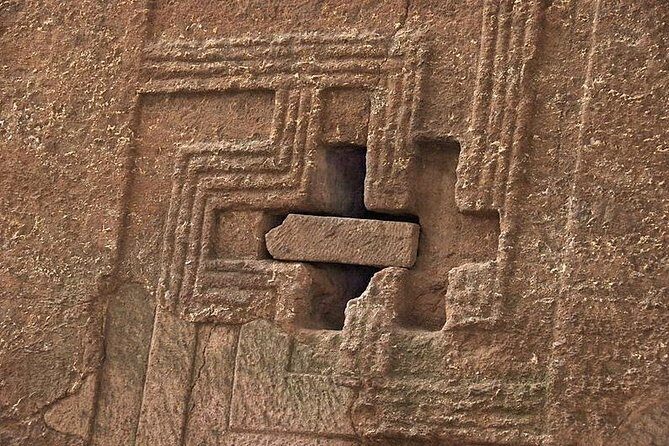
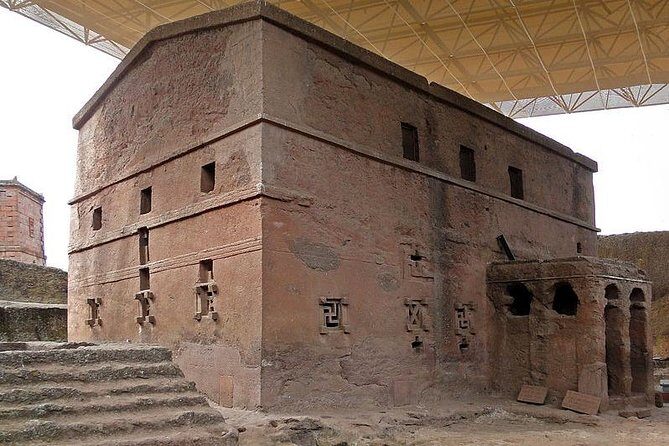
Day 2 keeps things concentrated and meaningful: Lalibela and its rock-hewn churches. You’ll visit the 11 groups of churches north of the small Jordan River.
These churches were carved during the time of King Lalibela (1181–1221) and are a UNESCO World Heritage Site. The key benefit of this day is that it’s not “drive-by heritage.” You’re in Lalibela specifically for the churches, and the program is structured around that.
From a value standpoint, it’s also efficient. The visit length is listed at about 7 hours, and admission tickets are included.
Practical note for your time and energy:
- This day is culturally intense but not trekking-heavy compared to Simien or Erta Ale.
- You’ll likely want to pace yourself with water and simple breaks, since you’re stacking a major site onto an already full travel circuit.
Traveling from Lalibela to Mekele: the road portion you shouldn’t ignore
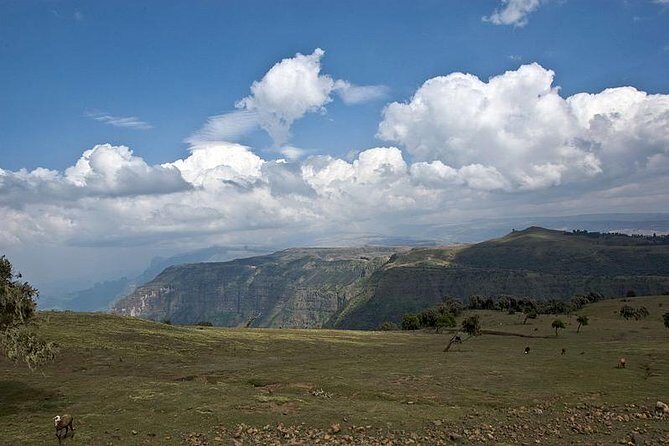
Day 3 is a transfer day: drive from Lalibela to Mekele, enjoying the scenery along the way. It’s not a “rest day” in the comfortable sense—driving time builds up, and you’re also transitioning toward Afar region operations.
Even if this sounds simple on paper, this is where many people start to feel the fatigue from the itinerary. Remote Ethiopian drives can be long and bumpy, and your comfort will depend heavily on your willingness to tolerate rough roads for a multi-hour stretch.
If you’re the type who wants perfect smoothness, this is the point where your expectations should adjust. The upside is that this routing positions you well for Erta Ale and the Danakil Depression.
Getting to Erta Ale: rough roads, early setup, and Afar-region guidance
Day 4 is where the trip becomes physically real. You start by driving to Erta Ale, meaning smoky mountain in Afar language. It’s a shield volcano with a summit caldera and—this is the headline—the world’s only permanent lava lake.
The day starts early (listed at 9:00 AM for the start, but the trip is described as starting early enough to get moving toward the base area). You drive to Dodom, at the base of Erta Ale.
Two details help you understand what kind of day this is:
- The road to Dodom is described as one of the roughest, and the distance is about 80 km.
- You’re not just viewing from far away. You’re walking and then dealing with volcanic terrain.
Admission tickets are included for this stop.
You also have support structures that matter in remote areas. The included items list includes local guide service for the Afar region, scout and police service in Afar region, and security. This is exactly what you want on a trip that can get logistically complex.
Erta Ale sunrise and the lava pits: what “challenging” really means
Day 5 is the payoff day: Erta Ale at sunrise. The program notes an early morning approach around the northern one corresponding to the main pit crater, with walking a short distance to reach the pits.
Here’s what the tour description tells you about the terrain:
- The main pit-crater is described as about 200 m deep and 350 m across.
- There’s a southern pit around 65 m wide, with about 100 m deep.
- The description also notes the crater structure as sub-circular and three-storied.
Timing-wise:
- You’re guided to Descend/leave back to Dodom around 9 am after sunrise walking, and you’re expected to reach the latest at 10:30 am at the camp.
- The program mentions relaxing after arriving at the camp.
There’s also an optional element described on Day 5: a drive toward Lake Giulietti (or Lake Afrera), with the note that availability may depend on the season. If that option is offered during your dates, it can be a nice extra, but don’t treat it as guaranteed.
Camping setup is included here. The tour includes cooking and camping equipment, and it also lists camel and camel tires for Afar region logistics. In practical terms: you’re not expected to improvise gear in a remote volcanic zone.
Dallol, Lake Assal, and salt mining: surreal geology with real human work
Day 6 is another big swing in visual tone. Morning includes a drive to Ragad (Asebo), where localities mine salt, then you visit:
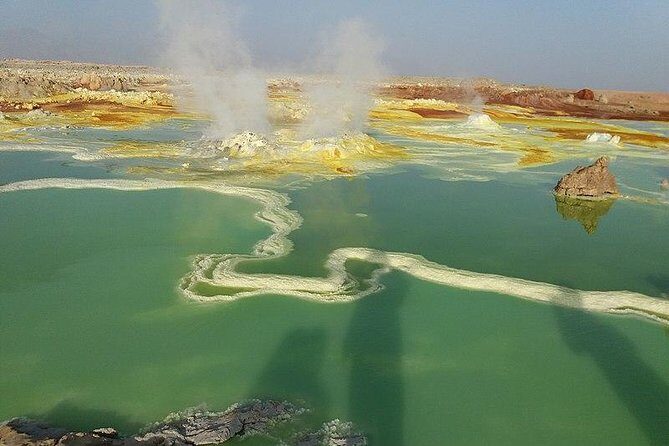
- Dallol and the volcanic formations of the area
- Lake Assal
- camel caravans (with a seasonal note)
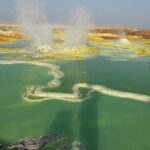
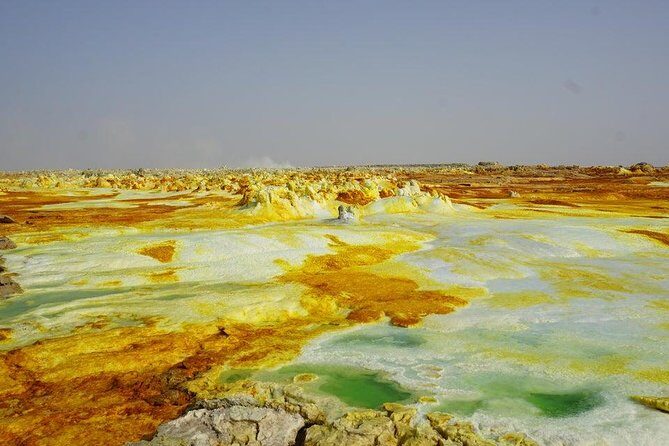
The Dallol piece is specifically timed and described with a striking statistic: it sits around 116 meters below sea level, and the area is described as colorful salts mining and volcanic-formed terrain.
Then Lake Assal adds a different kind of otherworldly scene—also tied to the salt region. And you’ll see salt mining work: workers breaking salt from the ground, cutting rectangular pieces, and loading them onto camels.
Season matters here. The tour description notes:
- No camel caravan in July, August, and early September
So if you travel in those months, expect the salt-mining element, but the camel-caravan part may not happen.
The day’s logistics also show how the tour stitches remote areas together:
- drive to Hamedela
- proceed to Mekele
- then fly from Mekele to Addis to end the tour
Even if you’re not a geology person, the combination of Dallol colors, salt processing, and the human labor behind it is one of the most memorable parts of the whole circuit.
Price and value: what $1,435.90 covers (and what you may still pay)
The price listed is $1,435.90 per person, and the tour is typically booked about 124 days in advance. So you’re paying for a serious amount of coordination: park permissions, domestic flights, 4WD land transport, guides, and remote-region security.
Here’s what’s clearly included:
- Accommodation and most meals (the fine print shows breakfast is 5, lunch is 3, dinner is 2; and lunch/dinner in Gondar and Lalibela are not included)
- Entrance fees and licenses
- Bottled water
- Surface transport in a 4WD Land Cruiser, including fuel and driver allowance
- Local guide service in Afar region
- Scout and police service in Afar
- Cooking and camping equipment
- Camel and camel tires in Afar region
- All transport, plus an English-speaking guide and driver
- Three domestic flights with Ethiopian Air Lines
- Security
- Admission coverage on key days (each stop includes admission ticket)
What’s not included:
- Lunch and dinner in Lalibela and Gondar
- International flights
- Alcohol
- Camera/video fees if any
- Laundry
- Personal expenses like internet/phone
How I’d judge value: if you tried to build this on your own, the biggest costs would likely be in transport and the remote-region permissions and safety setup. This tour takes that burden off your plate and puts you into a group flow that’s designed to reach Erta Ale and Dallol.
Still, value only holds if the organization quality matches the promise. One low-rating experience you were given points to disorganization and long rocky roads; another experience points to smooth coordination and strong HQ support. That tells me the biggest risk isn’t the destinations—it’s how smoothly the machine runs on the specific dates and staff handling your departure.
Group travel reality check: 25 people, early mornings, and long drives
A maximum group size of 25 usually means a good balance: small enough for some flexibility, big enough for shared logistics.
But the itinerary’s structure leans toward early movement and long transit. Your days won’t feel like a slow vacation. They’ll feel like a mission—one with fantastic scenery, but still a mission.
If you’re the kind of traveler who loves planning and control, you might feel impatient if pacing feels tight. If you’re the kind who just wants the sights and can roll with rough roads, you’ll probably enjoy the ride more.
One more subtle thing: this tour includes both hiking and remote camping. That combination rewards good physical readiness and sensible gear habits. If you go unprepared, your discomfort will be magnified in the Danakil days.
Who should book this (and who should reconsider)
This tour is a strong fit if you:
- want a high-contrast itinerary: mountains, medieval churches, and volcanic deserts
- are comfortable with hiking and early starts
- like the idea of guided logistics in remote regions with scout/police support
- want most major expenses handled up front (entries, transport, accommodations, and many meals)
You might reconsider if you:
- hate rough road days and want a smoother comfort level
- are very sensitive to planning changes or tight schedules
- are not interested in physical activities like multi-hour treks and sunrise crater walking
For the best match, think active-but-adaptable. You don’t need to be an athlete, but you do need to be willing to get moving.
Should you book this 6-day Simien, Lalibela, and Danakil tour?
My take: book it if your goal is to hit Ethiopia’s headline landscapes and cultural sites in one efficient loop, with guides and safety logistics already handled. The included structure—park permissions, Afar-region local support, 4WD transport, domestic flights, and the camping setup—turns a complicated route into a doable package.
I’d be cautious if you know you need perfectly smooth organization. Based on the two contrasting experiences in the feedback you provided, service quality can swing. If you’re easygoing and focus on the destinations, that swing is easier to tolerate.
If you do book, plan like a smart underdog:
- pack for heat and dust for Danakil
- expect early wake-ups and long drives
- keep your day-one energy for the Simien trek and don’t treat Day 3 as a true reset
FAQ
What time does the tour start in Gondar?
The tour start time is listed as 5:30 am, with pickup from Gondar Airport or your hotel.
Does this tour include pickup?
Yes. Pickup is offered in Gondar from either Gondar Airport or your hotel.
What’s the maximum group size?
The tour has a maximum of 25 travelers.
Are entrance fees and permits included?
Yes. Entrance fees and licenses are included as per the program, and each main stop notes admission ticket coverage.
Are meals included?
Accommodation is included, and most meals are included, with the program listing 5 breakfasts, 3 lunches, and 2 dinners. Lunch and dinner in Gondar and Lalibela are listed as not included.
How many domestic flights are included?
The tour includes three domestic flights with Ethiopian Air Lines.
What kind of transport is used?
You’ll use overland transport including 4WD Land Cruisers (with fuel and drivers allowance included), plus domestic flights.
Is there camping involved?
The tour includes cooking and camping equipment, and the Erta Ale section references reaching a camp for relaxing.
Is a visa or permission required to enter sites like Simien?
You’ll handle park entry permission in Debark on Day 1 as part of the program, including meeting a scout.
What happens if weather is bad?
The experience notes it requires good weather. If it’s canceled due to poor weather, you’ll be offered a different date or a full refund.