REVIEW · MEKELE
2 Days Dallol Trip
Book on Viator →Operated by Danakil Tour and Travel · Bookable on Viator
Dallol looks like it belongs to another planet. This 2-day Danakil trip brings you straight to Dallol’s otherworldly hydro-thermal colors and salt-caravan culture, with organized guiding and real time in the mining areas. I like that it’s not just a photo stop: you see sulfur springs and follow the salt economy up close, then you get out for walking where the work is happening.
What I like most is the mix of big sights and practical logistics. You get air-conditioned driving, camping gear, and included meals—plus a guide and scout/police service that keeps things running in a region that’s not set up for casual detours. One thing to think about first: this is remote, long-distance travel in a tough environment, and it calls for moderate physical fitness even if the pace is managed.
In This Review
- Key Things to Know Before You Go
- Entering the Danakil: How the Trip Starts at Erta Ale
- The Drive and Camp at Hamedela: Where Comfort Stops and Adventure Starts
- Day Two in Ragad (Asebo): Watching Salt Mining Up Close
- Dallol and Lake Assal: 116 Meters Below Sea Level and the Color Code of Minerals
- Walking with Afar People: The Culture Side Without the Museum Vibe
- Price and Value: What $307.70 Covers (and What It Doesn’t)
- Who This Trip Fits Best—and How to Prepare Without Stress
- Should You Book This 2-Day Dallol Trip?
- FAQ
- Where does the 2 Days Dallol Trip take place?
- What time does the tour start?
- How long is the trip?
- How much does it cost per person?
- Is pickup offered?
- Do I get a mobile ticket?
- What meals are included?
- Are admission tickets included?
- What is not included in the price?
- What is the cancellation policy?
Key Things to Know Before You Go
- Two days, one tight route: Erta Ale area on day one, then Ragad (Asebo) salt mining and Dallol on day two.
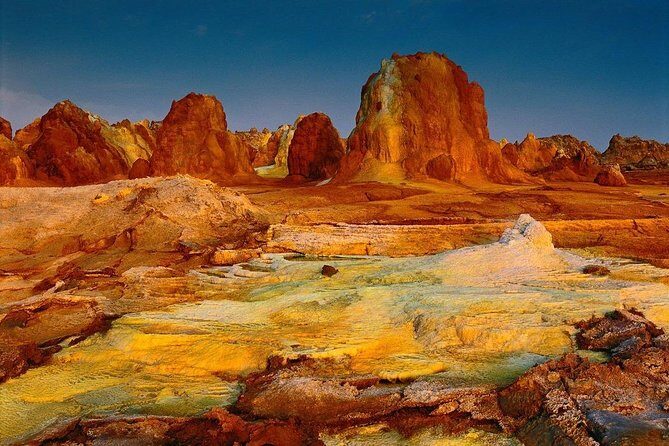
- 116 meters below sea level: Your Dallol excursion goes to one of the lowest places on Earth.
- Salt mining you can actually see: Watch salt broken into pieces and loaded onto camels.
- Camels are part of the show: You’ll see long caravans both entering and leaving the salt workings.
- Meals and water are included: Dinner, breakfast, and lunch (two times), plus bottled water on the trip.
- Small group size: Max 15 people keeps it more controllable in a place with few buffers.
Entering the Danakil: How the Trip Starts at Erta Ale
Your day begins with a straightforward start time—9:00 am—and then it’s off toward the Danakil Depression. This area is famous for being hard to live in, and that matters because it shapes everything about what you’ll experience. You’re not visiting a managed attraction with easy roads and visitor services. You’re traveling through a working edge of northern Ethiopia, where survival and commerce meet heat, minerals, and distance.
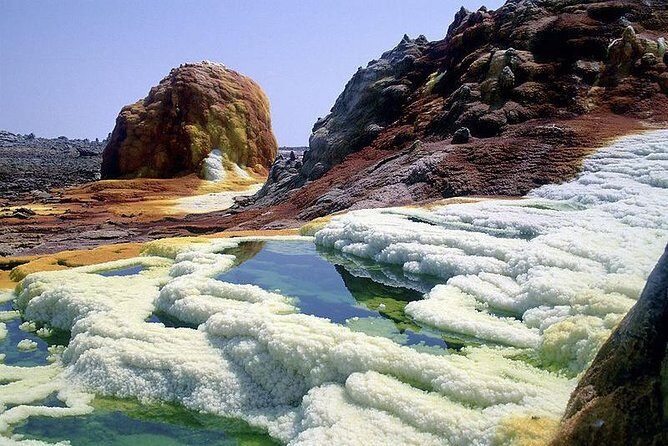
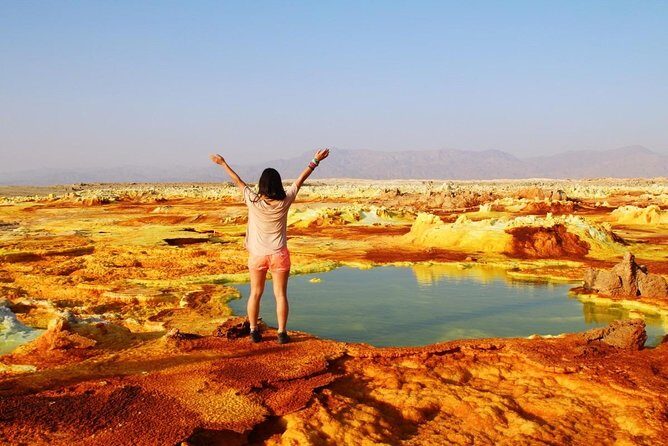
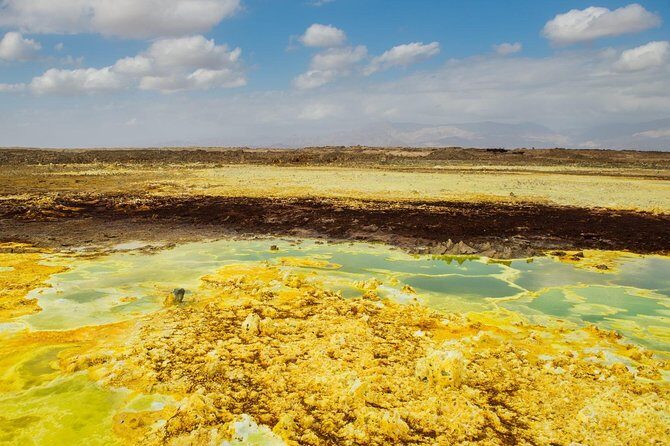
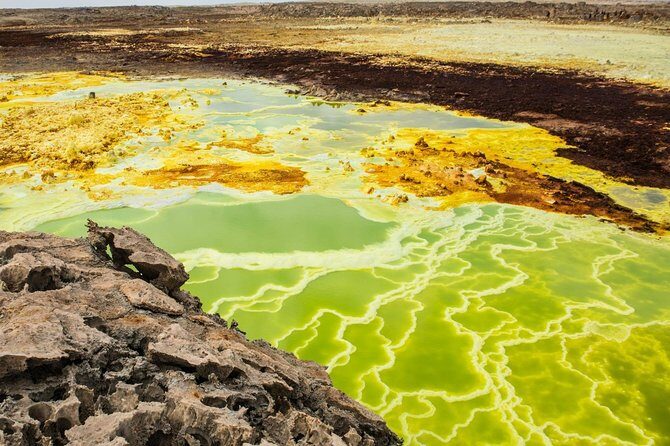
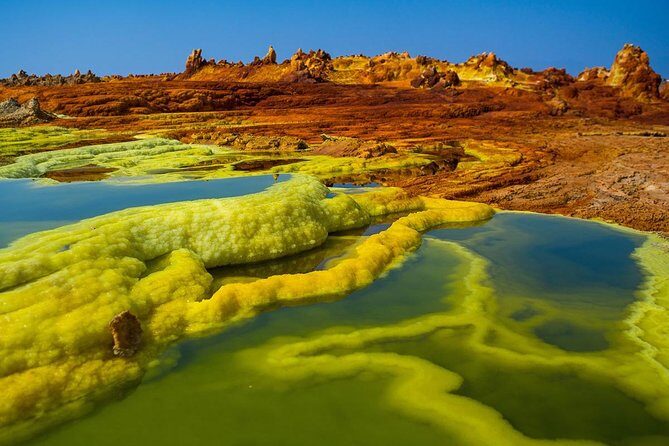
Stop one puts you near Erta Ale, often described as one of the points where the Danakil really starts to feel real. In this part of the desert you’ll see sulfur springs and striking mineral patterns—colors that don’t look like they were mixed by nature. The effect comes from hot, mineral-charged geothermal activity. The tour framework emphasizes those hydro-thermal springs and their very acidic fluids, so you’ll understand quickly that this is chemistry you’re standing near, not “just” scenic terrain.
A key detail I appreciate: the drive includes time passing through Berhale. The area is described as a stop for camel caravans before they continue toward the northern highlands and the salt routes. As you travel, you can spot long lines of camels heading toward the salt mines and others leaving with salt loaded. This makes the day feel alive. You’re not only watching nature; you’re watching the region’s supply chain move by slow rhythm.
Practical note: the first leg is listed around 3–4 hours of driving, then you camp at Hamad Ela (spelled in places as Hamedela/Hamad Ela depending on the wording). That camp base is important because it sets expectations for day two. You’ll likely wake up somewhere quiet and stark, not in a hotel.
A few more Mekele tours and experiences worth a look
The Drive and Camp at Hamedela: Where Comfort Stops and Adventure Starts
Between Erta Ale and camp, the day has a simple structure: travel, then camp at Hamad Ela, a village with about 500 people. That village scale is one of the reasons the experience can feel so “close to the ground.” Even with a tour company handling the route, you’re still in a place where daily life is visible in the background.
The tour includes camping equipment, which changes the comfort equation a lot. When people imagine a trip like this, they often picture roughing it without support. Here, the inclusion suggests you’re set up to sleep in the field with appropriate gear, not just dropped into the desert.
Another included piece that matters: dinner, breakfast, and lunch (twice). In remote areas, hunger and dehydration can turn an amazing day into a miserable one. Getting meals handled by the tour removes a major stressor. Bottled water for the trip is included too, which helps you stay focused on the sights rather than spending time hunting for supplies.
Still, here’s the drawback to keep in your head. It’s not a soft adventure. The tour calls for moderate physical fitness, and the region itself is inhospitable. Even if you aren’t doing strenuous hikes, you’ll likely spend time walking on uneven ground and dealing with heat and sun. Bring a mindset of steady effort, not sightseeing in flip-flops.
Also, remember this starts at 9:00 am. That early start is part of the deal—more daylight for the weird geothermal terrain and more time before the day closes in.
Day Two in Ragad (Asebo): Watching Salt Mining Up Close
The second day starts with more driving, heading toward Ragad (Asebo), where the local mining happens. This is where the trip becomes more than geology and photography.
You’ll see how salt is extracted directly from the ground. The description is specific: miners break salt from the surface, cut it into rectangular pieces, and load it onto camels. That detail matters because it shows the full workflow, not a single moment. When you watch salt turn into cargo, you start to understand why caravans are everywhere in this region and why these routes are so constant.
There’s also a human element built into the route. The tour connects mining with movement—how the salt moves out of the area and into markets. If you care about how people make a living in extreme places, this stop has real weight.
After Ragad, the day continues onward toward Dallol, which is where the geothermal effect becomes the headline. But mentally, I think you benefit from shifting gears. For many visitors, the first day feels like a dramatic intro. The second day starts to feel like a full working landscape—though the word landscape may feel too tidy. It’s more like a living industrial zone shaped by nature’s heat.
Dallol and Lake Assal: 116 Meters Below Sea Level and the Color Code of Minerals
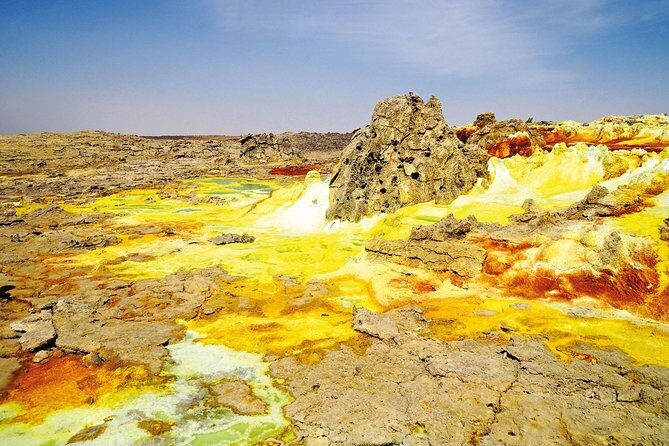
Dallol is the star. The excursion goes to 116 meters below sea level, one of the lowest places in the world. That number sounds abstract until you’re there and realize your “horizon” is a different kind of reality—wide, harsh, and defined by mineral surfaces rather than vegetation.
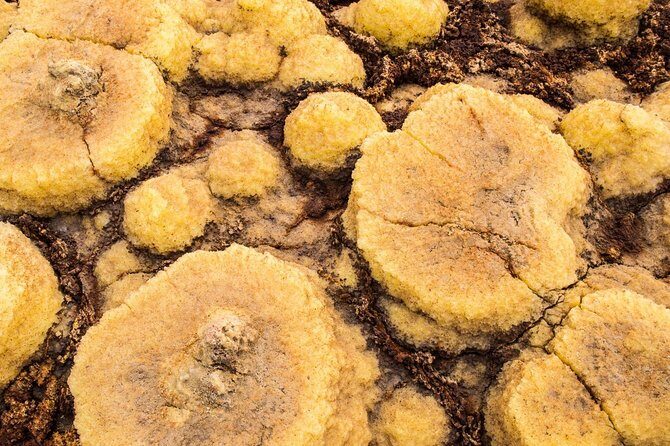
What you’re coming to see is a terrestrial hydro-thermal system known for unearthly colors and mineral patterns. The tour framing also emphasizes that you’ll be around very acidic fluids discharging from hydro-thermal springs. Translation for your expectations: you’re visiting an active geochemical environment. It’s not a place where you can treat the ground like it’s safe to touch or test. Follow your guide’s instructions and any boundaries. If you feel that tug to get closer for a better photo, resist it. Safety comes first.
Then there’s colorful salts mining in the Dallol area. You’ll see how mineral extraction fits into the geometry of the place—where the ground itself seems to be part of the material being harvested. If you love places that look “impossible,” this is the section that delivers.
The itinerary also includes Lake Assal, with the day tying it to camel caravans and the salt trade. Lake Assal is described alongside Dallol in the tour flow, so plan for a mix of mineral sights and the ongoing motion of carriers. In other words: you’re not just standing still. You’re moving through the route that connects the salt economy to the surrounding sites.
And yes, the caravan theme continues. You’ll get time connected to the camel caravans, and you can see how slow, steady transport keeps this place supplied. It’s one of those experiences where your eyes start to read the scene differently. The camels stop being “cool visuals” and start being the infrastructure of the region.
Walking with Afar People: The Culture Side Without the Museum Vibe
One of the strongest parts of this style of tour is that it isn’t only nature. The day includes a walk with the Afar people. That matters because it changes how you interpret what you see.
The experience is framed around salt mining, camel caravans, and walking in the areas where locals live and work. When you hear how salt extraction operates and you watch the steps unfold, the culture part becomes practical rather than performative. You’re learning because you’re moving through the same route and seeing the same rhythms: where people spend time, how work is done, and how movement supports survival.
I also like how the tour design supports that interaction. It’s not a long, rushed stop with a quick photo and then back to the vehicle. The timing includes multiple points on day two (Ragad, Dallol excursion, Lake Assal, camel follow elements, then the walk). That gives your guide enough time to connect the dots.
Still, keep your expectations grounded. This is a walk in an extreme environment. You’re not strolling a city park. It’s a purposeful walk, and you’ll want to keep your energy for the moments that matter: the mining visuals, the caravan movement, and the walk itself.
At the end of day two, you drive back to Hamedela and then continue on to Mek’ele. So the “walk” is the cultural finale before the long return to civilization.

Price and Value: What $307.70 Covers (and What It Doesn’t)
At $307.70 per person for about 2 days, this trip is priced in the “serious expedition” category. That can sound expensive until you break down what’s included.
You’re not just buying transportation to a viewpoint. The inclusion list covers:
- Air-conditioned vehicle (important for long drives)
- Local guide service
- Dinner, breakfast, and lunch (2 lunches)
- Camping equipment
- All fees and taxes
- Bottled water for the trip
- Scout and police service
That’s the value engine. Remote routes cost money because you’re paying for more than mileage—you’re paying for safety support, fees, meals, and the gear that lets you sleep out there.
On the flip side, what you don’t get is also clear: alcoholic beverages aren’t included, and services not listed aren’t part of the package. Plan for basics like personal snacks, extra water if you prefer it, and anything you personally need for comfort.
Another small-but-real value point: the group size max is 15, which usually helps with responsiveness and manageable timing. In tight, remote settings, fewer people often means your guide can keep a steady pace without losing time to constant regrouping.
And if you’re a planner, note the average booking window is 51 days. That doesn’t guarantee availability, but it does suggest demand. If you’re set on dates, don’t treat this like a last-minute whim.
Who This Trip Fits Best—and How to Prepare Without Stress
This is a two-day expedition for people who want real, extreme place energy: geothermal surfaces, salt mining, and caravan life in the Danakil region. It suits you if you like experiences that feel like you’re learning how the place works rather than checking off a list of famous backdrops.
The tour states moderate physical fitness as the requirement. So if you’re comfortable walking on uneven ground for short periods and you can handle long hours in a vehicle, you’ll likely be fine. If you’re sensitive to harsh conditions or you expect a cushy schedule, this may feel tougher than you want.
What you should plan for:
- Respect the environment around the geothermal features. The tour specifically notes acidic fluids, so stay within guide instructions and avoid touching surfaces.
- Expect heat and sun. Even if the vehicle is air-conditioned, the time outside at stops is the heart of the day.
- Bring personal comfort items. The tour includes camping equipment, meals, and bottled water, but you should still pack your own sun protection, basic hygiene items, and layer options for early morning and evening.
Also, keep in mind this is a region with long drives and remote timing. The day structure is built around reaching the next site while daylight is still useful.
Should You Book This 2-Day Dallol Trip?
Book it if you want a grounded expedition: Erta Ale sulfur springs, salt mining at Ragad (Asebo), a true Dallol excursion at 116 meters below sea level, and time connected to Lake Assal plus caravan life. The included food, camping support, small group size, and guide/scout/police service make it a smarter choice than trying to stitch together the route on your own.
Consider skipping (or picking a gentler alternative) if you’re looking for a comfortable city-style pace. This is remote and physically demanding enough to matter, and the geothermal setting means you’ll be following safety rules more strictly than usual.
If your idea of fun is seeing how people live and work on the edge of an extreme world, this trip delivers.
FAQ
Where does the 2 Days Dallol Trip take place?
The tour is based in Mek’ele, Ethiopia, and the route visits the Danakil area including Erta Ale and Dallol.
What time does the tour start?
The start time is 9:00 am.
How long is the trip?
It lasts 2 days (approx.).
How much does it cost per person?
The price is $307.70 per person.
Is pickup offered?
Yes, pickup is offered.
Do I get a mobile ticket?
Yes, you receive a mobile ticket.
What meals are included?
The tour includes dinner, breakfast, and lunch (2 lunches), plus bottled water for the trip.
Are admission tickets included?
Yes. Admission tickets are included and the tour also lists all fees and taxes.
What is not included in the price?
Alcoholic beverages are not included, and any services not listed under inclusions aren’t included.
What is the cancellation policy?
You can cancel for a full refund up to 24 hours before the experience start time.