REVIEW · MEKELE
Danakil 3 days tour
Book on Viator →Operated by Danakil Tour and Travel · Bookable on Viator
Danakil feels like another planet. In three days from Mek’ele, this small-group trip strings together Erta Ale’s lava lake, Lake Afrera, salt mining, and the volcanic weirdness of Dallol and Lake Assal—plus overnight camping with meals along the way. It’s one of those rare tours where the scenery isn’t just pretty, it’s physically intense and genuinely hands-on.
I especially like that you’re not doing this solo: you get an English-speaking local guide, air-conditioned vehicle comfort for the long drives, and a pace that still leaves time to soak it all in. I also like the value angle because your meals and key fees are wrapped in, so you don’t end up playing catch-up with extra costs. One drawback to consider is that this region is demanding, and some seasonal options—like camel caravans—can be unavailable in July, August, and early September.
In This Review
- Key things to know before you go
- Price and logistics: what $650 really buys
- Erta Ale and the lava lake: the main event
- Lake Afrera pit craters: sunrise light and tight walking
- Day 3: salt mining at Ragad, Dallol, and Lake Assal
- Camping, meals, and comfort: outside nights with real support
- Small-group energy: 15 people makes a difference
- Seasonality and your must-see list
- Who should book this Danakil 3-day tour
- Should you book this Danakil 3-Day Tour?
- FAQ
- What time does the tour start?
- How long is the Danakil 3 days tour?
- Is pickup available?
- Is an air-conditioned vehicle included?
- What meals are included?
- Are there entrance fees included?
- Is a mobile ticket provided?
- Are camel caravans included?
- What fitness level do I need?
- Is alcohol included in the price?
Key things to know before you go
- Erta Ale’s lava lake focus: you go early and hike out for the best chance at seeing the action, even if activity can be calmer than past years
- Sunrise timing at Lake Afrera: the crater views depend on early light and a short walk between pits
- Salt mining is front and center: you’ll watch workers cut salt from the ground and load it for transport
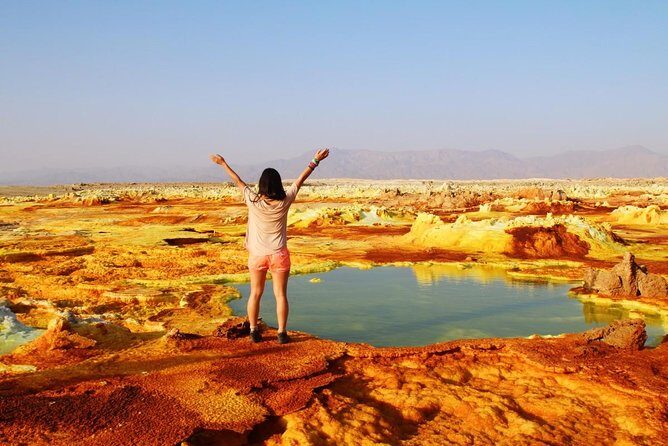
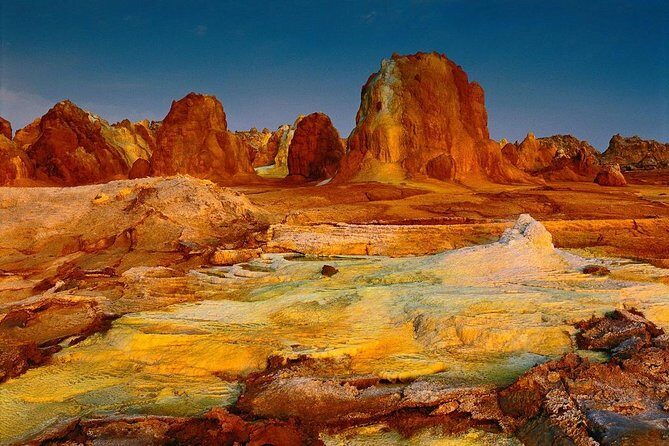
- Dallol and Lake Assal are the “wow” combo: extreme low elevation and colorful mineral terrain on the same day
- Max 15 people: a small group size means more guide time and easier logistics in remote areas
- Summer limitations: camel caravans and an optional Lake stop may be skipped depending on the season
Price and logistics: what $650 really buys
At $650 per person for a 3-day/2-night style experience (approx.), the price isn’t just about the “places.” It’s about how much is handled for you in a remote, infrastructure-light part of Ethiopia.
You get an air-conditioned vehicle for the driving days, bottled water, a local guide service, and scout/police service. You also have all fees and taxes covered, plus meals included (2 breakfasts, 3 lunches, 2 dinners). On tours like this, that bundled approach matters because the Danakil region doesn’t give you easy backup options if plans change or if you forget something small.
The schedule is built around early starts. Your day starts at 9:00 am, and the most visual parts (lava viewing and crater light) generally need you to be ready before the heat gets heavy. If you’re the type who hates early mornings, you might find yourself negotiating with your alarm clock for three straight days.
A few more Mekele tours and experiences worth a look
Erta Ale and the lava lake: the main event
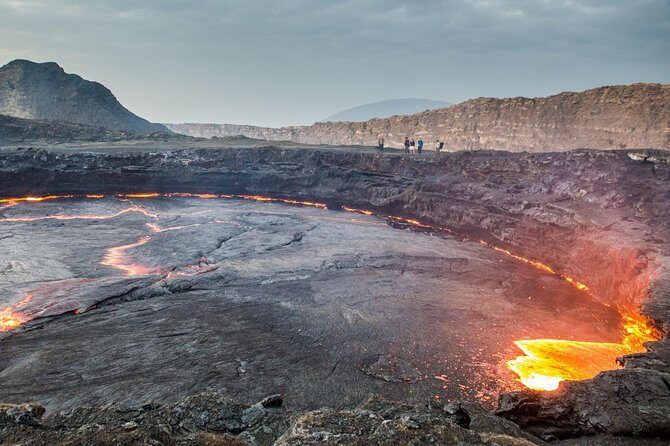
Erta Ale is the headline for good reason. The “smoky mountain” (from the Afar name) is a shield volcano with a summit caldera about 1 km across, and it contains the world’s only permanent lava lake. Even with the note that activity may be less than in earlier years and flank eruptions can slow down, the attraction is still the same: you’re heading toward a living volcano.
Day 1 begins with a drive from Mek’ele toward Dodom, the base area. The tour starts at 9:00 am, and there’s an admission ticket included for this section. From there, the experience becomes physically serious. You’re not just driving to a viewpoint—you’re preparing for a hike under intense volcanic conditions, and a guide helps manage timing and safety.
What to expect in practical terms:
- You’re going toward a caldera where the lava lake can be visible from within hiking zones at the summit
- Conditions can be strenuous even if the lava isn’t “wildly active” in the way you imagined
- The viewing is often time-sensitive, so being ready when the group sets off matters
If your goal is maximum spectacle, keep expectations flexible. If your goal is “standing close to Earth’s real engine,” you’ll likely find it worth every uncomfortable step.
Lake Afrera pit craters: sunrise light and tight walking
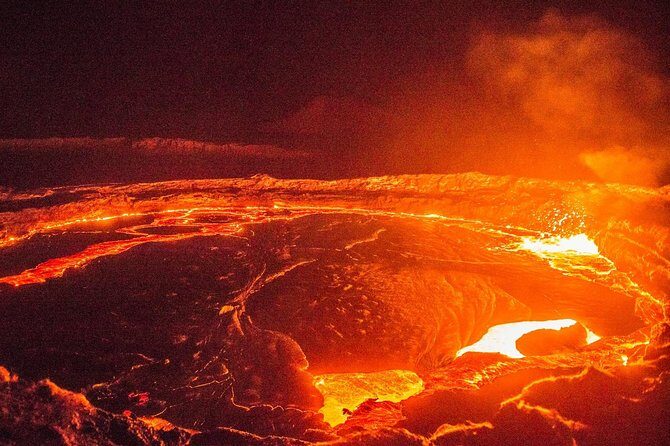
On Day 2, the tone shifts from volcano summit to crater geology. Your early timing is aimed at sunrise for the best chance at seeing the main pit crater clearly. The main pit is about 200 m deep and roughly 350 m across, and it’s described as sub-circular with three levels. Smaller pits—like the southern one—are shallower and different in shape and depth.
The walking is short but meaningful: you head out so the crater views line up, and you’ll move about 5 minutes between pit areas. That short distance matters because the craters sit in extreme conditions; you don’t want long hikes stacked back-to-back.
After your crater time, you return to Dodom for breakfast timing (it’s mentioned that breakfast can be as early as 07:00 if possible). Then you drive back to the camp and are set to relax by around 10:30 am.
There’s also an optional stop for Lake Giulietti / Lake Afrera, and the note says it may not be available in summer. So if you travel in the hotter months, you might get fewer “extra” sightings and more focus on what’s guaranteed.
Day 3: salt mining at Ragad, Dallol, and Lake Assal
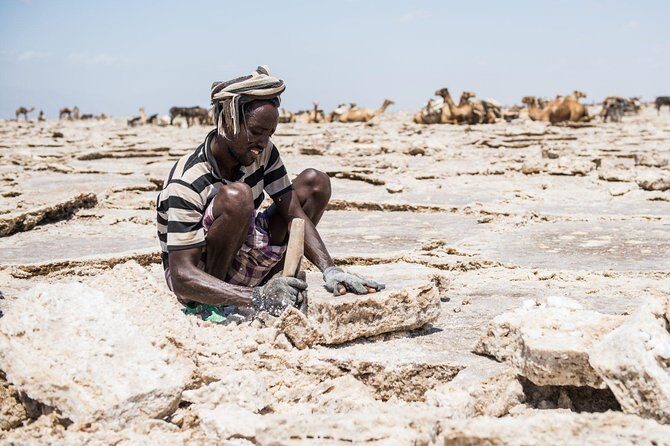
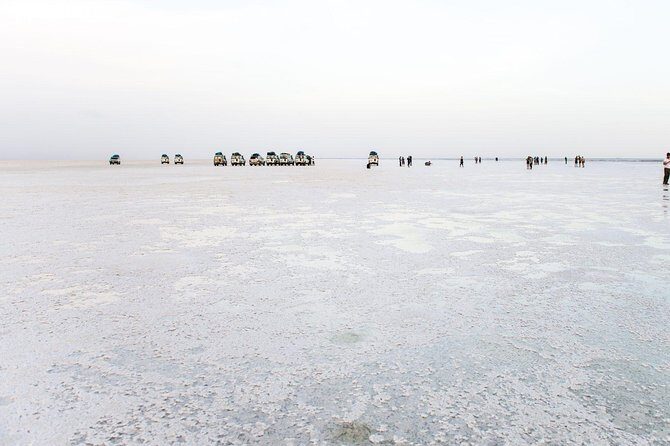
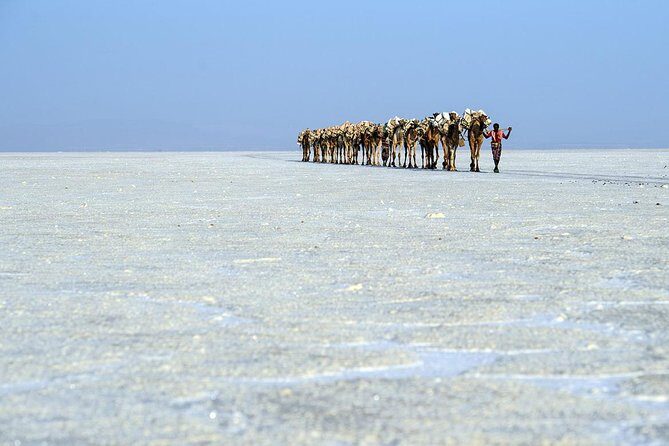
Day 3 is where you feel the human and volcanic sides of Danakil in the same frame. You start with salt mining near Ragad (Asebo). Instead of a quick look at a distant operation, you’ll see salt workers breaking salt from the ground, cutting it into rectangular pieces, and loading it for transport—often on camels in many seasons.
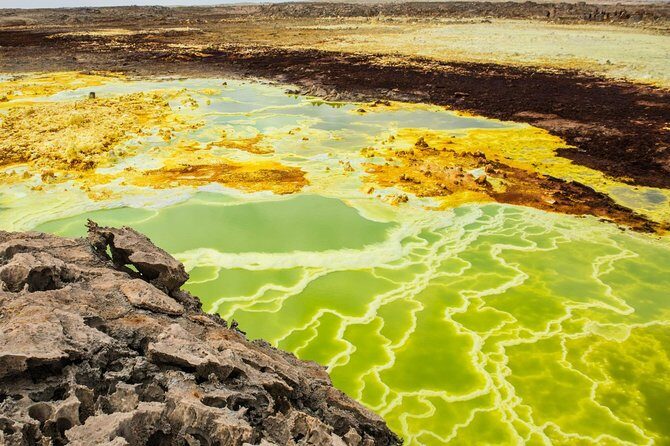
Then you head to Dallol, which sits about 116 meters below sea level, one of the lowest points in the world. The tour calls out Dallol’s colorful mineral terrain shaped by volcanic activity. This is not “scenery you take photos of from a comfortable spot.” It’s a place where the ground and minerals look almost artificial, and being there makes you understand why artists and scientists both obsess over this region.
After Dallol, you go toward Lake Assal. The day is also where camel caravans can come into play, with an important seasonal note: camel caravans are not available in July, August, and early September. So during summer travel, expect the salt and volcanic stops to still happen, but skip that particular “caravan on the horizon” element.
The day ends with the drive back toward Hamedela, then onward to Mek’ele.
Camping, meals, and comfort: outside nights with real support
The tour includes overnight camping accommodations, and that shapes what “comfortable” means here. You’re not staying in a hotel. You’re sleeping outdoors as part of the experience. In exchange, you get meals covered and a team that handles the basics so you can focus on the sights.
You’ll have:
- Breakfast and lunch and dinner included across the days
- Bottled water for the trip
- A cook and food service that’s praised for being tasty in the feedback pattern you provided
For many people, the biggest comfort issue isn’t food—it’s managing your body in a hot-and-cold region. You’ll likely want to pack for temperature swings and bring gear that can handle dust and rough conditions. Even with an air-conditioned vehicle during drives, you’ll feel the outdoors at night and during crater/volcano walking.
Also note that the group moves with local support: guide service plus scout and police service. That’s common in remote areas where safety and coordination matter, and it often makes the difference between a smooth experience and constant hassle.
Small-group energy: 15 people makes a difference
The cap is 15 travelers, which is a sweet spot for a tour like this. With a group that size, the guide can actually keep track of pace and timing. It also helps for photo stops and the short walks at crater points, where you don’t want everyone stampeding at once.
You’ll likely feel the small-group advantage most during:
- Early morning movements where timing matters
- Stops where the guide needs to explain what you’re seeing and where to stand
- Periods where the terrain is intense and you need to stay together
In practice, this style of group size often leads to less waiting and more “time on the ground,” which is exactly what you want in Danakil.
Seasonality and your must-see list
Danakil is shaped by season. Your planning should start with what you most want to photograph or experience.
Two seasonal notes from the tour details:
- Camel caravans are not available in July, August, and early September
- The optional Lake Giulietti / Lake Afrera stop may not be available in summer
So if camel caravans are a big part of your mental picture, plan outside that window if possible. If your top goal is Erta Ale and Dallol, you can still have a full, very intense trip even when caravan timing changes.
Also keep in mind that volcanic activity can shift. Even with the “permanent lava lake” claim, the guide context notes activity might be calmer than in past years. That doesn’t make it less worthwhile—it just means you should treat lava visibility like a real-world variable, not a guarantee.
Who should book this Danakil 3-day tour
This tour fits best if you:
- Want a guided route through major Danakil highlights instead of trying to piece it together yourself
- Are okay with early starts and physically demanding volcanic terrain
- Prefer bundled value: meals, key fees, water, and transport included
- Like travel that feels authentic and close-up rather than bus-to-viewpoint
You might think twice if you:
- Don’t have a strong physical fitness level (the tour specifically asks for strong fitness)
- Struggle with outdoor sleeping and the realities of camping
- Need every “optional” element (like camel caravans) no matter the month
Should you book this Danakil 3-Day Tour?
I’d book it if your idea of a great trip is getting serious time on the ground—Erta Ale’s lava lake, crater pits, salt mining, and Dallol and Lake Assal—without you micromanaging logistics. The best part is the balance: you get AC comfort on the drives, but you still experience the harsh wonder up close.
If you’re flexible on seasonal extras and your health is solid, this is the kind of tour that can become a career highlight. If you’re traveling in late summer and camel caravans are your must-see, decide early whether you’d rather lock in Danakil highlights or shift dates to catch the caravans.
FAQ
What time does the tour start?
The start time is 9:00 am.
How long is the Danakil 3 days tour?
It’s listed as 3 days (approx.).
Is pickup available?
Yes, pickup is offered.
Is an air-conditioned vehicle included?
Yes, you travel in an air-conditioned vehicle.
What meals are included?
Meals are included: 2 breakfasts, 3 lunches, and 2 dinners.
Are there entrance fees included?
Yes, all fees and taxes are included, and admission is indicated as included for key stops.
Is a mobile ticket provided?
Yes, the tour includes a mobile ticket.
Are camel caravans included?
Camel caravans are an option, but not available in July, August, and early September.
What fitness level do I need?
The tour notes that travelers should have a strong physical fitness level.
Is alcohol included in the price?
No. Any alcoholic beverage is listed as not included.