REVIEW · ADDIS ABABA
5 Days Omo Valley Tours
Book on Viator →Operated by Danakil Depression Tours · Bookable on Viator
Five days, tribes, and dusty roads. I love the tight routing from Arba Minch to Turmi to Jinka, and I love the village-level encounters that go beyond quick photos. The main thing to keep in mind: the big showstopper, like the Hamar bull-jumping, can depend on timing and what’s scheduled.
I also like how this trip runs with an English-speaking guide and a small group cap (up to 15). In practice, that tends to mean smoother days and more room for questions, especially when your coordinator is the tour manager Mickey and the local support includes guides like Abey and Robel.
The price is $750 per person, and for what you get it can be good value—just don’t miss the detail that domestic flights are not included in the base price.
In This Review
- Key highlights you’ll feel on the road
- Starting in Addis Ababa: what’s included before you even leave town
- Day 1: Arba Minch and the Dorze on the Guge Mountain
- Day 2: Konso UNESCO heritage, then on to Turmi for Hamar country
- Day 3 in Turmi region: Karo face painting, coffee ceremonies, and market days
- The bull-jumping reality check
- Day 4: to Jinka via the Dassanech and the Omo River crossing
- Day 5: Mago National Park and the Mursi lip-plate tradition
- Price and logistics: does $750 really make sense?
- Guides make or break it: Mickey, Abey, Robel, and the WhatsApp style
- Who this trip fits best (and who should skip it)
- Should you book 5 Days Omo Valley Tours?
- FAQ
- What time does the tour start in Addis Ababa?
- Where does the tour begin and end?
- How long is the tour?
- What’s the group size limit?
- Does the tour include pickup and a mobile ticket?
- What meals are included?
- Are domestic flights included in the $750 price?
- Are entrance fees included?
- Can I cancel for a full refund?
Key highlights you’ll feel on the road
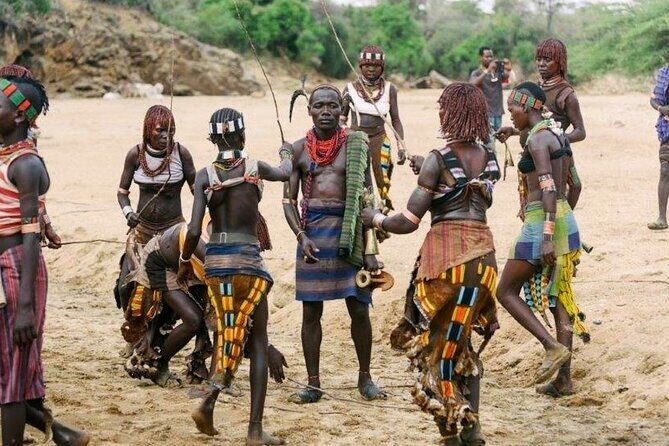
- Doorstep introductions to daily life: cotton weaving with the Dorze and coffee ceremonies with Karo and Hamar families
- UNESCO Konso plus a museum stop, not just a roadside viewpoint
- Market-day flexibility: you may catch Hamar or Banna markets depending on the day in towns like Demeka and Aldubba
- Omo River crossing by dugout canoe with the Dassanech
- Mago National Park for the Mursi and the lip-plate tradition (with cultural context on what the community says)
Starting in Addis Ababa: what’s included before you even leave town
Your day starts at 9:00 am at Edna Mall (Edna MallXQWP+RMV, Cameroon St, Addis Ababa). From there, the plan is to get you moving fast: you’ll transfer from your hotel to Addis Ababa Bole International Airport for the internal flight south, then pick up your driver and continue by air-conditioned vehicle.
This trip is set up for comfort on the long drives. You’ll have an air-conditioned vehicle and an English-speaking guide, plus accommodation, most meals, and entrance fees as per the program.
One practical note I think you should plan around: a road trip like this means a lot of seat time. The itinerary has multiple back-to-back drives (90 km, then 200 km, then 62 km, then more), so it helps if you travel with a slightly flexible mindset.
A few more Addis Ababa tours and experiences worth a look

Day 1: Arba Minch and the Dorze on the Guge Mountain
Day 1 uses Arba Minch as your gateway into Southern Ethiopia. After the internal flight from Addis, you meet your driver and transfer to your accommodation. In the afternoon, you drive a short distance to the Dorze tribe, who live on the Guge Mountain.
What makes this stop special is how tangible the Dorze traditions are. You’ll see:
- Beehive-shaped houses made from organic materials
- Cotton weaving skills tied to daily life
- A village setting where you can observe rather than just pass through
The vibe here is more about slow observation than spectacle. And if you like craft, this is one of the stops where you’re likely to feel like you learned something real—not just took pictures.
You’ll sleep at Paradise Lodge Turmi on Day 1 (as listed for the first lodging stop in Turmi).
Day 2: Konso UNESCO heritage, then on to Turmi for Hamar country
Day 2 starts with the drive to Konso. You’ll travel 90 km to reach the Konso village, which is a UNESCO World Heritage Site. You’ll also visit the Konso museum before continuing south to Turmi.
This is a good use of time. The museum helps you connect what you see on the ground to meaning—terracing, settlement patterns, and how culture stays in place. Without it, UNESCO villages can turn into “nice view, next stop.” With it, you have context.
Then you continue 200 km to Turmi. On the way, there’s an extra cultural stop: the Arbore tribe.
By the end of the day, you’re set up for Hamar experiences near Turmi. You’ll overnight at Buska Lodge.
Day 3 in Turmi region: Karo face painting, coffee ceremonies, and market days
Day 3 focuses on the Karo and on Hamar activities. After breakfast, you drive 62 km west to meet the Karo tribe, who are known for elaborate face and body painting. If you care about visual culture, this is one of the more photograph-forward days—just remember you’re visiting people, not a theme park.
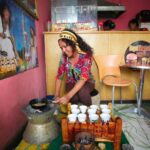
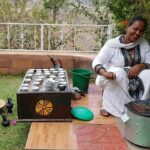
The itinerary then includes something I really like: a traditional coffee ceremony with a family in Korcho Village. It’s not just an item on a checklist. Coffee ceremonies are a window into hospitality and routine, and they tend to be a better way to ask questions than trying to rush through village viewing.
After you’re back in Turmi for lunch, you may visit the Hamar tribal market depending on the day:
- Monday or Thursday in Turmi
- Saturday at Dimeka (as an alternate market option)
In the late afternoon (around 5:30 pm), you visit the Hamar traditional village and have another coffee ceremony in a Hamar traditional house.
The bull-jumping reality check
The Hamar bull jumping ceremony is listed as a possibility on this day if available. One important takeaway from the experience style here: don’t build your trip around a single guaranteed performance. If the ceremony isn’t happening during your dates, you’ll still have village interaction and market time—but the headline event may not appear.
Day 4: to Jinka via the Dassanech and the Omo River crossing
Day 4 is where the Omo Valley stops feeling like a “tribe tour” and starts feeling like a living region. You drive 75 km south to meet the Dassanech (also referred to as Gelab) near the Omo River.
You cross the river using a traditional dugout wooden canoe, then walk for about 10 minutes to reach the village. After that, you’ll interact with the Dassanech and visit a family house.
This is one of the most important parts of the schedule for cultural engagement. The canoe crossing is not just a transport detail—it’s a shift in setting, and it usually makes you slow down and pay attention to how people move through their environment.
After the morning interaction, you return to Turmi for lunch, then continue 130 km to Jinka. Along the route, you may visit a colorful market connected to Hamar or Banna communities in towns like Turmi, Demeka, Aldubba, or Keyafer—again based on market days:
- Monday, Tuesday, Thursday, or Saturday
Finally, you’ll visit the Ari tribe village before you head to your lodge for the night.
Day 5: Mago National Park and the Mursi lip-plate tradition
On Day 5, you enter Mago National Park to visit the Mursi village. This is the moment most people have heard about: the tradition where women wear lip plates.
The itinerary notes something you should remember when you see it: the origin of the tradition is not known, and the Mursi explain it as a way of being distinct from surrounding tribes. That matters because it keeps you from treating the lip plate as just a curiosity. It’s tied to identity, and the community’s own interpretation is the key.
In the afternoon you transfer to the airport and fly back to Addis Ababa. If timing allows, there’s final shopping at a souvenir shop. Then there’s an evening welfare dinner at a traditional restaurant with folkloric dance before you head back to the airport.
Price and logistics: does $750 really make sense?
At $750 per person, this isn’t a cheap tour, so you’ll want to judge it by what’s genuinely covered.
Included items you should count:
- Air-conditioned vehicle for the road days
- Accommodation (with named lodge stops in the plan)
- English-speaking guide and government taxes
- Meals: 5 breakfasts, 4 lunches, 4 dinners
- Entrance fees as per the program
- Airport/departure tax
- Pickup and a mobile ticket
Not included:
- Domestic flight(s)
So the value equation looks like this: you’re paying for multi-day transport inside Ethiopia, guide time, and the everyday comforts that let you focus on people and culture. If you already have domestic flights priced separately at a fair rate, the overall package can be good.
Where you should watch your budget is the “missing piece” of domestic flights. Since that cost can swing based on the exact timing and airlines, you’ll want to price that early rather than assume it’s minor.
Also pay attention to the size: the trip runs with a maximum of 15. That’s a sweet spot for getting attention from your guide while still keeping costs reasonable.
Guides make or break it: Mickey, Abey, Robel, and the WhatsApp style
One of the strongest signals from the experience is that local support matters a lot. Tour manager Mickey shows up repeatedly as the person coordinating the whole flow—making sure you’re looked after and that you’re not left guessing what’s next.
Local guidance also gets credit. Names like Abey (guide) and Robel (driver, described as very helpful) come up as part of the quality of the day-to-day experience.
There’s also a practical service detail: WhatsApp communication before the tour is highlighted. That kind of pre-trip contact matters on a tight schedule, because it reduces confusion on pick-up timing and what to expect in-country.
Who this trip fits best (and who should skip it)
This is a strong match if you:
- Want cultural encounters across multiple ethnic groups in a short span
- Appreciate villages, markets, and daily practices like coffee ceremonies and weaving
- Don’t need every “big moment” to be guaranteed on a specific day (because schedules and ceremony availability can vary)
It may not fit as well if you:
- Want an ultra-smooth, low-drive itinerary with minimal time in vehicles
- Expect the Hamar bull-jumping ceremony to happen during your exact dates
Should you book 5 Days Omo Valley Tours?
I’d book it if you’re excited by cultural stops and you’re okay with the pace of a road trip through Southern Ethiopia. The itinerary is built around real interaction: weaving, coffee ceremonies, market days, an Omo River canoe crossing, and a final Mago National Park visit to see the Mursi lip-plate tradition in context.
I wouldn’t book it if domestic flights will be pricey for your dates or if you’re traveling with very strict expectations about a single event date like bull-jumping. In that case, you might still choose the region, but you’d want a plan that gives you more certainty on ceremony schedules.
If you do book, do one simple thing: pack for long driving days and bring a respectful attitude for photography and conversation. This kind of Ethiopia trip works best when you’re curious and patient.
FAQ
What time does the tour start in Addis Ababa?
The tour start time is 9:00 am, with the meeting point at Edna Mall (Edna MallXQWP+RMV, Cameroon St, Addis Ababa).
Where does the tour begin and end?
It starts at the Edna Mall meeting point in Addis Ababa and ends back at the same meeting point.
How long is the tour?
The tour is listed as 5 days (approx.).
What’s the group size limit?
The tour has a maximum of 15 travelers.
Does the tour include pickup and a mobile ticket?
Yes. Pickup is offered and you receive a mobile ticket.
What meals are included?
Breakfast is included for 5 days, and lunch and dinner are included for 4 days each (4 lunches and 4 dinners).
Are domestic flights included in the $750 price?
No. Domestic flights are listed as not included.
Are entrance fees included?
Entrance fees are included as per the program.
Can I cancel for a full refund?
Yes, you can cancel up to 24 hours in advance for a full refund, as long as you cancel at least 24 hours before the experience’s start time.