REVIEW · ADDIS ABABA
5 DAYS Lalibela, Axum, Tigray churches and Danakil
Book on Viator →Operated by Ethio Travel And Tours · Bookable on Viator
Ethiopia gets extreme on this 5-day route. You start with UNESCO rock-hewn churches, then shift to Afar geology where three tectonic plates meet, and finish in the otherworldly heat of Danakil. It’s not a slow museum crawl. It’s a sharp, well-timed circuit through places that feel like they belong in different planets.
I like the way this trip stitches together Lalibela and Axum with the physical reality of Danakil. You get major historic anchors first, then trade churches and ruins for volcano craters, lava-lake views, and salt-mining life. I also like the practical side: the tour builds in multiple domestic flights with Ethiopian Airlines, plus breakfast and dinners, so you spend less time “figuring it out.”
One consideration: the Danakil days are hard on the body and the schedule depends on conditions. Roads can be rough, days run early, and the whole experience requires good weather—so plan for some uncertainty when you’re booking your Ethiopia window.
In This Review
- Key things I’d circle before you book
- Five days that stitch history to Afar geology
- Day 1: Lalibela’s rock-hewn churches, north of Jordan River
- Day 2: Axum ruins to Hawzien base via Adwa and Gheralta plains
- Day 3: Erta Ale and the permanent lava lake at Dodom
- Day 4: sunrise crater views and pits at Erta Ale
- Day 5: salt mining at Ragad, Dallol, Lake Assal, and Afar life
- Price and what you actually get for $1,025.65
- Getting through Danakil without hating your life
- Who this tour fits best (and who should rethink it)
- Should you book this Lalibela and Danakil package?
- FAQ
- Is this tour private?
- What’s included in the price?
- What flights are included?
- Do I need to pay for tickets at the main sights?
- Is pickup included?
- How physically demanding is it?
- Are camel caravans always included?
- How does weather affect the trip?
- What’s the cancellation policy?
- Is the tour suitable for service animals?
Key things I’d circle before you book
- Lalibela + Axum in the same trip: historic sites handled early, before the physical challenge of Danakil
- Erta Ale: world’s only permanent lava lake in a shield volcano caldera
- Early starts and sunrise timing built into the Erta Ale cratering day
- Meals and domestic flights included: fewer moving parts for you
- Seasonal changes for camel caravans (not during July, August, and early September)
Five days that stitch history to Afar geology
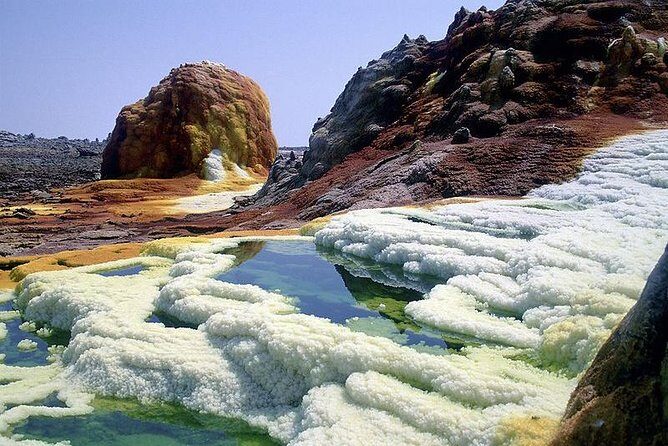
This is a “big geography” itinerary: northern Ethiopia’s sacred sites, then a straight shot to the Danakil Depression where volcanic activity shapes everything. The science is wild, even if you’re not a geology person. When tectonic plates pull apart at the Afar Triple Junction, it can create fissures, hot springs, and active volcanic features. On this tour, that theory becomes a view you can stand next to.
The route makes sense in the order it’s placed. You do Lalibela first, so you arrive rested enough to walk, climb, and take in the rock churches. Then you fly to Axum and connect onward to Hawzien for the Gheralta rock-hewn churches area. Only after those days do you go into the physically challenging Erta Ale and Danakil crater country.
You’ll also feel the “private tour” difference. It’s set up so your group stays together, and the timing is managed to keep you moving without unnecessary waiting. That matters when flights are involved and when Danakil schedules can be weather-sensitive.
A few more Addis Ababa tours and experiences worth a look
Day 1: Lalibela’s rock-hewn churches, north of Jordan River
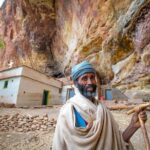
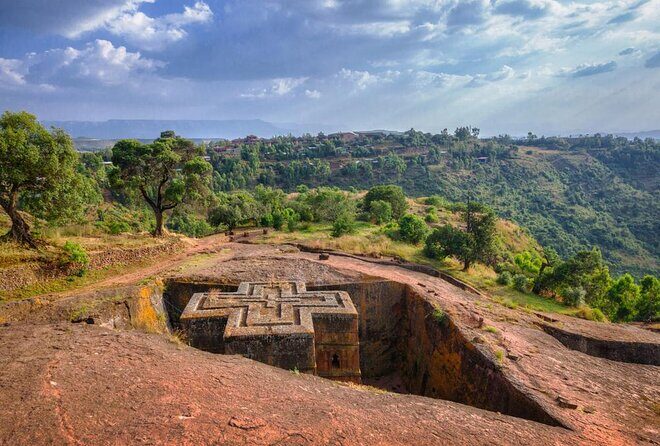
Day one begins with a morning flight from Addis Ababa to Lalibela, then a transfer to your hotel. After lunch, you head to the first cluster of the famous rock churches—those carved under King Lalibela (1181–1221). These churches are grouped in sets of three across the city, and they sit in an area tied to a small stream named the Jordan River.
What I like here is that you’re not thrown into everything at once. You get “Group 1” in the afternoon, then the schedule continues later across the next days of the tour. The churches are UNESCO World Heritage, and the admission is included, so you can focus on the place rather than paperwork.
Lodging is in Lalibela at Lalibela Lodge (overnight). Expect walking on uneven stone and steps up to churches. The good news: you’re doing this before you jump into extreme conditions. So this first day feels like the cultural warm-up, not the punishment.
Day 2: Axum ruins to Hawzien base via Adwa and Gheralta plains
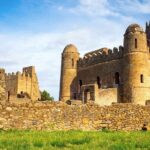
You fly from Lalibela to Axum in the morning and spend hours exploring the Ruins of Axum. It’s a dense set of historical remains, and the admission ticket is included. After that, you drive from Axum to Hawzien—about 190 km and roughly 2 hours—stopping via Adwa and then onward through the Gheralta plains.
Hawzien becomes your base for the Gheralta rock-hewn churches area. Even if you’re not sure what you’ll see there, you can treat Hawzien as a “base camp” setup: you have a place to sleep while the touring focuses on rock-cut churches and the region’s dramatic cliffs and plateaus.
This day is mainly about two things: switching regions fast (flight plus drive) and positioning you for the next big step. If you’re someone who hates packing and unpacking every day, this is a better rhythm than the kind of tour that changes hotels constantly.
Day 3: Erta Ale and the permanent lava lake at Dodom
Day three is where the trip turns from “walk and sightsee” into “move carefully and accept physical effort.” You start early—around 9:00 AM—and drive toward Erta Ale via Mekele. Mekele’s name relates to Afar language roots meaning smoky mountain, and it’s a quick mental cue that you’re heading into active volcanic country.
From there you drive to Dodom, at the base of Erta Ale. The distance from the road approach is described as 80 km, and the tour notes the road can be rough. Erta Ale is a shield volcano with a caldera at the summit. The highlight is not just the volcano shape—it’s the fact that it has the world’s only permanent lava lake, a feature noted as present since the early years of the twentieth century.
At Dodom, you’re positioned for the crater area. You’re not there to take pretty photos and forget the effort. The air, the footing, and the sheer physical presence of the caldera are the point. This is one of those days where your “how will I handle this?” questions matter more than your “how long will it be?” concerns.
Day 4: sunrise crater views and pits at Erta Ale
If day three is the approach, day four is the payoff: sunrise and the crater’s main features. The schedule calls for an early start so you can see the northern part corresponding to the main pit crater. From there, you walk briefly—about 5 minutes is mentioned for access to the pit areas.
This isn’t vague sightseeing. The main crater is described as sub-circular, about 200 m deep and 350 m across, with a three-storied structure. There’s also a smaller southern pit listed at about 65 m wide and roughly 100 m deep. Getting your head around those measurements helps you appreciate that you’re not standing near a small hole in the ground.
The tour also includes a descent around 9:00 AM (timing is tied to leaving Dodom and returning for an early breakfast around 07:00 if possible). Then you’re back at the camp around 10:30, with time to relax before the next driving section.
After that, there’s an optional stop for the mythical Lake Giulietti (also referred to as Lake Afrera). The exact availability can depend on conditions, so treat it as a bonus rather than a guarantee.
Day 5: salt mining at Ragad, Dallol, Lake Assal, and Afar life
Day five starts with a drive to Ragad (Asebo), where salt mining happens locally. You’ll watch workers break salt from the ground, cut it into rectangular pieces, and load it onto camels. This is hands-on, working-life viewing, not staged tourism.
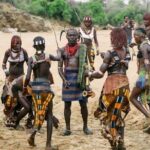
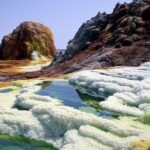
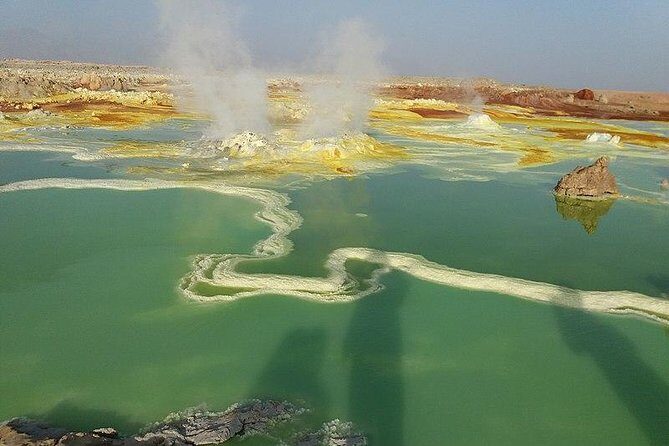
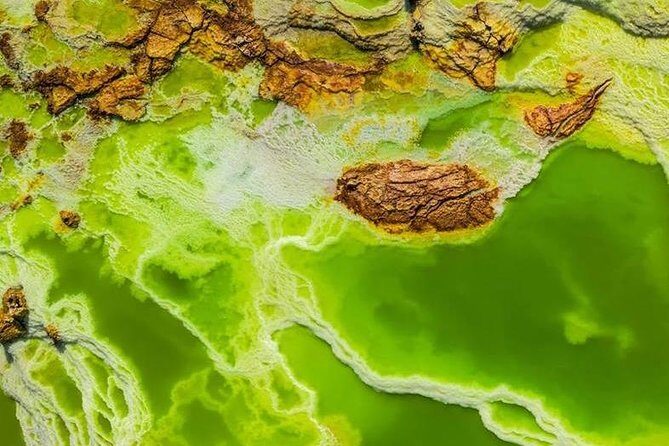
Then you head toward Dallol, which is described as 116 meters below sea level—one of the lowest places in the world. Dallol is famous for its volcanic color formations, and your itinerary places you there as the main “wow” stop on the day. You also visit Lake Assal, and you follow up with camel caravans and a walk with the Afar people.
The important practical note: the itinerary states there’s no camel caravan during July, August, and early September. So if you’re planning travel in those months, you’ll still get the Dallol and Lake Assal pieces, but you should expect less of the camel component.
By late day, you drive back to Hamedela, then continue to Mekele. You catch a flight back to Addis at 7:50 pm, arriving around 9:10 pm. That long travel day can feel like a wrap-up sprint, but it also prevents you from having to add another night in the heat.
Price and what you actually get for $1,025.65
For a five-day, cross-region Ethiopia trip, the price is easier to judge when you break it into what’s included. This tour is listed at $1,025.65 per person, and it bundles three domestic flights with Ethiopian Airlines, plus transfers and a pickup offering.
It also includes meals in a structured way: breakfast (5 times) and lunch (3 times) and dinner (3 times). There are admission tickets included across the key sites (Lalibela churches, Aksum ruins, and Danakil Depression components). Even if you’re the type who normally skips paid attractions, adding tickets and flights can change the real-world value fast.
What you’re paying for most is not one single stop—it’s the ability to link sacred sites and extreme geology in one compact run. Lots of Ethiopia routes force you to choose. This one tries to do both, and it does it with timing that keeps flights and drives from dragging into extra days.
The best indicator of value is how consistently the tour is rated: an average rating of 4.9 with 97% recommending it. The reviews summary also points to strong organization even when Ethiopia presents challenges, and it notes the company responded when political tensions disrupted timing by splitting the trip into separate segments.
Getting through Danakil without hating your life
The trip says it’s best for moderate physical fitness. That’s accurate in a way that matters. Lalibela and Axum/Gheralta are walking-heavy but manageable. Danakil is the part that asks you to take footing and endurance seriously.
You’ll want to prepare for:
- Rough road conditions on the Erta Ale approach (the itinerary explicitly calls the road one of the roughest in the world)
- Early mornings for sunrise and crater timing
- Steep, crater-like terrain around pit areas, with descents mentioned on schedule
- Heat and wind exposure in open volcanic country
Also plan your comfort around meals. The itinerary includes breakfast and some lunches and dinners, but you’ll still be in environments where timing matters more than comfort. Pack like you’re doing a serious outdoor day, not a city stroll.
What to bring is not spelled out in the tour details you provided, so I can only generalize: think sun protection, water planning, and sturdy footwear. If you have any medical concerns about altitude, heat, or walking time, check with your clinician before committing.
Who this tour fits best (and who should rethink it)
This trip fits you if you want a single Ethiopia circuit that covers two different styles of travel: sacred archaeology and extreme natural forces. It’s also a good match if you like a clear schedule with domestic flights handled for you. The private-group setup helps here because it keeps the pace consistent.
I’d reconsider if you:
- dislike long travel days (the final day includes a flight back to Addis at night)
- are uncomfortable with harsh terrain and early starts
- need a highly flexible itinerary that avoids weather sensitivity
If you’re the kind of person who can handle a few hard hours to see a lava-lake setting that stays active over decades, you’ll likely find this tour worth the effort.
Should you book this Lalibela and Danakil package?
I’d book it if you’re aiming for a “high impact” Ethiopia trip where you don’t have to choose between iconic churches and one of the most dramatic volcanic experiences on Earth. The strong rating and recommendation rate, plus the fact that the tour includes multiple flights and site admissions, all point to a package designed to reduce friction.
I’d hesitate if you’re traveling during a season when conditions can limit certain elements—like the note about no camel caravan in July, August, and early September—or if you know you struggle with rough roads and early mornings. Also remember the tour notes that it’s weather-dependent, so build your trip window with a little patience.
If your schedule can flex and you’re physically game, this is the kind of Ethiopia trip that gives you more than photos. It gives you a story: rock churches, ancient ruins, then a crater where the ground is still alive.
FAQ
Is this tour private?
Yes. It’s described as a private tour/activity, with only your group participating.
What’s included in the price?
The tour includes three domestic flights with Ethiopian Airlines, meals (breakfast 5 times, lunch 3 times, dinner 3 times), and admission tickets for the listed stops. Pickup is also offered.
What flights are included?
The itinerary specifies three domestic flights with Ethiopian Airlines, including flights between Lalibela and Axum and the final return flight from Mekele to Addis Ababa.
Do I need to pay for tickets at the main sights?
Admission tickets are included for the main stops listed in the itinerary, including the Lalibela churches and the Ruins of Axum, along with Danakil Depression components.
Is pickup included?
Yes, pickup is offered.
How physically demanding is it?
The tour states you should have moderate physical fitness. The Danakil and Erta Ale days include early starts and challenging terrain, and the approach roads are described as rough.
Are camel caravans always included?
No. The itinerary notes there are no camel caravans during July, August, and early September.
How does weather affect the trip?
The experience requires good weather. If it’s canceled due to poor weather, you’re offered a different date or a full refund.
What’s the cancellation policy?
It offers free cancellation. You can cancel up to 24 hours in advance for a full refund; within 24 hours, the amount paid is not refunded.
Is the tour suitable for service animals?
Yes. Service animals are allowed.