REVIEW · ADDIS ABABA
5 Days Lalibela-Danakil Tour
Book on Viator →Operated by Ethio Travel And Tours · Bookable on Viator
Danakil is not a trip you forget. You’ll mix Lalibela’s UNESCO rock churches with the physically tough wonder of Erta Ale’s permanent lava lake and a night camp on the rim. I like that the tour includes the return domestic flights and real on-the-ground support in Afar, not just sightseeing promises. One thing to keep in mind: this is a moderate-fitness trip with long drives and rough roads, plus early starts.
The value here is that the itinerary is built like a loop, not a scramble. You get transport, entry fees, accommodation, English-speaking guiding, and security support in Afar as part of the package—so you’re not constantly negotiating logistics in remote places. The group size is capped at 8 travelers, which usually means more manageable timing when you’re dealing with early-morning volcano moves.
If you want your Ethiopia to feel raw and real—caravans, salt flats, church rock-hewing, and volcanic heat—this tour fits. If you prefer a slow pace and cushy roads, you may find the Danakil section demanding even with bottled water and vehicle support.
In This Review
- Key things to know before you go
- Danakil and Lalibela in 5 days: why this loop works
- Price and logistics: what $900 gets you (and why it matters)
- Day 1 in Lalibela: Rock-Hewn Churches and a UNESCO-grade circuit
- The long drive to Mekele: switching gears on purpose
- Day 3: Erta Ale’s permanent lava lake trek (and what to expect)
- Day 4: sunrise pits, crater depth, and the Afar rhythm
- Day 5: Dallol, Lake Assal, and salt mining with camel caravans
- Safety, guides, and the small details that make or break remote travel
- What you should pack (because Danakil doesn’t do gentle)
- Should you book this 5-day Lalibela–Danakil tour?
- FAQ
- How long is the Lalibela–Danakil tour?
- Where does the tour start and end?
- What time is pickup scheduled in Addis Ababa?
- Are domestic flights included in the price?
- Is pickup offered?
- Does the price include entrance fees and licenses?
- What meals are included?
- Is there any security or extra support in Afar?
- How many travelers are on the tour?
- Are camel caravans available year-round?
- What fitness level is recommended?
- What happens if weather is poor?
Key things to know before you go
- Return domestic flights on Ethiopian Air Lines keep this 5-day plan actually doable.
- Scout + police service in Afar is part of the program, not an optional add-on.
- Erta Ale night on the rim gives you a front-row view of Ethiopia’s permanent lava lake.
- Camel caravans and salt mining are a core theme, with a seasonal note for July-Aug/early Sept.
- Lalibela includes the main church groups with UNESCO World Heritage context built in.
- A max of 8 people helps keep the schedule tight but not chaotic.
Danakil and Lalibela in 5 days: why this loop works
This is one of those Ethiopia itineraries where the wow factor comes from contrast. One day you’re walking through carved rock churches in Lalibela. The next stretch you’re riding out toward one of the most dramatic geological hot spots on Earth, where heat, dust, and salt become part of daily life.
The timing also makes sense. You land in Lalibela for the church circuit, then you push north and east toward Mekele and the Afar region. The center of gravity is clearly Danakil: Erta Ale first, then the Afar pits and optional crater-lake stop, and finally Dallol and salt mining with camel caravans.
This is not a “sleep in and take photos” tour. You’re moving with purpose. But that’s the point. If you’re going all this way, you want the schedule to earn it.
A few more Addis Ababa tours and experiences worth a look
Price and logistics: what $900 gets you (and why it matters)
The listed price is $900 per person for about five days. On paper, that’s a lot for Ethiopia. In practice, the value comes from what’s bundled:
- Two domestic flights with Ethiopian Air Lines
- All entrance fees and licenses
- Accommodation throughout
- Air-conditioned vehicle
- English-speaking guide and driver
- Scout and police service in Afar
- Water bottles in Danakil
- A set of included meals (with a key exception—see below)
That “included security” line matters. Danakil and Afar aren’t place-you-wander territory. The tour’s setup acknowledges that with scout support and police service in the Afar region as part of the program.
One practical catch: lunch and dinner in Lalibela aren’t included. The tour includes some meals overall (3 lunches, 2 dinners, 4 breakfasts), but you should budget for at least your Lalibela meals unless your agent confirms otherwise.
Also, the tour starts early—6:00 am from Addis Ababa. This is the kind of start time that punishes jet lag. If you’re arriving the day before from overseas, try to be rested for the pickup.
Day 1 in Lalibela: Rock-Hewn Churches and a UNESCO-grade circuit
Day 1 is a quick pivot. You fly north from Addis Ababa to Lalibela, then transfer to your hotel. After lunch, you start your church circuit north of the Jordan River stream.
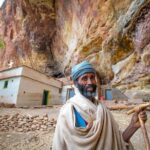
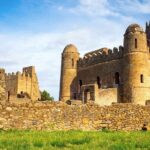
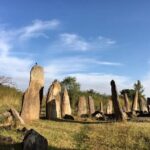
What you’re seeing are rock-hewn churches carved during the reign of King Lalibela (1181–1221) and protected as a UNESCO World Heritage Site. The tour is organized around about eleven rock churches, grouped into clusters of three.
These are the specific stops you’ll go through:
- Biete Medhanealem
- Biete Maryam
- Biete Golgotha Mikael
- Biete Maskal (House of the Cross)
- Biete Denagel (House of Virgins)
- Biete Giyorgis
- Biete Amanuel
- Biete Qeddus Merkoreos
- Biete Abba Libanos (House of Abba Libanos)
- Biete Gabriel-Ruphael
- Biete Lehem (House of Holy Bread)
Why I like this structure for your first day: it gives you a clear order and keeps you from randomly hopping between sites. Churches like these are all about details—shapes, carvings, and how the complex is laid out. When a guide keeps the route logical, you absorb more without rushing.
A small planning tip: since lunch and dinner in Lalibela aren’t included, think about your food timing around the start of your church visits. And wear shoes you can handle on uneven ground. Lalibela is historic, not flat.
The long drive to Mekele: switching gears on purpose
Day 2 is straightforward: you drive from Lalibela to Mekele, and the trip takes 7–8 hours.
This isn’t an “activity day,” but it’s an important one. It moves you toward the Afar region where the terrain, light, and daily rhythm change fast. If you go expecting comfort and scenery snaps only, you might miss the value: this drive is the transition into the Danakil mindset.
The tour includes an air-conditioned vehicle, which helps. Still, this is a long day. If you get car sick, consider preparing for it. Your payoff comes later, when the Erta Ale mornings start with that early-day intensity.
Day 3: Erta Ale’s permanent lava lake trek (and what to expect)
Day 3 is the headline. Erta Ale is named as the smoky mountain in Afar language. Geologically, you’re dealing with a shield volcano with a base about 30 km wide and a summit area roughly 1 km square inside a caldera.
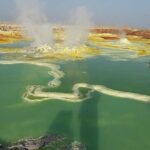
The signature fact is why people travel here: Erta Ale contains the world’s only permanent lava lake. The program also notes it has been present since the early years of the twentieth century and is notable for being the longest existing lava lake.
You start early (the day is scheduled for 9:00 AM, with driving out toward Dodom, the base area). You’ll cover about 80 km and the route is described as among the roughest roads in the world. In plain terms: expect bouncing, dust, and a “this is real terrain” feeling.
Then comes the real magic moment. The itinerary frames it as exploring Erta Ale’s lava lake—often described like a lava lamp effect, but on a massive, living scale. You’re not just looking at geology. You’re standing at the edge of an active system and watching heat do its thing.
If you’re the type who likes photos, you’ll have plenty of time to frame shots. If you prefer quiet viewing, bring that energy too. The best moments here aren’t about the camera—they’re about watching the glow and movement without needing to make it a performance.
Day 4: sunrise pits, crater depth, and the Afar rhythm
Day 4 starts with early energy. The itinerary calls for early morning sunrise focused on the northern pit, followed by a short walk (around 5 minutes) for the southern and central pits.
This isn’t vague sightseeing. The program gives specific scale:
- The main pit-crater is about 200 m deep and 350 m across, described as sub-circular and three-storied.
- The smaller southern pit is about 65 m wide and roughly 100 m deep.
After this crater-watching stretch, you return to Dodom for breakfast if possible around 07:00. Then you move back to camp no later than 10:30 for downtime and recovery.
There’s also an optional stop mentioned: a drive to Lake Giulietti (also called Lake Afrera). It’s flagged as optional and availability can vary. If it’s offered on your date, it’s worth accepting—because every crater-lake moment here tells a slightly different part of the same geothermal story.
Practically, this is the day to protect your body. You’ll likely feel the previous day’s volcano energy in your legs, even if you’re not hiking long distances. Drink water, eat what you can, and give yourself time to cool down.
Day 5: Dallol, Lake Assal, and salt mining with camel caravans
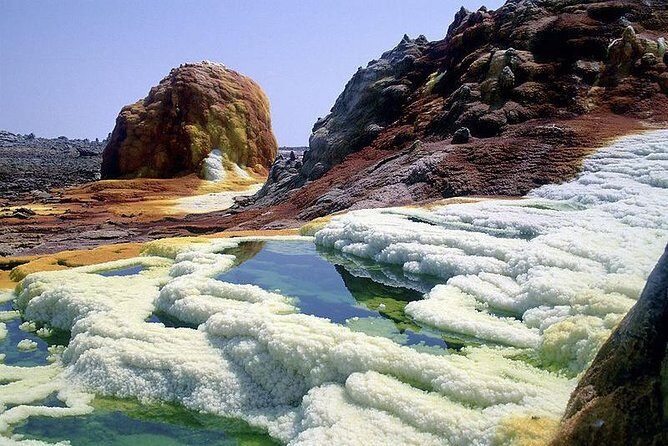
Day 5 shifts from volcano viewing to the salt world of the Danakil depression. You head toward Ragad (Asebo), where localities mine salt.
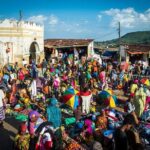
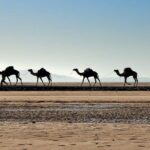
The itinerary is clear about what you’ll see: workers break salts from the ground, cut them into rectangular pieces, and load them onto camels. This is one of the most human moments on the tour because it shows geology turned into labor, and labor turned into livelihood.
Then you drive ahead to Dallol, visiting Dallol + Lake Assal, and continuing through the area with camel caravans and a walk with people from the Afar community.
Two notes you should take seriously:
- No camel caravan on July, August, and early September. If you’re traveling in those months, this part of the experience may change.
- The program states Dallol is 116 meters below sea level, so expect extreme heat, strong light, and a “dry environment” feel even if you’re used to desert travel.
After the Danakil portion, you drive back to Hamedela, then proceed to Mekele for your flight.
The schedule lists a 19:50 flight to Addis Ababa. It’s late enough that you’ll probably arrive back tired, sun-baked, and impressed in equal measure.
Safety, guides, and the small details that make or break remote travel
What I appreciate about this tour setup is that safety isn’t treated like a poster slogan. In Afar, you get scout and police service, plus a local guide service for the region.
That matters because Danakil is remote and conditions can change. Your guide is the buffer between you and the unpredictability of roads, timing, and access. You also get an English-speaking guide and driver, which is a real advantage when you’re dealing with early starts and fast shifts between sites.
One name you may run into when you coordinate with the operator is Natanael from Ethio Travel And Tours. Messages signed by Natanael show up in the feedback, and that kind of direct contact tends to make pickups and timing feel less like a mystery.
Still, I’d be strict about reconfirming your pickup details in Addis Ababa. There’s been at least one hiccup reported about pickup timing/meeting at terminals. The fix is simple: send your flight numbers and arrival times clearly, and confirm where your driver will be standing, not just what city you’re meeting in.
What you should pack (because Danakil doesn’t do gentle)
The tour provides bottled water in Danakil, plus meals and accommodation. It doesn’t remove the need for you to protect yourself from heat, dust, and big-sky sun.
Bring:
- Sunglasses and sunscreen (the sun glare around salt and volcanic areas is real)
- A hat that won’t fly off on rough roads
- Sturdy shoes for Lalibela and uneven walking
- A light layer for cooler morning starts (especially near sunrise activities)
- A small snack plan in case meals don’t align perfectly with early crater timing
Also, expect dust. Even with an air-conditioned vehicle, you’re going to step into dry air. Keep a small wipe kit and consider a scarf or buff for your face.
Should you book this 5-day Lalibela–Danakil tour?
Book it if:
- You want major variety in Ethiopia without losing time to open-ended planning.
- You care about having security support in Afar and guides who can handle remote conditions.
- You’re ready for rough roads and early starts to reach Erta Ale and Dallol.
- You like small-group travel (max 8 travelers) and a tight schedule.
Skip it (or choose a softer version) if:
- You’re sensitive to long drives and physical strain.
- You’re traveling during July, August, or early September and camel caravan expectations are a dealbreaker.
- You prefer more flexible days and fewer early-morning commitments.
This tour is built for people who want the real Ethiopia: carved stone devotion in Lalibela, then the raw geothermal theater of Erta Ale and the working salt economy around Dallol.
FAQ
How long is the Lalibela–Danakil tour?
The tour runs for about 5 days.
Where does the tour start and end?
It starts in Addis Ababa, Ethiopia and ends back at the meeting point.
What time is pickup scheduled in Addis Ababa?
Start time is listed as 6:00 am.
Are domestic flights included in the price?
Yes. Two domestic flights with Ethiopian Air Lines are included.
Is pickup offered?
Yes, pickup is offered.
Does the price include entrance fees and licenses?
Yes. Entrance fees and licenses as per the program are included.
What meals are included?
The tour includes breakfast (4), lunch (3), and dinner (2). Lunch and dinner in Lalibela are not included.
Is there any security or extra support in Afar?
Yes. The program includes scout and police service in the Afar region, plus local guide service.
How many travelers are on the tour?
The tour has a maximum of 8 travelers.
Are camel caravans available year-round?
Camel caravans are noted as not available on July, August, and early September.
What fitness level is recommended?
A moderate physical fitness level is recommended.
What happens if weather is poor?
The experience requires good weather. If canceled due to poor weather, you’ll be offered a different date or a full refund.