REVIEW · LALIBELA
Lalibela, Axum, Danakil and Omo Valley 8 DAYS
Book on Viator →Operated by Ethio Travel And Tours · Bookable on Viator
Eight days can feel like a sprint in Ethiopia.
What makes this route worth it is how efficiently it strings together UNESCO rock churches, the stark heat of Danakil, and the human culture of the Omo Valley—without you doing the paperwork. I also like that it’s built for comfort where it counts: an air-conditioned vehicle plus domestic flights, with most logistics handled in advance.
The main thing to consider is that the trip includes days with rough roads and early starts, especially around Erta Ale and the Danakil region. If you want a fully relaxed pace, this may feel like a lot.
In This Review
- Key highlights I’d put at the top
- The big idea: why this one tour covers four Ethiopia stars
- Price and value: what you’re really paying for at $2,051 per person
- Day 1: flying into Lalibela and stepping into the carved-church world
- Day 2: Axum’s quick hit, then Gheralta’s rock churches as a base day
- Day 3: Erta Ale and the long, rough road to the lava-lake area
- Day 4: Danakil Depression sunrise, crater pits, and a camp reset
- Day 5: salt mining at Ragad/Asebo, Dallol, and Lake Assal
- Day 6: Jinka arrival, Ari villages, and the Jinka Museum stop
- Day 7: Mago National Park with Mursi, then Turmi and Hamer bull jumping
- Day 8: Konso terraces and fortified settlements in the Konso highlands
- Logistics that matter: flights, small group timing, and comfort reality
- The guides and team: what I’d look for when you ask questions
- Who should book this, and who should think twice
- Should you book this Lalibela, Axum, Danakil and Omo Valley tour?
- FAQ
- What is the maximum group size?
- Where does the tour start and end?
- What time does the tour start?
- Are entrance fees included?
- Are domestic flights included?
- What kind of transport do you use?
- What meals are included?
- Is pickup from Addis Ababa included?
- What should I pack for this kind of itinerary?
- What is the cancellation rule for a full refund?
Key highlights I’d put at the top
- Small group size (max 10): easier pacing and less waiting around.
- Entrance fees and village/elder payments included: fewer surprise stops for cash.
- Flights inside Ethiopia included: you trade long driving days for more sights.
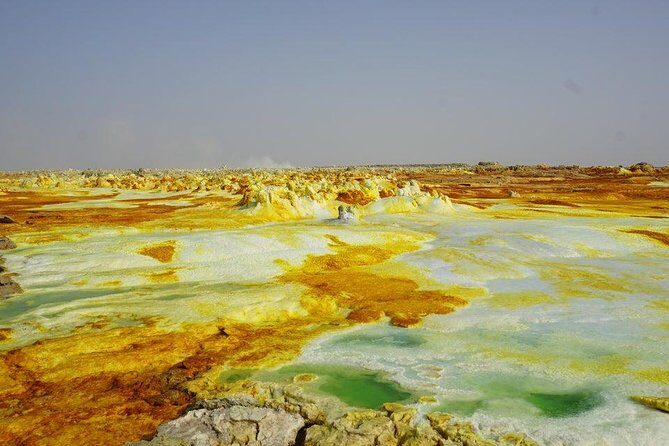
- Erta Ale and Danakil: a once-in-a-lifetime volcanic setting with sunrise timing.
- Omo Valley villages plus Mago and Konso: culture days are scheduled with intention.
The big idea: why this one tour covers four Ethiopia stars

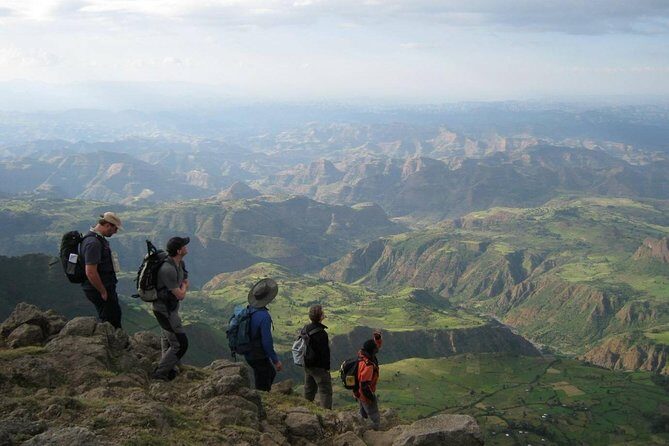
This itinerary works because it hits Ethiopia’s best-known contrasts in one go. You start with carved stone churches at Lalibela, shift into Axum, then go hard into the geothermal world of Danakil, and finish with ethnic cultures in the Omo Valley and Konso highlands.
That order matters. It keeps the most physically intense terrain (Erta Ale, then Danakil) closer together, and it saves the culture-heavy days for after you’ve already survived the “tough geography” phase. You’re not bouncing between every region with long, random detours.
Also, you’re not spending your energy on logistics. A driver, local guides, and flights keep the focus on the places themselves, not on finding transport and tickets.
You can also read our reviews of more tours and experiences in Lalibela.
Price and value: what you’re really paying for at $2,051 per person
This tour lists at $2,051.29 per person, and the value is mostly in what’s bundled. You get accommodations, a professional guide, local guides, an air-conditioned vehicle, domestic flights, and bed and breakfast included. You also get entrance fees taken care of, plus village and elder payments.
In practice, Ethiopia can be great but time-consuming to organize yourself, especially when flights and remote driving are involved. Paying for a package like this can be worth it if you want to spend your time looking out the window instead of hunting down tickets and schedules.
The other quiet value is the small-group cap (max 10). That reduces the “tour bus experience” feel, and it typically means fewer delays when you’re on tight timing for flights or early morning sunrise.
Day 1: flying into Lalibela and stepping into the carved-church world
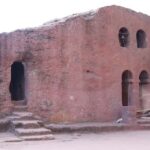
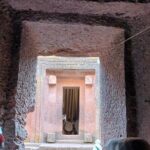
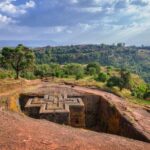
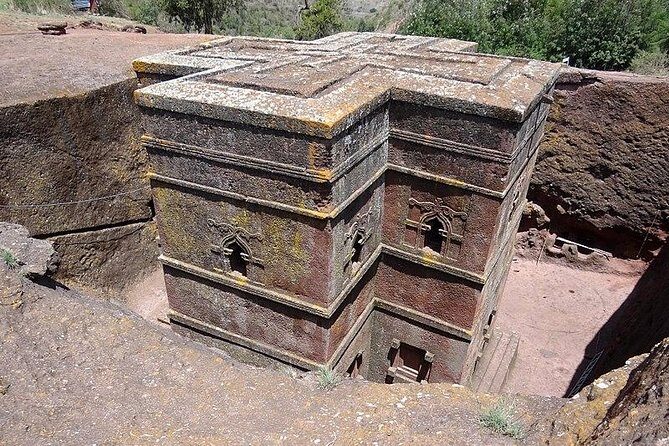
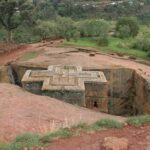
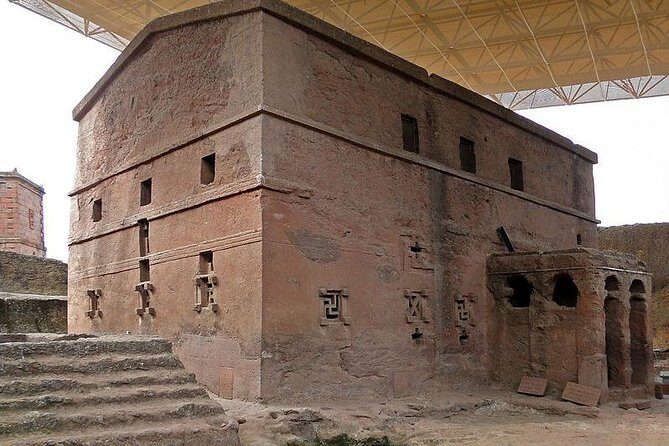
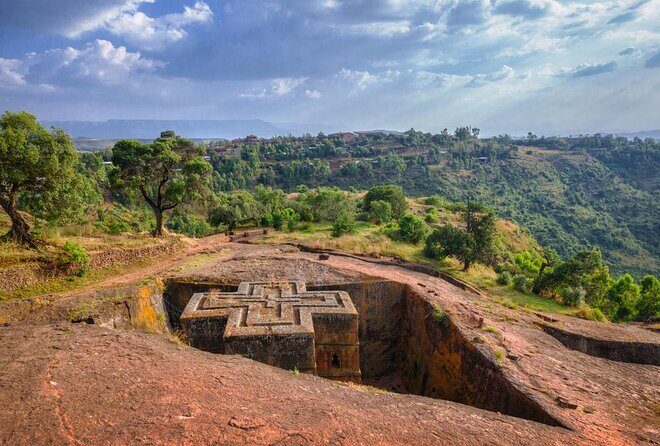
You fly north to Lalibela, then transfer to your hotel and get an afternoon start. After lunch, you visit the Rock-Hewn Churches of Lalibela—UNESCO-listed and carved during the time of King Lalibela (1181–1221).
What I like about the way this is scheduled is that it builds the site in manageable chunks. You start with churches organized in groups of three, and you specifically visit the area north of the small stream named the Jordan River. That gives you a mental map fast.
Practical note: church visits usually mean steady walking and time spent looking up. Comfortable shoes help, and you’ll want a light layer because mornings and afternoons can shift temperature.
Day 2: Axum’s quick hit, then Gheralta’s rock churches as a base day
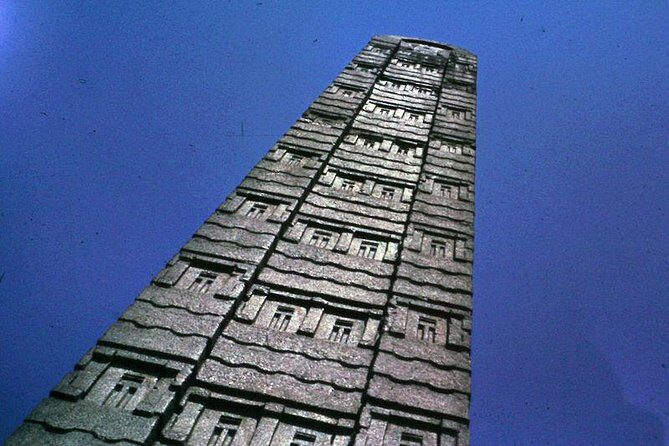
Day two starts with a flight from Lalibela to Axum. You get about an hour in Axum, then you drive from Axum to Hawzien via Adwa.
Axum in a tight timeline can be challenging, but it works here because you’re using it as a bridge rather than trying to do everything. You get the sense of place, then you move on toward Gheralta.
Then comes the real “base” idea. You drive to Hawzien for overnight via the Gheralta plains, and you can use the town as your launching point for the rock-hewn churches at Gheralta. That means you’re not constantly changing hotels, and you get more efficient sightseeing energy.
Day 3: Erta Ale and the long, rough road to the lava-lake area
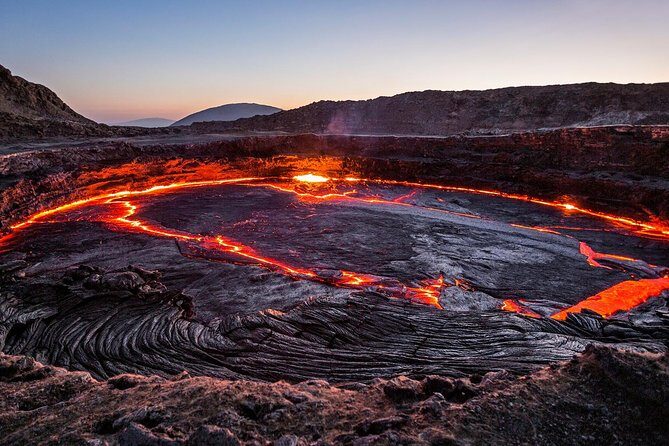
This is the day that turns the dial from historical Ethiopia to raw geology. You start early (the day begins at 9:00 AM in the route plan), driving toward Erta Ale via Mekele, whose name is tied to the Afar meaning smoky mountain.
Erta Ale is described as a shield volcano with a summit caldera and a world’s only permanent lava lake—not a one-off eruption moment, but something that has been present for decades. The setting is hard to picture until you’re close enough to feel how barren and active the terrain looks.
You drive to Dodom at the base of Erta Ale. The road is noted as one of the roughest, and you’ll want to treat this like a “hold on and breathe” day rather than a sightseeing drive. If you’re prone to motion sickness, it’s smart to plan ahead.


Day 4: Danakil Depression sunrise, crater pits, and a camp reset
Day four shifts into sunrise timing, and that’s where the Danakil region earns its reputation. You’ll head for the northern one that corresponds to the main pit crater, then walk about five minutes for access to pits in the area.
The descriptions here are very specific: the main pit crater is about 200 m deep and 350 m across, and there are smaller pits too, including one listed as 65 m wide and about 100 m deep. That scale isn’t just trivia—it helps you understand why this is not a casual stroll. You’re descending and exploring near steep volcanic features.
After an early start and a short walk, the plan is to return to Dodom after breakfast if possible around 07:00, then reach the camp by about 10:30 for downtime. There’s also an optional stop toward Lake Giulietti (also called Lake Afrera), depending on availability.
Day 5: salt mining at Ragad/Asebo, Dallol, and Lake Assal
This day is about the “other” Danakil stories—salt work, extreme terrain, and those strange color formations tied to volcanic activity. You drive toward Ragad (Asebo), where local workers mine salt, break it into rectangular pieces, and load it onto camels.
Then you move toward Dallol and related geothermal scenery. The route connects Dallol with Lake Assal and includes camel caravans in the plan, plus time walking with the Afar people.
One detail that matters for planning is the seasonal note: there are no camel caravans in July, August, and early September. If you’re traveling in those months, your experience should still include the geothermal sights, but you may not get the camel component.
Lake Assal is listed as 116 meters below sea level, and the Dallol area is described with volcanic activity shaping the scene. It’s the kind of place where your brain keeps trying to label it as something normal—and fails. That mismatch is part of the magic.
The day ends with a drive back toward Hamedela, then onward to Mekele, followed by a flight back to Addis Ababa at 7:50 PM (arriving 9:10 PM).
Day 6: Jinka arrival, Ari villages, and the Jinka Museum stop

After Danakil’s intensity, day six is a culture and community shift. You arrive at Jinka Airport, meet your group, then drive to the Ari villages for time with the Ari people.
One of the clearest cultural details provided is that women wear skirts made from enset, described as a banana-like tree, and they’re known as expert pottery makers. This isn’t just a photo stop; it’s scheduled as a village encounter.
You then also visit the Jinka Museum, with a collection of musical instruments, weapons, and household items. For me, museum time works as a grounding tool. After days of extreme terrain, it helps connect what you saw out in villages to wider daily life and craftsmanship.
Day 7: Mago National Park with Mursi, then Turmi and Hamer bull jumping
Day seven gives you two different ethnic culture experiences in one day. First is a day excursion to Mago National Park to visit the Mursi village.
The Mursi are described with straw-leaf huts and women wearing terra cotta jewelry, including the custom of enormously stretched lower lips and ear lobes. It’s worth going into this with respect and patience. These communities are not entertainment props, and the best moments happen when you’re calm and observant.
After that, you proceed to Turmi, where the Hamer people live. The highlight here is the custom of bull jumping, which initiates a boy into manhood. The route plan notes that female relatives dance and invite whipping from men, and that scars are part of the system connected to social support.
The boy runs back and forth twice across the backs of bulls or castrated steers, and failure leads to ridicule. That’s intense by design—so it helps to be mentally ready for a dramatic, high-energy cultural ritual.
Day 8: Konso terraces and fortified settlements in the Konso highlands
Your final day is a strong close because it’s historical and living at the same time. Konso is described as an arid property with stone-walled terraces and fortified settlements adapted to a dry, hostile environment.
The tour describes it as a cultural tradition stretching back 21 generations (more than 400 years). You also get anthropomorphic wooden statues, grouped to represent respected community members and heroic events connected to funerary traditions.
Admission for this stop is listed as free in the plan, which is a nice bonus, but the bigger win is the concept of continuity. You’re seeing architecture and social structure built to function in tough conditions, not just surviving as ruins.
Logistics that matter: flights, small group timing, and comfort reality
A tour like this succeeds or fails on execution, and the structure here is designed for fewer headaches. You get pickup offered and transfers included, with start in Lalibela and drop-off in Addis Ababa at your hotel.
You’ll also be traveling with an air-conditioned vehicle, which helps on driving days when the heat can drain you. For accommodations, the plan says you’ll sleep in a range of properties for variety. Based on the kinds of feedback from people who did similar versions of the trip, expect basic but clean lodging with real beds, not a luxury resort vibe.
Domestic flights are included, and that’s a big deal. It reduces the number of long overland days and helps you hit tight schedules—especially since Erta Ale and Danakil days have early starts and rough roads.
One more helpful detail: the tour notes a mobile ticket. That can make day-of logistics smoother, especially if you’re bouncing between flights and transfers.
The guides and team: what I’d look for when you ask questions
Even with a great itinerary, the guide experience shapes everything. I like seeing that the tour team is praised for responsiveness and professionalism, including named people such as Muller, Yared, Muna, Samrawit, and Sefora.
That matters because Ethiopia can throw curveballs—flight timing, weather, or local changes. The best operator response isn’t just fixing things; it’s keeping you informed and moving without panicking the group.
If you book, send your questions early. Ask who will be on your trip, confirm pickup timing, and ask what to pack for sunrise days and the rough-road portion. A good operator will answer clearly.
Who should book this, and who should think twice
You should book this if you want a big Ethiopia sampler in one shot: Lalibela churches, Axum, volcano country, and Omo Valley cultures. It’s also a good fit if you like a small group and want your days planned for you.
You should think twice if you need a gentle pace. The trip requires moderate physical fitness, and the route calls out rough roads and early starts around Erta Ale and Danakil. If you’re sensitive to motion or exhaustion, plan for rest breaks and bring what helps you cope.
Also, culture days are active. You’ll be moving between villages and viewpoints, so bring patience, respectful behavior, and an open mind. This kind of travel is about seeing people and places with care.
Should you book this Lalibela, Axum, Danakil and Omo Valley tour?
If you’re aiming for maximum variety with minimal planning stress, I’d say yes—this is the kind of trip that saves you time and gets you to far-flung places efficiently. The best parts are the combination: UNESCO rock churches, then a real volcanic world, then culture days in the Omo region and Konso.
But be honest about your tolerance for rough travel and early mornings. If you can handle that, you’ll likely love how much you fit in—and how the scenery and culture shift keep your brain awake.
One smart decision tip: ask yourself what you’ll enjoy most—church architecture, volcanic terrain, or village encounters—and make sure that mix matches your travel personality. This tour is strong at all three, but it can’t be a slow, cushy vacation.
FAQ
What is the maximum group size?
The tour is listed as a maximum of 10 travelers.
Where does the tour start and end?
It starts in Lalibela, Ethiopia and ends in Addis Ababa, Ethiopia, with drop-off at your hotel in Addis.
What time does the tour start?
The start time is listed as 7:00 am.
Are entrance fees included?
Yes. Entrance fees are included, along with village and elder payments where needed.
Are domestic flights included?
Yes. Domestic flights are included as part of the program (with flights also mentioned from Lalibela to Axum and back to Addis).
What kind of transport do you use?
The tour includes an air-conditioned vehicle and local guides where needed.
What meals are included?
The tour includes bed and breakfast.
Is pickup from Addis Ababa included?
Pickup is offered, and the tour specifically notes pick up from Addis Ababa and Lalibela for ease.
What should I pack for this kind of itinerary?
You should plan for moderate physical fitness demands and early days, especially around Erta Ale and Danakil, plus regular walking during sightseeing stops.
What is the cancellation rule for a full refund?
You can cancel up to 6 days in advance for a full refund, meaning you must cancel at least 6 full days before the experience’s start time.