REVIEW · ADDIS ABABA
10 Days North Historical Tour
Book on Viator →Operated by Ethiopian Wanderer Tours & Travel · Bookable on Viator
Ethiopia’s historic north is a big-picture time machine. This 10-day route strings together private touring with major sites like Axum, Gondar, Lalibela, and the Simien Mountains, plus airport pickup on arrival so you start without logistics stress. I love the way it balances superstar sights (rock-hewn churches) with quieter religious places like Lake Tana monasteries. I also love the animal-and-scenery payoff in Simien, especially the chance for close gelada viewing. One consideration: the days are long, with multiple 7–9 hour travel blocks, so you’ll want to pace yourself for fatigue.
I also like that entrance fees and breakfast are included, which helps you keep a lid on day-to-day costs. You’ll hit major cultural anchors right away in Addis Ababa, including Lucy at the National Museum, and you end with a farewell evening that includes cultural songs, dances, and traditional food and drinks. If you’re comfortable with early starts and long road days, this is a strong way to experience the north without feeling rushed.
In This Review
- Key highlights I’d plan around
- First day in Addis Ababa: Mount Entoto, Lucy, and George Cathedral
- Lake Tana monastery day: Ura Kidane Mihret on the Zege Peninsula
- Gondar: castle compounds and mural-filled Debre Birhan Selassie
- Simien Mountains National Park: Simien Lodge, Sankaber, waterfalls, and geladas
- Axum: stelae, Queen Sheba lore, Mariam Tsion, and royal tombs
- Yeha and Adwa: pre-Axumite stone and a 1896 battlefield pass-through
- Lalibela: 11 rock-hewn churches and the feeling of walking inside stone
- Finishing in Addis: the long drive back and a farewell with songs and food
- Price and value: what $2,432 per person really covers
- Is this private North Ethiopia route right for you?
- Should you book this 10-day North Historical Tour?
- FAQ
- How long is the North Historical Tour?
- Where does the tour start and end?
- Is airport pickup included?
- What major places does the tour include?
- Are entrance fees included in the price?
- Are meals included?
- Is this a private tour?
- Are flights and visa fees included?
- Does the tour run year-round?
- What happens if weather is bad?
- Is free cancellation available?
Key highlights I’d plan around
- Airport pickup on arrival so Day 1 can shift smoothly into sightseeing
- Lake Tana boat trip to Zege Peninsula and the 14th-century round churches at Ura Kidane Mihret
- Gondar murals at Debre Birhan Selassie (including the angels on the wooden ceiling)
- Simien Mountains UNESCO scenery and geladas with a stop at Sankaber and Ethiopia’s highest waterfall
- Axum stelae and Axumite royal sites tied to King Ezana and the tombs of Kaleb and Gebre Meskel
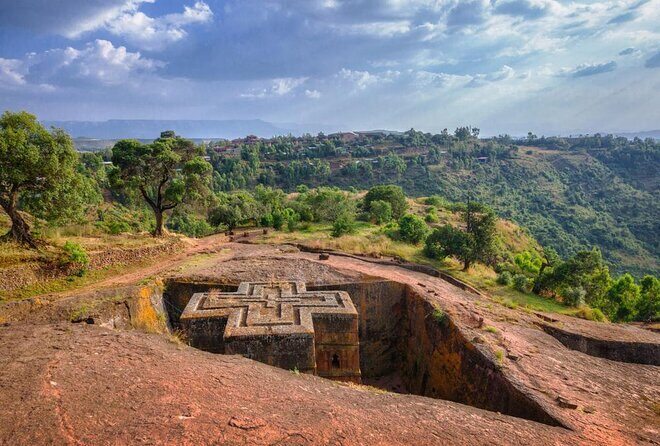
- Lalibela’s 11 rock-hewn churches, carved from volcanic rock and connected by tunnels and mazes
First day in Addis Ababa: Mount Entoto, Lucy, and George Cathedral
Most tours start with a checklist. This one starts with breathing room: when you land at Bole International Airport, a Ethiopian Wanderer Tours representative meets you and transfers you to your reserved hotel. If your arrival timing gives you extra daylight, you get a flexible city block of about 5–6 hours of sightseeing.
Mount Entoto is an easy win for orientation. It’s one of the best vantage points over Addis Ababa, and the views help you understand what kind of city you’re in—highland ridges, spread-out neighborhoods, and that big sense of altitude right away. If you like photos but also like learning, this is a great first day mental map.
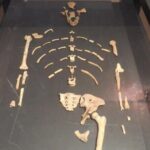
Then you get straight into Ethiopia’s cultural and historical layers. The Institute of Ethiopian Studies focuses on artefacts from different regions, so you get a fuller sense that Ethiopian identity isn’t just one chapter. Next comes the National Museum, where one exhibit that many people travel across the world to see is the 3.5-million-year-old bones of Lucy. Even if you’re not a fossils-nerd, Lucy lands differently in Ethiopia than it does elsewhere because it connects prehistory to a living culture.
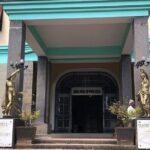
Finally, George Cathedral is a bonus for anyone who likes art in a religious context. You’ll see paintings by Afework Tekele and other ecclesiastical wealth. That combination—museum learning plus cathedral art—sets a tone for the trip: history here isn’t locked behind glass.
Practical note: Day 1 is partly about timing. If you land late, you may not get all the options. Either way, this structure is useful because you don’t waste Day 1 staring at a clock.
You can also read our reviews of more historical tours in Addis Ababa
Lake Tana monastery day: Ura Kidane Mihret on the Zege Peninsula
Lake Tana is a change of pace, and not just because it’s water. It’s a day built around Orthodox monastic history and the quiet drama of reaching it by boat.
After a long transfer day from Addis Ababa (including a flight to Bahir Dar), you’ll go to your hotel and then take a boat trip on Lake Tana. The destination is Ura Kidane Mihret on the Zege peninsula. This monastery is known for 14th-century round, grass-roofed churches and murals—specifically the Azoa Mariam and Ura Kidane Mihret churches.
What I like about this stop is that the churches aren’t just “old.” They’re visually specific: mud-plastered round walls and conical thatched roofs. That architectural language tells you a lot about how place, climate, and tradition work together. And because the monastery is hidden in the forest of the Zege peninsula, you get that moment when the scenery shifts from open water into a more sheltered, shaded feeling.
Tip for your own planning: bring a light layer for the boat time. Even when the weather is comfortable, you can feel a breeze on the water.
Gondar: castle compounds and mural-filled Debre Birhan Selassie
From Bahir Dar you move to Gondar, the 17th-century royal city that still feels built around imperial power and church art.
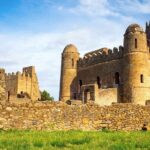
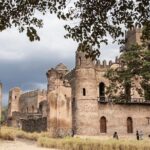
In Gondar, the big theme is the castle compound. You’ll visit the royal enclosures of Fassil Ghibe and explore the castles of the Gonderian emperors. This isn’t just a “look at buildings” day. The layout helps you understand how rulers displayed authority, controlled space, and tied political legitimacy to sacred spaces.
Debre Birhan Selassie Church is the art highlight. The church is covered in murals, and one trademark detail people remember is the angels’ faces on the wooden ceiling. It’s the kind of interior where you keep noticing new corners—painted expressions, patterns, and that layered sense of devotion expressed through visuals rather than text.
A small practical consideration: these are indoor and semi-indoor stops with concentrated attention. If you’re easily tired by long days, take a slower pace inside the church so you’re not trying to photograph everything at once.
Simien Mountains National Park: Simien Lodge, Sankaber, waterfalls, and geladas
This is the day where Ethiopia turns wild in a very direct way.
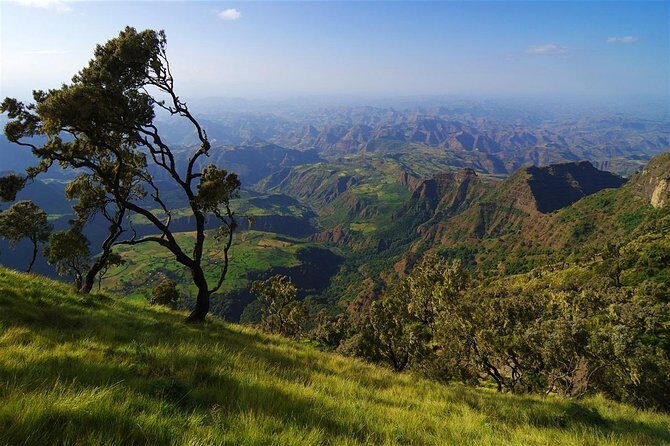
After breakfast, you travel to the Simien Mountains National Park region and reach Simien Lodge around noon. Simien Lodge is described as the highest lodge in Africa, which gives you a built-in sense that you’re not just driving through a park—you’re arriving at a high-altitude base. After lunch, you start exploring the park.
The park’s UNESCO World Heritage designation matters here because it reflects long-term conservation value, not just scenery bragging rights. The focus is endemic fauna and unique geography. And the tour is timed so you can experience the terrain at a human pace.
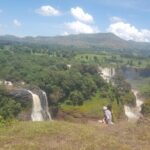
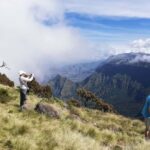
One standout stop is Sankaber at about 3,220 meters. From there you’re meant to admire deep gorges and valleys, plus the highest waterfall in Ethiopia. You can do a gentle walk there for about two hours. That’s an important detail: it’s not described as a punishing hike, so you can enjoy the viewpoints without betting your whole day on fitness.
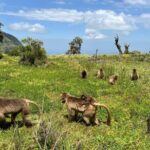
Then there’s the animal component. You may experience close interaction with gelada baboons, described as friendly. That doesn’t mean hands-off rules disappear—just plan to watch carefully and keep your movements calm and slow.
Practical reality check: altitude can affect breathing even if you’re walking gently. Drink water steadily and take breaks without rushing.
Axum: stelae, Queen Sheba lore, Mariam Tsion, and royal tombs

Axum is where the trip starts to feel like a foundation of Ethiopian identity. You drive to Axum after breakfast and spend a full day touring Axum sites tied to Ethiopia’s early Christian story and the Axumite kingdom.
In Axum, the “why” is as important as the “what.” Axum is described as a holy city where Ethiopian Christianity is said to have begun over 2,000 years ago, and the Axumite kingdom is considered the cradle of Ethiopian civilization. When you’re standing in these places, it helps to know you’re not just seeing relics—you’re seeing landmarks tied to origin stories.
Day 6 is the deeper tour day. You’ll visit the Axum stelae, or obelisks, including the largest single piece of stone erected by human beings anywhere in the world. Even if you’ve read about it before, seeing an object with that scale changes how you think about ancient engineering.
You’ll also see castles of former monarchs and Mariam Tsion Church, described as built on the site of Ethiopia’s first church. There’s also the Palace of Queen Sheba and inscriptions connected to King Ezana. Add the tombs of kings Kaleb and Gebre Meskel, and your mental timeline gets thicker—rule, inscription, sacred building, burial.
One way to enjoy Axum more: slow down between stops and let the names sink in. This is the sort of place where information clicks when you’re not trying to rush.
Yeha and Adwa: pre-Axumite stone and a 1896 battlefield pass-through
Before you move on to Lalibela, you stop at Yeha and pass through Adwa.
Yeha is a pre-axumite settlement, and the star is its well-preserved stone temple with 12-meter-high walls estimated to be about 2,500 years old. This stop offers a different flavor than Axum because it pushes you earlier in time—still monumental, but less tied to the later Axumite and Christian framing you’ll see in other days.
The route also takes you through Adwa, where in 1896 a famous battle took place between Ethiopians and Italians. Even if your time there is limited, this pass-through gives you context for Ethiopia’s modern historical self-definition—how people understand resistance and independence.
Practical tip: stone temples can be bright and hot. Wear sunscreen and consider a hat.
Lalibela: 11 rock-hewn churches and the feeling of walking inside stone

Lalibela is the big draw, and the tour gives it the attention it deserves.
You’ll drive to Lalibela for about eight hours, reaching late afternoon. That’s helpful because you’re not forced to cram everything into the first day; you can settle in before you start the church circuit.
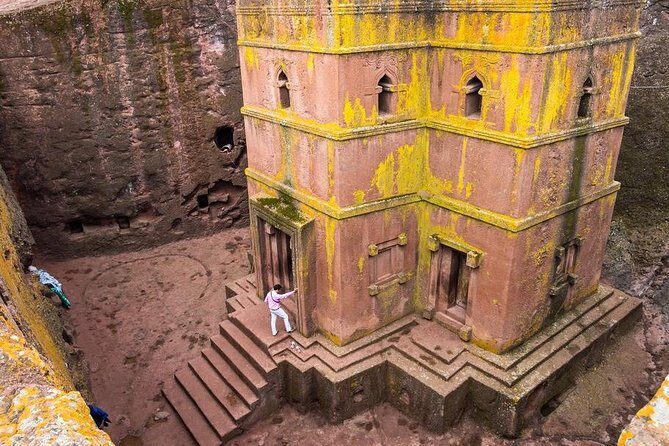
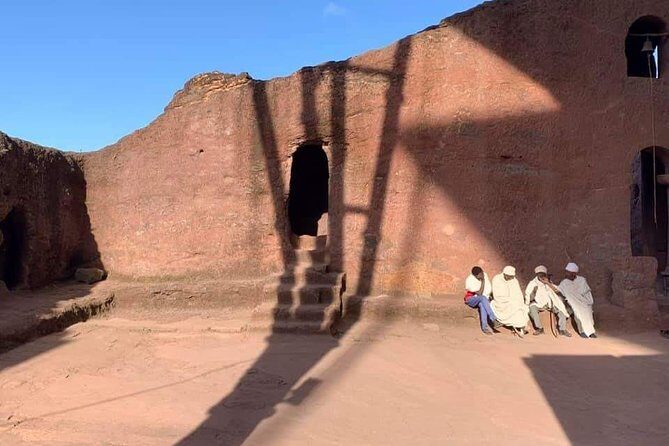
On the next day, you’ll visit the 11 renowned rock-hewn churches of Lalibela—often called the 8th wonder of the world. The defining detail is that they’re physically carved from the rock they stand on. That changes everything about the experience. You’re not looking at “old churches”; you’re looking at architecture grown from stone, built by shaping the environment instead of putting the environment in the way.
Some are sculptured out of solid volcanic rock. Others connect by underground tunnels and mazes. Some are described as quarried enlargements of caves. That description matters because it prepares you for a layout that can feel like you’re moving through a stone puzzle as much as a religious complex.
You’ll see the first group of six churches: Bet Golgotha, Bet Mikeal, Bet Mariam, Bet Maskel, Bet Dangal, and Bet Medhanealem. Bet Medhanealem is noted as the largest rock-hewn church in the world, built like a Greek temple. That detail is useful because it hints at how design ideas traveled and transformed across eras.
If you like photos, keep in mind that interiors and tight passages can make framing tricky. If you like understanding, focus on how doors, ceilings, and levels align—because the “carved-from-rock” concept is easier to feel when you compare angles as you move.
Finishing in Addis: the long drive back and a farewell with songs and food

The last day is a long one: you’ll have about a 9-hour drive back toward Addis Ababa.
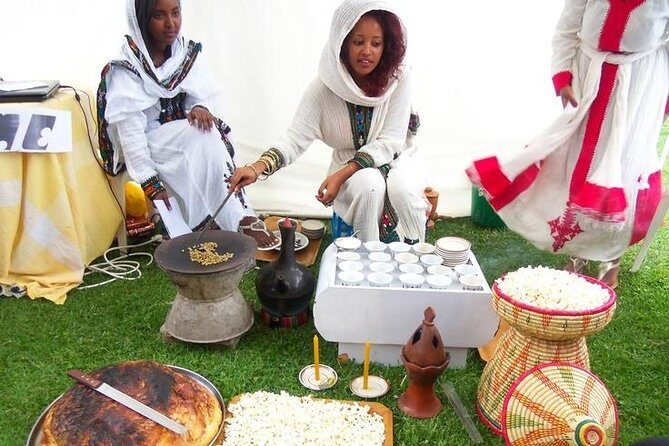
This day is framed around an evening farewell dinner in one of Addis Ababa’s traditional restaurants. You’ll get cultural songs, dances, and traditional food and drinks, then a transfer to Bole International Airport.
I like the structure of ending with shared food and performance because it wraps up the journey emotionally. After days of stone churches and highland parks, you get something social and celebratory—an Ethiopia you can feel in your body, not just your camera roll.
Price and value: what $2,432 per person really covers
The price is $2,432.00 per person for a roughly 10-day north Ethiopia experience. On paper that’s not a bargain. In practice, it can be good value if you compare it to what you’d pay separately in hotels, private transport, and entry fees across multiple regions.
Here’s what’s included:
- All entrance fees
- 9 night accommodation
- Breakfast (10)
Pickup is offered, and you’re also met on arrival at the airport. That matters because Addis logistics can eat half a day if you’re not prepared.
What’s not included:
- International and domestic flights
- Visa fees
- Excess luggage charges
- Flights and personal fee
So you should budget extra for lunch and dinner unless your own plan includes those costs elsewhere. The itinerary mentions a specific farewell dinner, which is included, but it doesn’t say other meals are covered. Plan on spending some time deciding what you’ll do for food each day.
Weather matters too: the experience requires good weather, and if it’s canceled due to poor weather, you’ll be offered a different date or a full refund. That’s especially relevant for the Simien Mountains segment.
If you want to travel “light” financially, you’ll want to travel “light” on logistics: book your flights early, pack within typical luggage limits, and keep your daily spending realistic.
Is this private North Ethiopia route right for you?
This works best if you want a focused route through the northern pillars—Addis, Lake Tana, Gondar, Simien, Axum, Yeha, and Lalibela—without hand-building every connection yourself.
It’s a great fit for:
- People who want a private tour so pace and attention can stay on your interests
- History-and-religion focused travelers who like seeing sites with names and dates, not just generic viewing
- Anyone who wants both “icon” stops (Lalibela) and less-famous religious architecture (Ura Kidane Mihret)
- People who value included entry fees and breakfast
It might be less ideal if:
- You hate long travel days. Several sections are described in the 7–9 hour range.
- You’re sensitive to high altitude. Sankaber is about 3,220 meters, and your body will notice.
- You prefer slow travel with fewer transfers.
One more angle: the tour provider is described in past feedback with strong communication and a hard-working guide named Abebe. In particular, I’d take that as a sign that planning support and clear messaging are part of the service style. If Abebe is assigned to you, expect a knowledgeable, detail-focused approach—at least that’s the pattern in the feedback you can see.
Should you book this 10-day North Historical Tour?
If you’re aiming to see Ethiopia’s historic north in one well-structured loop, I think this tour is worth a serious look. The included entrance fees and breakfasts help smooth out budgeting, and the route hits major cultural anchors rather than scattering time across too many random stops. The mix is smart: museums and churches in Addis, Lake Tana monastic life, Gondar’s imperial architecture, Simien wildlife and views, Axum’s stone monument scale, Yeha’s early temple, then Lalibela’s rock churches.
But be honest with yourself about pace. This is not a “move once, linger forever” trip. You’ll do meaningful drives, and you’ll likely feel them in your legs. If you handle that well, the payoff is big.
If you want a single recommendation: book it if your priority is the core north—Axum, Gondar, Lalibela—and you’re okay trading a bit of rest for a lot of first-rate sites in a tight window.
FAQ
How long is the North Historical Tour?
The tour is listed as 10 days (approx.).
Where does the tour start and end?
It starts in Addis Ababa, Ethiopia, and ends back at the meeting point (in Addis Ababa).
Is airport pickup included?
Yes. Pickup is offered, and you’re met at Bole International Airport on arrival.
What major places does the tour include?
You’ll visit Addis Ababa, Bahir Dar and Lake Tana (including Ura Kidane Mihret on the Zege Peninsula), Gondar, Simien Mountains National Park, Axum, Yeha (passing through Adwa), and Lalibela.
Are entrance fees included in the price?
Yes. All entrance fees are included.
Are meals included?
Breakfast is included for 10 days, and there is a farewell dinner on the last evening. Lunch and dinner are not listed as included.
Is this a private tour?
Yes. It’s private, with only your group participating.
Are flights and visa fees included?
No. International and domestic air tickets and visa fees are not included.
Does the tour run year-round?
The opening hours listed run from 12/19/2023 to 06/18/2026, Monday through Sunday, 7:30 AM to 11:30 PM.
What happens if weather is bad?
The experience requires good weather. If it’s canceled due to poor weather, you’ll be offered a different date or a full refund.
Is free cancellation available?
Yes. You can cancel up to 24 hours in advance for a full refund, based on the experience’s local time.