REVIEW · ADDIS ABABA
6 Days Lalibela, Omo Valley and Harar
Book on Viator →Operated by Ethio Travel And Tours · Bookable on Viator
Six days, three Ethiopian worlds. This route strings together Lalibela’s rock churches, the Omo Valley’s people and markets, and Harar’s walled-city culture in a tight, guided loop. You’re moving fast, but the stops are the point: you get history you can walk through, culture you can see up close, and a few genuinely memorable moments along the way.
I love how the trip gives real, specific church detail in Lalibela—Bet Medhane Alem, the Lalibela Cross, and linked chapels like Bete Maryam and Bete Golgotha. I also like the cultural stop sequence in the Omo region, because you’re not only “watching”—you’re visiting villages, seeing markets, and then stepping into UNESCO-listed Konso to understand how the community shapes the land.
One drawback to plan for: lodging quality can be uneven, especially in Harar, and you should double-check the domestic flights are fully ticketed before you arrive.
In This Review
- Quick hits before you go
- The big picture: how this 6-day route “actually” feels
- Day 1 in Lalibela: the Northern Group and the Lalibela Cross
- Day 1 continues: moving from one church group to the next
- Day 2 Jinka: Aari village life plus an ethnographic museum
- Day 3 in the Omo orbit: Mursi, then Hamer markets in Turmi
- Day 4: Omo River boat time and Konso’s UNESCO terraces
- Day 5 Lake Chamo crocodile market area and Dorze in Chencha
- Harar city living: walled streets and the hyena feeding
- Day 6 Harar morning: Arthur Rimbaud and Ras Mekonnen
- Price and logistics: what you’re paying for, and what to confirm
- Who this tour suits best (and who should think twice)
- Should you book this 6-day Lalibela, Omo Valley and Harar tour?
- FAQ
- How long is the tour, and what time does it start?
- What’s included in the price?
- Does the itinerary include domestic flights?
- Is pickup offered, and is it a private tour?
- Are entrance tickets included for visits?
- What are the main cultural highlights you’ll see?
- What if the tour is canceled due to weather, or if I need to cancel?
Quick hits before you go
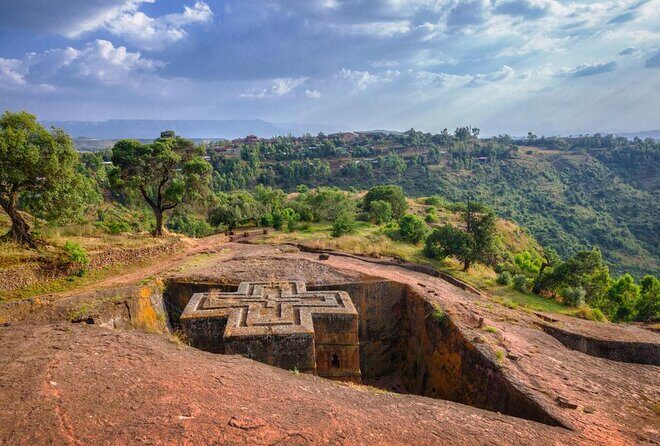
- Lalibela’s Northern Group with names you’ll remember: Bet Medhane Alem and its connected chapels around the Lalibela Cross.
- Omo Valley village + market pairing: Mursi, Aari, Hamer, and Dassench/Geleb fit into a single cultural itinerary.
- Boat time on the Omo and Lake Chamo: one river ride in the Omo region and a Lake Chamo outing that includes the crocodile market area.
- Konso UNESCO stop built around daily life: village compounds, a local museum, and a view of terraces and walls.
- Harar after dark: a night-time hyena feeding outside the town is part of the program.
- Private, guided, and transport-managed: air-conditioned vehicle, pickup offered, and a mobile ticket for the flow between stops.
The big picture: how this 6-day route “actually” feels

This is a multi-region Ethiopia sampler that’s designed for travelers who don’t want to choose just one area. You’ll start with an early flight to Lalibela, then drop down into the Omo Valley region for villages and markets, and end in Harar, where the city’s Islamic culture and night activity take over.
You should know the pacing: travel days are real days, not just “transfer time.” Between domestic flights and long drives, you’ll spend a fair amount of each day in transit, but the itinerary is built so each leg lands you in a specific place with specific things to do.
If you want comfort above all, this trip may feel like a sprint. If you want variety—churches, UNESCO farming traditions, river and lake outings, and a walled city—this is a strong fit.
A few more Addis Ababa tours and experiences worth a look



Day 1 in Lalibela: the Northern Group and the Lalibela Cross

On day 1, you’ll catch a morning flight from Addis Ababa around 7:10 am to Lalibela. Once you arrive, you’re met at the airport, then driven about 23 km to town for check-in and time to refresh before visiting the rock-hewn churches.
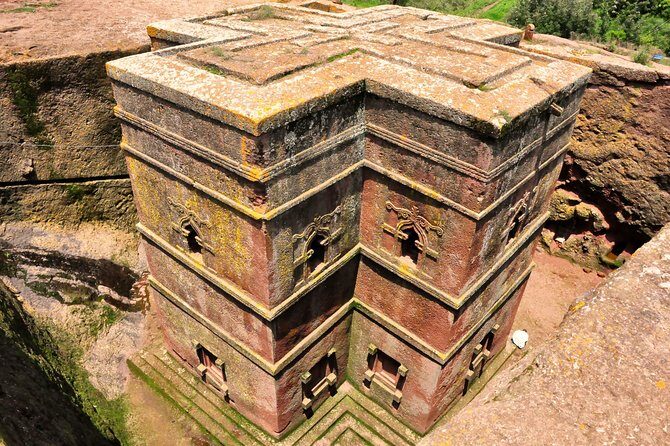
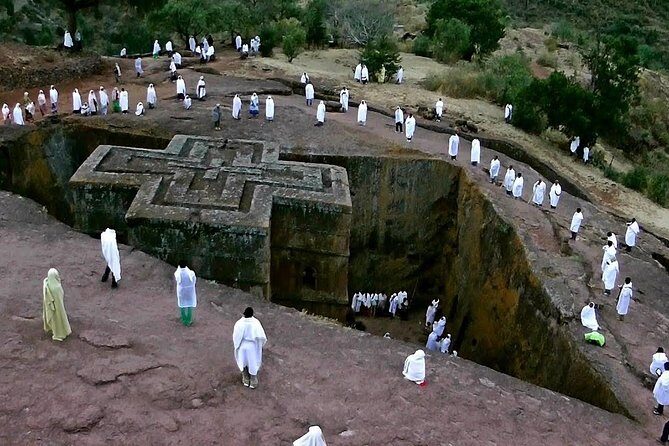
The standout here is the Northern Group, starting with Bet Medhane Alem. This church is tied to the famous Lalibela Cross, and it’s also described as linked to other key churches and chapels, including Bete Maryam and Bete Golgotha (often associated with arts and a tradition tied to the tomb of King Lalibela). You’ll also hear about or see the Selassie Chapel and the Tomb of Adam within this church network.
What I like about this day is that the sites are not treated like generic ruins. The itinerary points you toward meaningful connections between buildings—so when you look at one church, you’re already thinking about its links to the next. That makes the walking time feel more like a guided “story in stone” rather than a checklist.
Practical tip: wear clothing that covers shoulders and knees and be ready to climb and stand for a while. Even if you’re not religious, Ethiopian Orthodox sacred architecture is visually and physically impressive.
Day 1 continues: moving from one church group to the next

After a break, the program shifts you to another set of the rock-hewn churches (the schedule continues beyond the Northern Group). This is a smart structure, because Lalibela tends to feel more meaningful when you’ve already “set your eyes” on one group before you move onward.
Expect about 7 hours for this main day of church visits, with an admission ticket included. If you’re prone to museum fatigue, you’ll still likely enjoy Lalibela—because the churches are built to be visited outdoors, close up, and in small clusters.
Day 2 Jinka: Aari village life plus an ethnographic museum

You fly in to Jinka around 14:10 on day 2, and you’ll meet your driver and guide at the airport. After transfer to your hotel, the afternoon includes an excursion to an Aari village near Jinka and a visit to the ethnographic museum.
This day works well as a “landing day.” Instead of pushing you into the deepest culture-right-now right after a flight, you get a village outing plus museum context. The museum visit can be especially useful in Ethiopia, because it gives you a framework for what you’ll see later in the Omo region.
What to watch for: daily routines and material culture. Even when you’re not hearing every detail, village visits and museum time help you understand how people live, not just how they look in photos.
The program lists this stop with admission free time tied to the schedule, so it’s a good day to build depth without feeling like you’re paying nonstop at every gate.
Day 3 in the Omo orbit: Mursi, then Hamer markets in Turmi

Day 3 is early and full: you drive from Jinka toward the Mursi people’s village area, then return for early lunch. After that you drive toward Turmi via Dimeka, and later you visit the Hamer market and a cultural village in the Turmi area.
The Hamer portion is one of the best-known visuals in this region. The women’s dress and adornment—including decoration with red soil and butter—is part of what the itinerary highlights. It’s also a reminder that cultural presentation here is not random. It often reflects identity, community practice, and local aesthetics.
How to make this kind of day work for you:
- Stay respectful and patient when people are busy with market life.
- Keep your questions simple and curious.
- Take breaks when you can; long drives plus market crowds can wear you down fast.
The schedule gives you about 8 hours of programming here, with admission included. If you’re the type who likes to meet people and understand how traditions function day to day, this is a strong match.

Day 4: Omo River boat time and Konso’s UNESCO terraces

Day 4 adds variety by mixing a river visit with a UNESCO cultural heritage stop. You start with an early drive to Omorate to visit the Dassench/Geleb tribe (about 75 km from Turmi). From there, the program includes a boat trip on the Omo River and visits to a Dassench/Geleb village.
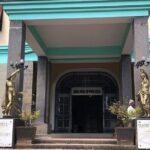
Then you continue toward Arba Minch via Konso, and the Konso portion is the big cultural structure of the day. Konso is another UNESCO Cultural Heritage site, and your visit includes the village compound and a local museum. The itinerary also notes that you are usually welcomed in the chief’s compound, including the family graveyard and house mummies—that’s the kind of detail that turns a site visit into something more personal and meaningful.
Konso is also about how people work with their environment. The program highlights agrarian culture and ingenious terraces and walls built to protect fields from livestock damage and flooding. Even if you’re not a landscape-nerd, it helps to see how architecture and farming habits go together.
The day runs about 8 hours and includes admission. Expect the day to feel longer than the hours suggest because you’re switching between boat time, village time, and driving.
Day 5 Lake Chamo crocodile market area and Dorze in Chencha

Day 5 starts with a morning boat trip on Lake Chamo. The itinerary specifically mentions visiting the “crocodile market” area and also seeing local hippos. Then, before the airport, you drive to Chencha to visit the Dorze people, known for their unique culture, houses, and traditions.
This is another “mixing” day: animals on the lake, then human scale culture in the Chencha area. It helps break up the Omo Valley rhythm so you’re not only dealing with markets and villages.
You then fly from Arba Minch to Dire Dawa via Addis around 14:00. After landing, you meet the group at Dire Dawa airport around 17:20, then drive by vehicle to Harar.
By the time you reach Harar, the schedule is still moving: this trip doesn’t treat Harar as a lazy finish. It sets you up to experience the city at night.
Harar city living: walled streets and the hyena feeding
Harar is one of Ethiopia’s most distinctive places. On the first Harar evening, you’ll stroll through the 16th-century walled city, then in the evening you’ll see the hyena man feeding the hyenas that gather outside the town.
This is the kind of moment that feels strange in the best way. Even if you’re not sure what you’ll think ahead of time, Harar’s atmosphere turns it into more than a quirky photo stop. It’s part of how locals and nighttime life coexist.
There’s also a practical side: Harar’s winding streets are easier with a guide and timing. You don’t want to be figuring out logistics after a long travel day.
Day 6 Harar morning: Arthur Rimbaud and Ras Mekonnen
Your final day starts with a morning visit inside Harar. You’ll see the home of Arthur Rimbaud, the French poet who lived and worked in Harar as a “gun-runner” during the 19th century. You’ll also visit the colorful Islamic market, plus the National and Harari museums and the house of Ras Mekonnen (the father of Haile Selassie).
This is where Harar feels layered. You’re walking through a city tied to trade and cultural exchange, and you’re also connecting it to major historical figures. It’s not just about seeing old walls; it’s about seeing how the city’s identity formed.
After the Harar morning, the schedule shifts back toward Dire Dawa. You’ll stop at the largest Dire Kefira market, then the Awadai chat market, and also the Ethio–Djibouti railway station. Your timing includes an overnight at Selam Hotel, followed by the flight back to Addis Ababa on ET-209 departing in the evening window.
If you hate rushed endings, this last day can feel like a lot. But if you’re trying to see the full Harar flavor—morning culture plus a flight-day market sweep—it’s efficient.
Price and logistics: what you’re paying for, and what to confirm
At $1,538.47 per person for a roughly 6-day itinerary, this package isn’t cheap on paper. But you are paying for several things that add real value:
- domestic flights tied directly to the routing (Addis → Lalibela, Arba Minch → Dire Dawa, and the final return),
- guided visits with entrance fees and licenses included as per the program,
- air-conditioned vehicle transport and pickup coordination,
- a private format (only your group participates), which usually means less waiting around.
That said, here’s the honest part you should handle before you go: confirm that all the internal flight tickets are truly issued under your booking. The itinerary clearly relies on those flights for timing, and delays or missing tickets can scramble your whole schedule.
Also plan for lodging variability. The Harar hotel can be basic, so if you’re picky about room comfort, ask specific questions before departure. Addis lodging tends to be better, but don’t assume the rest of the route will match it.
Finally, this trip lists moderate physical fitness as the expectation. Most walking is normal, but churches and city areas mean standing and moving steadily.
Who this tour suits best (and who should think twice)
You’ll enjoy this tour if:
- you want big variety in a short time (orthodox churches, Omo Valley villages/markets, UNESCO Konso, and Harar city culture),
- you like guided context—having names, connections, and cultural framing matters on this route,
- you’re okay with long travel days and the rhythm of flights plus driving.
You might think twice if:
- you want a slow pace with lots of downtime,
- you’re very sensitive to lodging comfort,
- you expect every day to feel effortless.
This is a cultural route with strong highlights and a few rough edges. Treat it like that, and you’ll get a lot out of it.
Should you book this 6-day Lalibela, Omo Valley and Harar tour?
Book it if your goal is a high-impact Ethiopia circuit: Lalibela’s rock-hewn churches, Omo Valley human culture and markets, Konso’s UNESCO terraces, and Harar’s walled-city atmosphere plus hyena feeding. The structure is built to connect places and ideas, not just move you from one checkbox to the next.
Hold off or ask extra questions if flights and lodging comfort are your top priorities. Do one extra check with Ethio Travel And Tours about internal flight ticketing and what to realistically expect from the Harar stay.
If you’re flexible and curious, this itinerary can be a memorable way to see parts of Ethiopia many people never manage to combine.
FAQ
How long is the tour, and what time does it start?
The tour is approximately 6 days. The start time listed is 6:00 am.
What’s included in the price?
The tour includes an air-conditioned vehicle, all fees and taxes, local guide service as per the program, all entrance fees and licenses as per the program, and breakfast (4).
Does the itinerary include domestic flights?
Yes. The schedule includes flights from Addis Ababa to Lalibela, from Arba Minch to Dire Dawa via Addis, and a return flight back to Addis Ababa.
Is pickup offered, and is it a private tour?
Pickup is offered, and it’s a private tour/activity, meaning only your group participates.
Are entrance tickets included for visits?
Yes. Entrance fees and licenses are included as per the program, including admission tickets where indicated in the itinerary.
What are the main cultural highlights you’ll see?
You’ll visit the Rock-Hewn Churches of Lalibela, Aari village and museum near Jinka, markets and village visits in the Turmi area, the Omo River boat trip and Konso UNESCO site, Lake Chamo outing, Dorze people in Chencha, and Harar’s walled city including museums/markets and the hyena feeding.
What if the tour is canceled due to weather, or if I need to cancel?
The experience requires good weather, and if it’s canceled due to poor weather you’ll be offered a different date or a full refund. You can cancel up to 3 days in advance for a full refund (based on local time).