REVIEW · ADDIS ABABA
A guided tour of Addis Abeba that includes a city viewpoint
Book on GetYourGuide →Operated by LIYU ETHIOPIA TOUR AND TRAVEL · Bookable on GetYourGuide
Addis Ababa shows itself from above and street level. In about four hours you’ll pair the Lucy fossil at the National Museum with sweeping city panoramas from Entoto Mountain, plus markets and a coffee stop. The main drawback to think about: if a church or museum area is closed or under renovation, the exact on-foot stops can change.
What makes this route especially interesting is how it strings together big moments in Ethiopian history with everyday life in the markets. English-speaking guides (some named Oli and Abebe from past runs) tend to explain what you’re seeing in plain terms while you’re in the van.
In This Review
- Key moments you’ll remember
- A 4-hour loop that hits Addis Ababa’s big contrasts
- National Museum of Ethiopia: Lucy and the long view of human history
- St George’s Cathedral and Ethiopia’s Orthodox roots
- Entoto Mountain viewpoint: city from altitude, not from a postcard
- Shiromeda cloth market: traditional textiles you can actually read
- Tomoka Coffee: a calm pause in the middle of movement
- Merkato: one of Africa’s biggest markets, up close
- Guides and pacing: what makes the difference in real life
- Price and value: what $62 buys you in Addis Ababa time
- Who this tour is best for (and who should pick something else)
- Final call: should you book this Addis Ababa city tour?
- FAQ
- What is the duration of the Addis Ababa guided tour?
- What major places does the tour include?
- Do I get hotel pickup and drop-off?
- Is the tour for English speakers?
- Are entrance fees included?
- What should I wear?
Key moments you’ll remember
- Lucy at the National Museum: the 3.5-million-year-old fossil of Dinkinesh (Lucy)
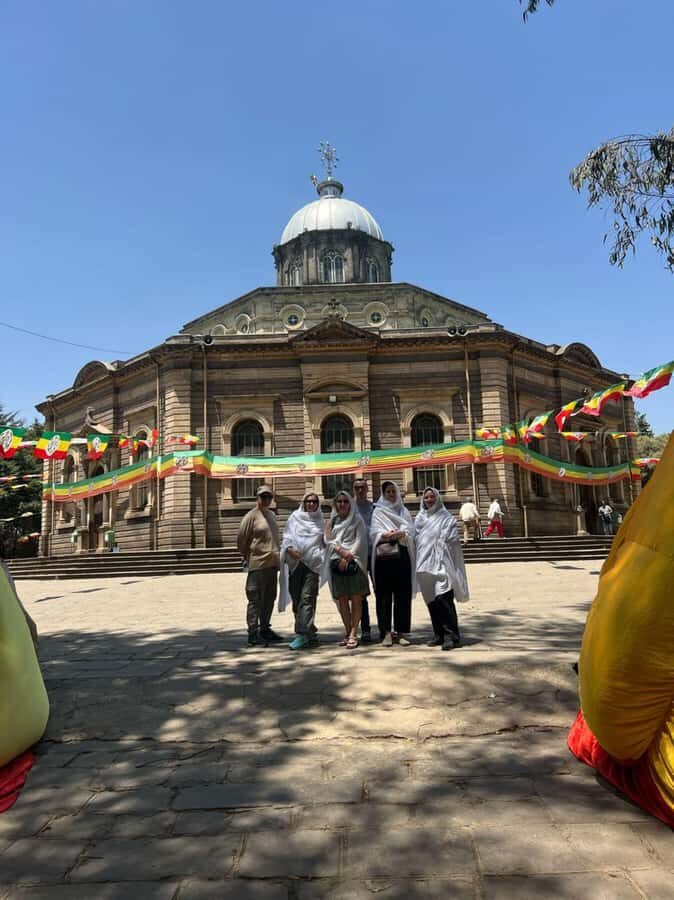
- Giorgis/St George’s Cathedral details: built in 1896 to mark Ethiopia’s victory over Italy at Adwa
- Entoto Mountain viewpoint: high-altitude city views and guided context
- Shiro Meda cloth market: a major place for traditional Ethiopian clothing
- Merkato open-air market time: one of Africa’s biggest markets, with guided storytelling
- Tomoka Coffee stop: coffee tasting included, with time to slow down
A 4-hour loop that hits Addis Ababa’s big contrasts
This is a short tour that tries to cover the essentials without turning Addis Ababa into a blur of monuments. You’ll start with archaeology, move to living religious architecture, then climb uphill for views before dropping back down into market energy. The pacing is built for a quick win: enough walking to feel the city, enough van time to keep it realistic.
At $62 per person for about 4 hours, the value comes from the bundle: pickup and drop-off, entrance fees, bottled water, coffee, and an English-speaking guide are all included. If you’re short on time, that matters in a city where getting around can eat up your day.
The biggest thing to know up front is footwear. You’ll spend time walking around Merkato and the cloth market area, so comfortable shoes aren’t optional.
You can also read our reviews of more guided tours in Addis Ababa

National Museum of Ethiopia: Lucy and the long view of human history
The tour begins at the National Museum of Ethiopia, where the star is the famous fossil often called Lucy (Dinkinesh, meaning lovely in the local tongue). The museum describes her as a 3.5-million-year-old hominoid from the Australopithecus afarensis species, and it explains why the 1974 discovery changed how people think about human lineage.
Even if you’ve heard the Lucy story before, seeing it in context inside a museum designed for that purpose is different from reading a headline. Here, the point isn’t just a name—it’s the timeline. The museum also includes items from pre-Axumite culture, so you get a sense of Ethiopia’s older layers before you jump into churches and more recent history.
One practical advantage: the tour includes a skip-the-line separate entrance. That can save real time on a short schedule—especially when you’re doing a lot in a single afternoon.
A small caution based on what can happen on the ground: in at least one past departure, the museum portion didn’t match expectations because an alternative museum was visited instead. That isn’t the standard description, but it’s a reminder to keep your priorities flexible if you’re booking during periods when sites are adjusting access.
St George’s Cathedral and Ethiopia’s Orthodox roots
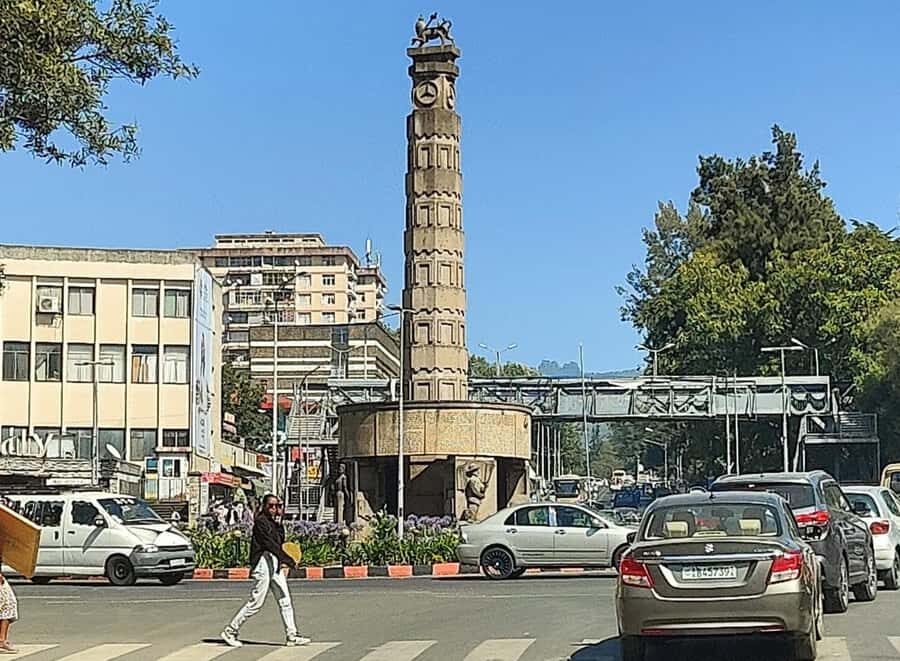
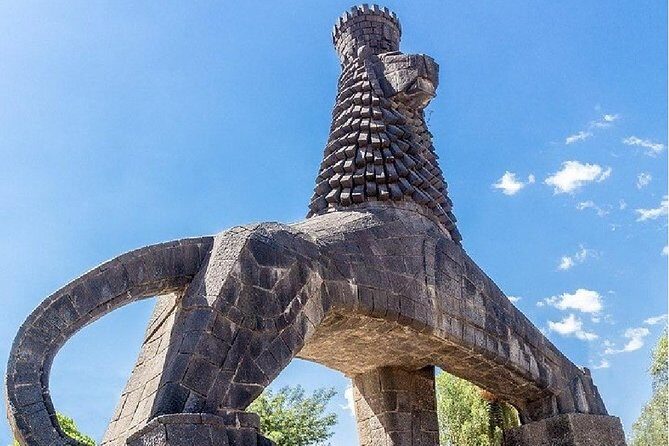
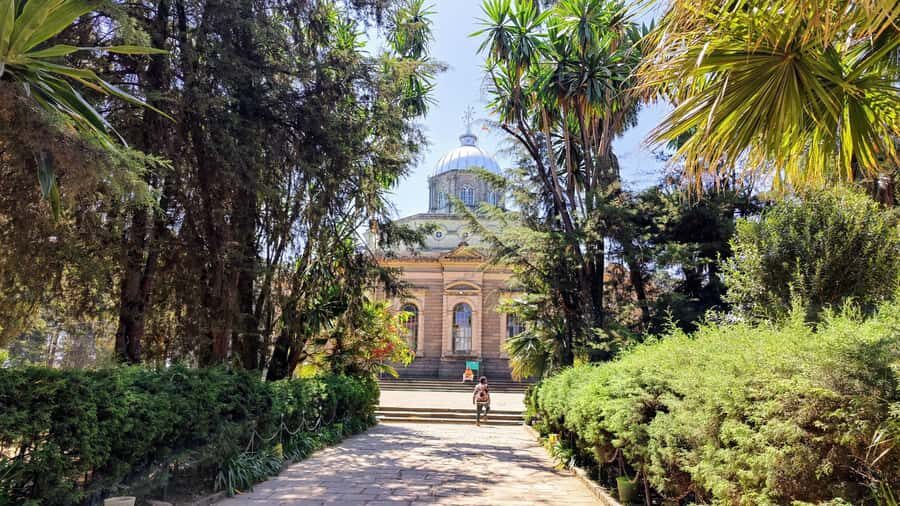
After the museum, you’ll head to St George’s Cathedral (Giorgis Cathedral) near the northern end of Churchill Road. The cathedral itself is a standout piece of architecture: built in 1896 in an octagonal form, it celebrates Ethiopia’s victory over the Italians at the Battle of Adwa.
What I like about this stop is the way the tour connects a building to a political moment—then pulls that thread into culture. You also get a clear explanation of Ethiopian Orthodox Christianity as a major force, including the fact that it became the state religion starting in the mid-4th century. That kind of context makes the churches feel less like isolated photo stops and more like part of a bigger system of identity.
Inside details matter here too. The cathedral is associated with work by Afewerk Tekle, a well-known Ethiopian artist who designed stained-glass windows for Africa Hall. If you’re the type who likes to notice craftsmanship (not just take wide shots), you’ll likely appreciate the references to specific artists and how Ethiopian art shows up across buildings.
In terms of logistics, another real-world consideration: there can be renovation-related disruptions. In one past run, the area around St George’s was scaffolded and the indoor portion wasn’t accessible, and the group visited another church on Entoto instead. If you care deeply about a particular interior, go in knowing that “best-case access” isn’t always guaranteed.
Entoto Mountain viewpoint: city from altitude, not from a postcard
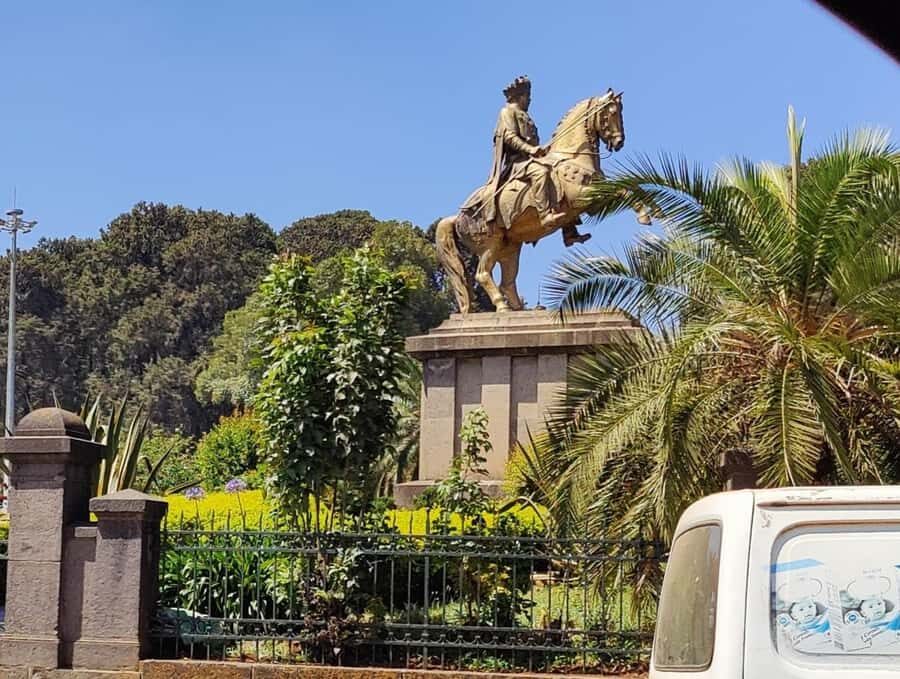
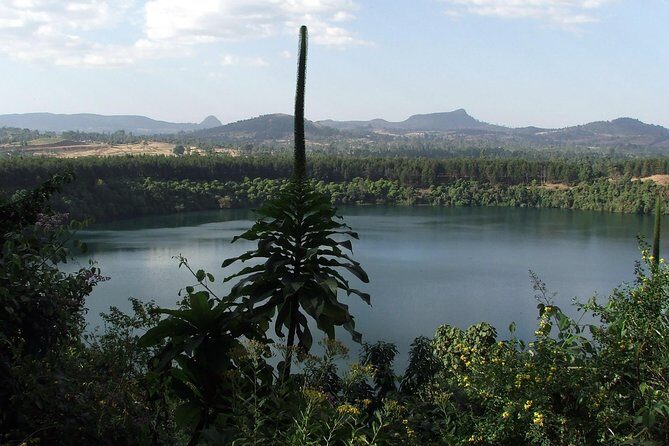
Once you drive up to Entoto, the tour becomes more than museum-and-market sightseeing. You’re climbing into a different feel—cooler air in some seasons, different light, and a wider sense of the city’s shape.
The schedule includes a guided visit and photo time at the panoramic viewpoint. One review notes the viewpoint being around 3,000 meters above sea level, which is high enough that you might notice breathing and pace. If you’re used to sea level, take it easy on the steps and don’t treat the climb like a sprint.
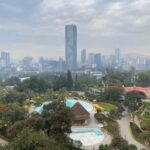
This is the moment where the tour earns its title as a city viewpoint experience. From here, Addis Ababa stops looking like a set of scattered stops and starts looking like a whole place—hills, roads, and neighborhoods all layered at once. It’s a great reset after time indoors.
Shiromeda cloth market: traditional textiles you can actually read
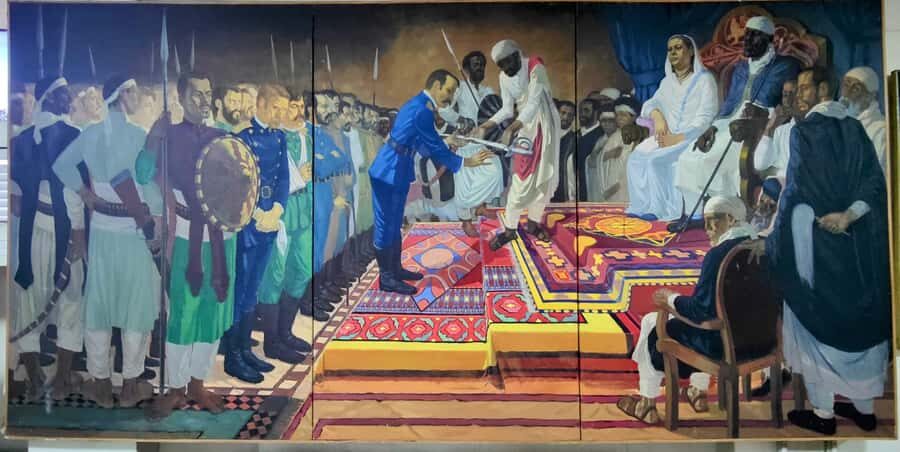
Next up is Shiro Meda (Shiromeda Traditional Cloth Market), one of the stops designed to give you a sense of daily culture rather than just big-name sights. Here, you’re in a space focused on traditional Ethiopian clothing—and that matters because textiles are one of the easiest ways to understand identity you can’t see in a single statue or church door.
You’ll have guided touring time and some walking/passing time depending on the day’s flow. The best way to use this stop is to look slowly. Notice patterns, colors, and how people move through the stalls. A guide can also help you interpret what you’re seeing, especially if you’re not familiar with Ethiopian clothing styles.
Comfort note again: markets demand shoes that can handle uneven ground and standing.
You can also read our reviews of more city tours in Addis Ababa




Tomoka Coffee: a calm pause in the middle of movement
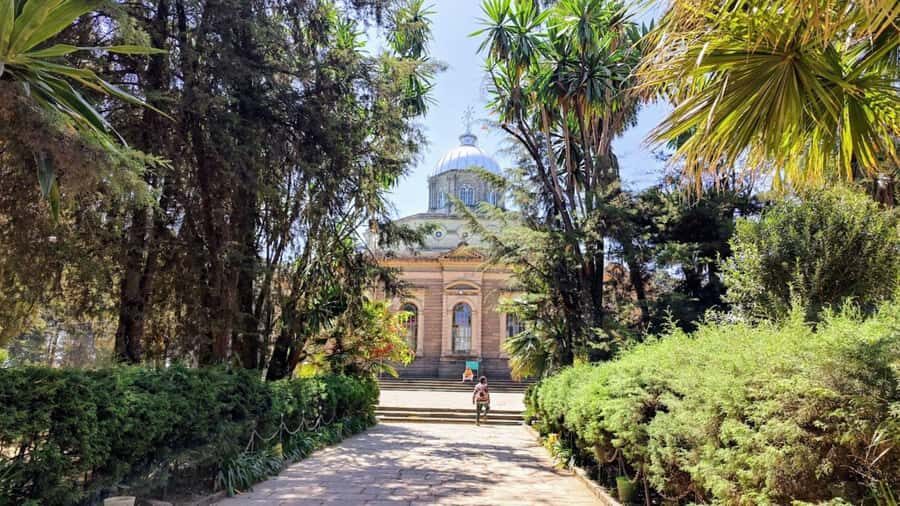
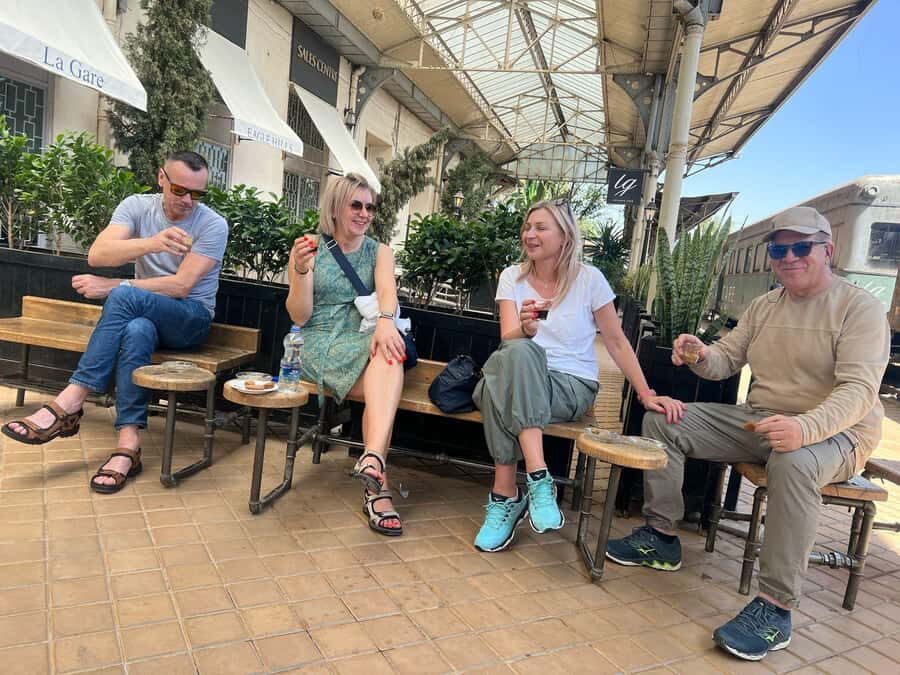
After the uphill segment, the tour includes a coffee stop at Tomoka Coffee, including coffee time and tasting. Coffee culture is a central part of social life in Ethiopia, and a scheduled pause does two things for you: it breaks up the walking, and it gives your guide a chance to explain what you’re drinking in context rather than on the fly.
One past departure specifically mentions a macchiato being prepared well at this stop. If coffee is your thing, plan to ask questions—how it’s made, what to expect from the flavor, and what local preferences are.
This is also the moment to take a breather if the day’s weather or timing has you a bit behind. The itinerary is short, so this stop can feel like a small win: you still feel like you’re sightseeing, but you’re also resting.
Merkato: one of Africa’s biggest markets, up close

The tour finishes with Merkato, described as Africa’s largest open market. This is where Addis Ababa becomes loud, visual, and intensely human. You’ll get guided time here, but the exact amount of walking can depend on conditions.
In one rainy departure, the group mainly passed by Merkato while the guide did the explaining. In another case, walking through the market seemed to be part of the experience more fully. Bottom line: if you want maximum market immersion, wear shoes ready for standing and be prepared that rain or crowd flow can change how much you step inside.
Even if you only do a guided “browse,” Merkato helps you connect the dots. You already saw textiles at Shiro Meda; now you see goods, bargaining culture, and the everyday engine of the city. And since this tour is only four hours, Merkato often acts like the final chapter—less about shopping, more about understanding.
Guides and pacing: what makes the difference in real life
The tour’s quality often comes down to the guide’s storytelling and the day’s pacing. Different guides show different strengths—some named Oli, Abebe, Amanuel, and Yhunna in past runs—yet the common thread is connecting architecture and fossils to lived Ethiopian culture.
Good guiding here means you’ll understand why:
- the museum artifacts matter beyond famous headlines,
- church design reflects political and religious shifts,
- and markets aren’t just chaos, they’re systems.
Pacing also matters. Several past experiences describe the tour as not rushed, with time to take photos and absorb explanations. That’s exactly what you want in a city like Addis Ababa, where traffic and crowds can eat time fast.
Price and value: what $62 buys you in Addis Ababa time
Let’s talk value honestly. You’re paying for a tightly planned route with a van, pickup and drop-off, all entrance fees, an English-speaking guide, plus bottled water and coffee.
For many visitors, the real cost isn’t just the $62—it’s the hassle of arranging transport, finding entrances, and figuring out what order makes sense. This tour gives you a pre-built path and a guide to translate what you’re seeing.
That said, the value depends on your expectations:
- If you want a guaranteed, exact walk-through of every named stop, you should be a little cautious. Renovation or access issues can change things, and one past run described multiple deviations.
- If you want the overall arc—museum to church to viewpoint to markets—and you’re fine with minor swaps, the price starts to look very reasonable.
At 4 hours, it also fits well into travel days. It’s short enough to recover afterward, but long enough to feel like you did more than just a drive-by.
Who this tour is best for (and who should pick something else)
This is a smart match for you if:
- you have limited time in Addis Ababa,
- you want a mix of big sights and everyday life,
- and you like guided context more than solo wandering.
It’s also a good fit if you enjoy structured stops: museum first, then religious architecture, then altitude views, then markets, with coffee as a reset button.
You might choose a different option if:
- you’re traveling with very specific priorities like a must-see interior that’s historically sensitive to renovations,
- you hate market walking (even short segments can be tiring),
- or you’re expecting deep time in one place. This is efficient, not slow.
Final call: should you book this Addis Ababa city tour?
I’d book it if your goal is a fast, guided Addis Ababa “greatest hits” route that connects Lucy, Ethiopian Orthodox culture, an Entoto viewpoint, Shiro Meda textiles, Merkato’s market life, and coffee—without you spending half the day figuring out logistics.
I’d pause and double-check your expectations if access changes would ruin your day. Because some past departures saw substitutions and missed walk-through time, this tour is best for people who can roll with a flexible route while still getting the overall experience.
If your schedule is tight, the included pickup options (hotel in Addis Ababa or Bole International Airport) help. And if you’re booking with uncertainty, the offer includes free cancellation up to 24 hours and a pay-later style option, which reduces stress when travel plans shift.
FAQ
What is the duration of the Addis Ababa guided tour?
The tour is listed as 4 hours.
What major places does the tour include?
The tour includes the National Museum of Ethiopia, St George’s Cathedral, Entoto Mountain with a viewpoint, Shiromeda Traditional Cloth Market, a coffee stop at Tomoka Coffee, and Merkato.
Do I get hotel pickup and drop-off?
Yes. Pickup and drop-off are included, and the tour mentions picking up any hotel in Addis Ababa (and also pickup from Bole International Airport).
Is the tour for English speakers?
Yes. The tour provides an English-speaking guide.
Are entrance fees included?
Yes. Entrance fees are included, and there is also a skip-the-line separate entrance.
What should I wear?
Wear comfortable shoes, especially because you’ll go around the markets.