REVIEW · ADDIS ABABA
Addis Ababa City Tours
Book on Viator →Operated by Danakil Depression Tours · Bookable on Viator
One day, and Addis history hits hard. You’ll start with pickup and ride in an air-conditioned minivan to see Lucy at the National Museum, then end with Mount Entoto for panoramic city views. It’s a tight route that mixes archaeology, Orthodox landmarks, and everyday market life.
I love the way the day balances big cultural stops with hands-on street-level time. The National Museum of Ethiopia delivers the main fossil story, and Shiro Meda plus Mercato make it real with cotton shopping and gift browsing.
One drawback to plan for: this is a long day (about 7 to 8 hours). You’ll do plenty of walking and market-street time, so if you’re heat-sensitive or on a strict schedule, build in a little slack.
In This Review
- Key things that make this Addis day tour work
- Getting around Addis Ababa the easy way: pickup, minivan, and pacing
- National Museum of Ethiopia: Lucy, Selam, and the timeline you came for
- Ethnological Museum: the culture side of Addis Ababa
- Shiro Meda and Mercato: how to shop, bargain, and stay sane
- St. George’s Cathedral and Meskel Square: Orthodox art and imperial echoes
- Red Terror Martyrs Memorial: the heavy stop with guided context
- Mount Entoto: sacred monasteries, eucalyptus, and city views
- Price and logistics: does $600 feel like good value?
- Who should book this Addis Ababa tour (and who should adjust it)
- Should you book Addis Ababa City Tours?
- FAQ
- How long is the Addis Ababa City Tours full-day experience?
- Is hotel pickup included?
- What’s included in the price?
- Are meals included?
- Is there a mobile ticket?
- What’s the group size limit?
- Is Mercato Market entry free?
- Are airport or departure taxes included?
- What’s the cancellation window?
Key things that make this Addis day tour work
- Lucy and Selam at the National Museum: early hominid fossils plus a newer child-focused display (Selam, estimated 3.3 million years old)
- Markets with a clear shopping angle: Shiro Meda for women’s handwoven cotton, Mercato for serious market energy
- St. George’s Cathedral with war-era history: Italian POW construction after Adwa, later fire and restoration
- Red Terror context you can’t get from postcards: museum pieces and guided explanation of the Derg era
- Entoto views and churches: Menelik II’s historic residence area and monasteries on a eucalyptus-covered sacred mountain
Getting around Addis Ababa the easy way: pickup, minivan, and pacing
This tour is built for people who want to see real Addis without figuring out routes, entry lines, or what goes where. You get hotel pickup (and airport pickup is offered too) and ride in an air-conditioned minivan with a driver/guide plus a Blue Badge guide. For a one-day plan, that kind of logistics coverage matters.
The route is scheduled as a full day, roughly 7–8 hours, with multiple stops ranging from 30 minutes to 2 hours each. That means you’ll have time for photos and learning, but you also won’t linger all day in one place. Think of it as a greatest-hits playlist, not a slow museum day.
The group size is small, up to 10 travelers, which usually helps with keeping everyone together at busy sites. You’ll feel the city’s rhythm most at Mercato, but the rest of the day stays structured enough to keep momentum.
For the best fit, I’d treat it like a “get your bearings fast” day. Addis has neighborhoods that can feel confusing if you’re flying solo, and this tour gives you a guided map of what’s important.
You can also read our reviews of more city tours in Addis Ababa


National Museum of Ethiopia: Lucy, Selam, and the timeline you came for
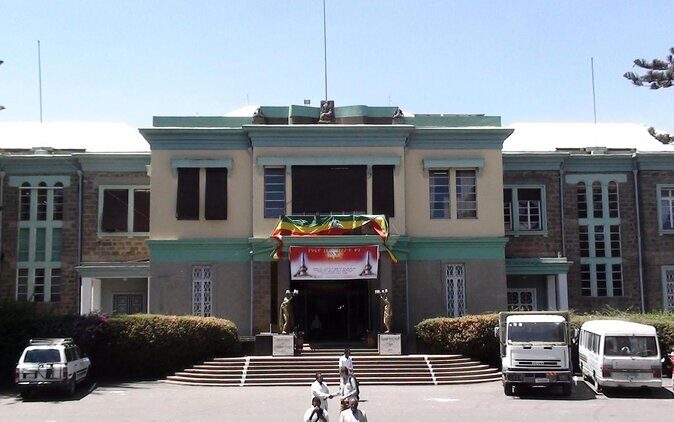
The day starts at the National Museum of Ethiopia, and yes, the fossil story is the headline. You’ll see the famous 3 million-year-old fossils of Lucy, discovered in 1974 near the village of Hadar. That alone makes the stop worth it if you’re curious about human origins.
What I like is that the museum doesn’t only do one thing. It also lays out archaeological and paleoanthropological finds, plus objects from ancient and medieval periods, regalia tied to former rulers, and art and crafts from different Ethiopian peoples. If you want a grounded sense of time—how people lived before and after empires—this museum gives you that scaffold.
There’s also a display on Selam, estimated to be 3.3 million years old, described as the earliest child. That’s a great “second angle” after Lucy because it shifts the focus from a single famous figure to a broader family of discoveries.
The main practical note: museum time is about 2 hours here. If you’re a super-fast reader, you’ll probably want to skim strategically; if you love details, you might wish the stop were longer. Either way, you’ll leave with a clearer mental map of Ethiopia’s deep past.
Ethnological Museum: the culture side of Addis Ababa
After Lucy’s world, the Ethnological Museum shifts the focus from fossils to people. It’s a public institution dedicated to ethnology and culture, and it’s tied to Addis Ababa University’s main campus (with the Institute of Ethiopian Studies). That academic connection shows in the variety of collections and how objects are presented.
You’ll spend about 1 hour at this stop. The highlights are anthropological, musicological, and cultural objects, which can be a nice change of pace after big-ticket archaeology. Even if you don’t read every label, the range helps you understand that Ethiopian identity isn’t one story—it’s many.
This is also one of those stops that gives you context for the rest of the day. When you later look at cathedral history, market textiles, and regional customs, the museum helps you connect the dots instead of treating every site like a separate trivia question.
If you’re choosing between museums on a tight day, I’d still back this one. It’s short, and it adds cultural framing you won’t get from markets alone.
Shiro Meda and Mercato: how to shop, bargain, and stay sane
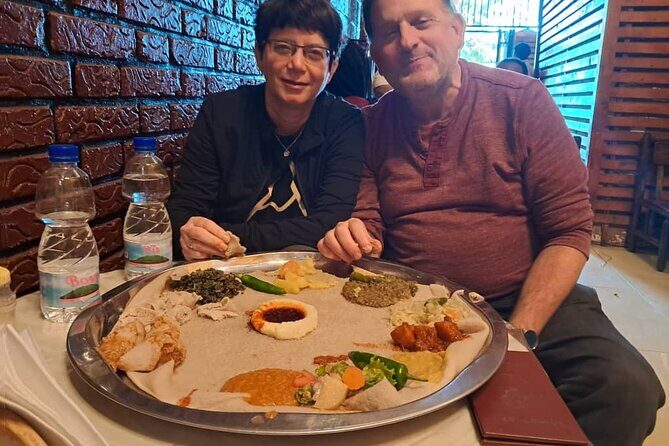
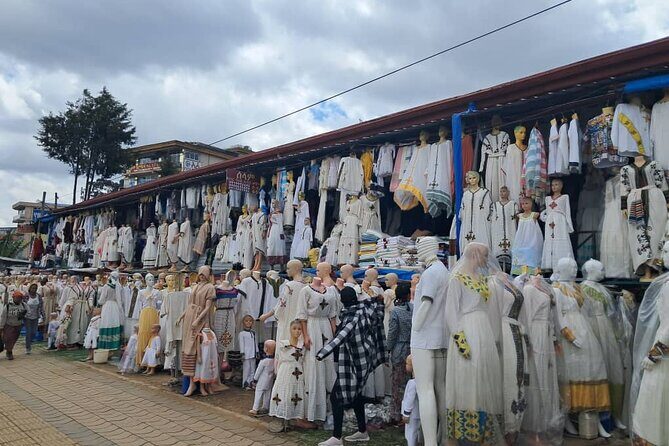
From museums, you jump into street life—first at Shiro Meda Market. This stop is positioned near the US Embassy, and it’s especially known for handwoven cotton clothes, particularly women’s garments. If you like textiles, this is one of the clearer shopping angles in the plan.
Shiro Meda is also a go-to for small gifts: T-shirts, necklaces, earrings, and lots of colorful scarves. The big tip here is simple: bargaining is expected. So bring patience and be ready to negotiate. Market shopping in Ethiopia is part of the experience, not a side task.
Time at Shiro Meda is about 30 minutes, so don’t plan to search every stall. I’d go in with a short list: scarf, small accessory, or a specific style of cotton dress, then spend your energy there.
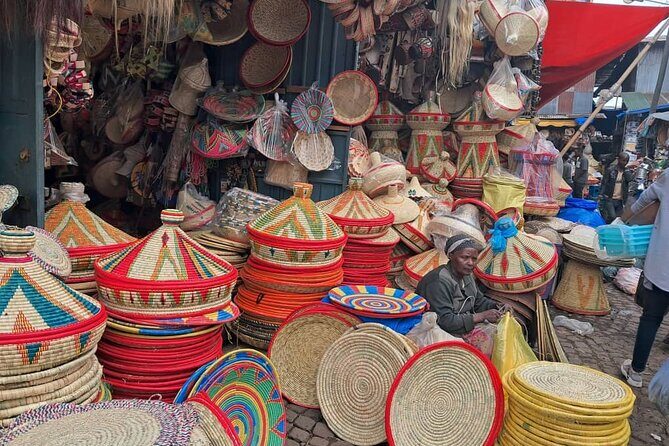
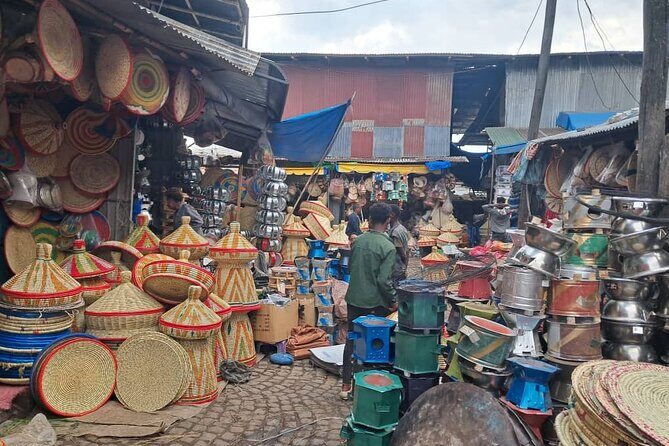
Next comes Mercato, the large open-air market area. You’ll spend about 2 hours here, and it’s free entry. More importantly, Mercato isn’t just a market—it has a layered history shaped by Italian occupation. During the 1930s, the Italians moved the market west and altered who could trade where, including restrictions tied to the European community around St. George’s area (the earlier market site).
On the ground, what you feel is the result of all that time: a huge place for everything from everyday goods to textiles and gifts. Practical advice: wear comfortable shoes, keep your phone secured, and move with purpose. Mercato is the kind of place where wandering is fun, but getting a little lost can eat time.
St. George’s Cathedral and Meskel Square: Orthodox art and imperial echoes
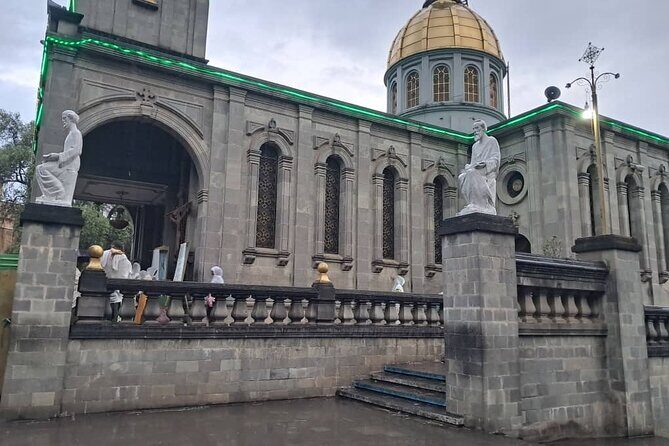
From Mercato, the tour shifts to two very different kinds of landmarks: a major Orthodox church and a civic square tied to major celebrations.
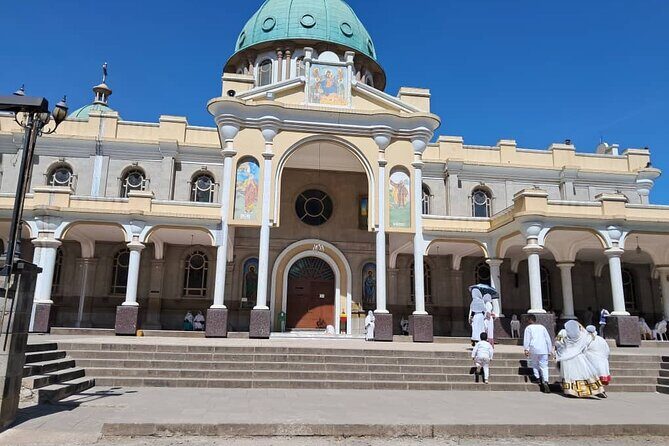
At St. George’s Cathedral, you’ll see an Orthodox church known for its distinctive octagonal form. The story behind it is dramatic: it was designed by Sebastiano Castagna and built by Italian prisoners of war defeated at Adwa in 1896. Later, Italian Fascist authorities set the building on fire in 1937, and it was restored by the Emperor after liberation in 1941.
That “history under the architecture” detail is exactly why cathedral stops can be more than photo ops. You’ll also visit the cathedral museum, which displays an Imperial throne and war-related items, including curved swords and tridents, plus large helmets made with lion manes. This is the kind of museum-within-a-church that makes the past feel physical.
Time here is about 1 hour, and entrance is included.
Then you’ll visit Meskel Square, often tied to public gatherings and the Meskel Festival. It’s called Cross Square in Amharic, and it has hosted major national moments, including Emperor Haile Selassie I celebrating the finding of the cross at Meskel Square in 1971. The space also has a history of name changes, including Stephen Square before it became Meskel Square.
If you’re there outside festival season, it can feel like a big open public area. But even then, it’s worth a stop because it shows how religion and public life overlap in Addis Ababa.



Red Terror Martyrs Memorial: the heavy stop with guided context
This is the emotional weight of the day: the Red Terror Martyrs Memorial Museum. It was established in 2010 to remember those who died during the Red Terror under the Derg government.
You’ll spend about 30 minutes here, and admission is included. The museum includes displays such as torture instruments, skulls and bones, coffins, bloody clothes, and photographs of victims. This is not a casual “quick look” museum.
What makes it more than a hard set of images is the guided explanation. The information provided at the museum includes context leading up to the Red Terror (starting from Haile Selassie I’s 80th birthday celebration), what opposition to the Derg led to, how prisoners were treated, and how they communicated secretly.
If you’re sensitive to difficult subject matter, take it slow. It’s okay to step out briefly or ask your guide to pace the narration. This stop isn’t about entertainment; it’s about understanding what shaped modern Ethiopia and why remembering matters.
Mount Entoto: sacred monasteries, eucalyptus, and city views
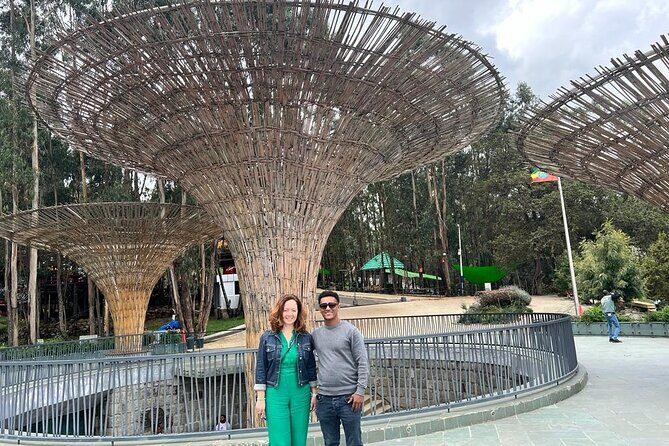
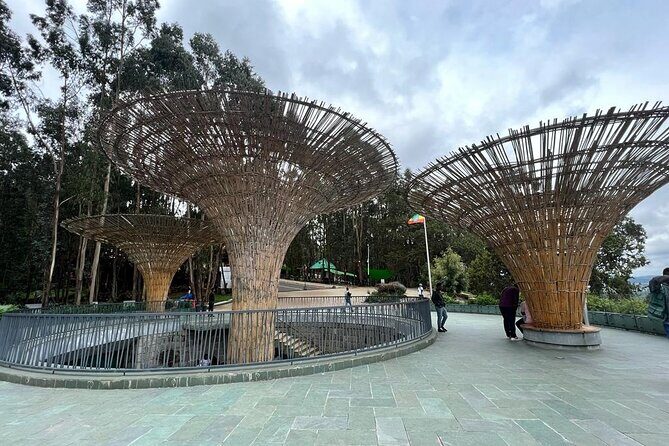
The last stop is Mount Entoto, a historical area where Emperor Menelik II resided and built a palace after founding Addis Ababa. The mountain is considered sacred and has monasteries and multiple churches, including Saint Raguel and Saint Mary.
You’ll spend about 1 hour here, with entrance included. One of the distinctive features is that the mountain is densely covered with eucalyptus trees—imported from Australia during Menelik II’s time and heavily planted later under Haile Selassie’s reign. That’s why it’s often referred to as the lung of Addis Ababa.
I also appreciate that the tour doesn’t only sell views. Eucalyptus is tied to practical city life too, since the forest has been a source of firewood. That connection helps you see the mountain as living infrastructure, not just a scenic backdrop.
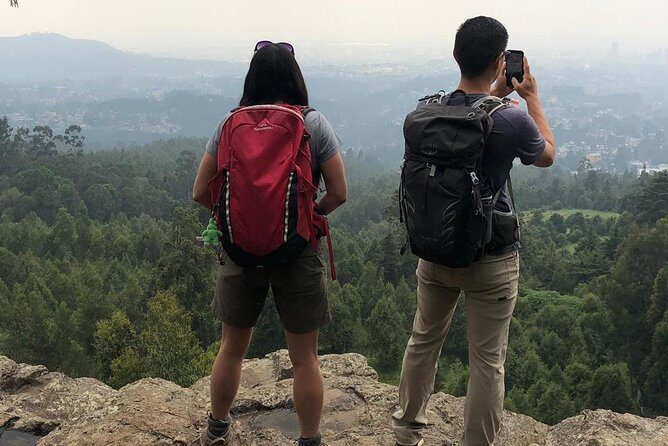
Expect a mix of sacred atmosphere, church stops, and a good chance to take in Ethiopian capital views from higher ground. On a full-day schedule, the hour on Entoto is the release valve.
Price and logistics: does $600 feel like good value?
At $600 per person, this isn’t a budget tour. The value question is really: what’s included, and how much time do you save versus doing it yourself?
In this case, the day includes:
- Hotel pickup and drop-off
- Air-conditioned minivan transport
- Driver/guide and a Blue Badge guide
- Entrance fees for the listed sights
That matters because Addis sightseeing can get expensive fast once you add entry tickets, transport, and guiding. Also, with a 7–8 hour route and max 10 travelers, you get a structured day that works well for layovers and first-time visitors.
What’s not included is also clear: food and drinks, and alcoholic drinks are on your own. That’s normal for Ethiopia city touring, but it means you should plan how you’ll handle meals. The good news is the day is timed in a way that gives you opportunity to buy coffee and Ethiopian cuisine along the way if you want.
One more practical note: the tour offers a mobile ticket and confirmation at booking time. It’s the kind of setup that reduces last-minute friction when your day is already packed.
Who should book this Addis Ababa tour (and who should adjust it)
This tour is a strong match for:
- You want a first Addis day with a clear hit list
- You’re on a layover and need a single-day plan that covers multiple neighborhoods
- You prefer guided context, especially for the heavier history at the Red Terror Museum
It may not be the best match if:
- You’re looking for a slow, linger-style day in one or two places
- You hate market environments or want minimal walking
- You’re traveling with very strict timing and no buffer at all
The tour also works well for couples and small groups because the group size is limited. And if you speak English, the past guides named in this company’s history include Mickey/Miki and Getachew, among others like Alex and Mulate. Having a consistent guide can make the day smoother, especially when you need translations and historical framing on the fly.
Should you book Addis Ababa City Tours?
I’d book this tour if you want one day in Addis that covers major cultural and historical anchors with minimal guesswork. The combination of Lucy at the National Museum, Orthodox landmarks at St. George’s Cathedral, market time at Shiro Meda and Mercato, and the viewpoint payoff at Mount Entoto is a practical mix.
Before you choose, check whether a long day works for you. If you’re the type who plans meals and rest stops proactively, this is a good fit. If you’d rather spread Addis sightseeing over multiple days, you might consider pairing this with a lighter “neighborhood day” later.
FAQ
How long is the Addis Ababa City Tours full-day experience?
It lasts about 7 to 8 hours.
Is hotel pickup included?
Yes. Hotel pickup is offered, and the tour also offers pickup from the airport.
What’s included in the price?
Transport in an air-conditioned minivan, a driver/guide (plus Blue Badge guide), hotel pickup and drop-off, and entrance fees for the listed stops.
Are meals included?
Food and drinks are not included. You can purchase them during the day.
Is there a mobile ticket?
Yes, a mobile ticket is provided.
What’s the group size limit?
The tour has a maximum of 10 travelers.
Is Mercato Market entry free?
The listing shows Mercato admission as free.
Are airport or departure taxes included?
No. Airport/Departure Tax is not included.
What’s the cancellation window?
You can cancel for a full refund up to 24 hours before the experience starts. Within 24 hours, no refund is provided.