REVIEW · ADDIS ABABA
Omo Valley 4days 3nights Cultural Tour
Book on Viator →Operated by WALK IN ETHIOPIA TOUR AND TRAVEL · Bookable on Viator
Tribal Ethiopia feels up close here. The Omo Valley has stayed isolated for centuries, so small communities like the Karo, Mursi, and Hamer keep traditions that are still part of daily life. You’ll see body art, piercing traditions, and ceremonies tied to identity and social life, not museum display cases.
What I like most is the built-in support: you get a local guide plus professional guide fee, and you’re transported in an air-conditioned Land Cruiser with entrance fees handled. I also like that the itinerary targets very specific cultural moments, including the Hamer Evangadi bull-jumping/dancing ceremony and the Mursi lip-plate tradition.
One thing to plan for: this area involves early starts and long drives, including at least one stretch described as rough when you head toward the Omo lowlands. Also, photography/camera fees are not included, so you’ll want to budget for that if you shoot a lot.
In This Review
- Key things that make this tour worth your time
- Why the Omo Valley still feels off the map
- Price and logistics: what $1,307.70 per person buys
- From Addis Ababa to Jinka: Konso Cultural Centre and ARI life
- Mago National Park to Turmi: Mursi lip plates and Hamer Evangadi
- The Omo lowlands by rough road: Karo chin piercings and Hamer territory
- Guides and drivers: the difference between chaos and connection
- What you’ll actually see: body art, jewelry, and ritual meaning
- Photography and camera fees: plan before you shoot
- Packing for hot days, long drives, and early starts
- Who should book this Omo Valley tour?
- Should you book this 4-day Omo Valley cultural tour?
- FAQ
- Where does the tour start?
- How long is the Omo Valley tour?
- Is pickup included?
- Is this tour private?
- Are flights included in the price?
- What meals are included?
- What’s included besides meals?
- Are admission or entrance tickets included for the stops?
- Are photography or camera fees included?
- How is cancellation handled?
Key things that make this tour worth your time
- Private tour setup: only your group participates, so your pace and questions get more attention
- Bole Airport meeting at 6:00am: you start early and keep the trip moving
- Air-conditioned Land Cruiser plus entrance fees: less hassle, fewer money stops
- Konso stop with ARI women’s pottery and Enset skirts: hands-on cultural craft, not just photos
- Mago National Park routing: it places you near the Mursi and the broader Hamer territory
- Jinka and Turmi overnights: you sleep in the region instead of doing pointless day trips
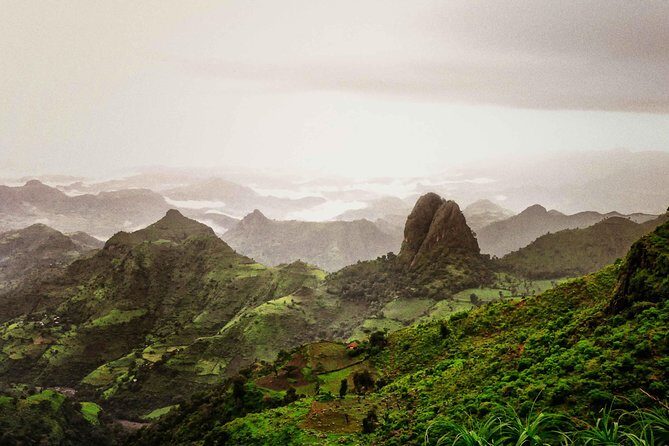
Why the Omo Valley still feels off the map
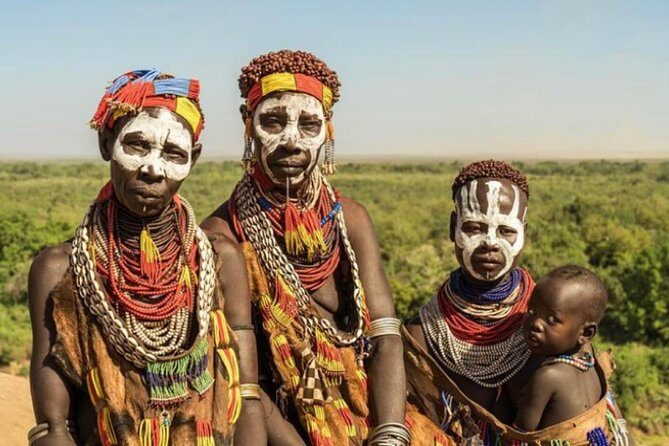
The Omo Valley is special because it didn’t get folded into mass tourism the same way many other places did. For generations, groups here lived with their own rhythms, community rules, and artistic style—so when you meet someone, it’s not a performance for the calendar. Clothing, jewelry, and body decoration are used for real social meaning: belonging, beauty, status, and celebration.
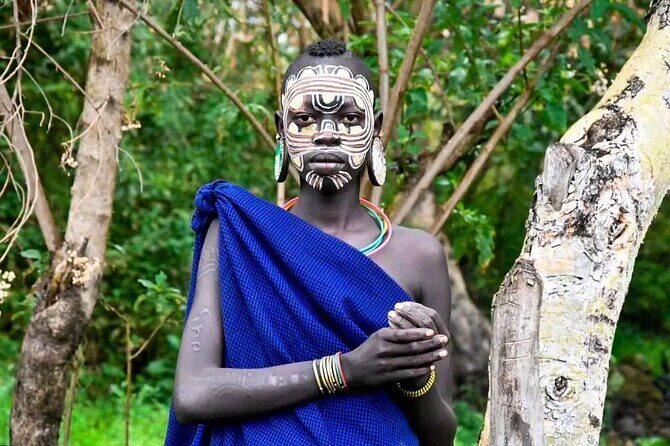
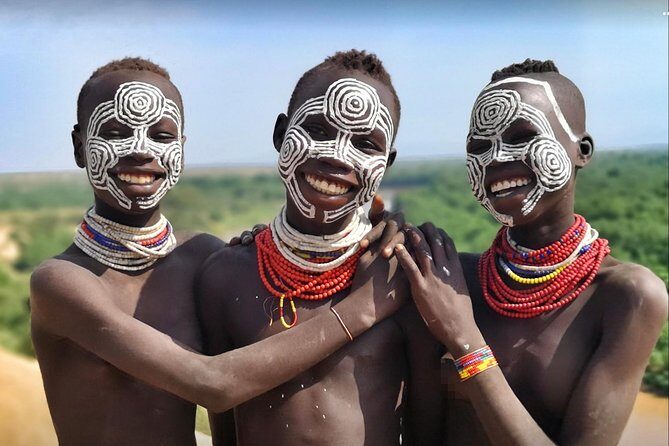
A big part of what you’ll notice is body art. The tour description points out that artists use local materials—clay and vegetable pigments—to paint patterns on faces, chests, arms, and legs. The effect is both aesthetic and competitive: artists create designs because it’s fun, and because each person wants their patterns to look better than the rest.
That mindset matters for your expectations. You’re not just looking at a checklist of customs. You’re seeing how culture works—how art and ritual show up alongside everyday life.
You can also read our reviews of more historical tours in Addis Ababa
Price and logistics: what $1,307.70 per person buys

This tour costs $1,307.70 per person for about 4 days. At first glance, that’s not cheap, but the value comes from how the service is packaged.
Here’s what you get that typically drives the real cost in remote regions:
- Local guide + professional guide fees
- Latest model air-conditioned Land Cruiser
- Entrance fees for all destinations
- Breakfast included (3 times)
Flights are not included (international or domestic flight fees), and photography/camera fees are also not included. That combination is pretty normal for Ethiopia: you’re paying to be there and being guided on the ground, but air travel and special permission costs are separate.
Another logistics detail that helps: the tour offers pickup, and you get a mobile ticket. The meeting point is Bole Airport (Addis Ababa) with a 6:00am start time. In practice, that early departure is one reason the itinerary can cover Konso, Mago National Park, Turmi, and the Omo lowlands in just a few days.
Finally, this is described as a private tour, meaning you’re not mixed into a large group shuffle. In places like this, that privacy usually leads to better pacing and fewer awkward waits.
From Addis Ababa to Jinka: Konso Cultural Centre and ARI life
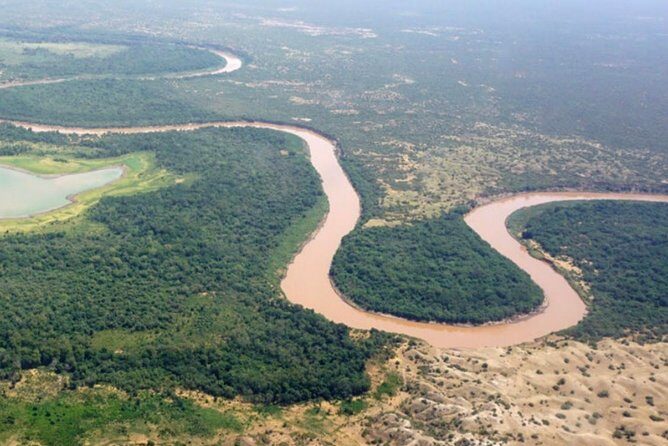
Your first big day begins with the flight from Addis Ababa to Jinka. After landing, you check in at Jinka Resort and head to Konso Cultural Centre.
This is where the tour becomes more than a road-trip. The focus is the ARI community, with attention on women’s craft and clothing traditions. You’ll learn about pottery selling and see the skirts made from banana trees (called Enset). The description also notes that ARI tribe members wear lots of jewelry and piercings, including beaded bracelets and wraps around arms and waist.
Why this stop is valuable:
- You get a clear example of how materials from the local environment become clothing and commerce.
- You see body adornment as part of everyday aesthetics, not just a ritual context.
- Konso Cultural Centre adds structure, so the visit feels organized instead of drifting.
Possible drawback to consider: cultural craft stops can move at a quick pace when schedules tighten after travel. If you care about detail—patterns, tools, techniques—ask your guide to slow down at key moments.
Mago National Park to Turmi: Mursi lip plates and Hamer Evangadi

Day two is built around a classic Omo Valley pairing: Mursi in the morning and Hamer in the afternoon, with Mago National Park in the routing.
After driving from Jinka toward the Mursi people via Mago National Park, you reach one of the most distinctive visual traditions in the region. The tour description says Mursi women wear geometrical lip plates inserted into slots in their lips. This is not random decoration—it’s a visible marker tied to identity and social meaning.
Then you shift gears and travel to Turmi, stopping in different small villages along the way. The Hamer are highlighted for their ceremony called Evangadi, described as bull jumping and dancing.
This is the part that usually sticks in your memory because it’s active. Body painting, jewelry, dance, and the group energy are all tied together. Even if you’re not fluent in the symbolism, you can understand the role of performance: community bonding, coming-of-age milestones, status, and celebration.
What I’d keep in mind for your own experience:
- Ceremonies can depend on timing and conditions. Your guide’s experience matters here, because they’re coordinating access and flow.
- You’ll likely want to watch first, then ask questions. In settings like this, questions are welcomed more easily when you show respect by not interrupting.
You sleep in Turmi at Buska Lodge, which makes the next day’s lowlands trip more practical than doing it from farther away.
The Omo lowlands by rough road: Karo chin piercings and Hamer territory

Day three starts early and includes a drive described as a rough road to the Omo lowland area. You’re heading through a wide Hamer territory and moving toward the village of the neighboring Karo tribe.
The Karo tradition described here is the pierced lower chin, often with nail or other sharp metal stuffed into the opening. That’s a detail you should treat with extra sensitivity. Look, learn, and let your guide handle the respectful context. Don’t treat it like a spectacle.
The tour then returns you back to Jinka for the overnight.
Why this day matters:
- It shows the valley as a connected region, not isolated “tribe stops.”
- It adds contrast: from Mursi lip plates and Hamer ceremony energy to Karo chin piercing practices.
- You see that these groups live next to each other and share space, even with distinct customs.
Possible drawback: after two days of focused cultural visits and long driving, you might feel sensory fatigue. Bring patience. If you’re tired, ask your guide to prioritize the most meaningful interactions for your interests—your time is the scarce resource, not the road.
A few more Addis Ababa tours and experiences worth a look
Guides and drivers: the difference between chaos and connection

A remote cultural trip lives or dies on your guide. In the information provided, the tour company has strong mentions tied to organization and on-the-ground competence.
For example, past Omo Valley trips run with Walk in Ethiopia Tour and Travel have highlighted guides and drivers such as Gashu (noted for organization) and a driver named Addis in Jinka. Another named guide/driver is Dr. (Hamer) in Turmi/Jinka context. There’s also mention of Gashaw for responsiveness, and Zemariam as a guide and driver with good access to tribal communities.
Even if your exact team isn’t the same, the lesson is clear: good driving and local connections reduce friction. In places where routes can be slow and timing matters, a skilled driver isn’t just about comfort. They’re about getting you to the right spot with the right amount of time.
Practical advice: when you meet your guide, ask three questions early:
1) What’s the timing priority today—ceremony, craft, or villages?
2) Where should I be standing/looking first?
3) Are there any photography rules I should follow for each community?
If your guide communicates clearly, you’ll feel calmer and more respectful without extra effort.
What you’ll actually see: body art, jewelry, and ritual meaning
The tour description emphasizes a few recurring themes across tribes:
- Body paintings using clay and locally available vegetable pigments
- Jewelry and piercings as decoration and social identity
- Distinct clothing materials, including Enset-based skirts
This is one of the reasons I like this tour’s structure. It doesn’t treat each stop as random. You can compare how communities use the body as a canvas—faces, chests, arms, legs—then connect it to how people present themselves in daily life and during ceremonies.
One extra thought on your side: try to focus on interpretation, not judgment. Many of these traditions are visible and intense. Your job is to stay curious. Your guide can help with symbolism where they can, but even without full explanation, you’ll notice the patterns are consistent with community values.
Photography and camera fees: plan before you shoot

Photography can be a tricky topic in cultural tourism, and this tour flags one important point up front: photography and camera fees are not included.
That means you should assume you may pay something once you’re there, depending on what and where you’re photographing. Bring a camera you feel comfortable using, but also be ready to put it away quickly. If you want sharp photos, you still need patience and permission.
Practical tip: at each stop, start with asking your guide what’s allowed. Then follow their lead on where to stand and how long you can linger in one spot.
If you’re filming, treat it even more carefully. Move slowly, keep directions simple, and don’t crowd people who are already in the middle of ceremony or daily tasks.
Packing for hot days, long drives, and early starts
The itinerary starts at 6:00am from Bole Airport and includes multiple driving days. Expect warm weather, dust, and a travel rhythm that doesn’t pause for comfort.
I’d pack with these realities in mind:
- A light layer for morning chill (it’s common to feel temperature swings during early drives)
- Sunscreen, sunglasses, and a hat
- Solid shoes for uneven ground around villages
- A small day bag for water and essentials
- Cash in smaller bills for any on-the-spot costs like camera fees (since those aren’t included)
- A respectful attitude first, gear second
Also, don’t ignore hydration. Long days plus ceremony hours can wear you out faster than you expect.
Who should book this Omo Valley tour?
This tour fits best if you:
- Want a short but focused introduction to multiple tribal cultures in the Omo Valley
- Like guided structure and want someone to handle entrances and timing
- Are comfortable with early starts and long drives
- Prefer a private group experience rather than being mixed into a large tour crowd
It might not be ideal if you’re:
- Hoping for a low-energy “country drive with easy pacing”
- Very sensitive to crowds (this is private, but ceremonies and villages still have intensity)
- Expecting photography costs to be included automatically
If your main goal is wildlife photography only, you may want a different trip. This one is about people, customs, and living traditions.
Should you book this 4-day Omo Valley cultural tour?
I think this is a good booking when you want a structured first visit to the Omo Valley without spending weeks on logistics. The biggest reason is value: your package handles major on-the-ground costs like guides, transportation in an AC Land Cruiser, entrance fees, and three breakfasts. That leaves your brain free to focus on the cultural moments.
I’d book it if you’re excited by the core highlights: Konso/ARI craft and Enset skirts, the Mursi lip plate tradition, and the Hamer Evangadi ceremony, plus the Karo chin piercing stop in the lowlands.
I’d hesitate if rough roads and early mornings would drain you, or if you’re counting on photography being included. Plan for possible camera fees and give yourself enough patience for the pace.
If you go in with curiosity, follow your guide’s lead on respect, and keep your expectations realistic, this tour can feel like a serious cultural encounter—not a rushed photo scavenger hunt.
FAQ
Where does the tour start?
The meeting point is Bole Airport in Addis Ababa, Ethiopia, with a 6:00am start time.
How long is the Omo Valley tour?
It’s listed as 4 days (approx.) with 3 nights.
Is pickup included?
Yes, pickup is offered.
Is this tour private?
Yes. It’s described as a private tour/activity, so only your group participates.
Are flights included in the price?
No. International or domestic flight fees are not included.
What meals are included?
Breakfast (3) is included.
What’s included besides meals?
Included are local and professional guide fee, a latest model air-conditioned Land Cruiser, and entrance fee for all destinations.
Are admission or entrance tickets included for the stops?
Yes. The itinerary notes admission ticket inclusion for the destinations/lodges it lists, and the package includes entrance fees for all destinations.
Are photography or camera fees included?
No. Photography and camera fees are not included.
How is cancellation handled?
The tour offers free cancellation up to 24 hours in advance for a full refund.