REVIEW · ADDIS ABABA
Full Day Addis Ababa City Tour with Hotel Pick Up And Drop Off
Book on Viator →Operated by Armaye Ethiopia Tours · Bookable on Viator
Addis Ababa hits you with scale. This full-day tour strings together the city’s big museum moment, its most famous market, and two major cathedral stops, plus a climb up to Entoto Natural Park for views and nature breaks. You also get hotel pick up and drop off, so you can spend the day looking, not negotiating transport.
The two things I like most are the well-organized, ticketed sights and the included comfort. The National Museum’s Lucy story is a real anchor, and the Ethnological Museum is unusually focused on how Ethiopians live across the life cycle, from Birth to Death.
One thing to keep in mind: this is a long day (about 6 to 10 hours) and it needs good weather, since you’ll be heading up to Entoto. If you’re visiting in stormy seasons, you may need flexibility.
In This Review
- Key Points Before You Go
- Price and What $60 Buys You in Addis Ababa
- Hotel Pickup, A/C Transport, and a Realistic 6–10 Hour Schedule
- Stop 1: National Museum of Ethiopia and the Lucy Moment
- Stop 2: Ethnological Museum with Birth-to-Death Storytelling
- Stop 3: Mercato Market and How to Read the City’s Everyday Pulse
- Stop 4: Holy Trinity Cathedral, 1942, and Haile Selassie I
- Stop 5: St. George’s Cathedral and the Adwa Story in Stone and Color
- Stop 6: Entoto Natural Park for Springs, Waterfalls, and High Views
- Lunch, Coffee or Tea, and the Comfort Factor You’ll Notice
- Who This Tour Fits Best (and Who Might Want a Different Style)
- Should You Book This Full Day Addis Ababa City Tour?
- FAQ
- Does the tour include hotel pickup and drop-off?
- How long is the full-day Addis Ababa city tour?
- How much does it cost?
- What are the main stops on the tour?
- Are entrance fees or admissions included?
- What’s included in the price?
- What is not included?
- Do I get a ticket on my phone?
- What time does the tour run?
- Is weather a factor?
- How big is the group?
Key Points Before You Go
- Lucy at the National Museum of Ethiopia: Fossils and the Lucy exhibition make this stop more than a quick look.
- Ethnological Museum’s life-cycle approach: Birth to Death themes connect religion, food culture, and history.
- Mercato Market in one focused pass: Spice, baskets, and second-hand sections give you a real sense of scale.
- Cathedrals tied to Ethiopia’s turning points: Holy Trinity (Haile Selassie I’s grave) and St. George’s (Adwa story).
- Entoto Natural Park for a high-altitude reset: Streams, springs, and waterfalls break up the city pace.
- All-in value for a full day: A/C vehicle, bottled water, coffee or tea, lunch, guided tour, and admission tickets are included.
Price and What $60 Buys You in Addis Ababa

At $60 per person, this is priced like a practical “see the essentials in one day” option. The value is less about any single attraction and more about what’s bundled: all fees and taxes, an air-conditioned vehicle, bottled water, coffee or tea, and a guided tour with lunch included.
Most city tours in Addis can quickly add up once you start paying for entrance tickets, transport, and food. Here, you’re covered on both the drive and the main stops, which makes the day easier to budget for. It also helps you move efficiently between locations without losing half a day to logistics.
The day runs about 6 to 10 hours, so think of it as a full itinerary, not a quick highlights reel. If you want to see museums, market energy, major churches, and a nature stop without piecemealing it, this price starts to make sense.
You can also read our reviews of more city tours in Addis Ababa


Hotel Pickup, A/C Transport, and a Realistic 6–10 Hour Schedule

This tour works on the classic Addis Ababa rhythm: you’re picked up, you travel by vehicle between neighborhoods, you get guided time at each stop, and you end back at your lodging. The operator also offers a mobile ticket and lists the tour as near public transportation, which can matter if you ever need a quick re-route.
One practical detail: each main stop is built around about one hour on site, with admissions included. That keeps the day from dragging, but it also means you’re not lingering for hours at any one place. If you’re the type who likes to sit and read every label, you’ll still be able to do it—just not at a museum-room pace.
Since good weather is required, plan for the fact that Entoto Natural Park may be adjusted if conditions are poor. Addis can go from clear to cloudy, so building in a little flexibility is smart.
Stop 1: National Museum of Ethiopia and the Lucy Moment
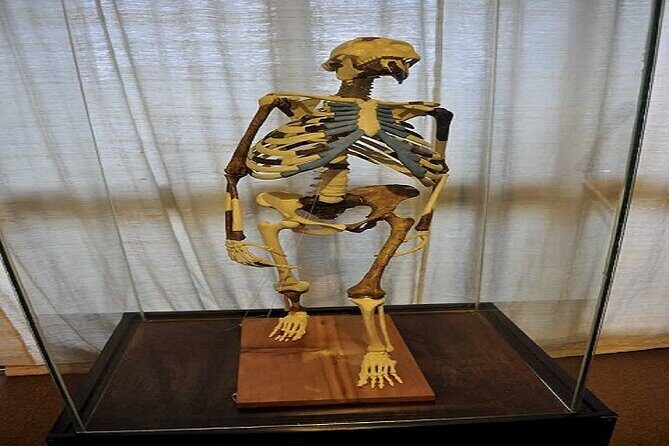
If your Addis Ababa day has a headline act, it’s the National Museum of Ethiopia. This is ranked among the most important museums in sub-Saharan Africa, and the standout is in the basement: the paleontological exhibition centered on Lucy, discovered in 1974 in Ethiopia’s Afar region.
What makes this stop so compelling is the mix of stories. You’re not only seeing human origins, you’re also looking at fossil evidence of extinct animals, including Homotherium (a massive sabre-toothed feline) and Notochoerus (a gargantuan savannah pig). It gives your brain a double-track focus: evolution and deep time, right next to each other.
On top of the paleontology, the ground floor covers major Ethiopian historical periods. You’ll find artifacts connected to pre-Aksumite, Aksumite, Solomonic, and Gonderian periods. In other words, you leave with a sense of both geology and human movement through time.
A consideration: it’s one hour. That’s enough to hit the big displays, but if you want a slow, detailed read-through, you’ll want to come back later on your own. Still, as a first-stop anchor, this museum does its job well.
Stop 2: Ethnological Museum with Birth-to-Death Storytelling
Next up is the Ethnological Museum of Addis Ababa, and it’s a strong change of pace from fossils. This museum is one of the best ethnographic museums in East Africa, with displays focused on how Ethiopians live across the life cycle, from Birth to Death.
That structure matters. Instead of feeling like a scattered set of artifacts, the exhibits connect themes such as religion, food culture, and natural facts into a clearer picture of cultural life. You’ll get a more grounded sense of how different cultural groups in Ethiopia understand everyday realities and major life moments.
Admission is included, and the guided approach helps you turn “things you see” into “ideas you understand.” For first-timers, this stop often helps Addis Ababa click into place—especially after the museum’s ancient-time focus.
One practical note: if you’re museum-weary, you might think ethnography sounds dry. It isn’t here because the life-cycle framing gives it motion. It’s designed to make you think about people, not just objects.
Stop 3: Mercato Market and How to Read the City’s Everyday Pulse
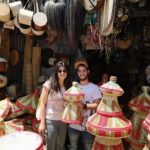
Then you hit Mercato, described as the biggest outdoor market not only in Addis Ababa and Ethiopia, but across Africa. It’s not a curated shopping stop. It’s the real trade-and-day-to-day pulse of the city.
You’ll focus on three sections: the Spice Market, the handmade baskets market, and the second-hand items market. Each one tells you something different. Spices show how food culture travels. Baskets show craftsmanship and practical design. Second-hand items show the reuse economy that runs under the surface of daily life.
This is one of the stops where your guided time pays off. Markets can be overwhelming when you’re alone, even when you’re just walking. A guide can help you steer your attention to what’s most representative, instead of trying to see everything at once.
A consideration: one hour goes fast here. If your idea of a great day includes shopping and bargaining (or just long visual wandering), you might wish you had more time. As part of a full-day circuit, though, Mercato gives you a powerful snapshot without swallowing your schedule.
A few more Addis Ababa tours and experiences worth a look



Stop 4: Holy Trinity Cathedral, 1942, and Haile Selassie I
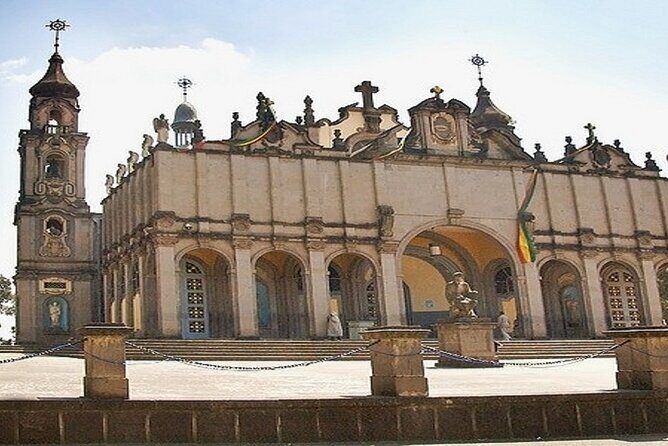
Holy Trinity Cathedral is a standout church stop in Addis, with a big story and very noticeable design details. It was built in 1942, and the building’s beauty isn’t just about the exterior. The cathedral’s window glass work and the stone art along the walls make it visually engaging.
This cathedral also functions as a cemetery for important national figures. Inside, you can find the grave of Emperor Haile Selassie I. That turns a photo-friendly stop into something more meaningful: the building holds state-level history and national memory in a very physical way.
You’ll also get the visual contrast that Addis churches often deliver. Even if you’re not a hardcore architecture buff, the combination of art, glass, and the cathedral’s role as a memorial space creates a strong impression.
A consideration: like many active churches, it’s best to move respectfully and keep your pace in line with your surroundings. Since the tour includes an hour, you’ll want to focus on the main art and the memorial areas rather than trying to absorb every detail at once.
Stop 5: St. George’s Cathedral and the Adwa Story in Stone and Color

St. George’s Cathedral brings one of Ethiopia’s key historic stories into the physical space of worship. It was commissioned by Emperor Menelik II to commemorate his 1896 defeat of the Italians in Adwa, and it’s dedicated to St George, whose icon was carried into the battle.
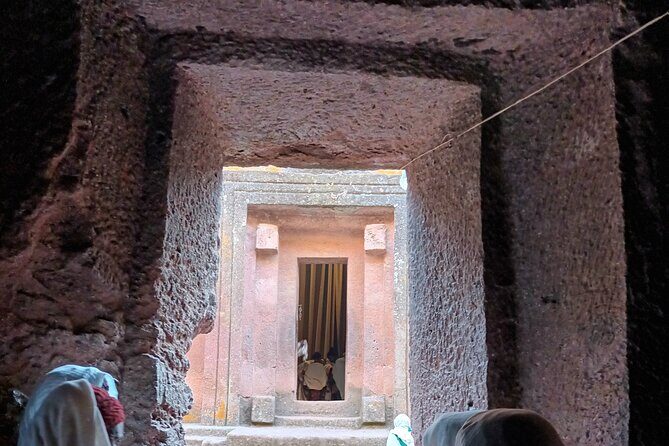
The church’s design has a clear visual language. The grey stone exterior can look understated, but the interior flips the experience with color and art. Ceiling sections glow sky-blue and include gilded stars. Outer wall areas of the innermost shrine are covered in paintings and mosaics by Afewerk Tekle, and that kind of artistic detail is what makes this stop feel alive.
The architecture is also specific: the church uses a traditional octagonal form and a severe neoclassical style. It was completed in 1911 with help from Greek, Armenian, and Indian artists.
If you like history tied to real places, St. George’s has that. Empress Zewditu was crowned here in 1916, and Emperor Haile Selassie was crowned in 1930. It’s one more reason the stop works well even if you’re only spending an hour.
A consideration: this is a cathedral with strong visuals, so it’s easy to move too fast and miss the art. Slow down for the ceiling and the mosaics, then you’ll get the full payoff in the time you have.
Stop 6: Entoto Natural Park for Springs, Waterfalls, and High Views

After cathedrals and markets, Entoto Natural Park is your nature reset. This area towers high above the capital and is described as a historical sanctuary—an off-ramp from city energy into mountain air.
You’re looking at ancient-mountain nature with clear springs and streams flowing into waterfalls. Even if you’re not chasing wildlife or hiking miles, the point here is atmosphere: a high viewpoint area where you can stretch your legs and feel the change in environment.
This stop includes admission and is timed for about an hour, which is enough for short walks and scenic breaks. Since the tour requires good weather, it’s also the part most likely to be affected by clouds or heavy rain. In perfect conditions, it’s the best emotional balance wheel in the itinerary.
One practical thing to consider: bring your patience for altitude and wind. Addis at elevation can feel different from the city below, and your pace might slow a touch.
Lunch, Coffee or Tea, and the Comfort Factor You’ll Notice
Lunch is included, along with coffee or tea and bottled water. That matters more than people expect on a long day. Addis tours can feel tiring if you’re skipping meals or drinking only from convenience stops.
There’s also a pattern in the experience: lunch gets described as a highlight when the timing aligns well with the day’s setting. Even if you don’t know exactly where it will be served, the key point is that you’re not planning your day around finding food.
For value, this is one of the biggest “silent” inclusions. It’s easy to overlook lunch when you’re comparing tour prices, then suddenly realize you would have paid more for meals and drinks on your own.
Who This Tour Fits Best (and Who Might Want a Different Style)
This tour is a good fit if you want:
- A first visit to Addis Ababa with the core sights in one day
- A guided day where tickets and entry costs are handled
- Museum + church + market + nature, without over-planning
It can also work well for people on a layover or shorter schedule, because the itinerary is built to cover major highlights without backtracking.
It might be less ideal if you:
- Hate long travel days and prefer slower pacing
- Want deep, unhurried time in one museum
- Are traveling during unpredictable weather patterns and can’t shift plans
But if you’re flexible and you like structure, this tour gives you an efficient overview that’s hard to duplicate easily on your own.
Should You Book This Full Day Addis Ababa City Tour?
I’d book it if you want a day that feels complete: Lucy and Ethiopian history in one museum complex, culture framing at the Ethnological Museum, Mercato’s market energy, two cathedral stops tied to national stories, and an Entoto nature break to end the day with something gentler.
I’d also book it for the value logic. When admission tickets, lunch, drinks, A/C transport, bottled water, and guided time are included, the $60 price stops feeling like just a cost and starts feeling like planning saved.
The main reason to hesitate is the schedule length and the weather dependency. If you’re the kind of traveler who needs everything to be laid-back and weather-proof, you might consider a shorter, museum-only plan.
FAQ
Does the tour include hotel pickup and drop-off?
Yes. The tour offers hotel pick up and drop off, so you can start and end at your lodging.
How long is the full-day Addis Ababa city tour?
It runs about 6 to 10 hours (approx.).
How much does it cost?
The price is $60.00 per person.
What are the main stops on the tour?
The tour visits the National Museum of Ethiopia, the Ethnological Museum, Mercato Market, Holy Trinity Cathedral, Entoto Natural Park, and St. George’s Cathedral.
Are entrance fees or admissions included?
Yes. Admissions are listed as included for the stops, such as the National Museum, Ethnological Museum, Mercato Market, Holy Trinity Cathedral, and the park and cathedral stops.
What’s included in the price?
Included items list all fees and taxes, bottled water, coffee and/or tea, lunch, an air-conditioned vehicle, and a guided tour.
What is not included?
Anything not mentioned in the Service Inclusions is not included.
Do I get a ticket on my phone?
Yes. The tour includes a mobile ticket.
What time does the tour run?
The listed opening hours are 2:00 AM to 5:00 PM, Monday through Sunday.
Is weather a factor?
Yes. The experience requires good weather. If it’s canceled due to poor weather, you’ll be offered a different date or a full refund.
How big is the group?
The tour has a maximum of 35 travelers.