REVIEW · ADDIS ABABA
2 Days and 1 Night in Lalibela from Addis Ababa
Book on Viator →Operated by Sun City Ethiopia Tour · Bookable on Viator
Eleven churches carved in volcanic rock. This short Lalibela break from Addis Ababa is built around one big idea: UNESCO World Heritage sights, led by an English guide, without wasting your limited time. You get picked up early in Addis, fly to Lalibela, then spend the next day seeing the churches in a tight, practical loop.
What I really like is the focus on the core set of Lalibela’s rock-hewn churches—organized into familiar groups and all tied to King Lalibela’s legacy. I also appreciate how your route isn’t only about the headline churches; the plan includes Neakuto Leab, a smaller site that adds texture to the trip.
The only real drawback: this is a fast schedule with an early start (meeting at 6:00am), plus flights. If you hate tight timing, you may feel a little rushed between sites.
In This Review
- Key highlights you’ll feel right away
- Why Lalibela feels like a time shift
- The early Addis start (and why it’s worth it)
- Day 1: Flying to Lalibela and starting north of the Jordan River
- The first group: Bete Medhanealem and Bete Maryam
- Bete Golgotha Mikael, Bete Meskal, and the House of the Cross
- Bete Denagel and the House of Virgins
- The standout shape: Bete Giyorgis
- Continuing the route: Bete Amanuel, Qeddus Merkoreos, and Abba Libanos
- Bete Gabriel-Ruphael and Bete Lehem (House of Holy Bread)
- Overnight in Lalibela Hotel: recharge before Neakuto Leab
- Day 2: Neakuto Leab church, then back to Addis
- A natural cave and holy water dripping from the roof
- Price and value: what you’re really paying for
- What the English guide changes (a lot)
- Who this fits best (and who might want a longer plan)
- Practical tips to get the most out of your two days
- Should you book this Lalibela package from Addis?
- FAQ
- What time does the tour start in Addis Ababa?
- What’s included in the tour price?
- Which churches will I visit in Lalibela?
- Is admission included?
- How many people are in the group?
- Can I cancel for a full refund?
Key highlights you’ll feel right away
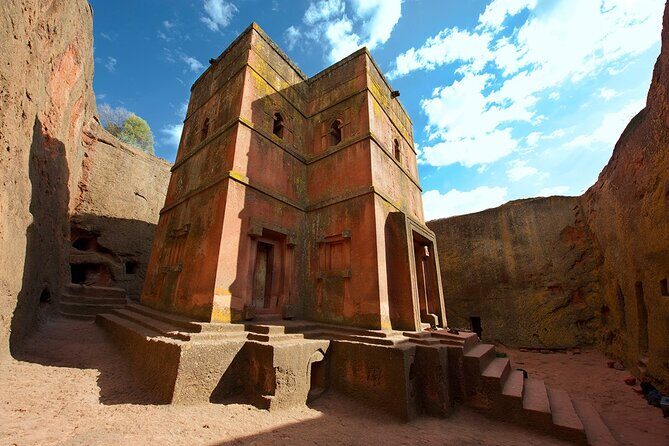
- UNESCO rock-hewn churches: 11 monolithic churches carved in volcanic rock
- King Lalibela’s vision in practice: churches dedicated to different biblical themes, grouped for a clear route
- Day 2 Neakuto Leab: a cave church about 7 km out, with holy water dripping into stone receptacles
- A small group size: maximum 30 travelers, which keeps the pace manageable
- English-guided architecture stories: you’re not just looking—you’re guided through meanings and symbolism
- A short-trip format that works: 2 days and 1 night, with breakfast, lodging, transport, and bottled water included
Why Lalibela feels like a time shift
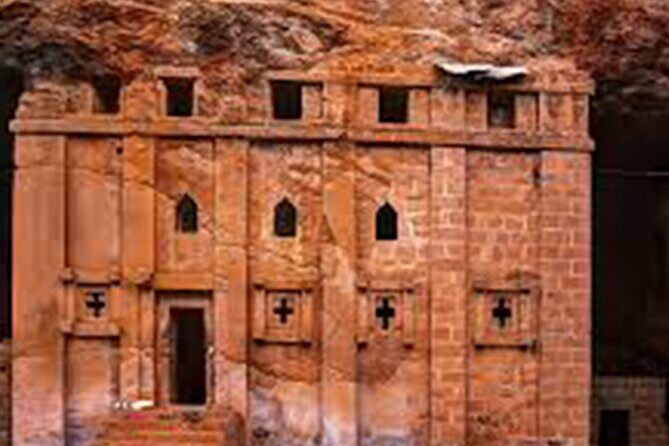
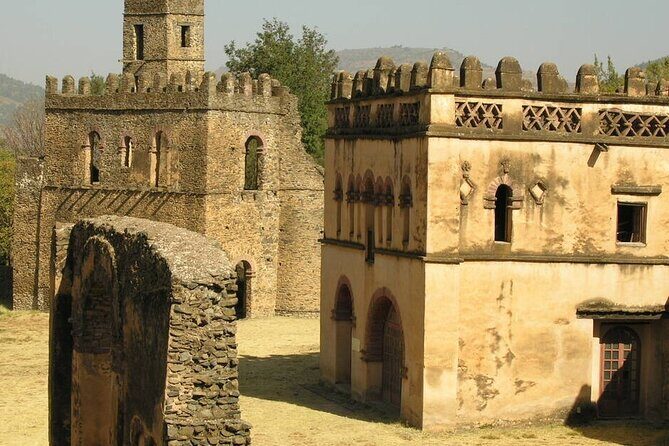
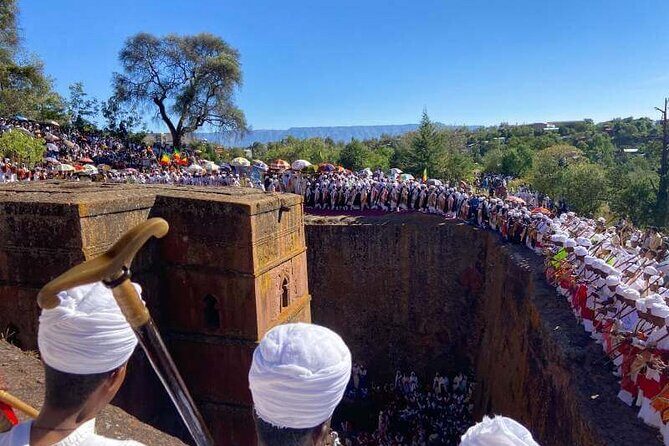
Lalibela is one of those places where the setting does half the storytelling for you. The churches were carved from rock during the reign of King Lalibela (1181 to 1221), and they’re arranged in groups across the town. It’s not a museum vibe. It’s a living religious space where you’ll see devotion and daily life moving alongside stonework that took centuries to create.
What makes the site so powerful is the purpose behind it. King Lalibela’s plan is often described as a way to recreate Jerusalem in Ethiopia, using churches dedicated to major biblical themes. When you walk from one church to the next, you start to notice how the names and dedications shape what you look for—crosses, sanctuaries, and symbolic design details that guide worship.
And because the churches are carved directly into volcanic rock, the engineering feels immediate. You’re not looking at a building that sits on a foundation—you’re looking at stone that has been shaped into architecture. That changes how you read the whole place: everything feels engineered and intentional, not added on later.
You can also read our reviews of more evening experiences in Addis Ababa
The early Addis start (and why it’s worth it)
Your day begins at Bole Addis Ababa International Airport at 6:00am. The trip also offers pickup, and your schedule is built around catching flights to Lalibela and back within a very short window. It’s an early wake-up, but it’s the trade-off for cramming two days of meaningful sightseeing into only 2 days and 1 night.
The tour uses an air-conditioned vehicle in Addis and includes bottled water. Those are small details, but they matter when you’re moving fast. You’re less likely to feel worn out before you even reach the churches.
Also, you’ll be traveling with an English guide. That’s not just convenience. It helps you make sense of what you’re seeing—especially in churches where the symbolism and structure matter as much as the visuals.
Day 1: Flying to Lalibela and starting north of the Jordan River
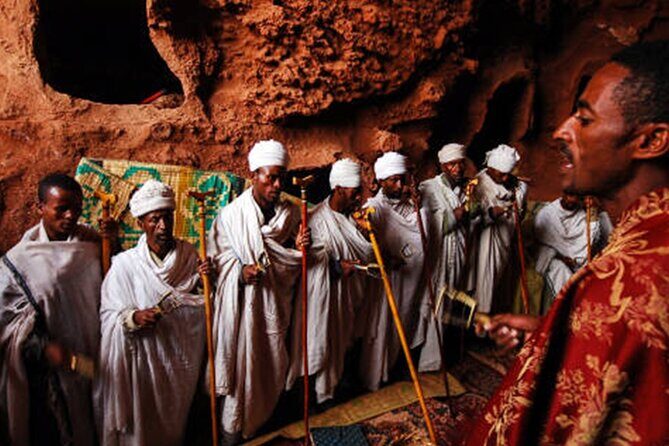
On day 1, you fly from Addis Ababa to Lalibela and begin visiting churches located north of a small stream referred to as the Jordan River. That detail matters because it gives your route a natural order. Instead of wandering randomly, you follow a planned direction that makes the town’s layout easier to understand.
Your day focuses on the main set of churches—about eleven rock churches organized into groups of three. Each church’s dedication (and therefore its religious meaning) is part of what your guide will point out. You’re not just ticking off stops; you’re learning why these particular churches were carved and how they relate to the overall spiritual plan.
The itinerary keeps you moving, but it’s not chaotic. The structure is clear, and the English guide helps you connect the names to the experience in front of you.
The first group: Bete Medhanealem and Bete Maryam
You’ll start with Bete Medhanealem and Bete Maryam. Even if you’re not steeped in Ethiopian Orthodox tradition, the church names help you anchor your attention. This is one of the best ways to get value from a short tour: use the dedications as your mental map.
As you stand close to the rock-hewn walls, watch how the architecture feels carved rather than built. Your guide’s explanations about symbolic meaning make those carvings easier to read, and you’ll probably find your eyes starting to focus on specific elements rather than just admiring everything at once.
Bete Golgotha Mikael, Bete Meskal, and the House of the Cross
Next comes Bete Golgotha Mikael, followed by Bete Meskal (also called the House of the Cross). This is where the religious themes start feeling more obvious. If you pay attention to the names your guide mentions, the churches become a connected story, not random stone boxes.
This cluster also helps you understand the layout logic. Grouping churches into threes gives you momentum. You see a theme, then move to the next, and your brain keeps a stronger thread across the day.
A few more Addis Ababa tours and experiences worth a look

Bete Denagel and the House of Virgins
Then you’ll reach Bete Denagel (the House of Virgins). This is the kind of stop where a guide really earns their place. Without guidance, you can admire the rockwork and move on. With guidance, you connect the church’s dedication to its visual and spatial cues.
In a short itinerary, these moments are where the experience becomes memorable. You’re not only collecting photos—you’re learning how the space is meant to be used and understood.
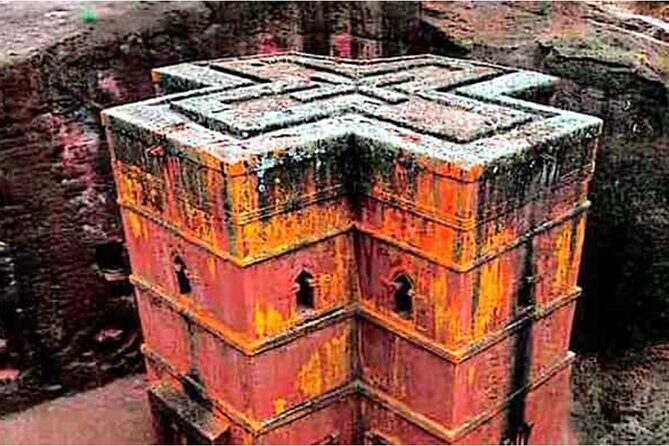
The standout shape: Bete Giyorgis
Bete Giyorgis often feels like a highlight because it’s one of the most recognizable names in Lalibela’s church map. Even when you’re not sure what you’re looking at, the guide’s context helps you see why the church matters within the whole complex.
Try to pause for a moment rather than photographing nonstop. Lalibela works better when you give your eyes a few minutes to adjust to the rock textures and carved forms.
Continuing the route: Bete Amanuel, Qeddus Merkoreos, and Abba Libanos
The route continues with Bete Amanuel, Bete Qeddus Merkoreos, and Bete Abba Libanos (the House of Abba Libanos). This stretch can feel like the point where you either start getting church fatigue or you start seeing patterns.
If you take small notes in your head—like how each church’s dedication changes what you notice—you’ll get more out of this middle portion. Your English guide’s job here is to keep each stop distinct, not repetitive.
Bete Gabriel-Ruphael and Bete Lehem (House of Holy Bread)
You’ll finish day 1 with Bete Gabriel-Ruphael and Bete Lehem (the House of Holy Bread). The name alone gives you a biblical anchor, and that makes this final chunk feel purposeful rather than rushed.
By the time you end the day, you’ll likely notice that Lalibela’s genius is not just the carving. It’s the planning—how the churches’ themes and positions work together into a single pilgrimage-focused setting.
Overnight in Lalibela Hotel: recharge before Neakuto Leab
After your first day of churches, you overnight in Lalibela Hotel. This is a good inclusion because it prevents you from having to solve same-day lodging when you arrive tired and travel-worn. You also have breakfast included, which is key on day 2 when you’ll start early again.
What you should plan for: this is a physically active day. You’ll likely do a lot of walking on uneven surfaces. Take advantage of your hotel time to rest your feet and pace your energy.
This kind of overnight also helps the experience feel less like a drive-by. Even if the schedule is tight, you at least get one proper night in Lalibela’s rhythm.
Day 2: Neakuto Leab church, then back to Addis
Day 2 begins early with Neakuto Leab Church. It sits about 7 km from Lalibela, lying just off the airport road. This is a great choice for the end of your trip because it shifts the mood from the main carved church cluster to something simpler and more nature-shaped.
Neakuto Leab is attributed to King Lalibela’s successor. That detail adds a neat layer: it’s not only about the original king’s era. It’s about what followed, how successors kept the pilgrimage tradition alive, and how new sacred spaces were placed into the landscape.
A natural cave and holy water dripping from the roof
Neakuto Leab is known for being set in a natural cave. Inside, you’ll see very old stone receptacles that collect precious holy water as it drips from the cave roof. That’s the kind of detail you remember later, because it feels tactile and immediate.
This stop is also a useful counterweight to the larger, more structured churches you saw first. After spending hours with carved forms, the cave gives you a different kind of spirituality—one tied to water, rock, and simple ritual function.
Then you fly back to Addis Ababa, completing the 2-day, 1-night loop.
Price and value: what you’re really paying for
The price is $450 per person for a 2-day trip with 1 night. That sounds like a chunk, but you’re not only paying for sightseeing. You’re paying for a whole package that includes a lot of the expensive friction points.
Here’s what the tour includes:
- Breakfast
- Air-conditioned vehicle
- Accommodation (Lalibela Hotel)
- Bottled water
- English guide
- Pickup offered
- Mobile ticket
Your itinerary also notes that admission ticket is free for the church visits listed. And because this is built around flights between Addis and Lalibela, you avoid the headache of planning the travel yourself on short notice.
What you should budget beyond the package:
- Personal expenses (the only clearly stated non-inclusion)
So is it good value? For most people doing Lalibela as a short stop from Addis, yes. The key is that it bundles logistics and interpretation. With an English guide and an organized route, you’re less likely to waste half a day figuring out the right church order.
What the English guide changes (a lot)
This kind of trip lives or dies on interpretation. You can see the churches and still leave feeling like you just photographed stone.
An English guide changes that because they connect what you see with the dedications, the symbolic meanings, and the broader historical significance. Even when churches look similar at first glance—each carved into volcanic rock—the guide helps you tell them apart in a meaningful way.
Also, the tour’s size cap (up to 30 travelers) helps the guiding experience. It’s large enough to feel organized, but small enough that explanations likely stay practical rather than rushed.
Who this fits best (and who might want a longer plan)
This trip fits you if:
- You have limited time in Ethiopia and want Lalibela without turning it into a multi-day project
- You care about religious architecture and want context, not only scenery
- You like a structured route that reduces decision fatigue
You might want a different plan if:
- You prefer slower travel with lots of unplanned pauses
- You dislike early starts and want a more flexible day-to-day rhythm
The upside is that the itinerary is built around the main church cluster first, then Neakuto Leab. That order gives you both the essentials and the off-main-route feeling without making the schedule messy.
Practical tips to get the most out of your two days
A few things will help you enjoy this more:
- Wear comfortable shoes with grip. Rock-hewn areas often mean uneven footing.
- Bring a small day bag with water and essentials, even though bottled water is provided.
- Take short breaks inside or near shaded church areas when you can, especially on day 1 when the route is longer.
- Use the church names as a memory trick. When you know what each church is dedicated to, the carvings make more sense.
Also, don’t treat Lalibela like a checklist. Even with limited time, you’ll get the best results when you let the place set the pace for your eyes.
Should you book this Lalibela package from Addis?
I’d book it if you want a focused, guided Lalibela experience that handles flights, lodging, transport, and church sequencing for you. At $450, the value is strongest when you factor in that you’re not just buying sightseeing—you’re buying a ready-to-run itinerary with an English guide and a one-night stay in Lalibela.
You might skip it if your travel style is slow and unstructured, because this plan is clearly designed for time efficiency. For everyone else—especially first-timers heading to Lalibela from Addis—this is a smart way to see the major rock-hewn churches and also catch Neakuto Leab’s cave-and-water atmosphere without adding extra days.
FAQ
What time does the tour start in Addis Ababa?
The meeting point is Bole Addis Ababa International Airport, and the start time is 6:00am.
What’s included in the tour price?
The tour includes breakfast, an air-conditioned vehicle, accommodation (Lalibela Hotel), bottled water, and an English guide.
Which churches will I visit in Lalibela?
You’ll visit the main group of eleven rock-hewn churches associated with King Lalibela, including Bete Medhanealem, Bete Maryam, Bete Golgotha Mikael, Bete Meskal, Bete Denagel, Bete Giyorgis, Bete Amanuel, Bete Qeddus Merkoreos, Bete Abba Libanos, Bete Gabriel-Ruphael, and Bete Lehem. On day 2, you’ll also visit Neakuto Leab Church.
Is admission included?
The itinerary notes admission ticket free for the church visits listed.
How many people are in the group?
The tour has a maximum of 30 travelers.
Can I cancel for a full refund?
Yes. There is free cancellation up to 24 hours in advance for a full refund. If you cancel less than 24 hours before the start time, the amount paid is not refunded.