REVIEW · ADDIS ABABA
Museum Highlights Guided Day Tour in Addis Ababa
Book on Viator →Operated by myGuzo · Bookable on Viator
Entoto Hill feels like the start button for Addis Ababa. This day tour strings together key museums and churches that trace Ethiopia’s story from early beginnings to royal power and everyday culture, all with pickup and admission tickets included. I especially like the tight mix of archaeology-level facts at the National Museum and hands-on cultural context at the Ethnological Museum. You’ll also get time to see standout architecture at major cathedrals, not just read labels.
The one thing to keep in mind is that this is a full day, so you’ll want to pace yourself. Also, lunch at the Taitu Hotel is optional and costs extra, and tips aren’t included.
In This Review
- Quick hits before you go
- Why this museum day in Addis Ababa works (and for whom)
- The starting point: Entoto Hill and the city’s earliest story
- Menelik II Palace: independence, power, and a surprisingly humble feel
- Entoto Maryam Church: an early church within a calm compound
- Ethnological Museum in Haile Selassie’s former palace
- National Museum of Ethiopia: Lucy, and why archaeology here hits hard
- St. George’s Cathedral: octagonal architecture in the city center
- Holy Trinity Cathedral Church: top-ranking status and an onsite museum
- Driving through Addis Ababa: Old Piazza, Arat Kilo, Meskel Square, and Piassa
- The lunch choice: optional, local, and at the Taitu Hotel
- What’s included vs. what costs extra
- Guides and the human touch that makes it feel easy
- When to book this tour (and when you might pass)
- FAQ
- FAQ
- How long is the Addis Ababa museum highlights guided day tour?
- What time does the tour start?
- What does the price include?
- Is lunch included?
- Which museums and churches are included in the tour?
- Is there a guide, and what languages are used?
- Do I need to buy admission tickets?
- Does the tour include hotel pickup?
- Is the tour weather-dependent?
- What are the age limits and group size?
- Is Lucy included in the itinerary?
Quick hits before you go
- Pickup anywhere in Addis Ababa: hotel, house, or airport—plus drop-off at the end.
- Lucy-focused stop: the National Museum includes the partial skeleton of Australopithecus afarensis known as Lucy.
- Ethiopia in two lenses: archaeology and big national artifacts at the National Museum, plus two floors of cultural and social history at the Ethnological Museum.
- Royal setting matters: the Ethnological Museum sits in Haile Selassie’s former palace, with gardens and fountains around Addis Ababa University.
- Cathedral architecture with a guide: octagonal St. George’s Cathedral and the Holy Trinity Cathedral with its own museum.
- Small group limit: capped at 30 travelers, so it stays easier to manage than huge city bus tours.
Why this museum day in Addis Ababa works (and for whom)
If you like your travel with structure—without feeling rushed—this tour makes a lot of sense. You’ll cover multiple museums in one go, and you won’t have to coordinate separate tickets, transport, or timing between sites scattered across the city.
This is also a strong fit if you want a clear timeline. The route moves from where Addis Ababa started (Entoto Hill) toward the city’s central institutions, then back through major landmarks like Arat Kilo, Meskel Square, and Piassa. It’s a practical way to get city context while you’re learning about Ethiopia’s broader history.
The value is not just the sites; it’s the guidance layer. You’ll have an accompanying English-speaking guide, and you’ll also get local museum guides at the stops. That matters because Ethiopian church history, museum collections, and the meaning behind the buildings can be hard to piece together on your own.
You can also read our reviews of more guided tours in Addis Ababa

The starting point: Entoto Hill and the city’s earliest story
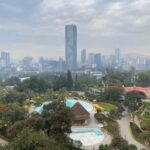
The day begins with pickup at your chosen address and a drive up to Entoto Hill, where Addis Ababa’s story began. From the viewpoint, you get a first sense of scale—how the city expands outward from its starting point.
Entoto Hill is more than a scenic start. It sets the theme for the rest of the day: you’re not just visiting buildings; you’re following the city’s growth and Ethiopia’s long timeline. The stop is short (about 30 minutes), so you’ll have enough time to look out over the city without losing momentum.
If you’re sensitive to being on the move, note that this tour is built with time-efficient segments. That’s usually a win for first-timers, but it does mean you’ll want comfortable shoes and a steady snack plan for the gaps.
Menelik II Palace: independence, power, and a surprisingly humble feel
After Entoto, you head to the Menelik palace, linked to Emperor Menelik II. The focus here isn’t luxury tourism; it’s the story of a ruler who worked to keep Ethiopia independent from colonial powers.
The palace stop runs about 30 minutes. That’s brief, but the framing is the point: you learn about the historical role Menelik II played, then you see the palace in a way that helps you understand how leadership looked in real life—described as relatively humble considering the stakes.
A practical plus: because the guide is doing the context-setting, you’re less likely to walk through and wonder what you’re looking at. You’ll have enough time to ask questions and connect the dots between the political history and the physical space.
Entoto Maryam Church: an early church within a calm compound
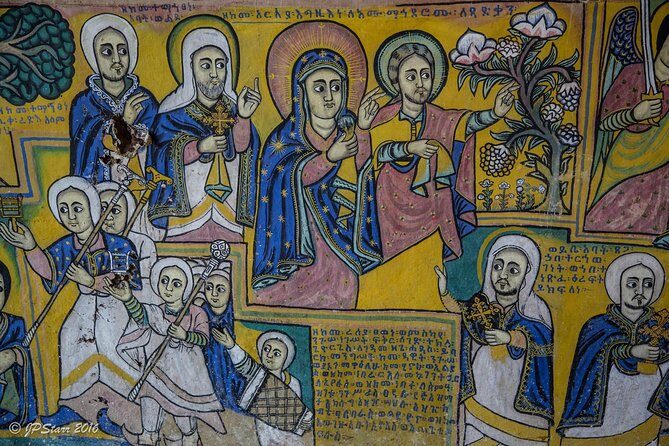
Next up is Entoto Maryam Church. You’ll walk around the church and its compound, with time to understand why it’s historic in the Addis Ababa story—this is described as having the first church in and around Addis Ababa.
This stop is also about 30 minutes, so think of it as a reset button between larger museum visits. The setting is described as tranquil, with typical ancient Ethiopian church architecture. That calm is useful on a day when you’re moving from one landmark to another.
One consideration: because this involves walking around a church compound, you’ll want to be ready for time on your feet. The good news is that the schedule keeps it to a manageable block.
Ethnological Museum in Haile Selassie’s former palace
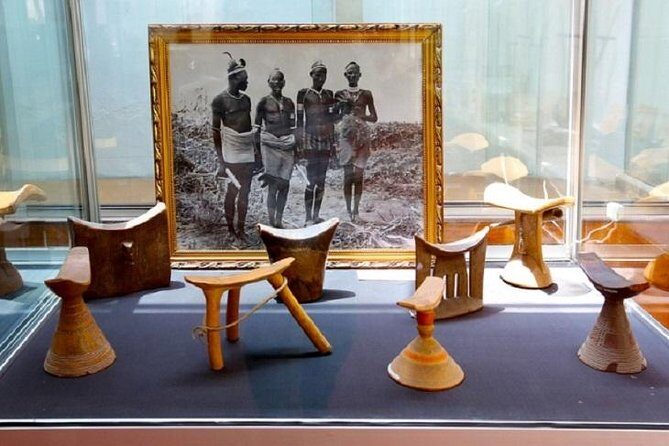
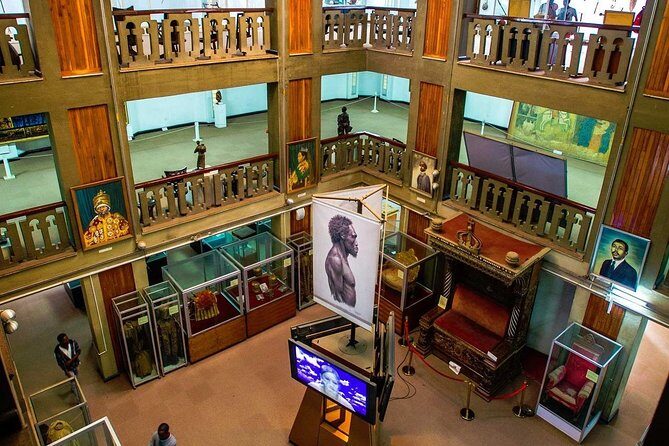
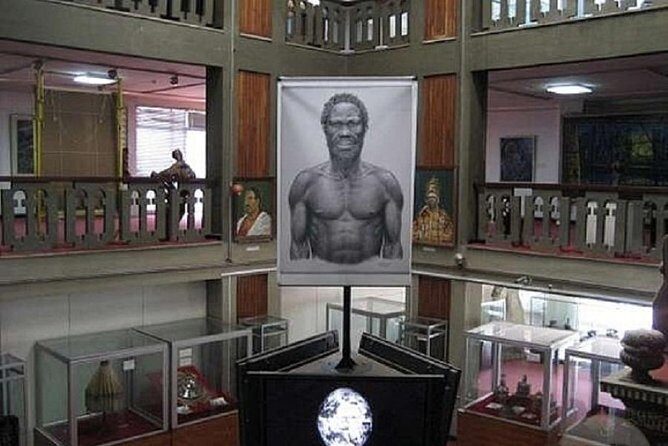
For many people, the Ethnological Museum is where the day becomes truly memorable. You’ll spend about one hour here, and it’s described as one of the finest museums in Africa, covering two floors of Ethiopia’s cultural and social history.
What makes this stop feel special is the setting. The museum is in Haile Selassie’s former palace, surrounded by the gardens and fountains around Addis Ababa University. Even if you’re not a “museum person,” the combination of palace setting plus culture-focused displays tends to land well because it gives you multiple ways to connect—place, artifacts, and the human story.
There’s also a big theme of scope: Ethiopia’s more than 80 ethnic groups and how people lived, organized society, and carried traditions through time. A guided approach helps here because the museum isn’t trying to teach everything in a single hour—but it can teach you how to think about diversity in Ethiopia.
You can also read our reviews of more museum experiences in Addis Ababa


National Museum of Ethiopia: Lucy, and why archaeology here hits hard
Then it’s off to the National Museum of Ethiopia, Ethiopia’s most important museum. This is the stop with the biggest headline moment: Lucy, a partial skeleton of Australopithecus afarensis.
You’ll have about 45 minutes at the National Museum. That’s enough time to see the key exhibits the guide will point out, and it helps you avoid the common “I’m here but I don’t know where to look” problem. The guided format matters because the National Museum can feel like a lot if you’re going solo.
Why this works in the overall tour: the Ethnological Museum gives you people and culture; the National Museum gives you deep time and human origins in Ethiopia’s own context. Together, those two stops create a more complete picture than either one alone.
St. George’s Cathedral: octagonal architecture in the city center
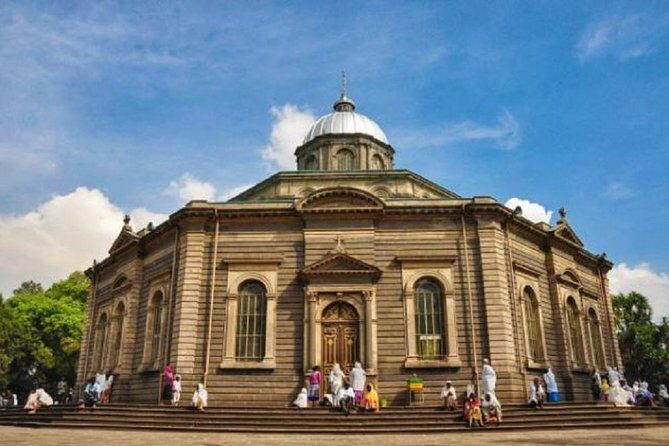
St. George’s Cathedral and Museum comes next, located in central Addis Ababa. You’ll get around 45 minutes, with time to appreciate its distinct octagonal architecture.
Architecture is a shortcut to understanding history. Even without reading every label, the shape and style tell you something about design choices and religious identity. With a guide, you’re not just admiring a building—you’re learning what you’re seeing and why it matters in the Ethiopian church tradition.
If you’re photographing, keep expectations realistic. This is an active part of the city, and you’ll be in a place of worship as well as tourism. That means you should move steadily, watch for your timing, and follow your guide’s lead.
Holy Trinity Cathedral Church: top-ranking status and an onsite museum
The day rounds out at the Holy Trinity Cathedral Church, described as the highest ranking cathedral church in Addis Ababa. It also has its own museum, and you’ll have about one hour here.
This is one of the bigger “wow for the eyes” stops because of its distinct architecture, but the key is that you’re not only looking—you’re walking through with guidance about construction, history, and religious significance.
If you want your tour to feel balanced, this ending helps. By the time you reach the Holy Trinity Cathedral, you’ve already seen Ethiopia’s human story, cultural identity, and the city’s evolution. The cathedral museum ties many of those themes back to belief, community, and continuity.
Driving through Addis Ababa: Old Piazza, Arat Kilo, Meskel Square, and Piassa
Between major stops, the route includes city drives through areas like Arat Kilo, Meskel Square, and Piassa. You’ll also pass through Menelik II Square / Old Piazza, where you can see older Italian buildings and the flow of people moving through the city.
These drive-by segments can feel “small” compared with museums, but they help you orient yourself. Addis Ababa isn’t just a collection of monuments—it’s a working city with layers of architecture and everyday movement.
It’s also where you notice the blend of old and new without committing more time than the day already demands. The tour keeps it useful, not filler.
The lunch choice: optional, local, and at the Taitu Hotel
You’ll have a lunch window with an optional traditional Ethiopian lunch at the Taitu Hotel, described as the oldest hotel in the country. This is your own expense.
Even if you skip the meal, the lunch stop still functions as a break in the schedule. If you do go, you’ll be eating in a place that fits the theme of long Ethiopian history, not a random restaurant stop.
My practical take: if you’re the type who needs a real sit-down break, budget time and money for lunch here rather than trying to find something last-minute. The tour flow works better when you’re not hunting.
What’s included vs. what costs extra
This tour is priced at $102.57 per person, and it feels fair for what you get. You have pickup and drop-off, a car with a driver and fuel, and both an English-speaking guide and local museum guides. The admission fees for four/five museums are included too, which is often where tours quietly save you money.
Included items also reduce stress: you won’t be paying at each museum entrance, and you won’t be figuring out transport between sites on your own.
What’s not included:
- Lunch (the Taitu Hotel option is own expense)
- Tips for the tour guide
- Other costs not offered in the program
Guides and the human touch that makes it feel easy
The guides are a big part of why this tour scores high. One review called out a guide named Seya for being extremely knowledgeable about Ethiopian history and culture and for explaining details clearly.
Even without naming every guide, the structure is similar: your main guide keeps the story flowing, and local museum guides add stop-specific context. That combo is what turns museum visits from list-walking into real understanding.
When to book this tour (and when you might pass)
Book it if:
- You want a guided route through major Addis Ababa museums and cathedrals in one day.
- You like a chronological feel, starting at Entoto Hill and moving through central landmarks.
- You’d rather pay one price for transport + museum entry than piece it together yourself.
- Lucy and Ethiopian cultural history are on your must-see list.
You might pass if:
- You prefer free-form exploring and want long solo time inside museums.
- You’re not interested in church architecture and museum context, because the day includes both.
- You hate the idea of optional lunch and tipping, since those are part of the real-world cost picture.
FAQ
FAQ
How long is the Addis Ababa museum highlights guided day tour?
It runs about 6 to 8 hours.
What time does the tour start?
The start time is 9:00 am.
What does the price include?
Pickup and drop-off, ground transportation with a driver and fuel, an English-speaking guide, local guides at the museums, all fees and taxes, and entrance fees to FOUR/FIVE museums are included.
Is lunch included?
No. Lunch is not included. There is an optional traditional Ethiopian lunch at the Taitu Hotel (own expense).
Which museums and churches are included in the tour?
You’ll visit Holy Trinity Cathedral Church, the National Museum, St. George Cathedral and Museum, and the Ethnological Museum, plus stops at Entoto Hill, Menelik palace, and Entoto Maryam Church.
Is there a guide, and what languages are used?
An English-speaking guide is provided, and the tour may be operated by a multi-lingual guide.
Do I need to buy admission tickets?
No. Museum admission fees for FOUR/FIVE museums are included.
Does the tour include hotel pickup?
Yes. Pickup and drop-off are offered at any location in Addis Ababa, including hotels, houses, or the airport.
Is the tour weather-dependent?
It operates in all weather conditions, so you should dress appropriately.
What are the age limits and group size?
The minimum age is 8 years, and the tour has a maximum of 30 travelers per group.
Is Lucy included in the itinerary?
Yes. The National Museum of Ethiopia is home to Lucy, described as a partial skeleton of Australopithecus afarensis.