REVIEW · ADDIS ABABA
Day Trip to Adadi Rock and Tiya Archeological Excursion
Book on Viator →Operated by Enat Ethiopia Tours · Bookable on Viator
Three ancient stops, all within Addis reach. This private day trip connects Adadi Mariam and UNESCO-listed Tiya with the deep prehistory of Melka Kunture, so you get Ethiopia in layers, not just one highlight. I like that the sites feel close on the map but totally different in mood, from a still-active rock-hewn church to symbolic standing stones.
I also like the practical setup: pickup, an air-conditioned vehicle, a professional guide, and all the admissions plus lunch and snacks are included in the price. That means you spend your energy looking at stone carvings and geology, not figuring out tickets and timing.
One consideration: the pace is efficient. You’ll have about 4 hours at Adadi Mariam and roughly 2 hours at each of the other two stops, so if you want long, slow wandering, you may feel slightly rushed.
In This Review
- Key things to know before you go
- A smart Addis day with three very different ancient worlds
- Stop 1: Adadi Mariam and the underground church experience
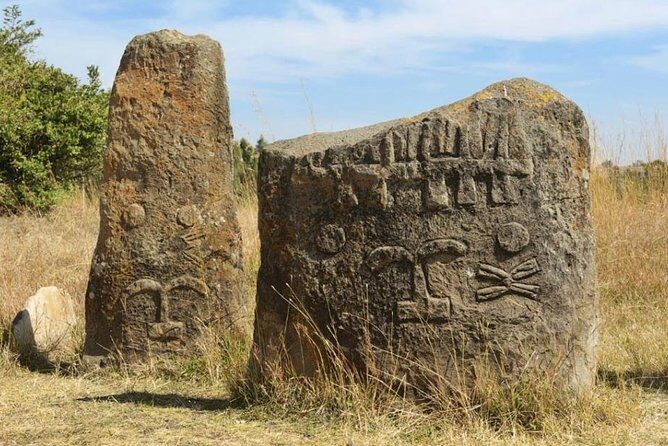
- Stop 2: Tiya stelae, 36 standing stones, and the symbols no one fully decodes
- Stop 3: Melka Kunture and what 1.5 to 2 million years looks like today
- Price and value: is $120 for this day fair?
- Comfort, timing, and what to expect from the schedule
- Guide quality matters more than you think (hello, Ashu)
- Who this tour is for, and who may want a different plan
- Should you book this Adadi Mariam–Tiya–Melka Kunture day trip?
- FAQ
- How long is the day trip?
- How much does it cost?
- Does the tour include pickup?
- Is lunch included?
- Are admission tickets included?
- Is this a private tour?
- Do I need to buy a paper ticket?
- What’s included besides transport and the guide?
- What’s the cancellation policy?
Key things to know before you go
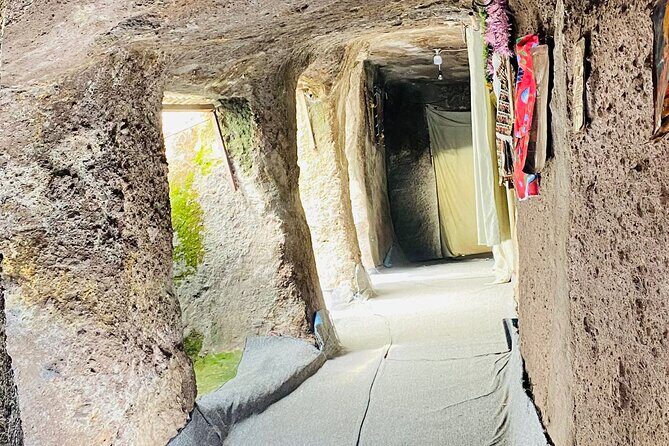
- Three time periods in one day: 13th-century worship at Adadi Mariam, 10th–15th-century Tiya, and near-2-million-year prehistory at Melka Kunture
- Admission tickets and lunch are included so you’re not constantly reaching for your wallet
- A private vehicle with a guide keeps the route smooth and the explanations clear
- Tiya’s symbols are still a mystery with swords and carvings unlike anything else found nearby
- Melka Kunture is for science-minded visitors who enjoy fossils and early tools
A smart Addis day with three very different ancient worlds
This is the kind of day trip that works well if you’re based in Addis Ababa and want more than one stop without hiring separate transport each time. You’ll be covering three sites that usually get visited one at a time, yet the plan keeps it manageable in roughly an 8-hour day.
What makes it feel worthwhile is the contrast. Adadi Mariam is a living, underground rock-hewn church, while Tiya is a cemetery site marked by standing stones and symbols whose meanings are still unknown. Then Melka Kunture shifts your attention from carved stone to human traces from almost the dawn of toolmaking.
A few more Addis Ababa tours and experiences worth a look

Stop 1: Adadi Mariam and the underground church experience
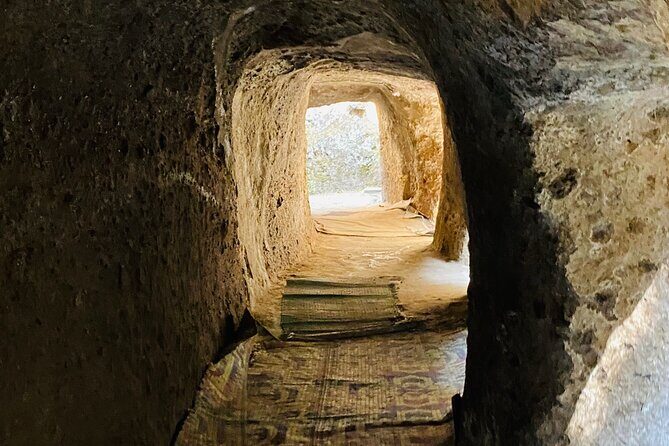
Adadi Mariam is a subterranean rock-hewn church, similar in style to the rock churches people often associate with Lalibela. The standout detail for this site is its location and rarity: it’s described as the southern-most church of this type, and there aren’t other rock-hewn churches like it in the immediate area.
The visit is especially interesting because it blends past and present. Dating to around the 13th century, Adadi Mariam is still an active place of worship. That gives the visit a different texture than a purely archaeological ruin, even though it’s ancient in every sense of the word.
You’ll also hear the idea that construction may have been linked to King Lalibela’s visit to southern Ethiopia. That’s a fascinating thread to hold while you look around, even if it’s presented as a hypothesis rather than a guaranteed fact. The point is the connection to Ethiopia’s larger Christian heritage, but from a less-traveled direction.
How long you’ll have: about 4 hours here. That’s a generous chunk, and it helps because rock churches typically reward slow looking—details, shape, and atmosphere.
A practical heads-up: rock-hewn spaces can be cooler and darker than outdoors. You might appreciate comfortable footwear and patience for steps and uneven surfaces, since the design is built into stone rather than smoothed out for visitors.
Stop 2: Tiya stelae, 36 standing stones, and the symbols no one fully decodes
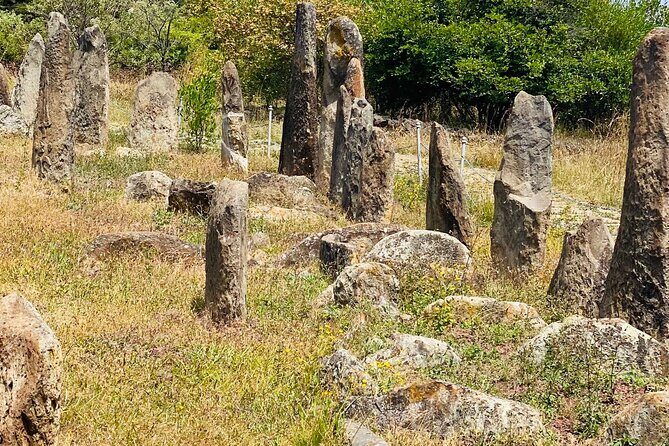
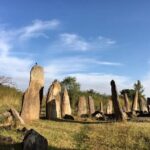
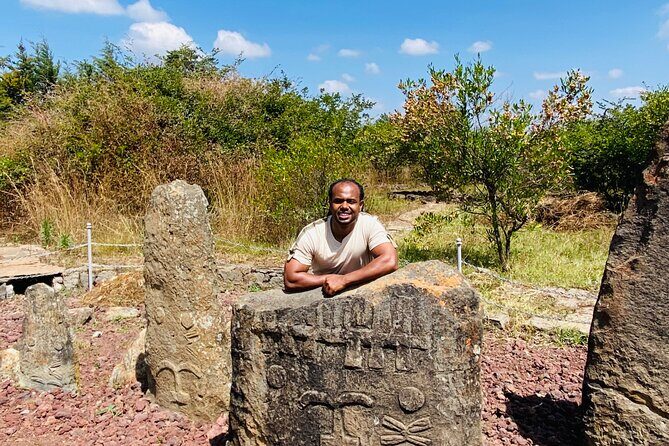
Tiya is one of those sites that sticks in your brain because it looks simple at first glance, then becomes oddly complex the longer you study it. Close to Adadi Mariam, the monuments number 36 standing stones, each about 1 to 2 meters tall.
These stelae are connected to a cemetery rather than a temple or palace. Excavations have revealed remains of both males and females, with ages estimated between 18 and 30. The dating is broad—between the 10th and 15th centuries—so you’re looking at a long span of community life, burials, and symbolic marking.
Then come the carvings. The stones are covered with symbols whose meaning remains unknown. One of the most compelling details is that the swords and other carvings are described as unique in their forms; no other stelae with the same kind of symbols have been discovered.
This is where a good guide matters. With the right framing, you stop treating it like a photo stop and start reading the stones like evidence. You don’t need special background to get value here—you just need time and explanations that keep you oriented.
How long you’ll have: about 2 hours. That’s enough to walk the area, notice recurring shapes, and hear the significance of what’s been found and what hasn’t.
A consideration: because the meanings aren’t settled, some people want firm answers and will feel less satisfied. If you’re okay with questions—and you like archaeology as interpretation rather than certainty—Tiya is a great match.
Stop 3: Melka Kunture and what 1.5 to 2 million years looks like today
Melka Kunture brings you back to deep time. This archaeological area is associated with prehistoric discoveries, including fossils described as nearly 2 million years old. Tools have also been found that date to about 1.5 million years ago, and that combination is powerful: you’re seeing traces of early human life in multiple forms.
In other words, this isn’t just a place where old stuff sits on a shelf. It’s a site-level story about how humans lived, worked, and left evidence that survives long enough for us to argue about it. Even if you’re not a professional science person, you can still appreciate the age by imagining what it means for tools to be that old—far older than written records, far older than the churches and cemeteries on the rest of your route.
How long you’ll have: about 2 hours. That gives you a chance to connect fossils and tools to the broader idea of early technology, without turning the day into a lecture marathon.
A practical reality: at sites like this, the “wow” is often in how old everything is, and how much careful thinking goes into explaining it. Bring the mindset of curiosity, not the expectation of a polished museum display.
Price and value: is $120 for this day fair?
At $120 per person, the value hinges on what’s included and how much time you save. For this tour, you’re getting pickup, private transportation in an air-conditioned vehicle, a professional guide, lunch, snacks, bottled water, and Ethiopian coffee or tea. You also get all fees and taxes, plus admission tickets at each stop.
That package matters because three separate sites can turn into a pile of small costs fast: transport, entry fees, and guide time. Here, those pieces are bundled, which is especially helpful if you want a smooth day without negotiating details in the moment.
It’s also a private tour, so you’re not sharing the day with strangers who may want to stop for different reasons or rush through explanations. If you like structured storytelling at your own pace, private format is a real value.
The one trade-off is that you’re paying for convenience and guidance. If you love exploring completely on your own and you’re comfortable arranging transport and tickets from scratch, this might not feel as cost-effective. But if you want a well-led route with inclusions that reduce hassle, $120 starts to feel reasonable.




Comfort, timing, and what to expect from the schedule
The day is set up to cover three locations within an 8-hour window. You’ll likely feel the rhythm: drive, arrive, walk and look, then move on before you can get tired of one type of site.
This is where the included lunch and snacks help. Long drives and short site visits can make hunger a bigger issue than you expect. Having lunch and water provided keeps you from turning the second half of the day into a scramble.
The mobile ticket detail is also practical. It’s one less thing to carry or misplace, and it usually makes check-in faster when you’re on a tight schedule.
What I’d plan for: even with an air-conditioned vehicle, you’ll still spend time outdoors at least part of the day. It’s smart to bring comfortable shoes and dress for weather changes, since Addis-area conditions can shift between morning and afternoon.
Guide quality matters more than you think (hello, Ashu)
A big reason this type of day trip feels satisfying is the way a good guide helps you “see” what’s in front of you. In one account, Ashu is described as very knowledgeable and positive, with clear answers and a patient approach. That kind of guide presence changes the whole experience—Adadi Mariam stops being just a church, Tiya stops being just stones, and Melka Kunture stops being just old sites.
Safety also comes up in the same positive way. When a guide and driver know the route and the timing, you spend less energy worrying about logistics and more energy paying attention to details.
So when you book, I’d treat the guide as part of the product. The sites are the stars, but the narration is what turns a photo day into a learning day.
Who this tour is for, and who may want a different plan
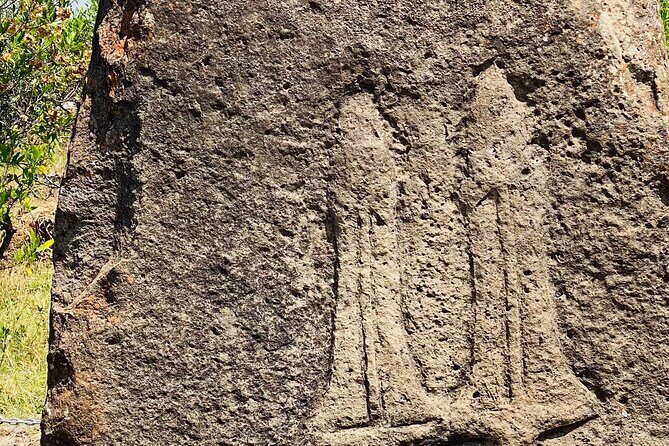
This tour fits best if you want a guided overview across multiple time periods without building the itinerary yourself. It’s also a strong choice for history-minded visitors who appreciate contrasts: Christian rock architecture at Adadi Mariam, symbolic funerary monuments at Tiya, then prehistoric evidence at Melka Kunture.
Because it’s private, it also suits couples and small groups who like to ask questions and set their own tempo within reason. The tour is described as suitable for most travelers, and that’s another point in its favor for a day-trip commitment.
If you’re the type who wants long hours at one site—like spending half a day inside or returning for a second visit—this plan may feel too tight. But if you want maximum value from a single day, it’s hard to beat.
Should you book this Adadi Mariam–Tiya–Melka Kunture day trip?
Yes, if you want a structured, value-packed way to see three major ancient sites near Addis Ababa with minimal hassle. The combination of included admissions, lunch, and a professional guide makes it easier to commit without worrying about hidden costs.
I’d book this especially if you enjoy guided interpretation—when someone points out what to notice, and where the evidence is strong versus where meanings stay uncertain. Tiya in particular rewards that mindset.
Skip it only if you’re determined to travel with zero schedule and no guidance. Also consider changing plans if you know you need lots of extra time at one location, since the visit windows are efficient.
If you’re balancing time in Ethiopia and want a day that moves through Ethiopia’s timeline—church, cemetery stones, then prehistoric tools—this is a smart choice.
FAQ
How long is the day trip?
The experience runs about 8 hours (approximately).
How much does it cost?
It costs $120.00 per person.
Does the tour include pickup?
Yes, pickup is offered.
Is lunch included?
Yes. Lunch, snacks, and bottled water are included.
Are admission tickets included?
Yes. Admission tickets are included for Adadi Mariam, Tiya, and Melka Kunture.
Is this a private tour?
Yes. It’s private, and only your group participates.
Do I need to buy a paper ticket?
No. The tour uses a mobile ticket.
What’s included besides transport and the guide?
Air-conditioned vehicle, professional tour guide, Ethiopian coffee or tea, and all fees and taxes are included.
What’s the cancellation policy?
You can cancel for free up to 24 hours in advance for a full refund. If you cancel less than 24 hours before the start time, you don’t get a refund.