REVIEW · ADDIS ABABA
3-Day Danakil Depression A Journey into Earth’s Fiery Heart
Book on GetYourGuide →Operated by vowland ethiopia tour · Bookable on GetYourGuide
The salt flats glow like sunrise on fire. In Ethiopia’s Danakil Depression, you’ll get time at Lake Afdera (a warm salt-lake swim) and then push on to Erta Ale for a crater-edge view of an active lava lake at night. I love that the route stacks the best sensory hits in 72 hours—salt, sulfur color, and heat-driven geology. The trade-off is you should treat this as real expedition travel: open-air camping with limited facilities and no easy comforts in the hottest part of Earth.
What makes this tour feel workable is the hands-on setup. You’re moving in 4×4 vehicles with an English-speaking local guide and scout, and the group stays small (up to 12), which matters a lot when conditions are demanding. I also like the practical touches—unlimited bottle of water, plus hot drinks and all meals—because out here the biggest risk is running out of energy, not sightseeing.
In This Review
- Key highlights you’ll feel in your body
- Why the Danakil Depression feels like another world
- The remote logistics: 4×4 time and a small-group rhythm
- Day 1: Semera, Lake Afdera swim, and Lake Asale sunset
- Semera to the Afar drive
- Lake Afdera: warm salt-lake swim and lunch
- Hamed Ela base, then Lake Asale at golden hour
- Day 2: Dallol’s sulfur colors, salt caravans, and Erta Ale at night
- Dallol Depression: sulfur springs and mineral formations
- Lake Assal and salt caravans (plus camel ride)
- Drive to Erta Ale and the crater-edge trek
- About safety and what you might see
- Day 3: Erta Ale dawn, Afdera again, and the long return to Semera
- Erta Ale to Afdera
- Final dinner and flight back
- Price and value: what $360 covers in harsh remoteness
- Camping reality check: sleeping bags, limited facilities, and bathrooms
- What to pack (and what can hurt you in heat)
- Fitness, heat, and health: be honest before you go
- Cultural respect in the Afar region
- Should you book this Danakil Depression tour?
- FAQ
- Where is the tour located?
- How long is the experience?
- How much does it cost?
- Where are the pickup and drop-off points?
- What’s included in the price?
- What is not included?
- What language is the tour guide?
- What fitness level do I need?
- What should I bring?
- Is it suitable for wheelchair users?
Key highlights you’ll feel in your body
- Lake Afdera salt-lake swim: warm, salty water and a lakeside lunch in a place that looks wrong in the best way
- Lake Asale sunset: salt flats that turn the light golden and the horizon huge
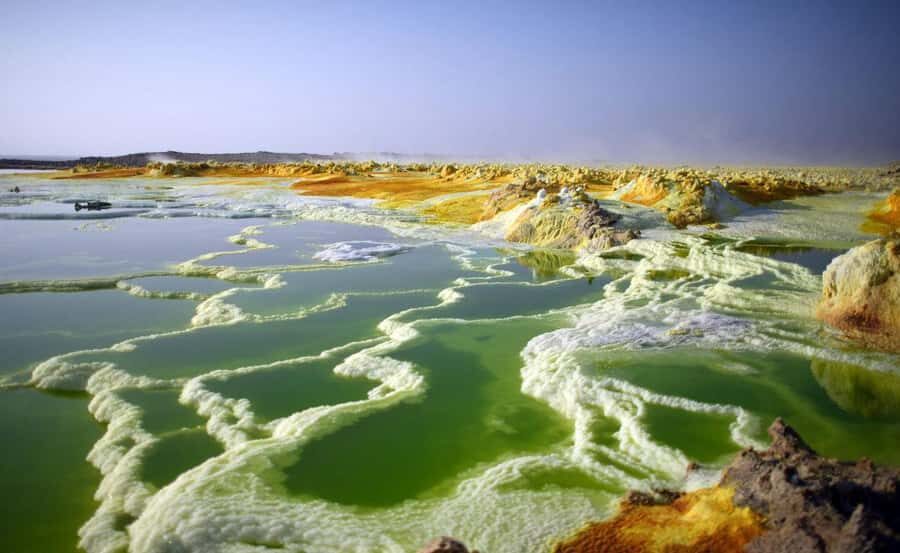
- Dallol’s sulfur springs: bright mineral textures and bubbling thermal zones where the ground looks painted
- Lake Assal salt caravans (plus camel ride): see how salt is still moved the old way
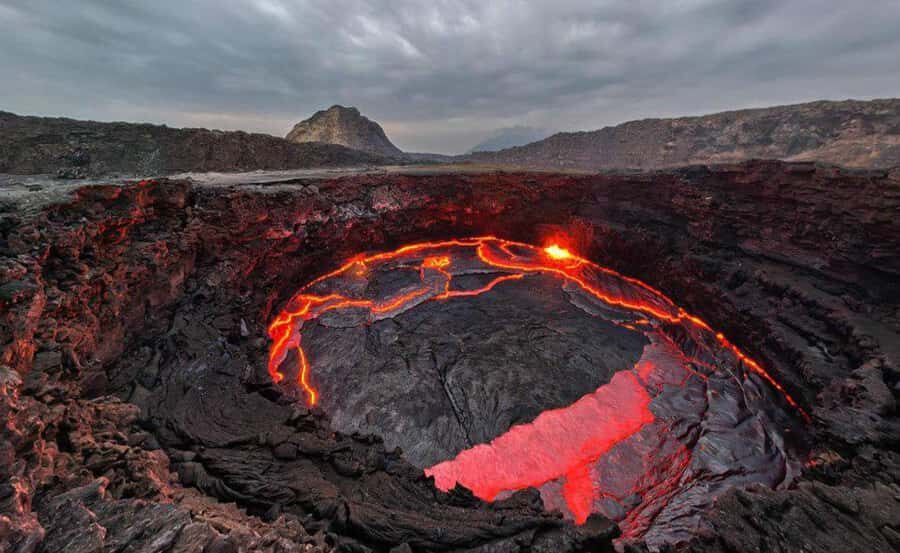
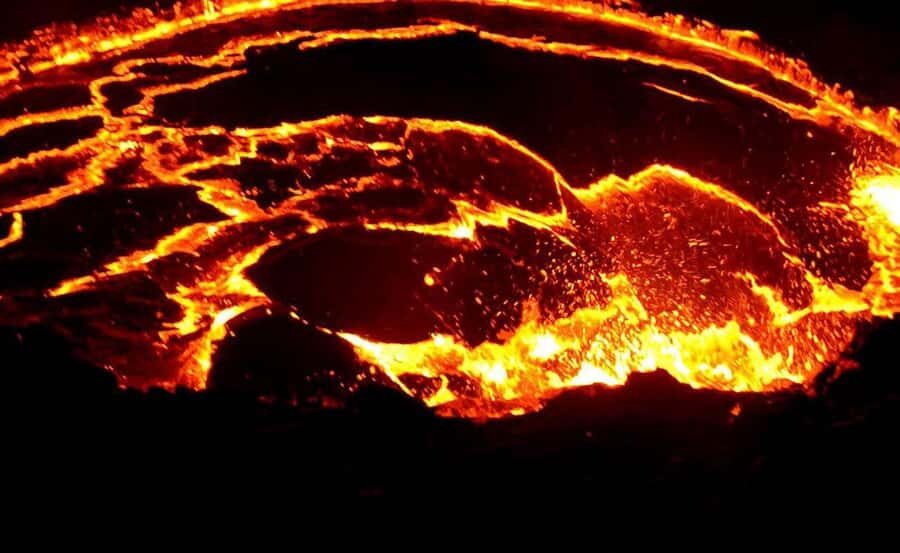
- Erta Ale night trek to the crater: a guided walk under the stars to a glowing lava lake
- Dawn return: another quick look at Erta Ale before you drive back toward Semera
Why the Danakil Depression feels like another world
Danakil is not “pretty in a normal way.” It’s geologically active, low-lying, and brutally hot—so your brain keeps going back to the same question: how can nature make something this extreme and still function like a living machine?
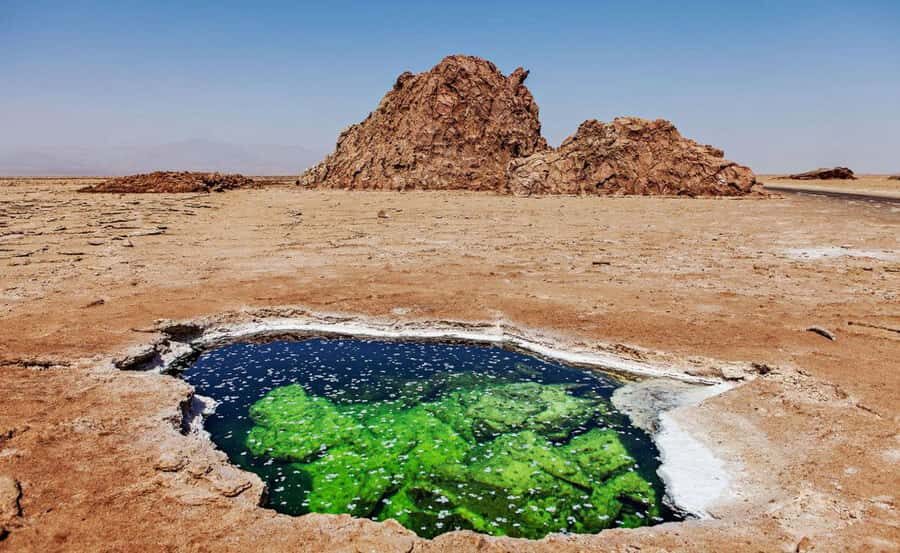
That’s why this itinerary hits. It doesn’t just show you one wow moment. It strings together three distinct textures of the region: salt (Afdera and Asale), sulfur minerals (Dallol), and volcanic heat (Erta Ale). Each stop has its own mood, too. At the salt lakes you’re cooling off and smelling the sharp edge of minerals. At Dallol you’re staring at colors that look like special effects. And at Erta Ale you’re watching a real-world process that’s happening now, not in a museum.
Also, the short duration is part of the magic. Three days forces focus. You’re not spending your whole trip waiting in transit; you’re using time where it counts: swimming, walking, and seeing the crater at night and dawn.
A few more Addis Ababa tours and experiences worth a look
The remote logistics: 4×4 time and a small-group rhythm
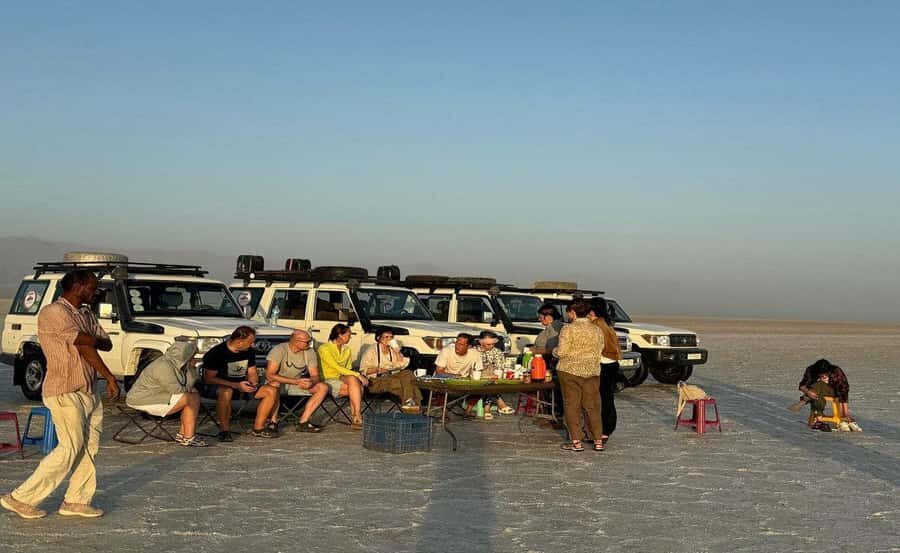
You’re traveling far from normal services, so the “pace” is less about clockwatching and more about staying alert and ready. Expect lots of off-road driving and frequent short stops along the way. That’s why 4×4 vehicles matter—this region can’t be reached comfortably with typical road travel.
The group size (limited to 12) is not just a marketing detail. In a place where it’s easy to feel tired, a smaller group helps the guide and scout manage timing, hydration, and footing during walks. It also means you’ll have more chances to ask questions and get real explanations—especially during the stops like Dallol and the crater trek.
One practical note from real-world experience: this is remote travel, so don’t assume everything will feel perfectly timed at the very first handshake. I’d mentally prepare for small hitches early on (finding the vehicle, confirming the group, and getting moving). The upside is that once you’re out there, the route itself is the payoff.
Day 1: Semera, Lake Afdera swim, and Lake Asale sunset
Day 1 starts with a flight from Addis Ababa to Semera, then a drive into the Afar region. You’ll likely feel the shift right away—heat changes your pace, and the terrain looks more “industrial” than scenic.
Semera to the Afar drive
This drive is part of the experience, not just transportation. You’re moving through remote areas where the background changes constantly, so it helps to keep your camera ready and your sunscreen topped up. Early on, I like that the schedule gives you enough time to settle without turning the day into a speedrun.
Lake Afdera: warm salt-lake swim and lunch
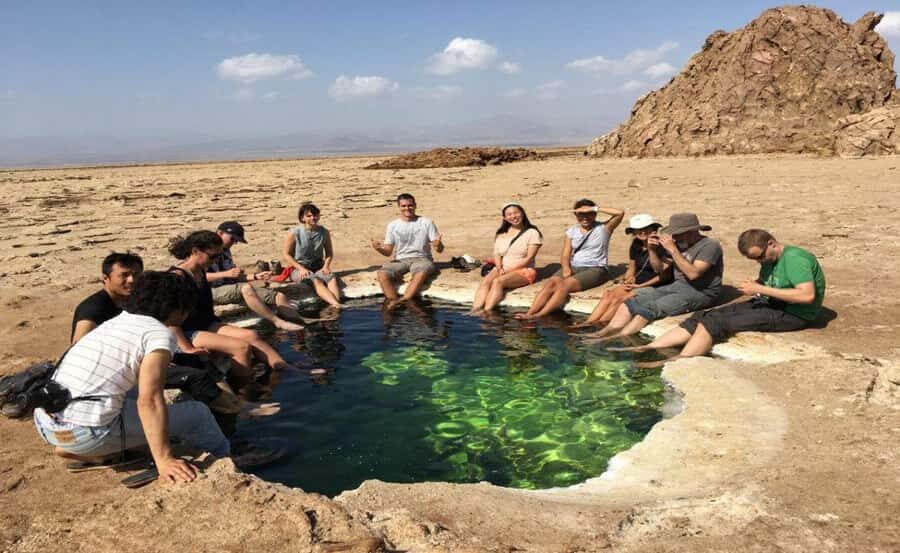
Lake Afdera is one of the most immediate perks of the tour: a salt-lake swim in natural, warm water. You’re not putting on a wetsuit and pretending it’s a beach vacation—you’re stepping into a mineral pool that’s more about contrast than comfort. The feeling is simple: you cool off, float a bit, and then get back to the heat-charged reality of the region.
After the swim, lunch at the lakeside scenery gives you a rare break from the driving monotony. This is where you’ll appreciate that the tour includes all meals, because eating out here on your own isn’t a safe bet.
Hamed Ela base, then Lake Asale at golden hour
You’ll reach the village of Hamed Ela and use it as a base. Then comes Lake Asale, where the sunset over salt flats turns the ground into a reflective, crystalline mirror.
This sunset is more than a photo moment. Salt flats flatten everything visually, so the horizon feels endless. It’s quiet, stark, and oddly calming after a day that started with travel and then threw you into intense scenery.
Overnight is open-air camping at Hamed Ela with camping gear provided (mattresses and sleeping bags). In practical terms: sleep will be simple, not luxurious—plan for that.
Day 2: Dallol’s sulfur colors, salt caravans, and Erta Ale at night
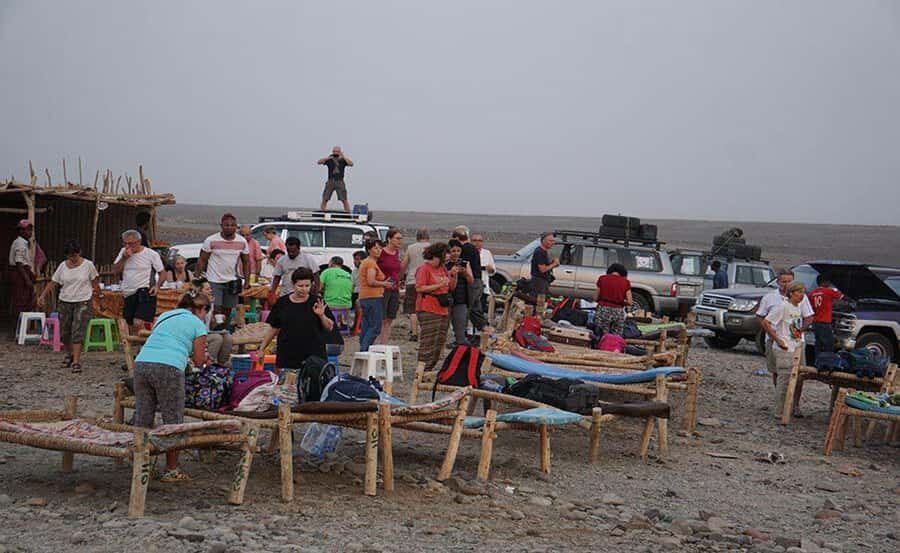
Day 2 is the “wow by volume” day. You’ll go from surreal colors to a volcanic crater in the same rotation, and you’ll feel the heat shift as the ground changes.
Dallol Depression: sulfur springs and mineral formations
Dallol is one of those places where your eyes keep hunting for an explanation that never arrives. You’re looking at vivid sulfur springs, mineral deposits, and hydrothermal activity—features that make the terrain look chemically manufactured.
The key here is pacing. Don’t rush through it. Let your eyes adjust, then walk slowly to take in how the colors change from one spot to the next. If you’re sensitive to strong smells or fumes, take short breaks and keep your headlamp off until you need it; you want calm, steady exposure, not sprinting.
Lake Assal and salt caravans (plus camel ride)
Then you’ll move toward Lake Assal. This is where you see camel caravans carrying salt—an Afar tradition that’s still practiced. If you’ve only seen salt as a kitchen ingredient, this will snap you into a different understanding of how valuable and heavy it is.
The tour includes a camel ride, which typically fits into this salt-caravan segment. Just keep expectations realistic: it’s a ride tied to the area’s working rhythms, not a theme-park loop. It’s also a good “sit for a moment” activity after hours of heat.
Drive to Erta Ale and the crater-edge trek
After an early dinner at the campsite near Erta Ale, you’ll start a trek under the stars—about an hour—up to the crater area. This is why the tour calls for moderate fitness. It’s not a mountain climb in the Alps sense, but it is a nighttime walk in a hot, remote environment with uneven ground.
Bring a flashlight/headlamp. Night in the desert isn’t just dark; it’s also disorienting. And during the trek, you’ll want to stay focused on your footing more than your photos.
The moment you reach the crater edge is the reason people sign up. You’re looking at molten lava glowing in the night—an active lava lake effect that doesn’t feel like a metaphor. It’s raw, bright, and real.
Overnight again is camping near Erta Ale, with the same overall expectation: basics, not comfort.
About safety and what you might see
Because this is a sensitive, remote volcanic zone, you may see armed security personnel in the area. I’d treat that as part of the reality of traveling in remote regions—seriously, follow your guide’s lead and don’t try to second-guess the local setup.
At least in positive experiences, participants report that the operation feels safe and well handled once everything is underway.
Day 3: Erta Ale dawn, Afdera again, and the long return to Semera
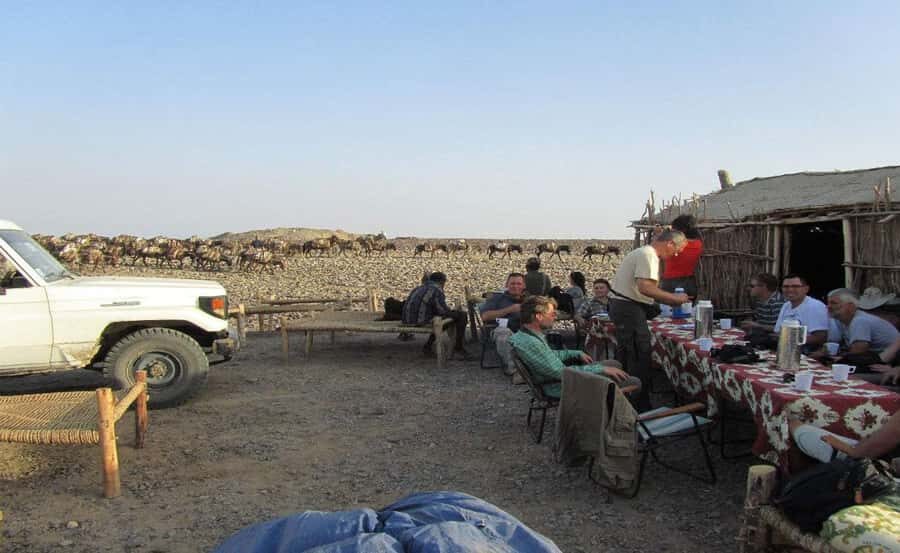
Day 3 is shorter on drama, but it still matters. You’ll rise early for another look at Erta Ale as dawn breaks. The crater can look different in early light—less purely “night glow,” more shape and color around the edges.
Then breakfast at the campsite, and you’ll start moving back.
Erta Ale to Afdera
You’ll drive to Afdera and continue along the paved road route toward Semera Airport. It’s a relief to shift from off-road to smoother roads, and you’ll feel the body catch up on rest.
Final dinner and flight back
The tour includes a farewell dinner on your way out, and then you head back to Addis Ababa by flight. By this point, you’ve seen three different kinds of extremes: salt, sulfur, and fire.
Price and value: what $360 covers in harsh remoteness
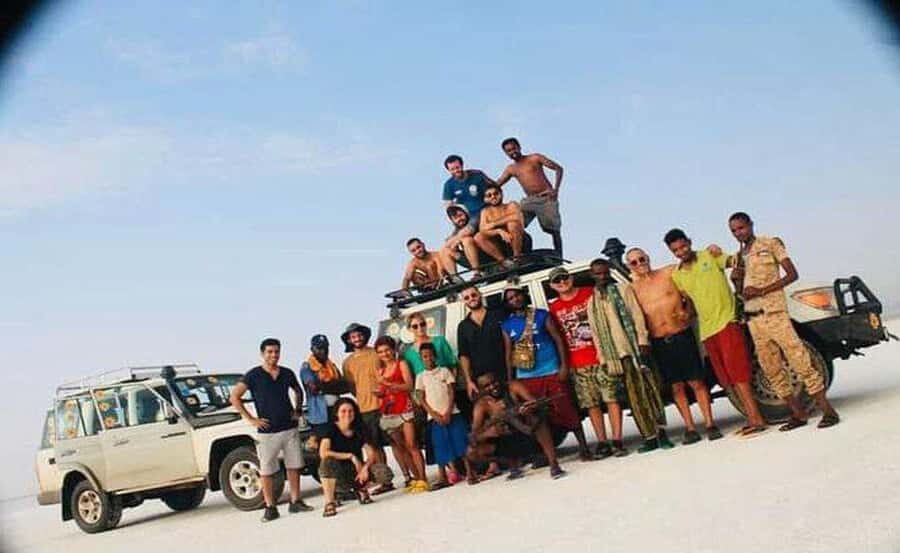
At $360 per person for 3 days, the price is less about “tour operator margins” and more about the real cost of getting logistics right in a remote, hot, low-service region. Here’s what your money is buying:
- Ground transport by 4×4 across remote terrain
- All meals (breakfast, lunch, dinner) so you’re not hunting food in places where options are limited
- Unlimited bottled water and hot drinks, which is huge for staying functional in extreme heat
- Camping equipment (mattresses and sleeping bags)
- Experienced local guide and scout
- Entrance fees and permits, plus government taxes and service charges
What’s not included matters too. You still pay for the domestic flight from Addis to Semera and return tickets, plus personal expenses, and there are no Addis hotels included. If you’re budgeting, think of this tour price as covering everything once you’re in Semera and rolling through the depression—logistics and food included.
In other words: if you show up prepared and fit enough for the trek, you get a lot of core experience packed into a short window. If you’re chasing comfort, you might feel the price is high. If you’re chasing the real thing, it starts to feel fair fast.
Camping reality check: sleeping bags, limited facilities, and bathrooms
This isn’t a hotel circuit. Accommodation is basic open-air camping with limited facilities. There’s no hiding from that.
A couple of practical expectations:
- You’ll sleep in provided gear: mattresses and sleeping bags
- You’ll get food and hot drinks, so you’re not stuck in the cold at night (but don’t expect luxury)
- Along the route, you should plan for no proper bathroom stops and simple field practices
I’d treat the “what to bring” list as part of the safety plan, not just “nice extras.” Sunscreen, a hat, sturdy shoes, and a headlamp make your days easier. And in heat like this, hydration habits matter more than how pretty you look.
What to pack (and what can hurt you in heat)
The tour gives you the essentials for sleep and food, but you’re still responsible for staying comfortable and safe in the sun.
Bring:
- Comfortable, sturdy shoes for walking on rough ground
- Sun hat and sunscreen (you’ll use both)
- Camera (and a way to protect it from dust/salt air)
- Water (even though unlimited bottles are included, having personal habits is smart)
- Headlamp/flashlight for the nighttime trek
Helpful extras (not listed, but practical) are things like lip balm and a couple of light layers for temperature swings, since desert evenings can feel different than midday. But the core list above is non-negotiable for this itinerary.
Don’t smoke. It’s listed as not allowed, and in a remote, dry environment, it’s also just asking for trouble.
Fitness, heat, and health: be honest before you go
This tour asks for moderate physical fitness because of the trek to Erta Ale’s crater and because you’re dealing with high temperatures and dry conditions.
Here’s the real decision point: can you walk steadily for the trek duration and can you handle heat without needing constant breaks? If yes, you’ll likely love the challenge. If no, you’ll spend the trip counting minutes instead of enjoying the geology.
Also, if you have respiratory or heart conditions, the tour instructs you to consult a doctor before traveling. You’re far from medical help, and the environment is demanding. That’s not the place for “I’ll just try and see.”
If you’re wheelchair users: this tour is not suitable.
Cultural respect in the Afar region
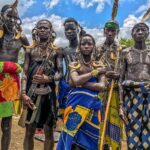
The Afar region is described as culturally conservative. That means modest clothing and respectful behavior matter. Practical tip: pack clothes that cover appropriately while still being lightweight and breathable for extreme heat.
You’re also moving through villages, not just “seeing” them from a bus window. So your guide’s cues on how to behave locally are worth following closely.
Should you book this Danakil Depression tour?
Book it if you want one of the most unusual combinations of natural sights on Earth in a short time: Afdera salt-lake swim, Dallol’s sulfur colors, and Erta Ale’s lava lake—with the crater at night and again at dawn.
Don’t book if you need comfort, bathrooms on demand, and predictable routines. This is basic camping, intense sun, and real walking in remote conditions.
If you’re the type who likes authenticity, can handle heat, and thinks camping under a stark sky is part of the fun, then yes—this is the kind of tour that leaves you with stories you won’t get anywhere else.
FAQ
Where is the tour located?
It takes place in Ethiopia, focused on the Danakil Depression region.
How long is the experience?
The tour runs for 3 days.
How much does it cost?
The price is $360 per person.
Where are the pickup and drop-off points?
Pickup includes Semera, Samara Airport (Sultan Alimirah Hanfare Airport). Drop-off includes Samara Airport (Sultan Alimirah Hanfare Airport) and Semera.
What’s included in the price?
It includes 4×4 ground transportation, all meals, bottled water and hot drinks, an experienced local guide and scout, camping equipment (mattresses and sleeping bags), entrance fees and permits, and government taxes and service charges.
What is not included?
Domestic flight tickets from Addis to Semera (return) are not included, along with personal expenses and any hotels or meals in Addis Ababa.
What language is the tour guide?
The tour guide speaks English.
What fitness level do I need?
Moderate physical fitness is required for the trek to Erta Ale and for withstanding high desert temperatures.
What should I bring?
Bring comfortable shoes, a sun hat, camera, sunscreen, and water. A flashlight/headlamp is also recommended.
Is it suitable for wheelchair users?
No, the tour is not suitable for wheelchair users.