REVIEW · ADDIS ABABA
12 Days SIMIEN MOUNTAIN-LALIBELA-DANAKIL-TIGRAY CHURCHES
Book on Viator →Operated by Ethio Travel And Tours · Bookable on Viator
Ethiopia goes vertical on this 12-day route. I like the small group size (max 10) because it keeps the pace humane on long drives, and I really appreciate that entry fees are included so you’re not nickel-and-dimed at every stop. The mix is wild in the best way: church history in Gondar and Lalibela, big animal country in the Simien Mountains, and the otherworldly volcanic extremes of the Danakil Depression. One consideration: you’re signing up for early mornings, rougher roads, and days where you’ll be walking at least a bit—this isn’t a sit-in-the-car vacation.
You’ll be guided by English-speaking local staff, and the itinerary is built around having local context on the ground, not just driving between famous names. If you want a trip where you can actually ask questions—about Ethiopia’s rock churches, the Afar salt economy, or why those ancient ruins matter—this format works.
The routing also makes practical sense: you’re not constantly changing hotels every few hours. You spend focused time in the Simien and Danakil areas, then you shift into Tigray and Axum, ending with Addis Ababa’s museums and markets. Just know that some stretches are long, and the “adventure” part is real.
In This Review
- Key things that make this tour click
- Gondar’s royal castles and Debre Berhan Selassie
- Simien Mountains National Park: escarpment walks and real animal country
- Lalibela’s rock-hewn churches: Northern Group to Western Group
- Mek’ele and the climb toward Erta Ale
- Danakil Depression: craters, salt mining, and Dallol’s strange colors
- Gheralta rock churches: steep climbs and a ledge walk
- Axum: stelae field, Sheba-era ruins, and St. Mary of Zion
- Ending in Addis Ababa: Entoto views, Lucy, and Merkato
- Price and value: what you’re really paying for
- Quick fit check: who this tour suits best
- Should you book this Simien–Lalibela–Danakil–Tigray trip?
- FAQ
- What is the group size for this tour?
- Are entry fees included in the tour price?
- Does this tour include domestic flights?
- What kind of meals are included?
- Is the Danakil and Simien portion weather dependent?
- How much time is spent on hiking?
Key things that make this tour click
- Max 10 people means less crowding when you’re at viewpoints, churches, and trailheads.
- All entry fees included helps you budget without surprises.
- Domestic flights on Ethiopian Airlines cut travel time and keep the schedule from turning into one giant bus ride.
- Simien Mountains hiking is built around escarpment walks with lookout views and a good chance at seeing gelada baboons.
- Danakil is the headliner: craters, salt mining, and Dallol’s volcanic color show up in the plan.
- Tigray rock churches include dramatic ledge walks, so you’ll want steady footing.
Gondar’s royal castles and Debre Berhan Selassie

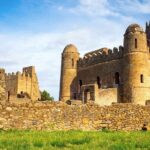
Your trip starts in Addis Ababa, then you fly to Gondar. Once you’re picked up at the airport, you get a city tour that puts you right in the mood: 17th-century power and architecture at Fasil Ghebbi, the Royal Compound. This is the kind of place where you can feel the “old Ethiopia” scale—stone buildings, royal structures, and the sense of a capital that once mattered.
Then comes Debre Birhan Selassie Church. From the outside, it’s stone walls, arched doors, and that two-tiered thatch roof. But the real story is inside: the sanctuary is famous for its frescos, and the guide context matters here because this church—like many in Gondar—has faced destruction and near loss over time. It’s not just a quick photo stop. You’re seeing how Ethiopian Christian art survives, rebuilds, and still carries meaning.
Practical takeaway for you: If you like history that you can actually stand in, not just read about, Gondar is a strong start. Wear shoes that work on uneven surfaces, because church compounds often are.
You can also read our reviews of more tours and experiences in Addis Ababa.

Simien Mountains National Park: escarpment walks and real animal country
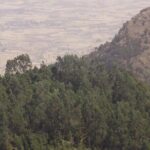
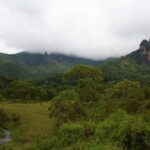
Days 2 through 4 are where the tour earns its legs. You drive from Gondar to the park headquarters in Debark along a paved stretch, then handle permits and meet your scout for the area. After that, you’re not just dropped into a park and hoped for the best. You get a proper intro day walk along the northern edge of the escarpment with viewpoints over northern Ethiopia’s plains and foothills.
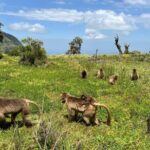
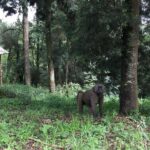
That “first hike” is described as easy, and that matters because the Simien days aren’t about sprinting. It’s about pacing yourself so you can actually enjoy the sightlines and the wildlife rhythm. You’ll have a chance to encounter gelada baboons on that walk—worth being ready for because they don’t always show up exactly when you want a perfect moment, but when you see them, it’s a very Simien kind of experience.
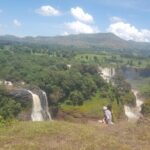
The next walking day follows the northern escarpment eastward, dips into the Kaba Valley, then climbs again before reaching Gich Abyss. Here you get one of the itinerary’s clearest “wow” scenes: a narrow ridge to a cliff viewpoint looking toward the Simien foothills, plus the Jinbar River waterfall where the river plunges about 500 meters into the abyss.
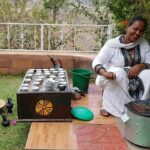
Then there’s the human-scale part that many big-park trips skip: lunch near the Jinbar River, a walk through barley fields, and time in Gich village. You can take part in a traditional coffee ceremony in a hut and learn more about local farm life. That coffee stop isn’t just a ritual box; it helps you understand how people live at the edge of dramatic terrain.
On the later Simien day you’re still in the same region and rhythm—escapes, ridges, cliffs, and the route over toward Gich camp. The repeated emphasis on escarpment movement and the Gich-area experience suggests this tour is designed for scenery + culture, not just a checklist of trail names.
Possible drawback to plan for: the schedule has “hike plus drive plus lookout” patterns. You’ll feel it over multiple days, especially if you’re not used to changing elevations. Bring a steady walking pace mindset.
Lalibela’s rock-hewn churches: Northern Group to Western Group
After Simien, the trip pivots hard into sacred architecture with a stop in Lalibela. You meet the group at the airport in Lalibela, then drive about 23 km to town. The first chunk is check-in and refreshment, which is smart—Lalibela demands attention, and you don’t want to start the churches with jet-lag brain.
From there you visit the Northern Group first:
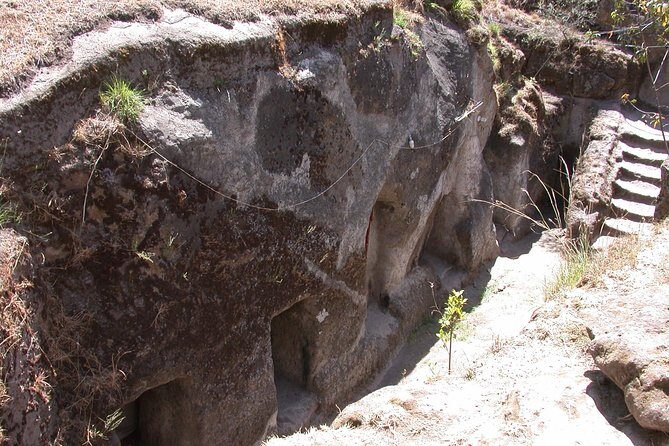
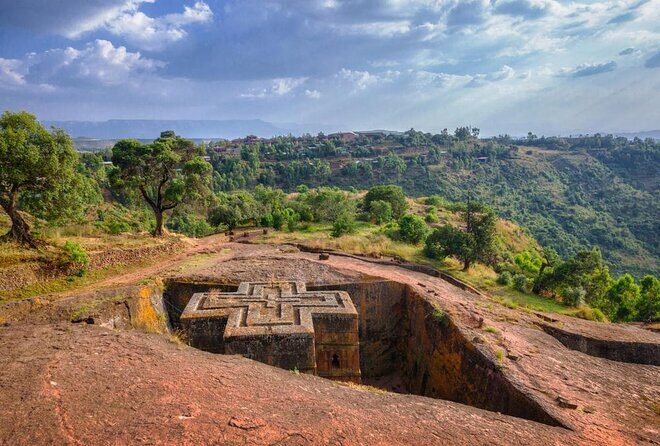
- Bet Medhane Alem, home to the Lalibela Cross and described as the largest monolithic church in the world (with the tour noting it’s likely a copy connected to St Mary of Zion in Aksum).
- Connections across a set of churches: Bet Maryam, Bete Golgotha (with its arts reputation and said tomb association with King Lalibela), the Selassie Chapel, and the Tomb of Adam.
Then you move to the Western Group, led by Bete Giyorgis, described as part of the highlights for its place in the cluster.
The big value of doing Lalibela this way—split into Northern and Western—so you don’t just rush from one named church to the next. Each cluster makes it easier to notice patterns: how the churches are carved into rock, how the spaces are arranged, and why these places feel like they were designed to hold ritual life for centuries.
For your comfort: dress modestly and be ready for surfaces that feel old and worn. You may spend time looking up and around stone features, so take breaks if your neck gets cranky.
Mek’ele and the climb toward Erta Ale
Day 6 is more of a transit day in spirit: the drive to Mek’ele takes about 8 hours. This isn’t a museum stop day. It’s about shifting geography and resetting for the Danakil region, which feels like a different planet once you’re close.
The next morning, you move toward Erta Ale. The schedule is early: start at 9:00 AM, drive to Dodom at the base of the volcano, and expect one of the rougher roads in the itinerary’s wording. The distance is about 80 km but the drive can take around 6 hours because the terrain changes—solidified lava, rock, sand, and occasional palm-lined oases.
At Dodom camping site (about 17 km from Erta Ale), dinner is served around 17:00. Then you get a short trek—about 30 minutes—up to the rim. The itinerary also notes that camels carry camping materials and some food, including sleeping materials like light mattresses and mats and water. That’s a key detail: you’re not hiking alone with a daypack. Logistics are handled in a way that makes the volcano visit possible.
What to consider: Erta Ale nights are often about wind, glare, and time spent watching. The tour has you on the rim fairly quickly, so you’ll want to be ready for quick changes between walking and standing.
Danakil Depression: craters, salt mining, and Dallol’s strange colors
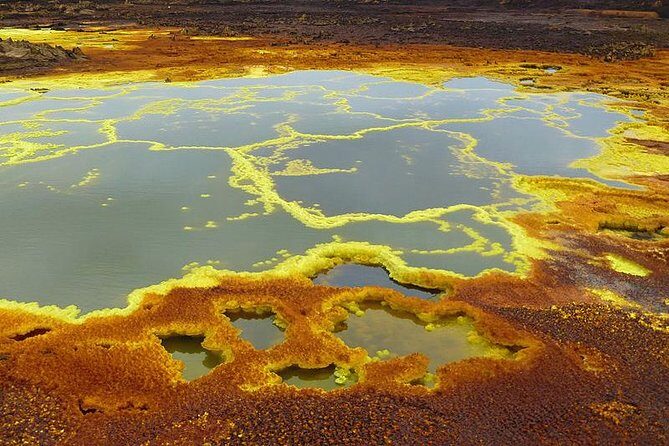
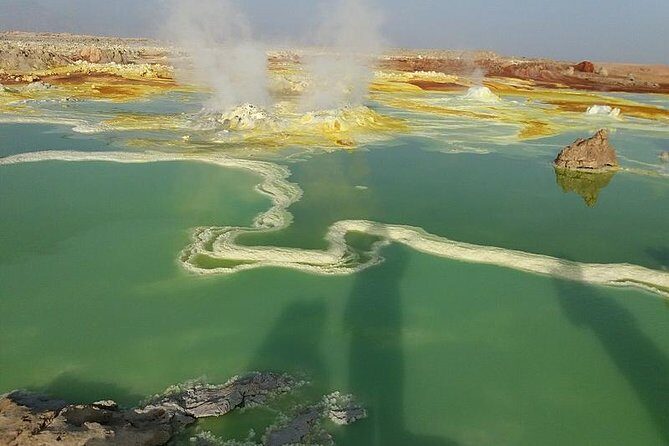
Days 8 and 9 are the Danakil core. This is where the itinerary turns scientific and dramatic at the same time: pits, crater dimensions, salt extraction, and then volcanic sites at extreme low elevations.
On Day 8, you rise with the sun and walk around craters and pits. The tour describes the main pit as sub-circular, three-storied, about 613 meters above sea level, and roughly 200 meters deep and 350 meters across. The smaller southern pit is listed as about 65 meters wide and around 100 meters deep. Those numbers aren’t filler—they help you understand the scale when you’re standing close to the terrain.
After a visit to the pits, you head back to Askoma for breakfast and aim to be back at the camp by about 10:30. Then there’s a drive to Lake Afdera, described as optional (and noted as may not be available during summertime). This is one of the places you’ll want flexibility in your expectations depending on season and conditions.
Day 9 shifts from geology spectacle to human industry. You visit salt mining areas where salt is broken from the ground into rectangular pieces and loaded on camels. There’s also the Dallol and Lake Assal pairing:
- Dallol at around -130 meters, described as a difference landscape formed by volcanic activity.
- Lake Assal at about -130 meters.
- Then camel caravans and a walk with Afar people.
One seasonal note is explicit in the plan: there’s no camel caravan on July, August, and early September. If you’re traveling during those months, the “caravan” piece may be reduced or missing even though other parts run.
My practical take: Danakil can feel intense—sun, wind, and long days. This itinerary spreads the Danakil experience across two days so it’s not all squeezed into one. That makes it more bearable and gives you time to process what you’re seeing.
Gheralta rock churches: steep climbs and a ledge walk
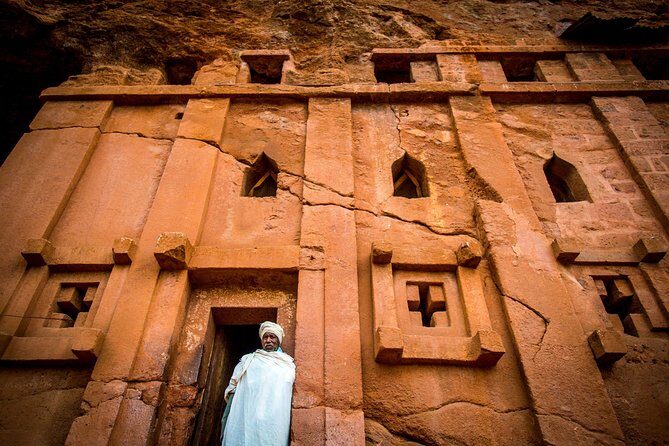
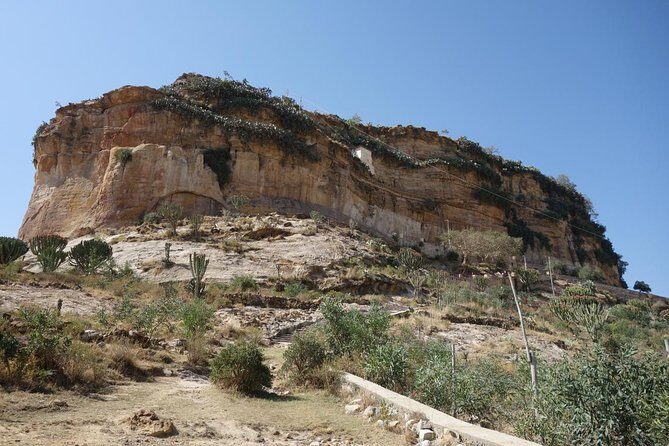
When the tour reaches Tigray, it goes back to rock churches—but with a different kind of challenge. Day 10 focuses on Abuna Yemata Guh, reached via a steep ascent along the Gheralta massif. The climb is described as starting with an hour-long walk before the steep part, then switching into footholds and handholds chipped into sandstone from years of foot traffic.
Then you hit the part that people remember: narrow ledges with sheer drops. The church itself is reached by walking out on a ledge described as about one meter wide, with a 200-meter drop to the left-hand side. There’s also a small cave and a wooden door built into the rock at the entrance.
There’s another church name included in the description too: Maryam Korkor, called the most impressive architecturally among the group mentioned. Even with the brief description, it’s clear that this day is about access to hard-to-reach sacred spaces—not just passing them on a road.
Day 11 adds more walking with a morning trek around rock churches of Tigray, then you drive to Axum. This is a smart sequencing choice: get the Gheralta hiking done while you’re still near it, then shift cities for the next historical focus.
If you have any balance concerns: take the ledge sections seriously. Even if you’re “fine with stairs,” ledges are different. Move slow, hold steady, and don’t rush for photos.
Axum: stelae field, Sheba-era ruins, and St. Mary of Zion
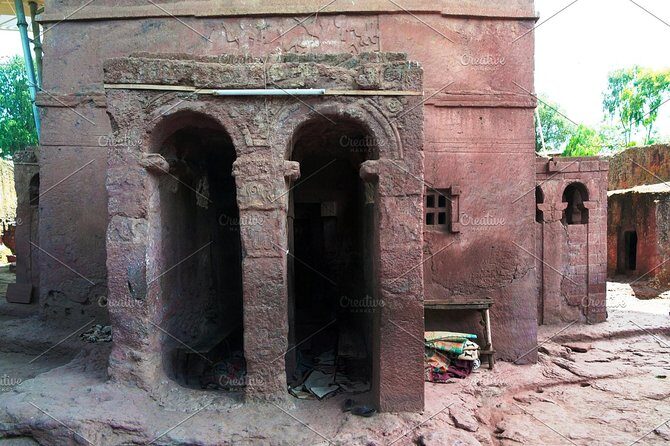
Axum brings the story into a different scale: obelisks, royal tombs, and a famous church tied to Biblical tradition. After lunch, you visit the Northern Stelae field, with fourth-century obelisks that give the region its name. The tour notes that while the tombs excavated so far were robbed long ago, more than 90% of ancient burial sites remain unearthed. That’s a powerful way to frame the ruins: not all is gone, and the region still holds archaeological potential.
Next is Dungur, better known as the Queen of Sheba’s Palace, plus tombs of ancient figures such as King Kaleb and King Gebre Meskel. Then you finish at St. Mary’s of Zion Cathedral, described as famed home of the Ark of the Covenant and connected to ancient Axum emperors and empresses.
This combination matters because it links monuments (stelae), stories (Sheba-era palace), and a living religious site (Zion). You get more than one angle on why Axum is more than a stop—it’s a thread that connects Ethiopia’s historical identity to world religion.
Ending in Addis Ababa: Entoto views, Lucy, and Merkato
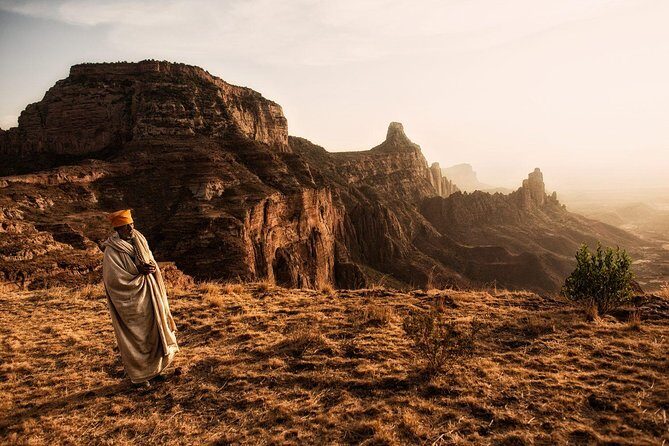
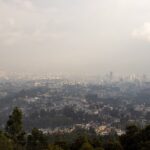
The final day is a city reset with a morning flight from Mek’ele. You then go up to Mount Entoto, looking down on Addis Ababa from the capital’s highest viewpoints. The plan highlights panoramic views plus fresh air from eucalyptus forests.
After Entoto, you head down via Shiro Meda, the city’s largest market for traditional clothes. Then you go to the National Museum of Ethiopia, described as a top choice museum in Addis Ababa. Here the plan flags the basement highlight: Lucy, Ethiopia’s famous paleoanthropological discovery. The tour notes that this section is well labeled in English, which is a practical tip if you only have limited time in a museum.
Then you also have time for Merkato, described as the largest market in Africa, with about 45 minutes allocated. That’s enough for a browse if you’re not trying to buy half the continent.
How to make this day work: keep your museum expectations realistic. Lucy gets the attention for a reason, but if you spread your focus too thin across rooms, Merkato will feel rushed. Pick a priority and go.
Price and value: what you’re really paying for
At about $1,641.03 per person for a 12-day small-group tour, the price looks high until you line up what’s included. This isn’t just transportation and a guide.
You get:
- Domestic flights on Ethiopian Airlines (three flights).
- All entry fees to the listed sights.
- Full board for Danakil and Simien, plus breakfast at other accommodations.
- Accommodation with breakfast outside Simien and Danakil.
- Transfers and sightseeing in a tourist standard vehicle.
- English-speaking local guides and local support.
- All taxes.
For many travelers, those flight costs and entrance fees add up fast on a do-it-yourself itinerary. So the value isn’t only the headline price—it’s the way the tour reduces decision fatigue. You’re not hunting for permits, managing the sequence, or trying to coordinate guides across several remote regions.
The main reason to pause is that the schedule demands physical flexibility and patience for long travel days. If you hate early starts, or if ledges and steep ascents make you nervous, you may feel the strain. This tour favors people who like moving through places, not just posing in them.
Quick fit check: who this tour suits best
This tour is a good match if you want:
- a small-group experience with active days in Simien and Tigray
- major Ethiopia sights connected in one coherent route
- guided context at churches and ruins
- the Danakil experience without having to stitch together permits, logistics, and multi-day transport yourself
It’s less ideal if you need:
- lots of downtime every day
- minimal walking and no exposure to narrow ledges
- a trip that avoids rough roads and long driving segments
Should you book this Simien–Lalibela–Danakil–Tigray trip?
I’d book it if you want Ethiopia at full volume: churches carved from stone, steep viewpoints, geladas in the high country, and Danakil’s volcanic weirdness paired with salt mining and Afar daily life. The included flights, entry fees, and full-board structure for the remote regions make it feel like real value, not a hand-wavy package.
I’d hesitate if your idea of comfort is a slow itinerary and a lot of guaranteed flat walking. The Gheralta ledges and the rougher road to Erta Ale are meaningful factors, and the tour also depends on good weather for the experience to run as planned.
If you’re honest about your stamina and your comfort level with dramatic terrain, this one has a lot going for it.
FAQ
What is the group size for this tour?
The tour is limited to a maximum of 10 travelers.
Are entry fees included in the tour price?
Yes. All entry fees to the sights listed in the itinerary are included.
Does this tour include domestic flights?
Yes. Domestic flights are included on Ethiopian Airlines, listed as three flights.
What kind of meals are included?
The tour includes full board for Danakil and Simien, plus breakfast at accommodations outside Simien and Danakil. Lunch and dinner counts are also listed as included.
Is the Danakil and Simien portion weather dependent?
Yes. The experience requires good weather, and if it’s canceled due to poor weather, you’ll be offered a different date or a full refund.
How much time is spent on hiking?
You’ll have scheduled walking days, including an easy introductory walk in the Simien area, cliff and ridge hikes in the park, and steep ledge routes during the Tigray rock church days. A moderate physical fitness level is recommended.