REVIEW · AXUM
4-Day Tour: Tigray Churches & Danakil Depression Adventure.
Book on Viator →Operated by ARRE TOURS AND TRAVEL · Bookable on Viator
Three churches, one lava lake. This 4-day Axum to Danakil adventure is a rare hit of sacred stone and extreme geology. I love the small groups and the way the operator stays flexible with the route as conditions change. The trade-off is physical: steep climbs, narrow ledges, and long early days mean you should come ready for height and heat.
You’ll also get real value for the money because the trip compresses a lot into four days: rock-hewn churches in Tigray, Erta Ale in the Afar region, then Dallol and salt-lake country before you roll back toward Mekele. Pickup is offered, and you’ll use a mobile ticket. This one is private, so it’s your group and your pace—just don’t expect it to feel like a relaxed sightseeing stroll.
In This Review
- Key highlights you’ll feel fast
- Axum to Danakil plus Tigray churches: why this combo makes sense
- Price and value: what $543.59 per person buys in real terms
- Day 1 in Tigray: climbing to Abuna Yemata Guh and seeing three church styles
- Abuna Yemata Guh: the climb is the experience
- Maryam Korkor and Daniel Korkor: different styles, same cliff-country feeling
- Day 2: Erta Ale’s smoky mountain at the caldera, then Dallol salts
- Erta Ale timing and what to expect
- Dallol after the volcano: colorful salt country
- Day 3: Danakil Desert early sunrise pits and crater-walk views
- Pit craters: short walks, big depth
- Back to Dodom and camp timing
- Optional lakes: keep expectations flexible
- Day 4: Ragad (Asebo) salt mining, Dallol features, Lake Assale, and camel time
- Ragad (Asebo): salt mining you can watch up close
- Back to Dallol and toward Lake Assale
- How hard is it, really? Physical pace, heights, and early starts
- Tigray church day = steep + exposed
- Danakil days = heat, dust, and volcano terrain
- Food: vegetarian options have been praised
- Guiding style and flexibility: why small groups help here
- Is this tour for you? Best match and likely misses
- You’ll enjoy it if you want…
- You might want to skip or swap if you…
- Should you book this 4-Day Tigray Churches & Danakil Depression adventure?
- FAQ
- What cities are this tour based around?
- How long is the tour?
- What is the price per person?
- Is pickup offered?
- Is this a private tour?
- What ticketing method is used?
- Which churches do you visit in Tigray?
- What major sights are included in the Danakil Depression?
- Is camel caravan viewing always included?
- How soon can I cancel for a full refund?
- When does the operator list availability hours?
Key highlights you’ll feel fast
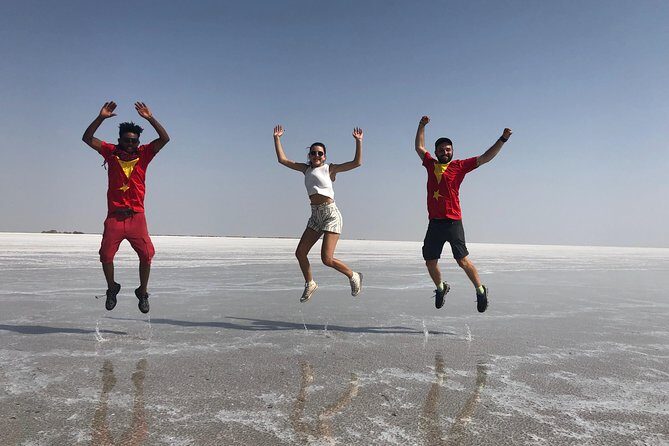
- Abuna Yemata Guh on narrow ledges with a long, serious ascent up the Gheralta massif
- Erta Ale’s caldera and lava-lake setting, plus the option of a night hike on the volcano
- Dallol’s color salts and the weird volcanic shapes around the depression
- Salt mining at Ragad (Asebo) and how workers cut salt into blocks and load camels
- Early-morning pit-crater views at Danakil with short walks between vantage points
- Small-group, flexible guiding, including named guides like Arre and Solomon in past trips
Axum to Danakil plus Tigray churches: why this combo makes sense
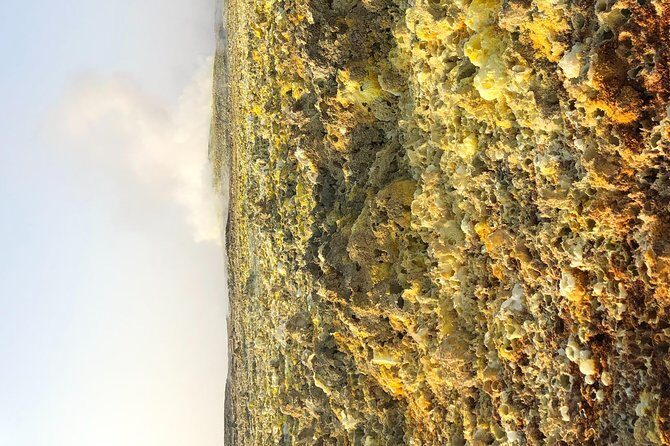
Most people come to northern Ethiopia for either the historical churches of Tigray or the otherworldly Afar geology around the Danakil Depression. This itinerary links both, so you see how different parts of the north can feel like different planets—sandstone churches carved into cliffs, then shield volcano terrain with active heat and salty fumes.
What makes this pairing work for you is the pacing. Day 1 is focused on Tigray’s rock-hewn worship sites. Then the trip pivots toward Afar: Erta Ale, Dallol, and salt-country crater views. By the time you hit the depression, you’re already in the mindset that Ethiopia can be both spiritual and extreme in the same week.
Also, the operator notes their small groups and flexible programming. In practice, that matters because conditions in Danakil can be unpredictable. If activity is calmer than expected at Erta Ale, your guide can shift how you spend your time to still keep the experience meaningful.
You can also read our reviews of more tours and experiences in Axum.
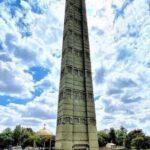
Price and value: what $543.59 per person buys in real terms
At $543.59 per person for about four days, this is not a budget day-trip price. You’re paying for distance, logistics, and guiding in two challenging regions: the mountain terrain of Tigray and the remote heat of the Afar lowlands.
Here’s what supports the value:
- Private tour for your group (not shoehorned into a bus of strangers).
- Pickup offered, which matters when you’re moving between Axum, Mekele, and remote sites.
- Admission marked included/free at key points in the schedule, so you’re not constantly paying extra small fees throughout the trip.
- Time efficiency: you’re not doing one attraction and waiting around. The itinerary is packed, but it’s packed with purpose.
Do note the potential drawback in cost terms: because the trip is intense and remote, it’s the kind of experience where you’ll want to be comfortable with early mornings, long drives, and the need for solid shoes. If you want an easy vacation, you may feel the price more than the views.
Day 1 in Tigray: climbing to Abuna Yemata Guh and seeing three church styles
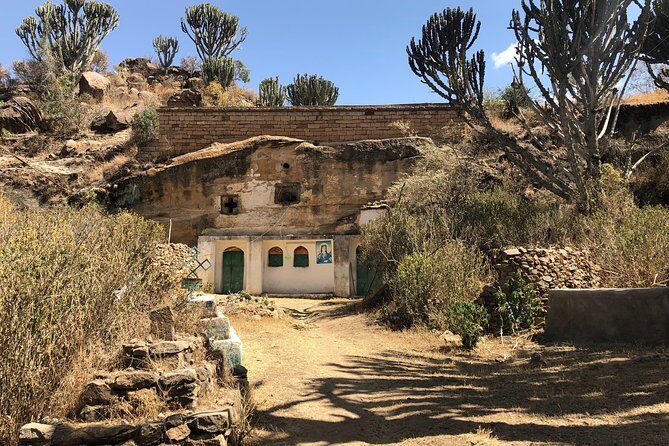
Day 1 is where the trip earns its name. You’ll spend the day in the Tigray region visiting three churches: Abuna Yemata Guh, Maryam Korkor, and Daniel Korkor. Even without fancy explanations, that’s a strong start because each church has its own look and feel.
Abuna Yemata Guh: the climb is the experience
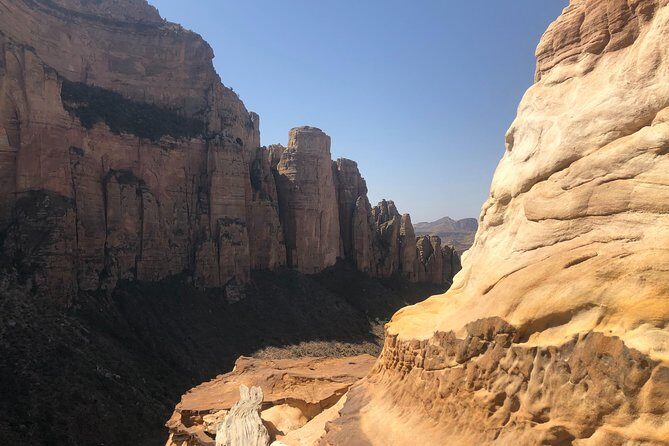
This is the headline. To reach Abuna Yemata Guh, you start with about an hour of walking that turns into a steep ascent up the side of the Gheralta massif. Then it gets more hands-on: there are foot holds and hand holds chipped into the sandstone, worn smooth by lots of passage.
The route runs along very narrow ledges with sheer drop-offs. The final approach includes a walk-out ledge about one meter wide with a drop roughly 200 meters to the left side. If you get nervous around heights, this is the part to think about early—not after you’re halfway up.
Once you’re on site, the time at the church is about 2 hours 39 minutes. It’s a long enough visit to slow down and actually take in the carvings, the stonework, and the way worship space can feel carved out of a living wall.
Maryam Korkor and Daniel Korkor: different styles, same cliff-country feeling
The itinerary doesn’t give the same step-by-step description for Maryam Korkor and Daniel Korkor as it does for Abuna Yemata Guh, but it emphasizes that the three churches are different in style and stunning in their own way. I like that logic: you get variety without switching towns or wasting time commuting all day.
Practical takeaway: Day 1 is a big walking day. Even if you don’t remember every church detail, you’ll remember the motion—up through sandstone, along narrow ledges, then back down.
Day 2: Erta Ale’s smoky mountain at the caldera, then Dallol salts
Day 2 moves fast. You start by driving to Erta Ale, a shield volcano in the Afar region. In Afar language, Erta Ale means smoky mountain, and the schedule points to why people chase it: Erta Ale contains the world’s only permanent lava lake, and it’s one of the longest-existing lava-lake situations documented in the early 1900s.
Erta Ale timing and what to expect
The plan begins early, at 9:00 AM in the itinerary notes, driving to Dodom at the base of Erta Ale. From there, your day centers on the volcano’s caldera and the lava-lake atmosphere.
A key note you should keep in mind: the schedule warns that activity may not look like it used to, and flank eruptions can slow. That’s normal in volcano-country. Don’t treat this as a guarantee of constant explosive spectacle.
What you can treat as more reliable is the setting itself: Erta Ale is physically challenging terrain, and the experience is built around getting to vantage points where you can see down into the caldera system.
Also, based on past trip feedback, the volcano hike timing is often a highlight—especially the night hike option. That makes sense. When the light changes, lava and heat haze feel even more alive.
Dallol after the volcano: colorful salt country
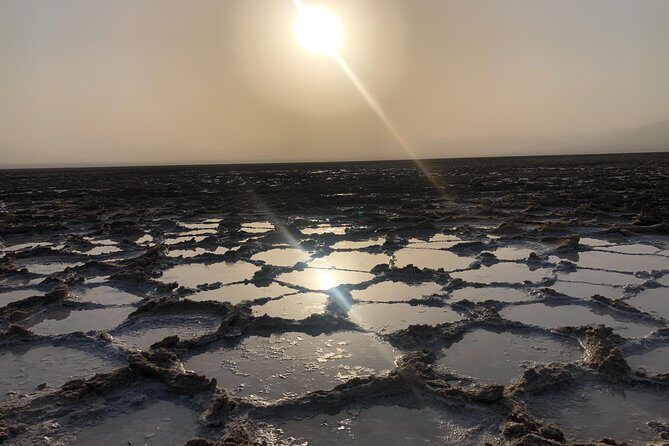
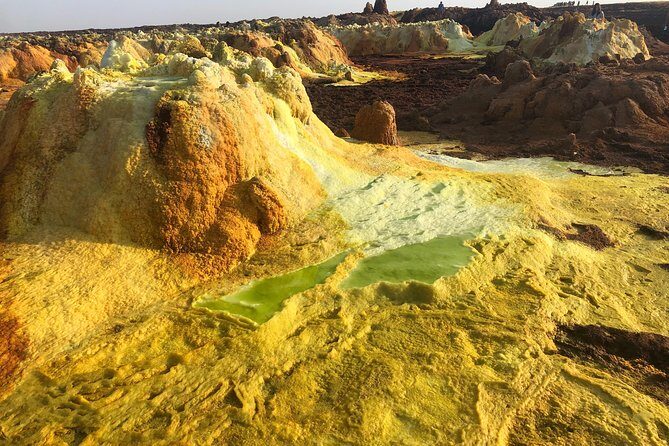
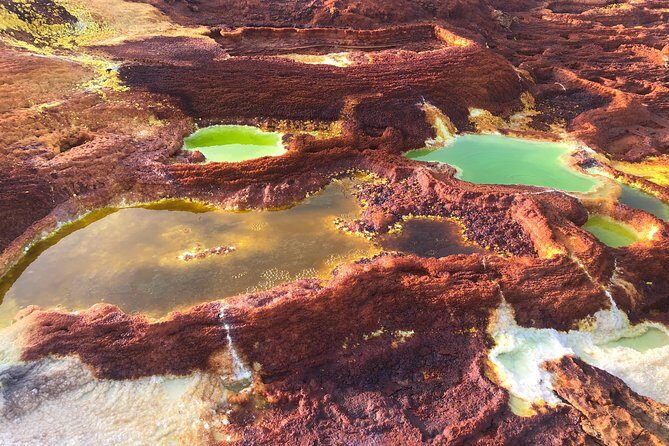
After Erta Ale, you head to Dallol for about 4 hours. Dallol is all about salt and volcanic weirdness. The schedule calls out colorful salts, and that’s exactly what people remember: stark tones, bright mineral color, and a texture that feels like the earth is doing something it shouldn’t.
If you’re expecting greenery or normal “nice nature,” you’ll be surprised—in a good way. This is harsh, mineral-driven terrain. Dress for dust and glare.
Day 3: Danakil Desert early sunrise pits and crater-walk views
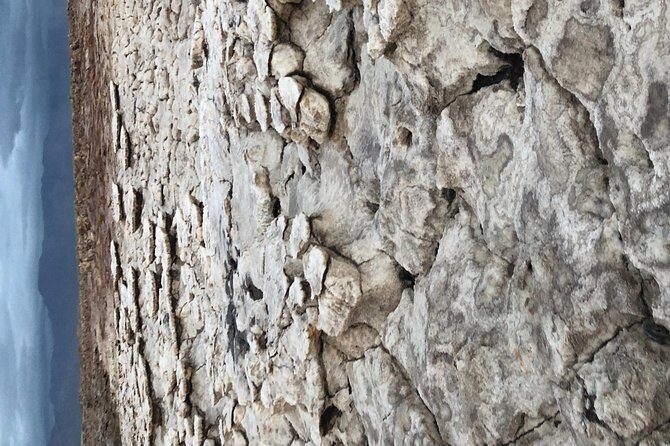
Day 3 is built around morning light. You’ll get early sun rise at the northern part that corresponds to the main pit crater, with short walking time to the southern and central pits. The idea is simple: you can move between views without spending the entire day in transit.
Pit craters: short walks, big depth
The itinerary notes key sizes so you can picture the scale:
- The main pit crater is about 200 meters deep and roughly 350 meters across.
- The smaller southern pit is about 65 meters wide and around 100 meters deep.
You descend and move between pits with about a 5-minute walk between certain viewpoints. That’s a nice design for you if you’re already tired from Day 1 and Day 2. You get dramatic views with minimal trekking compared to the church day.
Back to Dodom and camp timing
After time around the Erta Ale area, the notes describe descending around 9:00 AM, then leaving back to Dodom after early breakfast, possibly as early as 07:00. You should reach camp by about 10:30 at the latest and then relax.
This “recovery window” is important. Danakil takes it out of you. Even if you’re excited, your body will appreciate a break before Day 4’s salt-mining circuit.
Optional lakes: keep expectations flexible
There’s also an optional drive to Lake Giulietti (also referred to as Lake Afrera). The schedule suggests it may not be available during some periods. If it’s offered, it can add a different texture to the day. If it’s not, you’re still spending the core time where the depression feels most active.
Day 4: Ragad (Asebo) salt mining, Dallol features, Lake Assale, and camel time
Day 4 is your final hit of the Afar depression. It starts with a morning tour and a drive to Ragad (Asebo), where localities mine salt.
Ragad (Asebo): salt mining you can watch up close
This is the part that turns the “geology photos” into human scale. You’ll see workers breaking salt from the ground, cutting it into rectangular pieces, and loading it onto camels.
I like this stop because it explains how the product moves. Salt isn’t just a color on the earth here; it’s part of daily labor and trade. Even if you don’t understand every local word, you’ll understand the work with your eyes.
There is one timing constraint: the schedule states there’s no camel caravan on July, August, and early September. So if you’re traveling during those months, you may get the salt-mining scenes but not the camel procession.
Back to Dallol and toward Lake Assale
After Ragad, you drive ahead to Dallol and take in the different volcanic-formed terrain and the salt-lake area. Lake Assale is listed as a stop on Day 4 for about 5 hours, and it’s explicitly called out as a salt lake.
You’ll also have time to walk with Afar people, which is usually where the experience shifts from scenery to perspective—how people live with this environment instead of just staring at it.
The full Day 4 drive and tour notes say it can be around 12 hours, ending after the Danakil portion with a drive back to Hamedela and then onward to Mekele.
How hard is it, really? Physical pace, heights, and early starts
This tour is exciting, but it’s not gentle. You should plan for two very different kinds of effort.
Tigray church day = steep + exposed
The Abuna Yemata Guh ascent is described as steep, with hand holds and foot holds in sandstone rock. Then you’re on narrow ledges with severe drop-offs, including a roughly one-meter-wide ledge with a drop around 200 meters. That’s not just “some stairs.” It’s exposure plus climbing.
If you’re okay with heights and have decent balance, you’ll likely feel proud by the time you reach the church. If you’re anxious around drop-offs, this is the day to evaluate honestly before committing.
Danakil days = heat, dust, and volcano terrain
Erta Ale is noted as physically challenging. Danakil also brings bright sun and harsh conditions. Even when you’re not walking far, you’ll feel the dryness and glare.
You’ll also have early timing: Day 2 starts at 9:00 AM for the Erta Ale approach, and Day 3 includes a breakfast that can be as early as 07:00 with morning sunrise time built in.
A big practical plus: if you’re doing a night hike on the volcano (mentioned as a highlight in feedback), bring a headlamp and take cold nights seriously. Even in desert regions, temperatures can shift.
Food: vegetarian options have been praised
One of the strongest comments from prior groups is about food quality, with vegetarian meals singled out as superb. That doesn’t guarantee every meal will be identical each time, but it tells you the operator takes feeding people seriously, not just logistics.
Guiding style and flexibility: why small groups help here
The operator emphasizes small groups and flexibility with programs. Past feedback also praises communicative, organized guiding and problem-solving on the ground.
Two named guides show up in the feedback: Arre and Solomon. If your trip includes either of them, you can expect a style that focuses on where to go, how to go, and how to handle the reality of changing conditions.
This matters for you because both Tigray and Danakil are areas where plans can need adjustment:
- weather can shift morning visibility
- volcano activity can change
- walking routes may need a safety check
- timing around long drives can change
Small groups give your guide more room to manage these shifts without losing the core of the day.
Is this tour for you? Best match and likely misses
You’ll enjoy it if you want…
- dramatic contrast: churches carved into cliffs, then lava-lake and salt-country geology
- a private feel with only your group
- a trip that stays flexible when conditions change
- photos that feel earned, not just taken from a roadside
You might want to skip or swap if you…
- fear heights or aren’t comfortable with exposed ledges (the Abuna Yemata Guh approach is the big one)
- dislike early starts and long travel days
- want a comfort-first itinerary with minimal physical exertion
Should you book this 4-Day Tigray Churches & Danakil Depression adventure?
If your travel style is “I want the real Ethiopia, not the easy version,” this is a strong booking candidate. You get two high-impact regions in one plan: Tigray’s rock-hewn worship spaces and the Afar Depression’s mineral chaos, with Erta Ale as the star attraction and Dallol as the sensory shock.
My main caution is about the physical and exposed parts on Day 1. If you’re comfortable with heights and want a guided hike that’s part worship, part climb, you’re in the right frame of mind. If you’re not, consider a different route that avoids the narrow ledges.
Overall, the value looks solid for what you’re buying: private guiding, pickup, a packed four-day circuit, and an operator known for flexible handling. If you’re ready for intense days and you can handle steep stone climbing, this is the kind of trip that sticks with you long after the photos stop being the main story.
FAQ
What cities are this tour based around?
The tour location is Axum, Ethiopia, and the itinerary also references ending the Danakil portion by proceeding to Mekele.
How long is the tour?
The duration is 4 days (approximately).
What is the price per person?
The price is $543.59 per person.
Is pickup offered?
Yes, pickup is offered.
Is this a private tour?
Yes. It’s described as a private tour/activity, and only your group will participate.
What ticketing method is used?
The tour includes a mobile ticket.
Which churches do you visit in Tigray?
You visit three churches: Abuna Yemata Guh, Maryam Korkor, and Daniel Korkor, with Abuna Yemata Guh described in more detail.
What major sights are included in the Danakil Depression?
The itinerary includes Erta Ale, Dallol, Danakil Desert pit craters, and Lake Assale.
Is camel caravan viewing always included?
No. The schedule notes there is no camel caravan on July, August, and early September.
How soon can I cancel for a full refund?
You can cancel up to 3 days in advance of the experience for a full refund, and cancellations less than 3 full days before the start time are not refunded.
When does the operator list availability hours?
Opening hours are listed from 6:00 AM to 6:00 PM on Monday, within the broader date range shown (11/09/2019 to 06/20/2026).